


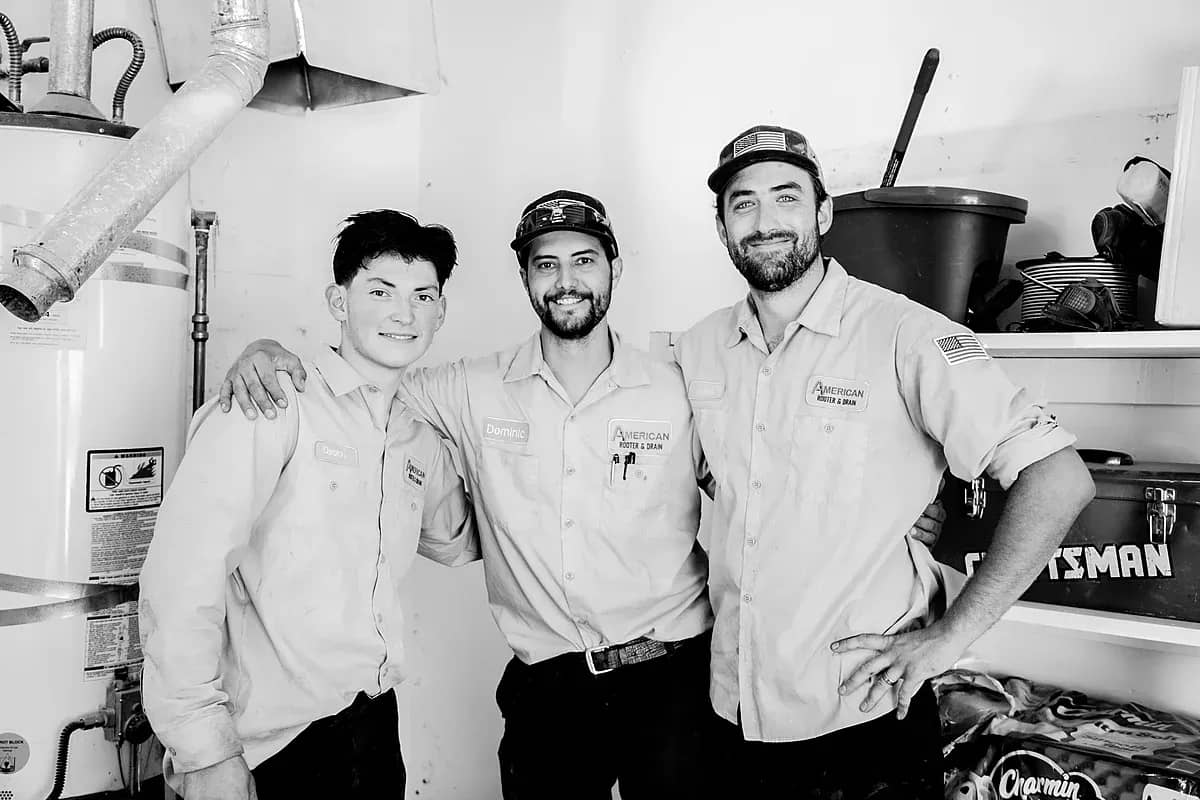
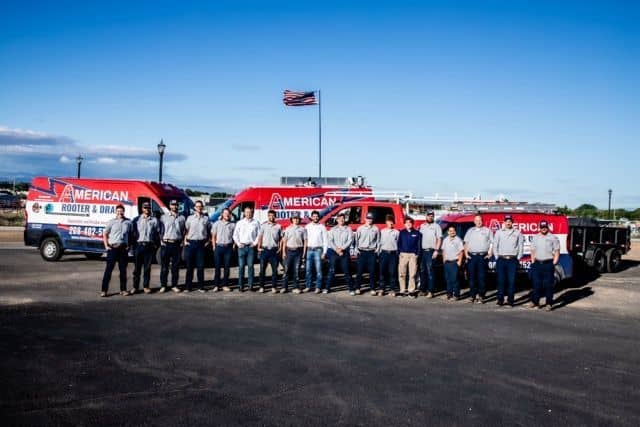
Idaho Electrical Contractor License LIC# 3671445. Every job is run by a licensed electrician and priced in writing before the work starts.
What we handle
- Electrical repair — outlets, switches, wiring faults, breakers that trip or will not reset, dead circuits
- Panel upgrades — adding capacity, replacing failed or obsolete panels, bringing service up to current code
- EV charger installation — Level 2 chargers in garages, carports and driveways
- Lighting installation — interior fixtures, recessed, under-cabinet, exterior and landscape
- Generator installation — standby power with a proper transfer switch
- Commercial electrical service for shops, offices and light industrial
Broader project work lives on the electrical service, electrical installs and electrical upgrades pages.
Treasure Valley houses by era, and what each one hands you
The valley's housing stock spans more than a century, and the decade a house went up predicts its electrical problems better than almost anything else.
Pre-1950 — Boise's North End and East End, the older cores of Caldwell, Nampa and Emmett. Expect original knob-and-tube in places, ungrounded two-prong outlets, and service capacity sized for a house with a radio in it. Knob-and-tube was competent wiring for its era, but it has no equipment ground, its insulation embrittles with age, and it was never designed to be buried in the blown-in attic insulation that later got added on top of it. These are also the houses where somebody's uncle "just added a circuit" at some point in the last seventy years, and finding what he actually did is part of the job.
Roughly 1965 to 1973 — the aluminum branch-wiring window. Copper prices in that stretch pushed builders to aluminum for ordinary 15- and 20-amp branch circuits, and around two million U.S. homes got it. Aluminum expands, contracts and oxidizes differently than copper, so connections at outlets and switches loosen over time, and a loose connection under load heats, arcs and eventually starts a fire. The CPSC has documented this for decades. It is not a reason to panic and it is absolutely a reason to know: if your house is in that window and has never been assessed, that is worth doing. The accepted remedies are a full rewire in copper or a permanent connector repair at every device — the COPALUM crimp the CPSC identifies, or AlumiConn-style connectors in approved, code-compliant applications. Replacing outlets with ordinary devices and calling it fixed is not a repair.
1950s through the 1980s panels. Two panel lines from this period have long-documented failure-to-trip histories, and they are still in service all over Caldwell, Nampa and the Boise Bench: Federal Pacific Stab-Lok and Zinsco. The failure mode is the one that matters most — a breaker that looks fine, feels fine, and does not open when the circuit faults. If we find either one, we tell you what it is and why we would replace it, and we do not pretend a breaker swap solves it.
Post-2000 — the Meridian, Kuna, Star and Middleton growth. These houses generally have modern 200-amp service and copper branch wiring, so the era-specific hazards above are mostly absent. The problem here is different: the panel is full. Builders filled the spaces, and now the household wants an EV charger, a heat pump, a hot tub and a shop sub-panel that were not in anyone's load calculation in 2004. That is a capacity conversation, not a safety one, and it has more than one answer.
Panel upgrades — capacity versus condition
Two completely different reasons land people on a panel upgrade, and it is worth knowing which one you are in.
Condition. The panel is obsolete, damaged, corroded, or one of the lines with a documented failure-to-trip record. Here the panel is the problem and replacing it is the fix, independent of how much power the house draws.
Capacity. The panel is fine, but the service or the busbar cannot carry what the household now wants to run. This is the common one in newer construction and in older houses that have been remodeled. The honest first step is a load calculation, not a sales pitch — sometimes the answer is a sub-panel, sometimes it is a circuit rearrangement, sometimes it genuinely is a service upgrade, and those are very different jobs.
A service change — going from the old service size to a larger one — is not purely our work. It has to be coordinated with your electric utility, Idaho Power on the Idaho side of our service area, because the meter and the service conductors feeding your house are theirs. That coordination adds a scheduling step that a straight panel swap on the same service size does not have, and it is the single most common reason a panel job takes longer than a homeowner expected. We tell you which of the two you are in before you commit to anything.
EV chargers — what a Level 2 install actually requires
A Level 2 charger is a 240-volt appliance on its own dedicated circuit, and there are three real questions behind every install:
Does the panel have capacity, and does it have space? Those are separate questions. A panel can have plenty of amperage headroom and no physical slots left, or slots left and no headroom. A load calculation answers both.
How is the circuit sized? Vehicle charging is a continuous load, so the circuit and breaker are sized above the charger's nameplate rating rather than equal to it. That is why a charger's advertised amperage is never the breaker number — a detail that surprises people who have priced the charger online and assumed the wiring is trivial.
How far is the run? Panel in the basement on the far corner of the house, charger at the far end of the garage or out at a detached shop, and the conductor run becomes a real part of the job. Distance affects conductor sizing and how the run gets routed, and it is the variable that most often separates two otherwise identical-sounding installs.
We walk the run with you, confirm the panel can carry it, and give you a written price before anything gets opened up.
Generators — and the transfer switch that is not optional
Standby power on a rural Treasure Valley property is a different calculation than in town, for one reason people forget until it happens: if you are on a private well, no power means no water. Not just no lights — no toilets, no taps, no livestock water. A generator that carries the lights and the fridge but not the well pump has solved the smaller half of the problem, and well pumps are a meaningful load. Sizing that in from the start is the difference between a generator that works and one that disappoints you the first time it runs.
The other non-negotiable is a properly installed transfer switch. Its job is to guarantee that when your generator is running, your house is electrically isolated from the utility. Without it, a generator can backfeed power out onto lines that a utility crew believes are dead. That is not a code technicality — it is how line workers get killed. Any generator that is going to power house circuits gets a transfer switch, permitted and inspected. There is no version of this we will shortcut.
Permits and inspection in Idaho
Electrical permits in Idaho are issued through the Idaho Division of Occupational and Professional Licenses, under the Idaho Electrical Board — not the city, and not the county. Permits are purchased online, and either a licensed contractor or a homeowner working on their own residence can pull one.
When a job needs a permit, we pull it and we schedule the inspection. Two things worth being straight about:
- Permit and inspection fees are set by the jurisdiction, not by us. We are not able to waive them and we would not pretend otherwise. What we will do is show you which part of the number is us and which part is the state, instead of blending the two into one figure and letting you assume.
- A permit is a feature, not a tax. It is the mechanism by which somebody other than the person who did the work confirms the work is right, and it is what a future buyer's inspector will look for.
Call now, or schedule
Some electrical problems can wait for an appointment. These cannot:
- A burning or hot-plastic smell at an outlet, switch or panel
- An outlet, switch plate or breaker that is warm or hot to the touch
- Scorch marks, discoloration or melted plastic at any device
- Buzzing, crackling or sizzling from a panel, switch or receptacle
- A breaker that trips immediately every time it is reset — it is doing its job, and the fault is still there
- Any shock, even a small one, from an appliance, a faucet or a switch plate
- Visible arcing, or lights that flicker across the whole house rather than on one circuit
Any of those? Stop using the circuit and call (208) 782-8268. A breaker that keeps tripping is a warning that has already been delivered.
Non-urgent but worth scheduling: outlets that no longer hold a plug, two-prong ungrounded receptacles, a panel with no room left, lights that dim when a large appliance starts, or any house in the 1965–1973 aluminum window that has never been assessed.
How pricing works here
Flat rate for the job, quoted and approved before any work starts. Not hourly — the number cannot climb while somebody is in your attic, and if the job runs long that is on us rather than on you. The only thing that changes an approved number is additional scope that you approve first.
We do not quote electrical work sight-unseen, and the reason is specific to this trade: what drives the price is what is behind the wall. Whether an existing circuit can be reused or has to be re-run. Whether the panel has space, headroom, both or neither. Whether the wall is drywall or plaster-and-lath. Whether the attic and crawlspace are accessible or a genuine problem. Whether the previous work was done correctly. Diagnosis first, written number second, work third — that order is deliberate.
What to expect when we come out
A licensed electrician evaluates the job, explains what is actually happening in plain language, and walks you through your options before any work begins. If a repair turns out to sit on top of a larger problem — an aluminum-wired circuit behind a failing outlet, a panel that should not still be in service — we show you what we found and get your decision before going further, rather than assuming you want the bigger job. We do not push add-ons, and we do not perform work that has not been explained to you first.
Electrical service by city
Idaho: Boise · Meridian · Nampa · Caldwell · Eagle · Star · Kuna · Middleton · Garden City · Hidden Springs · Mountain Home · Emmett · Marsing · Homedale · Parma · Wilder · Payette · Fruitland · Weiser
About American Electrical Services
American Electrical Services is an Idaho DBA of American Rooter & Drain (ABN 0006889156), holding Idaho Electrical Contractor License LIC# 3671445 in its own right — same ownership, its own brand and its own phone line at (208) 782-8268. The electrical side was built on the same rule the plumbing side was: send a licensed professional, explain the work in plain language, and do it right the first time.
Need a licensed electrician? Call (208) 782-8268 or request service online.