

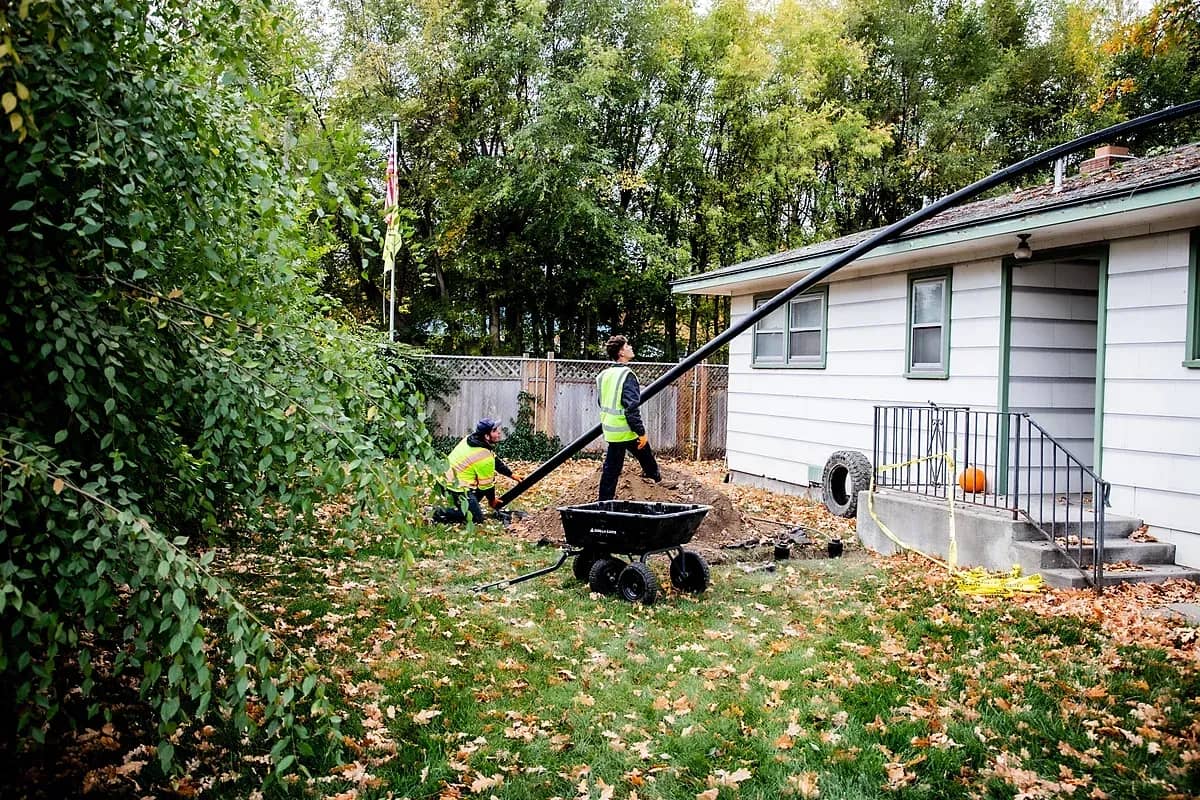
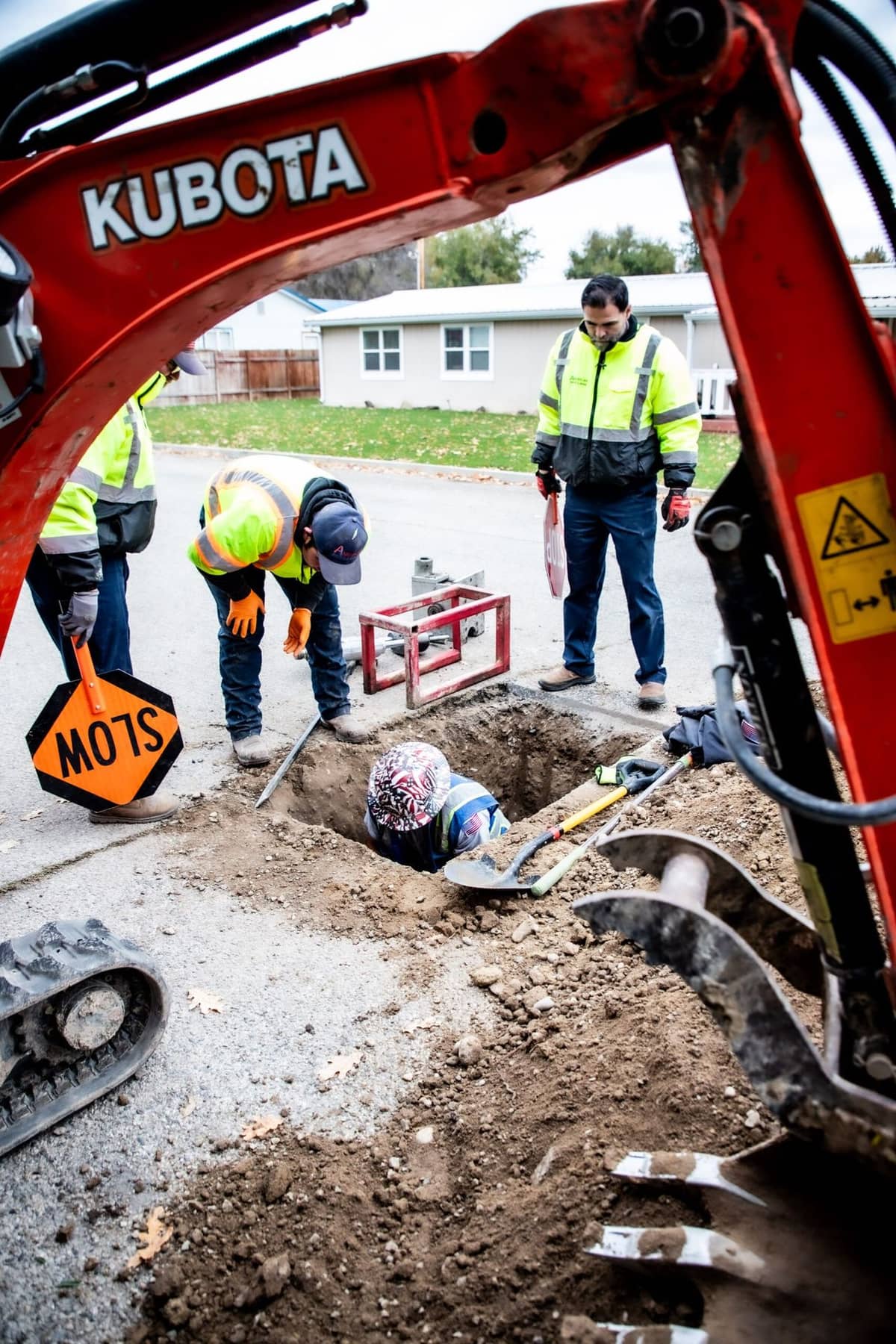
Septic tank pumping is $395 for 1,000 gallons — larger tanks and deep lids cost more — quoted in writing before we start. Everything else gets looked at first and priced in writing second.
What we handle
- Septic pumping — routine maintenance pump-outs and emergency evacuations
- Septic inspection — for a home sale, a permit, an accessory-use approval, or peace of mind
- Septic repair — baffles, lids, risers, inlet and outlet tees, failed pumps and float switches
- Drain field services — diagnosing and addressing the soil absorption field that filters what leaves the tank
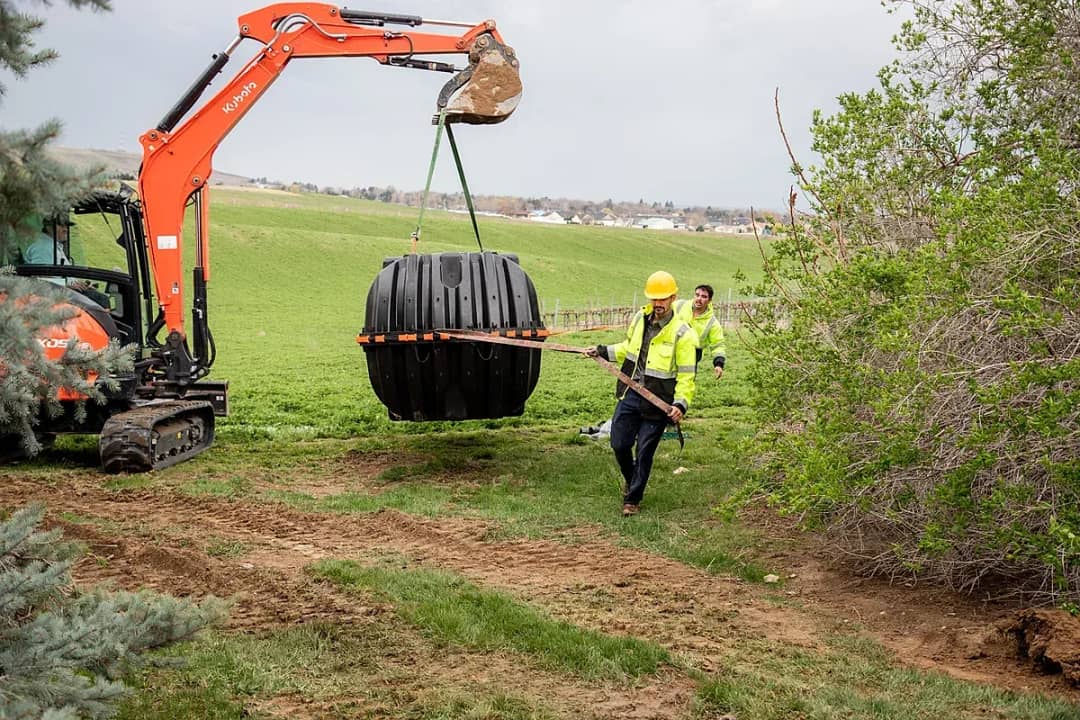
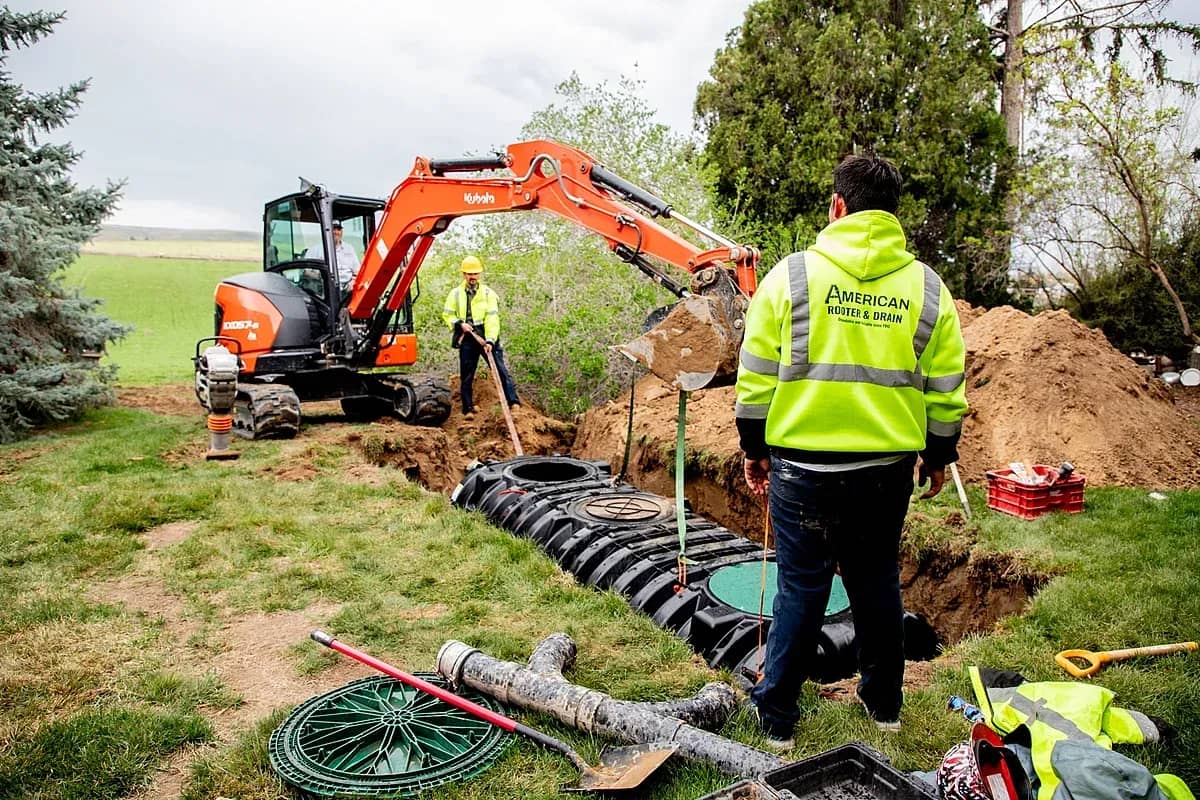
- Septic tank installation and full system replacement, permit-first, through your health district
- Leach field inspection when you need the field itself documented, not just the tank
If your property turns out to be on city sewer rather than septic, that is a different job entirely — drain cleaning and sewer camera inspection live on the plumbing side.
Where septic still runs in the Treasure Valley
Most people inside Boise, Meridian, Nampa and Caldwell city limits are on municipal sewer and never think about a tank. Step past the city limits and that flips fast.
Canyon County acreage. Wilder, Parma, Middleton's outskirts and the farm ground between Caldwell and Nampa are heavily septic. A lot of these systems went in decades before the subdivisions that grew up around them, and they were sized for the household of the day, not for the one living there now.
Owyhee County. Marsing and Homedale are almost entirely on private systems, often on larger lots where the tank and field have plenty of room but are also a long way from anyone's memory of where exactly they were buried.
Ada County's edges. Kuna, Star, the ground north of Eagle, the Boise foothills and Hidden Springs all carry septic properties, sometimes on the same street as a neighbor who got hooked to sewer during a later annexation. Two identical-looking houses, two completely different answers to "who do I call."
Gem, Payette and Washington counties. Emmett, Payette, Fruitland and Weiser are septic country outside their town cores.
The Oregon side. Ontario, Nyssa and Vale are a different state with its own onsite-wastewater rules and its own permitting agency. We service tanks over there; the paperwork for anything permitted runs through Oregon, not Idaho, and we will tell you which agency your property falls under before you start filling anything out.
The irrigation season changes how a drain field behaves here
This is the thing that surprises people who moved to the valley from somewhere else, and it is genuinely local.
The Treasure Valley sits under one of the most heavily irrigated landscapes in the West. Canal seepage and deep percolation from surface irrigation are the dominant recharge to the shallow aquifer here, and the shallow water table rises through the irrigation season in response — measurably, year after year. In parts of Canyon County and the lower ground near the canals, the depth to groundwater in August is not the depth to groundwater in February.
A drain field works by letting effluent percolate down through unsaturated soil. Raise the water table under that field and you have shortened the column of soil doing the filtering. That is why a system can run flawlessly all winter and then, every summer, back up or send a wet patch to the surface — and why "it only does it in the summer" is a diagnostic clue rather than a reason to wait.
It also explains a pattern we see constantly: a homeowner calls in July, we pump the tank, the symptom clears, and it returns the following July. Pumping relieved the tank. It did not do anything about a field sitting in seasonally saturated soil. Those are two different problems and they get two different answers, which is why we look before we quote.
How often a septic tank actually needs pumping
EPA guidance for a typical household is every three to five years. That is a starting point, not an answer, and the honest version has four variables in it:
- Tank size. A 1,000-gallon tank and a 1,500-gallon tank serving the same family are on different schedules.
- How many people live there. A tank serving two people behaves nothing like the same tank serving six. Household size changes more than any other single factor.
- Garbage disposal use. A disposal adds solids the tank was never meant to digest, and it shortens the interval meaningfully.
- How overdue it already is. A tank that has not been opened in a decade can hold compacted solids that a routine visit is not equipped for. We would rather establish that up front than discover it in your driveway.
An inspection tells you where your system actually sits, which is worth more than assuming a number in either direction. Guessing long risks carrying solids into the drain field, and the drain field is the part of a septic system you genuinely do not want to replace.
Signs it is time to call
- Slow drains throughout the house at once — not one fixture, all of them
- Gurgling from toilets or tubs when another fixture drains
- Sewage odor indoors, or outdoors near the tank or field
- Standing water, soggy ground, or grass that is noticeably greener and taller over the drain field
- Backup at the lowest fixture in the house first — usually a basement floor drain or a ground-floor shower
- Any of the above showing up seasonally, on the same rough calendar, year after year
- A well on the property testing for bacteria or nitrates when it never did before
Seeing any of these? Call (208) 782-8269. A backup that has reached the house is not a wait-and-see situation.
What a septic inspection is for, and when you need one
Four situations put an inspection in front of most people:
A home sale. Buyers, lenders and title companies want the system's condition documented before closing. This is the most common reason we get called, and the worst time to discover a failing field is after the paperwork is signed.
A building permit for something else. Adding a shop, an outbuilding, a garage or an addition normally requires an accessory-use approval from your health district first, because the district has to determine whether the new structure affects the existing system — and whether you need a new or expanded permit before the county will issue the building permit. People routinely find this out three weeks later than they wanted to.
A remodel that adds bedrooms or fixtures. Septic systems are permitted against a design load. Add to the house and the load assumption underneath the permit may no longer hold.
Routine due diligence. If you bought a place and inherited a system whose age, size and location are all unknown, an inspection is how you stop guessing.
Who permits a septic system in Idaho, and what actually happens
Septic permitting in Idaho runs through your regional public health district, not the county building department and not the state. For our service area that is one of two agencies:
- Central District Health covers Ada, Boise, Elmore and Valley counties — so Boise, Meridian, Eagle, Star, Kuna, Garden City, Hidden Springs and Mountain Home.
- Southwest District Health covers Adams, Canyon, Gem, Owyhee, Payette and Washington counties — so Caldwell, Nampa, Middleton, Wilder, Parma, Marsing, Homedale, Emmett, Payette, Fruitland and Weiser.
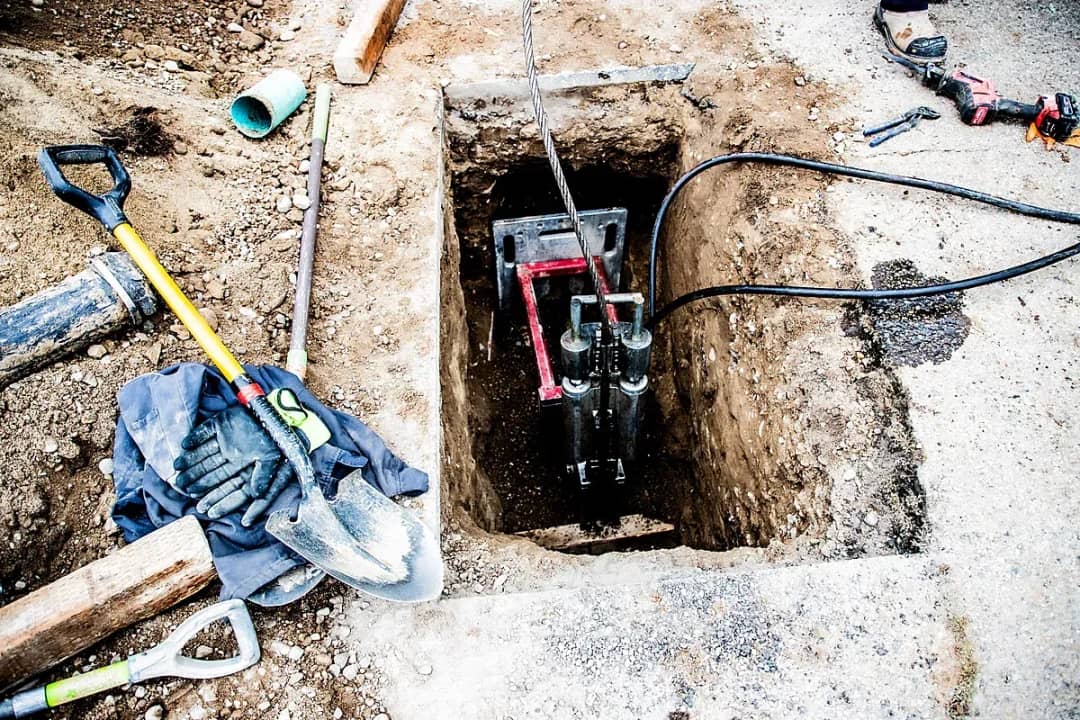
For a new or replacement system, the district performs an on-site evaluation of the property before any subsurface sewage disposal permit is issued. The part that catches people out: you are responsible for having a backhoe on site to excavate a ten-foot test hole at the time of that evaluation. The district looks at the soil profile in that hole and, from it, determines what kind of system your property actually qualifies for — which may not be the system you had in mind, and is not something any contractor can promise you in advance.
That sequence is why a full system or drain field replacement starts with a non-refundable permit fee rather than a price. The fee funds coordinating the evaluation with the health district. Once the district has determined what your ground supports, we can talk about the replacement and put a number in writing. Anyone who quotes you a replacement before that evaluation is quoting a system they have not been told they are allowed to install.
How pricing works here
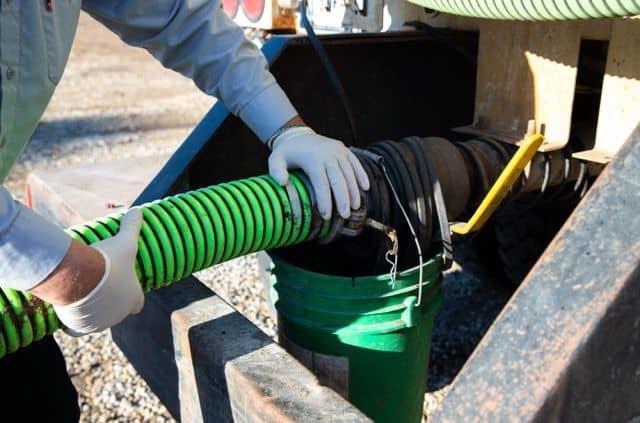
Septic tank pumping is $395 for 1,000 gallons — larger tanks and deep lids cost more — quoted in writing before we start, one truck, one access point, tank fully evacuated, most pump-outs finished in under an hour, same-day scheduling available.
Repair, inspection and drain field work are priced after an on-site look, and you get that number in writing before any work begins too. We do not quote those sight-unseen, and we are direct about why: the variables that move the number are things nobody can see from a phone call. Tank depth and whether the lid has been buried under years of landscaping. Access for a truck and hose. Whether the failure is a baffle that gets replaced in an afternoon or a field that has stopped accepting water. Whether the last pump-out was three years ago or fifteen. A number given before those are known is either padded to cover the unknown or too low to honor — and both of those end badly for you. We would rather look, then commit. That is the same reason we will not quote a price over the phone on the plumbing side either.
Full system and drain field replacement follows the permit sequence above: permit fee, health district determination, then a written price.
What happens when we come out
Tell us what the system is doing and where the property is. From there:
1. We locate and open the tank. On properties where the lid location is unknown, finding it is step one and sometimes the longest step.
2. We look at levels — where the liquid sits relative to the outlet is one of the fastest reads on whether the problem is the tank or the field.
3. We check the components that fail: baffles and tees, the lid and riser, and on pressurized systems the pump and float switch.
4. We pump if pumping is what the system needs, and we say so plainly if it is not.
5. We walk the drain field for surfacing, odor and vegetation differences.
6. You get told what we found in plain language, and a written number for anything beyond the pump-out before we do it.
Waste we pump is hauled off your property and discharged at a permitted treatment and disposal facility. It is not spread on the property and it does not go into a storm drain. That is a fair question to ask any septic company, and a straight answer is a reasonable thing to expect.
Septic or city sewer — how to tell what you have
If you pay a monthly sewer charge on your utility bill, you are on city sewer. If you do not, and there is no sewer charge line anywhere, you are almost certainly on a tank. Other tells: a lid or two lids in the yard, a clean-out riser, a rectangular depression in the lawn where the tank sits, or a mowing pattern where the grass over one strip of yard behaves differently than the rest.
It matters more than people think. On a septic system, chemical drain cleaners are hard on the bacteria the tank depends on to digest solids, so mechanical cleaning is the better call. And a backup on septic and a backup on city sewer send you to two different phone numbers.
Septic service by city
Idaho: Boise · Meridian · Nampa · Caldwell · Eagle · Star · Kuna · Middleton · Garden City · Hidden Springs · Mountain Home · Emmett · Marsing · Homedale · Parma · Wilder · Payette · Fruitland · Weiser
About American Septic & Sewer
American Septic & Sewer is an Idaho DBA of American Rooter & Drain (ABN 0006889161) — same ownership, its own brand and its own phone line at (208) 782-8269. Founder Joshua Jordan is a U.S. Marine Corps veteran, and the septic side runs on the rule the plumbing side was built on: look at it first, explain it in plain language, and put the number in writing before anyone starts.
Ready to get it handled? Call (208) 782-8269 or request service online.