
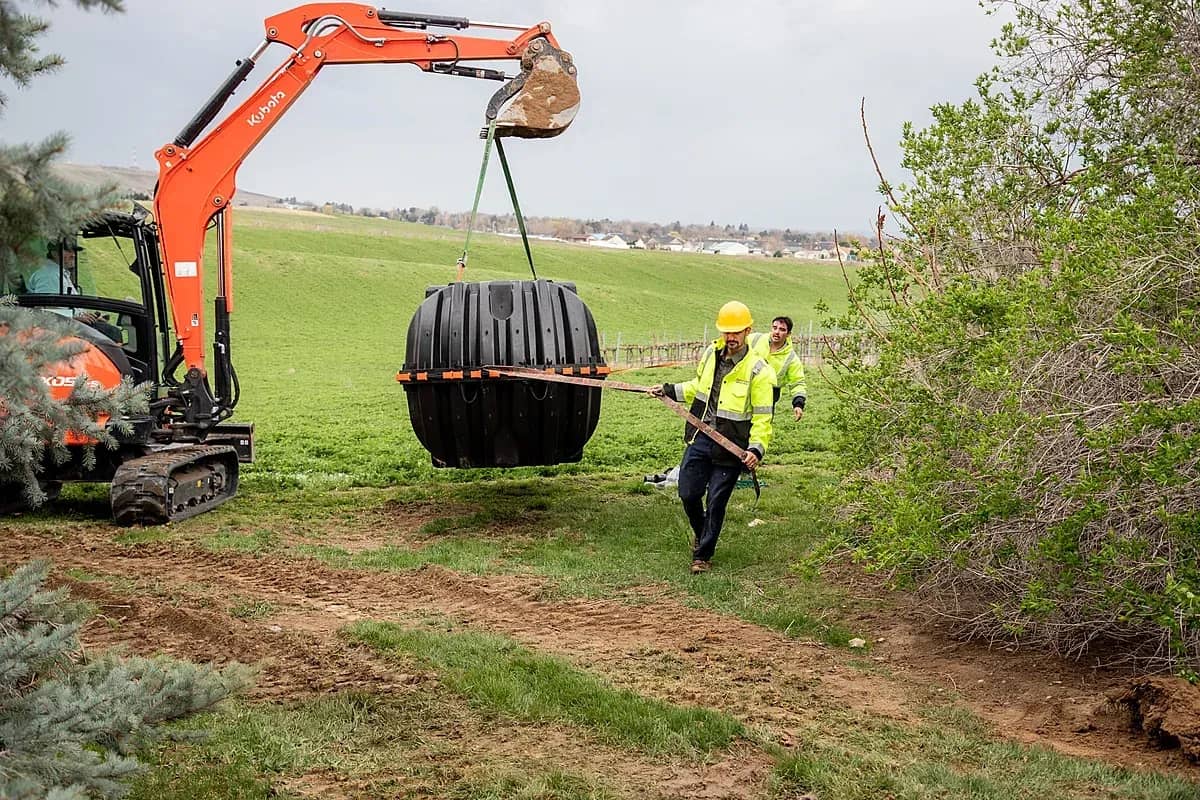
How does a septic tank installation actually work?
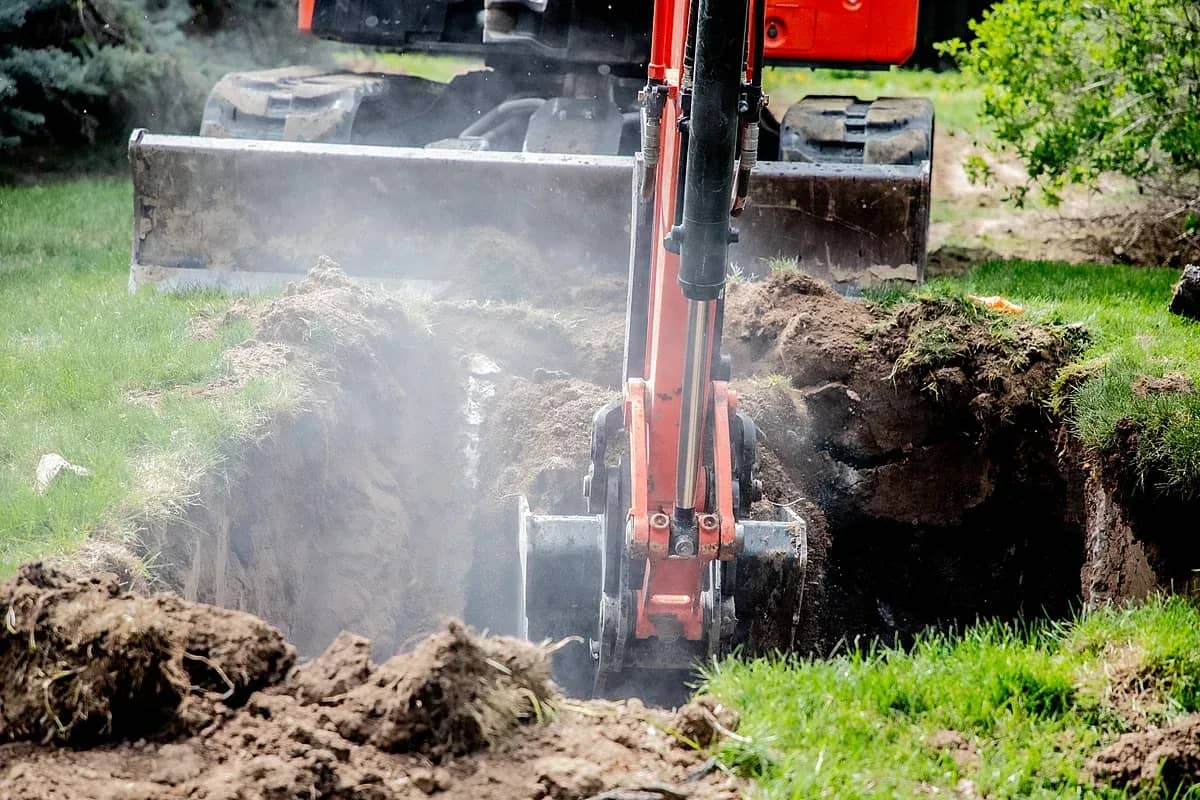
- Test holes and a read on your soil. A backhoe opens test pits on the lot so the soil profile can be read and logged — texture, structure, restrictive layers, and how deep the seasonal high water table sits. This decides whether the ground will accept effluent at all, and where a drain field can legally go. Nothing downstream can be decided before it, which is why we book test holes as their own scheduled visit rather than folding them into an install day.
- The written evaluation and the permit application. The logged profile becomes a written soil evaluation, and that document plus a proposed system design goes to the local health district. We prepare and submit the application and act as the point of contact through review.
- Health district review. This is the step that takes the longest, and the clock belongs entirely to them. The reviewer decides whether your lot supports a basic system or requires a more complex one, sets the required drain field size, and signs the permit. Excavation cannot legally start before that permit is issued.
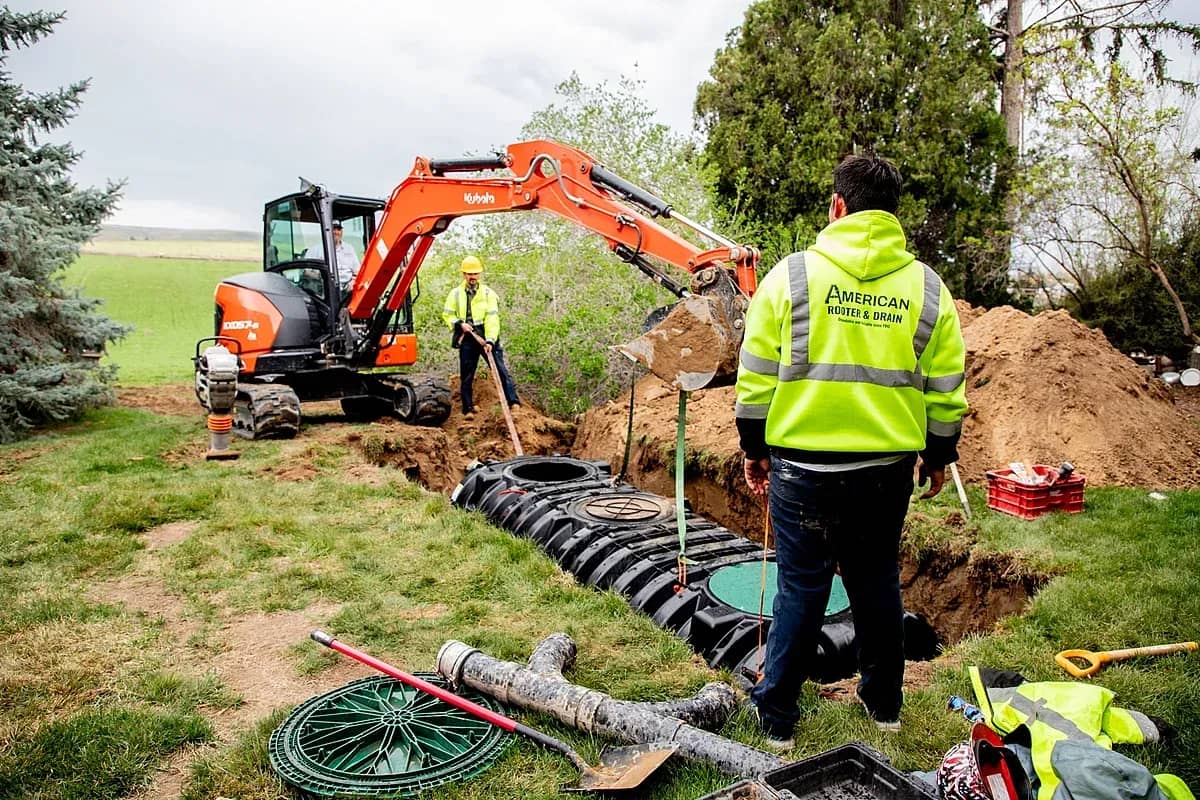
- Digging and setting the tank. With the permit in hand, we excavate, prepare and level the tank bed, and set the tank. Inlet and outlet elevations are the fussy part here — a tank set even slightly out of level will fail years earlier than it should — so this step gets measured far more than it gets dug.
- Building the drain field. Trenches, or the alternative design the permit calls for, get cut to the specified depth, bedded, and piped so effluent is distributed evenly across the whole field instead of loading one end of it.
- Inspection, then cover. The health district inspects the system open, before any backfill. Once it passes, we cover, grade, and restore the site. That inspection record is what proves the system was permitted and built to the approved design — it is the document that matters at resale.
How long does a new septic system take?
The digging is rarely what makes a septic install take as long as it does. Three other things do.
Permit review time. Every install waits on the health district. We can submit a complete, clean application quickly, and we do, but the review clock belongs to them. Anyone who promises you an installation date before the permit is issued is guessing.
The season. A soil evaluation done in April and one done in late August on the same lot can read differently, because the seasonal high water table is part of what gets logged, and irrigation across the valley moves groundwater around. Winter adds frozen ground and a shorter working window. Neither stops the job — both change the sequence.
Whether the old system has already failed. A planned replacement gets scheduled around permit review. An emergency replacement gets scheduled around a household that cannot use its plumbing, which usually means temporary measures while the permit runs its course. That is the single strongest argument for having an aging system evaluated before it quits.
Once the permit is issued and the system is defined, you get the schedule in writing before excavation starts, not after.
Do I need a soil test before a new septic system?
Yes, and it is the first thing that happens rather than the last. "Perc test" is the phrase most homeowners use, and it points at the right idea: can this ground move water. What is actually done in Idaho is a soil evaluation — pits opened with a machine, the exposed profile described by a qualified evaluator, and the results written up for the health district. It looks at soil texture and structure, depth to any restrictive layer such as hardpan or bedrock, and evidence of how high the water table gets seasonally.
Two things surprise people about it. First, it happens before design, not after, because the soil dictates the design rather than the other way around. Second, a lot that fails in one corner often passes in another — which is why the test should happen early enough in a build that the house, driveway and well can still be positioned around the answer, not squeezed in afterward.
What size septic tank will my house need?
Sizing is not a guess and it is not negotiable. It comes from household size — usually counted in bedrooms rather than people, because bedrooms are what the next owner will fill — combined with how much water your soil is allowed to take each day, which is exactly what the evaluation establishes. Then the setbacks apply: minimum distances from wells, property lines, foundations, irrigation ditches and surface water, plus a reserve area held aside for a future replacement drain field. On smaller or oddly shaped lots, the setbacks and the reserve area are frequently what constrains the design, not the soil.
What kind of septic system will my property need?
A conventional gravity system is the simplest build and the least expensive one, and where soil and depth allow it, that is what goes in. Where soil is tight clay, where usable soil is shallow over hardpan or gravel, or where the water table comes up seasonally, the approved design steps up — a pump that pushes measured amounts of water out across the whole field instead of letting gravity load one end of it, a mound built to create usable depth, or an advanced treatment unit that cleans the effluent further before it ever reaches the soil. Which of these you get is the health district's call, made from your soil evaluation. We build what the permit approves.
Concrete septic tank or plastic — which one should I get?
Both are legitimate, and the deciding factors are usually practical rather than philosophical. Concrete is heavy, durable, and stays put in wet ground, but setting one needs truck and boom access to the tank location — a real constraint on a tight lot, a steep driveway, or a site with overhead lines. A plastic tank, made of polyethylene, is light enough to place where a concrete tank cannot reach, but it depends on careful bedding and backfill, and where the water table comes up it has to be handled with buoyancy in mind. The approved design and the access to your tank location decide it between them, and we will tell you which one your site is pointing at when we walk it.
What is a drain field or leach field, and how do I protect it?
Drain field and leach field are two names for the same thing. The tank separates solids; the field is where treatment actually happens, and it is the expensive half of the system to replace, so it is worth knowing where yours is and keeping it protected. Do not drive or park on it, do not build a shed or pour a slab over it, keep trees and deep-rooted shrubs well off it, and keep livestock and heavy irrigation off the surface. Compaction and saturation are what kill leach lines early — far more often than age alone. If you already have a system and the field is the part that is failing, drain field service and replacement is its own job and does not always require a new tank.
How do I know if my septic system needs replacing?
Frequent backups, drains that are consistently slow throughout the house, soggy ground or unusually green grass over the field, or a sewage odor in the yard all point at a system near the end of its life rather than one isolated fix. An older tank showing those signs is worth having inspected before it quits outright.
We are not saying that to sell you something sooner. A replacement still has to go through the soil test and permit review, and that clock runs the same whether or not your plumbing currently works. Some failures are genuinely repairable, and a septic repair visit is the right first call when the problem is a single component. But when the field itself is done, a planned septic tank replacement is a fundamentally easier job than an emergency one.
How much does a new septic system cost?
Septic system installation and replacement work differently from a repair or a pumping visit, and we won't pretend otherwise: because the system your property needs — a basic system or a more complex one — is decided by the local Health District's review of your soil evaluation, not by us, we can't hand you a single price on day one the way we can for most other work. American Rooter & Drain charges a non-refundable permit and documentation fee up front, which funds coordinating your permit with the Health District. The Health District reviews your site and soil evaluation and determines whether your property needs a basic system or a more complex one — those are different builds at different prices, and that call is theirs, not ours. Once we know what the Health District will allow, we come back to you, walk through the system your property actually needs, and give you the price in writing before any work begins.
If you are still in the budgeting stage rather than ready to dig, what a new septic system costs in Idaho breaks down which variables move the number and why.
Where do you install septic systems?
Our completed septic installations cluster where septic is the norm rather than the exception: Weiser, Payette, Nampa, Caldwell, Fruitland, Middleton, Parma, Meridian, Mountain Home, New Plymouth, Wilder, Eagle, Homedale, Kuna, Marsing and Melba, and across the Snake River into Ontario, Nyssa and Vale, Oregon.
Inside Boise city limits most properties are on municipal sewer, so a brand-new system is the exception there rather than the rule — but the exception is real. We have built septic systems inside Boise proper, on west-side lots the sewer never reached. If you are searching for septic installation in Boise, the first thing worth confirming is whether the property is on a system at all. And if you are building on a lot with no sewer main to tie into, septic is not an option you are choosing, it is infrastructure you are budgeting for, and the soil test belongs at the front of your site plan.
We install and replace systems for both residential and commercial properties, working out of our shop on Commercial Way in Caldwell, and we have served the greater Treasure Valley since 1945.
How often does a septic tank need pumping?
A correctly sized system that gets pumped on schedule runs for decades without drama. Keep septic pumping on a regular schedule — $395 septic pump-out of 1,000 gallons — keep the drain field clear of traffic and structures, and keep the as-built drawing and inspection paperwork somewhere you can find them at resale. What runs the long-term cost up is almost always neglect rather than the system itself: skipped pump-outs, wipes and grease going down the drain, or a truck parked over the leach lines.
How do I get started?
Start with a visit. We come out, look at the property, tell you what the next step is and what it costs before you commit to anything, and take the permit coordination from there. Call (208) 366-5771 — a real person answers, no phone tree and no call center. Family-owned and veteran-owned, licensed and insured for residential and commercial septic tank installation, with septic service across the Treasure Valley.