Well Pump Services We Handle
- Well pump repair for submersible and jet (above-ground) pumps
- Well pump replacement when a unit is beyond repair
- Pressure switch and pressure tank service
- Diagnosis of pressure, flow, and water quality issues tied to the pump
- Electrical connection checks for pump circuits
How a Well Pump Works
A well pump lifts water from underground up through the well casing and into your home's plumbing. Submersible pumps sit down in the water itself, ideal for deeper wells, while jet pumps stay above ground and pull water up through suction — typically used on shallower wells. Which one your property has was decided by well depth at the time it was drilled, and that mostly determines how it gets repaired.
Signs Your Well Pump Needs Repair
- Irregular or inconsistent water pressure throughout the house
- Strange noises coming from the pump or pressure tank
- Discolored or cloudy water
- Noticeably reduced water flow
- A pump that keeps running without actually delivering water — this one especially shouldn't wait
Submersible vs. Jet Pumps
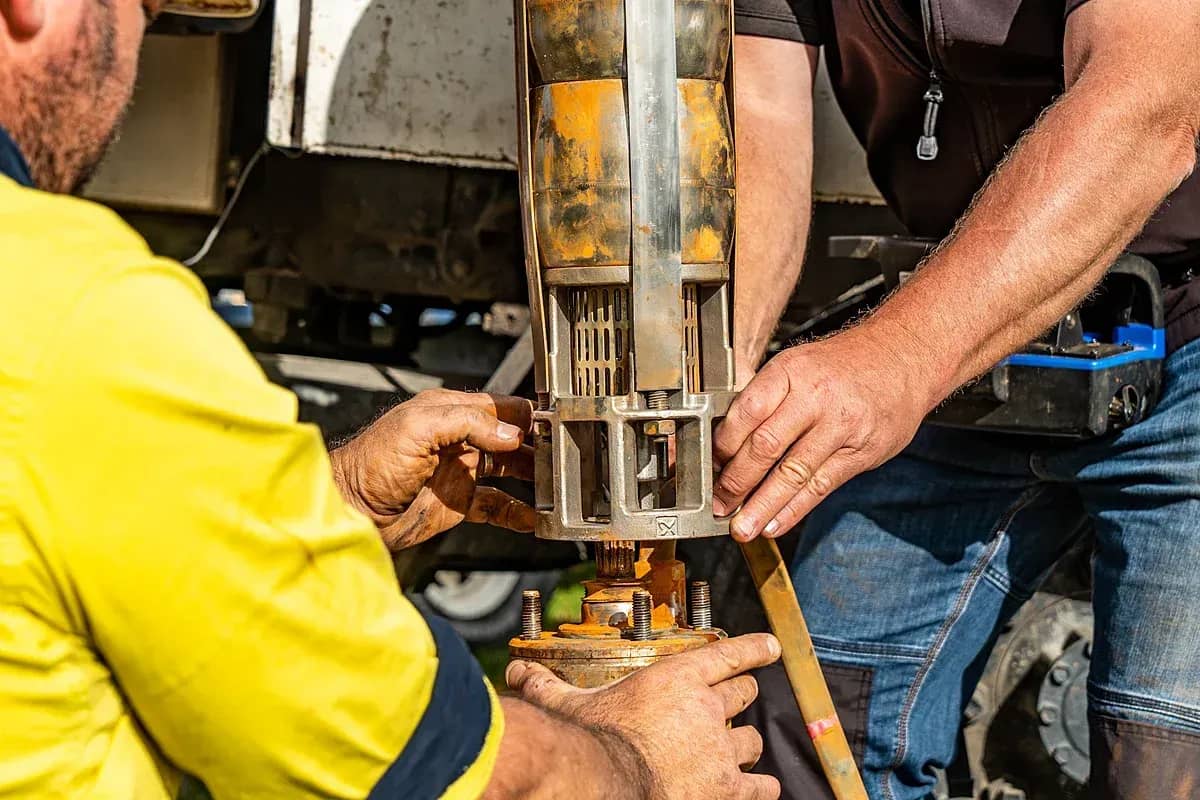
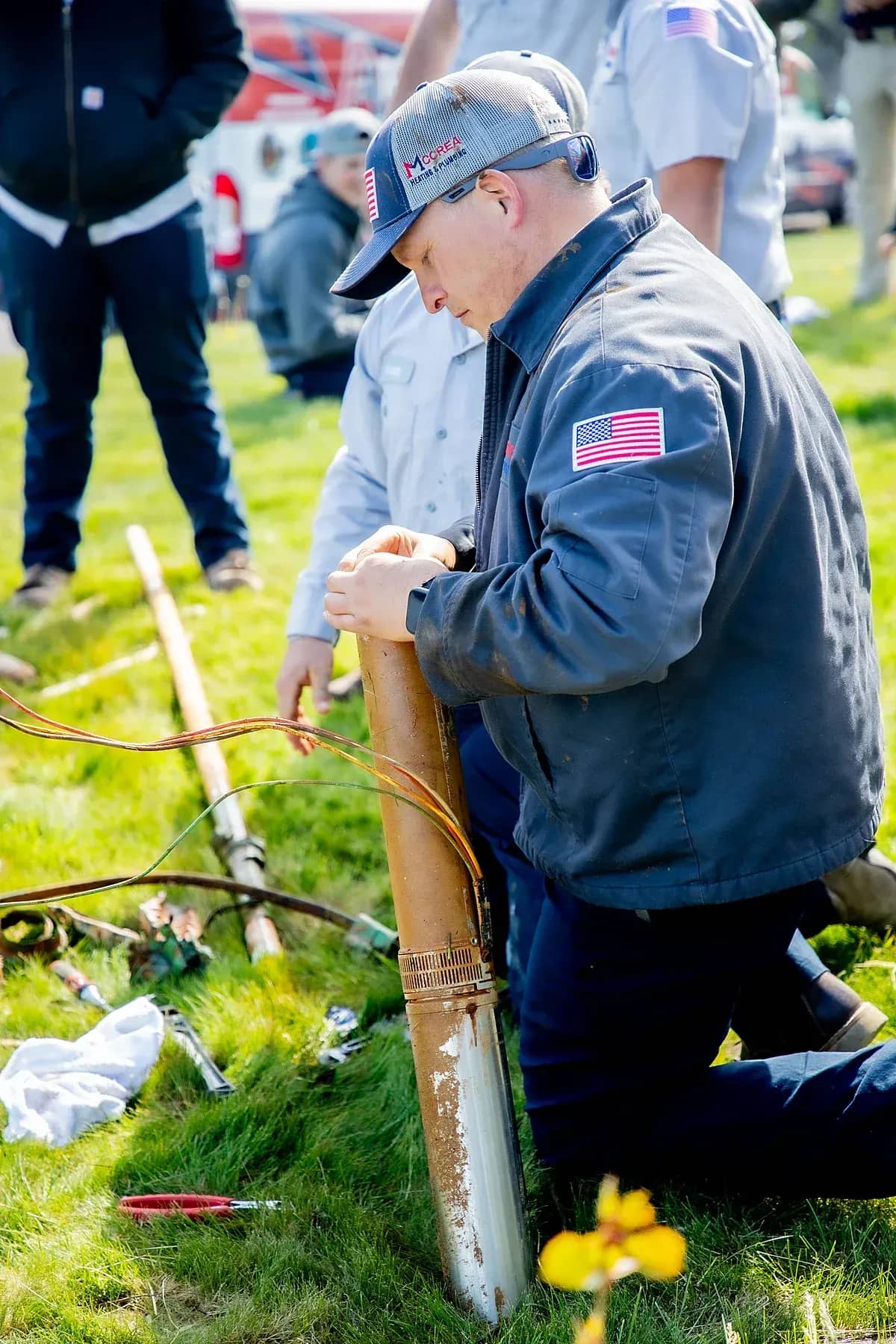
- Submersible pumps sit underwater, which cuts energy loss during transfer and keeps them quiet since the water muffles noise and vibration. Being submerged also protects them from weather, impact, and other external damage, and they're less prone to cavitation than above-ground pumps. They're the standard for deeper wells and can be retrieved for service without disassembling the whole system.
- Jet (non-submersible) pumps sit above ground, which makes them easier to access for routine maintenance and repairs, and they typically cost less upfront. They're most common on shallower wells where the extra suction lift a jet pump has to work against isn't a problem.
Well Water Quality and the Pump
Discolored, cloudy, or sediment-heavy water isn't always the pump's fault, but it's worth ruling the pump out first — a failing pump or one pulling from too close to the bottom of the well can stir up sediment that a healthy pump wouldn't. If the water quality issue persists after the pump and pressure system check out fine, that points toward the well itself or the water table rather than the equipment, and it's worth a separate water quality test to know what you're dealing with.
When to Repair vs. Replace
A pump with an isolated issue — a bad pressure switch, a failing capacitor — is usually a straightforward repair. A unit that's needed repeat service calls, or one that's simply old and losing efficiency, usually makes more sense to replace than to keep patching. We test the pump and pressure tank together before recommending either one, since a pressure tank problem can look exactly like a pump problem.
Keeping a Well Pump Running Longer
A well pump lasts longer with a few basic habits: checking the pressure gauge periodically so a slow decline doesn't go unnoticed, keeping electrical connections secure and free of corrosion, and having the system looked at when anything seems off rather than waiting for a full failure. A pressure tank in poor condition puts extra strain on the pump itself, cycling it on and off more than it should, so we check both together rather than assuming the pump is always the problem.
Choosing a Well Pump Service Provider
Experience with well systems specifically matters here — well pump work isn't the same as general plumbing, and a technician unfamiliar with pressure switches, pressure tanks, and well casings can misdiagnose a straightforward problem. Ask about licensing, insurance, and warranty coverage on both labor and the pump itself before scheduling, and ask whether they service both submersible and jet pumps, since not every company handles both types.
Well Pump Installation Basics
Whether it's a new pump on an existing well or a replacement, installation follows the same basic sequence: the pump is sized to the well's depth and the property's water needs, secured in place, wired to the power source, and connected into the existing plumbing and pressure tank. Getting the sizing right matters — an undersized pump struggles to keep up with household demand, while an oversized one short-cycles and wears out faster than it should. We size the replacement to the well and the house, not just to whatever's already down there.
Electrical and Pressure Tank Considerations
A well pump doesn't work in isolation — the pressure tank and the pressure switch both have to be functioning correctly for the pump to run the way it's supposed to. A waterlogged pressure tank forces the pump to cycle on and off far more than normal, which looks like a pump problem but isn't one. Electrical connections at the pump circuit also corrode over time, especially in older setups, and a loose or corroded connection can cause the same symptoms as a failing pump. We check the whole system, not just the part that's easiest to swap.
Treasure Valley Well Pump Service
We repair and replace well pumps across the Treasure Valley and surrounding rural communities from our shop on Commercial Way in Caldwell. American Rooter & Drain does not dig new wells — we service the pump and pressure system once a well is already in place.
Call (208) 366-5771 and a real person answers — no phone tree, no call center. Family-owned, veteran-owned, and Treasure Valley-based since day one.
Frequently asked questions
What is a well pump and how does it work?
A well pump is a mechanical device that extracts water from a water well. Once a well is drilled, the pump is installed to lift water from the ground to the surface, creating a vacuum that pulls water up through the well casing and generating the pressure that pushes water through the plumbing system into the home or an irrigation system.
What types of well pumps are there?
The two most common types are submersible pumps, which sit underwater and are used for deep wells, and jet pumps, which are typically used for shallower wells. The right choice depends on the depth of the well and the specific water needs of the property, so it's worth consulting a professional before installation.
What are the signs my well pump needs repair?
Irregular or inconsistent water pressure, strange noises coming from the pump, and discolored water are common early signs of a malfunctioning pump. A reduced flow of water, or a pump that keeps running without actually delivering water, are also clear indicators that the system needs service before the problem gets worse.
What are the advantages of submersible well pumps?
Submersible pumps are efficient because they're submerged directly in the water they're pumping, which minimizes energy loss, and their compact design suits situations with limited space. Being underwater also makes them quieter, less prone to cavitation, and protected from external damage like weather, vandalism, or accidental impact, while their design keeps maintenance simple since they can be retrieved and inspected without full disassembly.
Does American Rooter & Drain dig new wells?
No. American Rooter & Drain repairs and replaces well pumps and related equipment but does not dig wells.