American Rooter & Drain has been serving the greater Treasure Valley since 1945. We're fully insured, licensed, and bonded, and every repair or install comes with a workmanship guarantee. For a genuine after-hours crisis, our emergency plumbing service explains exactly how a middle-of-the-night call gets handled. This page covers the plumbing issues we see most often in Boise, how pricing and diagnosis actually work, comparisons homeowners genuinely ask us about, and answers to the questions Boise residents call us with most.
What we handle in Boise
- Drain cleaning in Boise, clogged drain repair in Boise and hydro jetting in Boise
- Sewer camera inspection in Boise
- Sewer line repair in Boise, trenchless replacement and pipe bursting in Boise
- Water line repair in Boise and water heater service
- Septic pumping in Boise, septic inspection in Boise and drain field service
- Gas line installation in Boise, faucet installation in Boise, plumbing repair in Boise and plumbing inspection in Boise
- Emergency plumber service in Boise, day or night
Drain and sewer service in Boise
For the specific service pages homeowners search for most, we cover drain cleaning in Boise, sewer line repair in Boise, clogged drain repair in Boise, and 24/7 emergency plumbing in Boise.
What a Boise plumber actually handles
"Plumber" covers a wide range of work, and Boise homeowners call us for all of it:
- Leak detection and pipe repair — copper, galvanized, and PEX
- Drain cleaning and clogged drain repair
- Water heater diagnosis, repair, and replacement — tank and tankless
- Water line repair and replacement
- Sewer line inspection, repair, and trenchless replacement
- Fixture installation and repair — faucets, toilets, sinks, tubs
- Gas line installation for appliances, fireplaces, and outdoor features
- Water softener and filtration installation
- Water pressure testing and adjustment
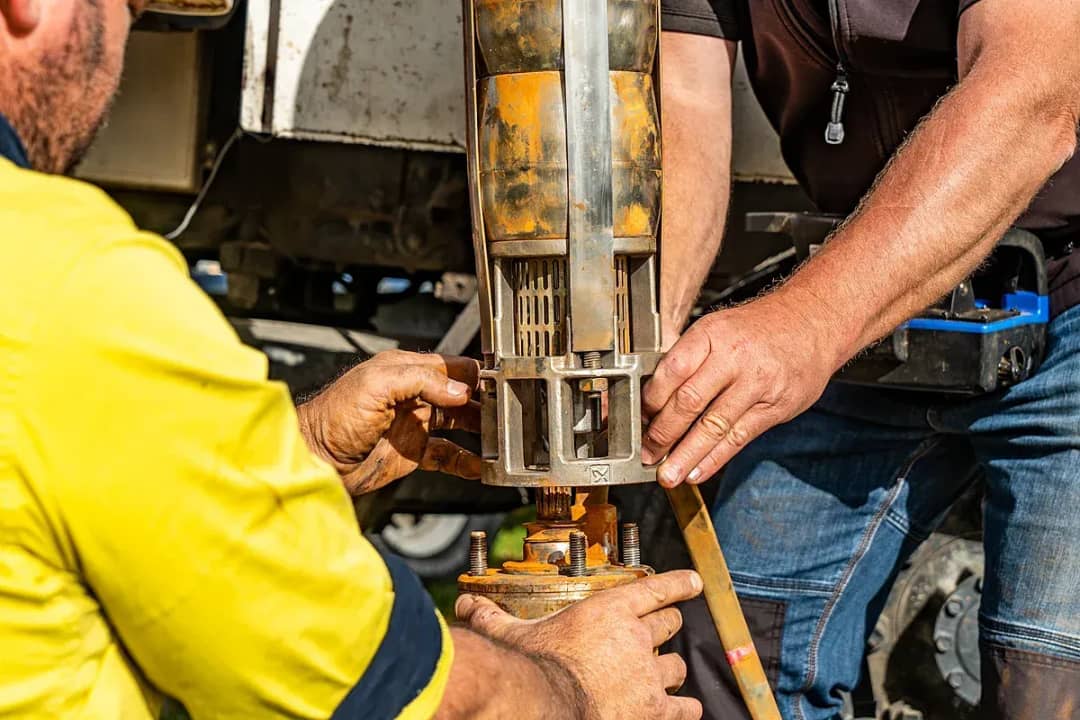
- Well pump service
- Septic tank installation, pumping, and leach field inspection for properties outside city sewer
We also handle heating, air conditioning, indoor air quality, and electrical work — panel upgrades, circuit repairs, lighting installs, and outlet replacements — if a Boise plumbing call turns out to involve more than plumbing.
Boise's housing stock is genuinely different block to block, and that changes the job
A plumber working in Boise deals with a wider spread of home ages and construction styles than almost anywhere else in the Treasure Valley, and that range directly shapes what a service call looks like.
North End and East End. These are Boise's oldest, most established neighborhoods, full of homes built in the early-to-mid 20th century. A lot of these houses still have original cast-iron drain lines and galvanized steel supply lines — both materials that were standard for their era and both prone to predictable problems today. Cast iron corrodes from the inside, gradually narrowing and roughening the interior wall until it catches debris and slows drainage; galvanized supply pipe corrodes similarly, and the buildup inside it is a common, often-overlooked cause of chronically low water pressure that homeowners assume is just "how the house is." When we get a call from a North End or East End address, we come prepared for the possibility that the real fix involves more than the fixture someone's actually complaining about.
Boise Bench and the older mid-city neighborhoods. A lot of Bench homes date to the mid-20th century, splitting the difference between North End-era materials and more modern construction. Expect a mix — some original galvanized or early copper still in place, some updated over the decades by prior owners. It's the neighborhood where a plumbing inspection genuinely earns its cost, since you can't assume the plumbing's age just from the house's build date the way you sometimes can elsewhere.
Foothills, Harris Ranch, and newer construction toward the edges of town. Newer Boise builds are almost universally on PEX supply lines and PVC drain lines, both far more resistant to the corrosion issues that plague older materials. The problems here tend to run different: builder-grade fixtures that weren't built for daily long-term use failing early, tankless water heater installs that weren't sized quite right for the household, and the occasional construction debris left in a drain line from the build itself.
Downtown and river-corridor infill. Boise's ongoing downtown growth means a lot of plumbing work tied to renovations, additions, and conversions of older buildings — which comes with its own complications, since a plumber is often tying new work into an existing system that wasn't designed with modern fixture counts or water pressure demands in mind.
Comparisons Boise homeowners actually ask us about
Repair vs. replace, on a water heater or a major fixture. As a rule of thumb: if a unit or fixture is under roughly half its expected service life and the failure is a component (a thermostat, a valve, a cartridge) rather than the vessel or body itself, repair is usually the smarter money. Past that point, or with a failure in the tank or body itself, replacement tends to be the better long-term value even though the invoice is bigger today. We'll walk through the actual numbers for your specific situation rather than defaulting to whichever is more profitable for us.
Cabling vs. hydro-jetting for a slow or clogged drain. Cabling — a flexible cable fed through the line to break through or hook a blockage — is fast and less expensive, and it's the right call for a straightforward clog. Hydro-jetting uses high-pressure water to scour the full interior of the pipe clean, not just punch through the immediate blockage, and it's the better call for older North End and East End lines with years of grease and mineral buildup, or for any line with a history of repeat clogs. We diagnose before quoting either one rather than defaulting to whichever costs more.
Tank vs. tankless water heaters. A tank stores 30-50 gallons and keeps it heated continuously — simpler, less expensive upfront, but limited by tank capacity when demand spikes. A tankless unit heats water on demand with no storage, which means effectively continuous hot water as long as it isn't asked to serve more fixtures at once than its flow rate supports; tankless units also last longer on average (commonly 15-20 years versus 8-12 for a tank) because there's no standing water accelerating corrosion, but the upfront cost is higher and installation sometimes requires upsized gas or electrical service. Larger households running multiple hot-water fixtures simultaneously tend to see the most benefit from switching; smaller households with straightforward usage patterns often do just as well with a tank.
DIY drain cleaning vs. calling a professional. Baking soda and vinegar are fine for minor odor control and very light film buildup but won't touch a real clog or root intrusion. Chemical drain cleaners can clear a mild, recent clog close to the drain opening but are caustic — hard on older galvanized and cast-iron pipe common in North End and East End homes, and largely ineffective on anything beyond the first few feet of line. A hand auger handles a simple hair clog in a sink or shower drain but has limited reach and won't diagnose a deeper problem. For anything with a real history — repeat clogs, multiple slow drains at once, or an older line — professional cabling or jetting, ideally with a camera to confirm what's actually happening inside the pipe, gets you an actual fix instead of a temporary one.
National chain vs. a local, licensed plumber. Both can do quality work, but a locally based crew that works Boise's specific mix of century-old and brand-new housing stock day in and day out tends to diagnose faster, because they're not seeing an unfamiliar situation for the first time. It's also worth confirming any plumber you hire is actually licensed and insured — ask to see the license number, and don't be shy about it. Ours is Plumbing License PLB-C-13057.
Seasonal plumbing issues we see across Boise
Boise's four-season climate means plumbing problems here follow a predictable pattern year to year, and knowing what's coming can save you an emergency call.
Winter freeze risk. Boise doesn't see the deep, sustained freezes of a true northern climate, but it gets enough hard cold snaps to catch exposed or poorly insulated pipe off guard — especially in older North End and East End homes where a supply line might run through an uninsulated crawlspace or an exterior wall that wasn't built to modern insulation standards. Exterior hose bibs and any pipe running through an unheated garage are the most common freeze points we see. A pipe that freezes and cracks often doesn't show the damage until it thaws, so a sudden interior leak in a cold snap's aftermath is a pattern we watch for every winter.
Spring thaw and irrigation start-up. As irrigation systems and outdoor spigots get turned back on for the season, we see a spike in calls related to fittings and valves that didn't survive winter well — a cracked backflow preventer or a hose bib that was left connected over the freeze is a common culprit.
Summer demand spikes. Higher household water use in summer — more showers, more laundry, sprinkler systems running — puts more strain on aging water heaters and can expose a marginal water pressure issue that wasn't noticeable during lower-demand months.
Fall leaf drop and root activity. In the tree-lined North End and other mature-canopy neighborhoods, fall is when we see the most drain-line calls tied to root intrusion, as decomposing leaf matter adds to whatever roots have already worked into aging clay or cast-iron joints over the year.
How pricing factors actually break down
Beyond the headline number, it helps to understand what actually drives a plumbing quote up or down in Boise. Access matters — a fixture behind an easily removable panel costs less to reach than one requiring us to cut into a wall or ceiling. Pipe material matters — working with older galvanized or cast-iron sometimes means additional care or adapter fittings that PEX or PVC wouldn't require. Diagnosis complexity matters — a visible leak with an obvious source prices differently than an intermittent problem that requires a pressure test or camera inspection to pin down. Permit requirements matter on larger jobs — anything involving new gas line runs or a full sewer line replacement requires a permit and inspection through the City of Boise and Ada County, which adds both a fee and a scheduling step that a simple repair doesn't need. We walk through whichever of these applies to your specific job as part of the quote, rather than handing you a number with no explanation behind it.
Is it a septic system or city sewer? It matters more than people think in Boise
Most of Boise sits on city sewer, but that's not universal — foothills estates, larger-lot North End and East End properties, and pockets out toward the Bench still run on private septic, some on tanks that have been in the ground since before the surrounding neighborhood grew up around them. This matters for more than just septic-specific service calls: it changes what's safe to put down a drain (chemical drain cleaners are hard on the bacteria a septic tank needs to function, so mechanical cleaning is the better call if you're on a tank), and it changes who you call for a sewer backup versus a septic system backup. If you're not sure which one your Boise property has, we'll help you figure that out before recommending anything.
Signs it's time to call rather than wait
- A drain that's noticeably slower than it used to be, even without a full stoppage — often the first sign that clogged drain repair will clear it before it turns into a full backup
- Water pressure that's dropped gradually over months, which often points to corroded galvanized supply pipe rather than a single fixture issue
- Any rust-colored water from the hot tap only, which usually means the water heater tank is corroding internally
- Gurgling from a fixture when another one drains, a sign of a trapped air pocket behind a partial blockage
- A spike in your water bill with no obvious explanation, which often means a hidden leak
- Multiple slow drains at once, which usually means a main line issue rather than an isolated fixture problem
- Any smell of gas near an appliance or line — leave the area and call immediately, don't wait to see if it's serious
Seeing any of these at your Boise property? Call (208) 366-5771 and we'll get someone out to take a real look.
How pricing actually works
Every job gets a flat-rate price in writing before any work beyond diagnosis begins — no hourly guessing, no surprise add-ons once we're already inside a wall. For a straightforward call like clearing a clog or repairing a running toilet, that's usually a quick, on-the-spot number once we've had a look. For anything involving diagnosis — a slow leak with no obvious source, a water heater that's intermittently failing, a sewer line with a history of backups — we'll often recommend a camera inspection or pressure test first, because pricing a repair before actually confirming the cause means either overcharging to cover the unknown or underquoting and having to renegotiate mid-job. Neither is fair to you, so we diagnose first.
How often should a Boise home get a plumbing inspection?
There's no universal answer, but a few patterns hold up across the calls we run. A newer Foothills or Harris Ranch build on PEX and PVC can typically go several years between full inspections if there's no history of issues — the materials are more forgiving and less prone to age-related failure. A North End or East End home on original cast iron and galvanized pipe benefits from a closer look every year or two, especially ahead of a Boise winter, since corrosion and freeze risk compound each other in older, less-insulated construction. Anyone buying a home in Boise, regardless of neighborhood, should treat a plumbing inspection as standard due diligence before closing — the cost of an inspection is small compared to discovering a slab leak or a failing sewer lateral after you've already moved in.
Water softeners and well pumps in Boise
Not every plumbing call is about a leak or a clog. A meaningful number of Boise homeowners deal with water quality and supply issues that fall outside typical repair work. Water softener and filtration systems address mineral content and taste/odor issues in tap water — worth considering if you're noticing scale buildup on fixtures, spotting on dishes, or water that just doesn't taste right, and something we can install and size correctly for your household's actual usage rather than a generic unit. Well pumps come up for the smaller number of Boise-area properties, particularly on the outskirts and in the foothills, that rely on a private well rather than city water. A failing well pump shows up as reduced pressure, a pump that short-cycles on and off, or water that runs sandy or discolored, and it's a job that benefits from being diagnosed correctly the first time since a wrong guess means pulling the pump twice.
What to expect when we come out
We start by asking what you've noticed and when it started — that history narrows things down before a technician ever picks up a tool. From there we inspect the actual issue, explain what we found in plain language, and give you a written price before doing anything beyond that initial diagnosis. Once you approve the work, we get to it, keep the work area clean, and test everything before calling the job finished. If the issue turns out to be bigger than what you called about — a corroded supply line behind a leaking fixture, for instance — we'll show you what we found and get your sign-off before going further, rather than assuming you want additional work done.
Expert Plumber & HVAC Contractor Near Boise
When searching for a plumber in Boise, you want more than just someone who can fix a leaky faucet. A Boise plumber stands out for their experience, professionalism, and commitment to providing high-quality services to homeowners and businesses alike. American Rooter & Drain has been helping Treasure Valley residents since 1945. We're known for certified expert technicians equipped to handle complex plumbing and HVAC problems, from basic repairs to large-scale installations, and we lead with upfront pricing so you know exactly what to expect before any work begins. That transparency is what builds trust — you'll never face hidden fees or surprise charges once the job is done.
Office nearest Boise: American Rooter & Drain, 2419 W State St Ste 102D, Boise, ID 83702, Phone: (208) 366-5771.
We handle electrical work too
At American Rooter & Drain, we don't just handle plumbing and HVAC — we're also your local option for safe, reliable electrical work. From panel upgrades and circuit repairs to lighting installations and outlet replacements, our licensed electricians provide the same quality of workmanship on the electrical side that we do on plumbing. Whether you're remodeling, troubleshooting a power issue, or improving your property's efficiency, every job meets the same safety standards and comes with the same upfront pricing.
About Boise
Boise, Idaho, the state capital and largest city, sits along the Boise River in the southwestern part of the state. Known as the "City of Trees," Boise is renowned for its scenic surroundings and abundant outdoor activities, nestled at the foothills of the Rocky Mountains with ample opportunity for hiking, biking, and exploring in the Boise Foothills. Founded as a military fort during the Gold Rush in the mid-19th century, Boise has evolved into a thriving urban hub with a mix of modern amenities and a deep connection to the outdoors.
With a population of over 230,000, Boise is part of the larger Treasure Valley metropolitan area, which includes surrounding cities like Meridian and Nampa. The economy is diverse, driven by a growing tech sector, healthcare services, and agriculture — major employers include Micron Technology and Hewlett-Packard. Downtown offers a mix of dining, shopping, and cultural landmarks like the Boise Art Museum and the historic Old Idaho Penitentiary, and the Basque Block highlights one of the largest Basque communities in the U.S. Outdoor enthusiasts use the Boise River Greenbelt, a 25-mile path for walking, biking, and wildlife observation, and in winter, locals ski at Bogus Basin just outside the city. Home to Boise State University, the city has a lively college-town atmosphere alongside rapid recent growth that's drawn new residents while the city has largely kept its welcoming, small-town character.
Neighborhoods we serve in Boise
North End, Southeast Boise, Barber Valley, Highlands, Downtown, South Boise Village, Warm Springs Mesa, Boise Heights, Boise Bench, Collister, West Bench, Veterans Park, Harrison Boulevard, Northwest Boise City, West Boise, Winstead Park, Quail Ridge, Depot Bench, Stewart Gulch, and West Cloverdale.
The American Rooter & Drain promise
- Licensed, bonded, and insured on every job — Plumbing License PLB-C-13057
- Written flat-rate pricing before we start, so the number you approve is the number you pay
- Same-day scheduling when possible across Boise, not just the neighborhoods closest to our shop
- A workmanship guarantee on every repair and install
- Honest diagnosis — if a fixture just needs a repair, we're not going to sell you a replacement
Recent work in Boise
From early July through early October 2026, our crews completed 299 service calls in Boise, including 26 drain clearings and 18 sewer camera inspections. The calls we take most often here are clogged drains, toilets and sinks, pipe and outdoor water leaks, and camera inspections of sewer lines. If you need rooter service or a plumber to snake a drain in Boise, call (208) 366-5771, days, nights, weekends and holidays.
Clogged drain, toilet, sink or shower in Boise
Need a plumber for a clogged drain in Boise? Which fixture is backed up tells us where to start. A clogged toilet that will not clear with a plunger is usually blocked at the fixture itself. A clogged kitchen or bathroom sink or a clogged shower or tub drain is a single branch line, the kind of job our $59 drain cleaning special covers. When more than one fixture backs up at the same time, the blockage is in the main line, and that starts with clogged drain repair in Boise. Call (208) 366-5771, days, nights, weekends and holidays.
Ready to schedule?
Whether it's a North End home on original cast iron or a brand-new build in the Foothills, call (208) 366-5771 for a technician who diagnoses before quoting and puts the price in writing before any work starts.