Shower drain: hair at the strainer, soap in the trap
A shower drain is a 2 inch line with a trap sitting directly under the strainer. Long hair goes through the strainer slots, hangs up on the crossbars underneath, and makes a net. Everything after that sticks to the net. Treasure Valley water is hard, and the calcium and magnesium in it turn bar soap into a grey curd that does not rinse away. Conditioner and body oil coat the hair and glue it together. The result is a rope of hair and curd hanging in the trap, and it grows until the water has nowhere to go.
That is why a shower slows down for weeks before it stops. The first sign is water over your feet at the end of a long shower. The second is a ring of scum on the pan after it drains.
This one you can often clear yourself. Take out the screws in the strainer, or pry it up if it snaps in. Pull what you can reach with needle-nose pliers, then run a plastic barbed drain strip down the trap and draw it back out slowly. A wet/dry shop vacuum on the drain opening pulls the rest. If the strainer comes off clean and the trap is clear but the pan still fills, the blockage is past the trap, in the branch line under the floor, and hand tools are done.
Bathtub drain: the stopper is the snag
A tub drains through a 1-1/2 inch line, and the stopper hardware sits right in the flow path. Which stopper you have decides where the clog builds.
- Trip lever on the overflow plate. The lever lifts a brass plunger inside the overflow tube. Hair wraps around that plunger and the linkage rod, out of sight, behind the wall of the tub.
- Pop-up with a rocker arm. The lever moves a rod that tips a rocker under the stopper. Hair collects on the rocker and the spring.
- Toe-touch or lift-and-turn. The stopper threads into a crossbar in the drain. Hair wraps the crossbar and the post.
For the first two, the fix starts at the overflow plate. Take out the two screws, pull the plate, and draw the whole linkage up and out. On a tub that has been slow for a few months, most of the clog comes out wrapped around it.
The overflow is also the way in for a cable. Below the drain opening the pipe turns a hard ninety into the drain shoe, and a cable pushed down the drain itself kinks there or chews up the fitting. Through the overflow the cable drops straight down the tube and into the trap. That is how we run it, and it is why a hand snake fed down the drain so often goes nowhere.
Plunging a tub only works if you block the overflow. Otherwise every stroke pushes air out the overflow instead of down the line. Hold a wet rag tight over the overflow plate, keep a couple of inches of water over the plunger cup, and then plunge.
Skip the chemical opener in a tub or shower
Store drain openers are caustic lye or sulfuric acid, and they work by generating heat. In a blocked tub the chemical does not reach the clog and move on. It sits in the trap, hot, against a chrome-plated brass drain, rubber gaskets and, in older homes, a thin brass waste-and-overflow that is already tired. It can also dull the finish on an acrylic or fiberglass tub or pan.
Then there is the part people do not think about. If it does not work, you now have a tub of standing caustic water, and the next person to step in or reach for the stopper is you. A cable run through it slings it. If you poured something in, tell us when you call. No lecture. It changes the protection we bring, and we flush the trap first. Never follow one product with another, because an acid opener on top of a caustic one reacts.
How we clear it, and how long it takes
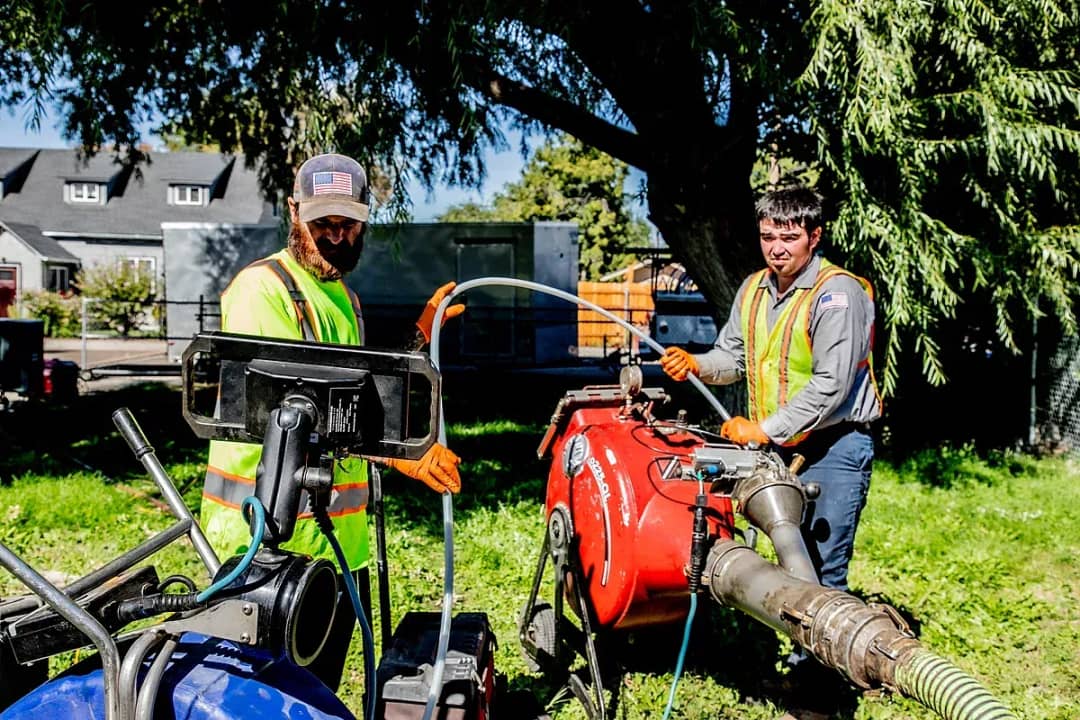
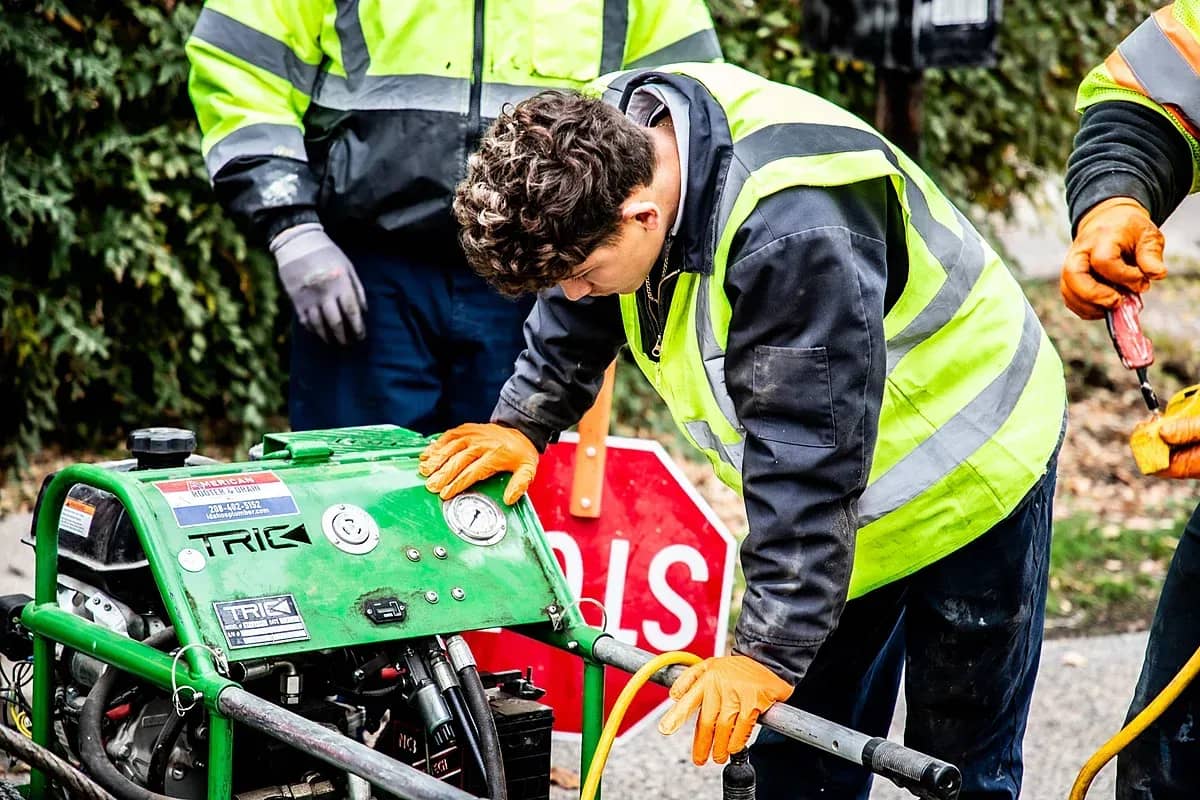
On a tub we pull the overflow plate and linkage, run a 1/4 or 5/16 inch cable down the overflow tube with a small drum machine, and work it through the trap into the branch line. On a shower we pull the strainer and go straight through the trap. The cutting head is sized to the pipe. An oversized head in a 1-1/2 inch tub line is how old traps and thin brass get wrecked.
Most single shower or tub calls are one visit and under an hour. What adds time:
- A drum trap. Older homes in the original parts of Caldwell, Boise and Nampa sometimes have a round drum trap in the floor beside the tub instead of a modern P-trap. A cable does not pass through one cleanly. It has to be opened, and the cover is often seized.
- A corroded waste-and-overflow that will not come apart without being replaced.
- No access. A tub with no access panel behind it and a tiled-in overflow leaves fewer ways in.
A cable is the right tool for hair. Where years of soap have coated the pipe wall all the way down the branch, a cable opens a hole and the drain slows again in a few months. Restoring the full diameter takes hydro jetting, which scours the wall of the pipe instead of drilling through the plug.
When a clogged shower is not a shower problem
A tub or shower is usually the lowest drain opening on its bathroom branch, and a basement shower is often the lowest opening in the whole house. Water finds the lowest opening. So when the main line is blocked, the shower is where it shows up first. Escalate if:
- Water rises in the tub or shower when you flush the toilet or when the washing machine drains.
- The drain gurgles when another fixture is running. Air being pushed through the shower trap means the blockage is on a line they share.
- What comes up is dark, or smells like sewage. That is the main line backing up into the lowest fixture. Treat it as emergency plumbing, stop running water in the house, and see sewer line backing up.
- More than one drain in the house is slow at the same time.
- The same drain clogs again within months of a proper cable job. That points at the pipe: a belly holding water, a branch that never had enough slope, or scale inside old cast iron.
Any of those and the next step is not another snake. It is a sewer camera inspection, so we can see where the blockage is, what the pipe is made of, and whether it is soap and hair, roots, a break, or a low spot. That is what decides between a cable, jetting and a repair.
Keeping it from coming back
A hair catcher over the drain does more than anything else, and it costs a few dollars. Clean it every week. Pull and clean the tub stopper or the trip-lever linkage twice a year. If you have long-haired people or pets being washed in that tub, do it more often. Liquid body wash leaves less curd than bar soap in hard water. None of that fixes a pipe with a belly in it, but it keeps a healthy line healthy.
What it costs
Clearing a single branch line, one shower or one tub and not a main line clog, is covered by our $59 drain cleaning special. Past that, what moves the number is whether there is access, whether the trap and the waste-and-overflow survive being taken apart, whether the line needs a cable or jetting, and whether the trouble is the branch or the main. We diagnose first, then hand you a flat price in writing that you approve before anything starts. Flat rate, not an hourly meter. On-site estimates are free.
Where we work
American Rooter & Drain was established in Caldwell, Idaho in 1945 and has worked the greater Treasure Valley since 1945. Shower and tub calls go to Boise, Nampa, Caldwell, Meridian, Kuna, Eagle, Star, Middleton, Garden City, Emmett and the rest of the valley, plus Ontario, Nyssa and Vale in Oregon. For the fixture next to it, see clogged sink or clogged toilet. For everything else that drains, see drain cleaning and clogged drain repair, or everything we do in Caldwell. If the camera shows the trouble is out in the yard, that goes to our sewer line repair crew. Call (208) 366-5771, days, nights, weekends and holidays.