Kitchen sink: grease coats the pipe, it does not pass through
Everything that leaves a kitchen sink is warm. Bacon fat, pan drippings, butter, the film off a greasy plate. It all goes down liquid and none of it stays liquid. Ten or fifteen feet into the horizontal run under the floor the pipe is cold, and the grease plates onto the pipe wall there and stays.
Then it collects. Coffee grounds, rice, pasta, eggshell and anything the disposal ground up stick into that layer instead of sliding past. The working diameter of a 1-1/2 inch kitchen branch narrows a little every month. That is why a kitchen sink slows down for half a year before it ever stops. It is not a sudden clog. It is a pipe that has been closing for a long time and finally closed.
Boiling water does not fix that. Hot water melts the top of the mat, the softened grease travels another ten or twenty feet, and it sets up again where the pipe is colder, usually right at the tee where the branch ties into the stack. Nothing was removed. The plug moved past the trap arm, out of reach of a hand snake, into a spot that costs more to clear. Chemical openers push it downstream for the same reason.
A disposal is not a solvent. It grinds food into particles that still have to be carried the rest of the way out on moving water. Grinding on a trickle of hot water and shutting the faucet off the second the motor stops is how a healthy line becomes a slow one. Run cold water, and let it run twenty or thirty seconds after the grinding stops.
Bathroom sink: hair and soap curd at the stopper
Bathroom sinks clog at the top because the snag is already there. The pop-up stopper hangs on a pivot rod that pokes straight through the drain body into the flow path, and every hair that goes down catches on it. Soap does the rest. Treasure Valley water is hard, and the calcium and magnesium in it react with soap into a sticky grey curd that no longer rinses, packing into the hair on the rod and lining the tailpiece. Pull the stopper on a sink that has been slow for a month and the clog usually comes out attached to it.
That one you can do yourself. Loosen the pivot nut behind the tailpiece, pull the ball rod out, lift the stopper, clean it, and hand-tighten the nut plus a quarter turn going back together. If that does not do it, pull the P-trap with a bucket underneath. If the stopper and the trap are both clean and the sink is still slow, the blockage is in the trap arm or inside the wall, and hand tools stop being enough.
Skip the chemical drain opener, and here is the honest reason
Store drain openers are caustic lye or sulfuric acid, and both work by generating heat. In a partly blocked line most of it runs on through and does very little. In a fully blocked line, which is when people actually reach for it, none of it goes anywhere. It sits in the trap in a standing column, hot, pressed against the first fitting it reaches, for hours or days.
That is the trade. What it is pressed against is a chrome-plated brass tailpiece, a rubber slip washer, a solvent-welded plastic joint, or in older Caldwell and Boise homes a cast iron stack that has already lost wall thickness. The chemical cannot tell the pipe from the clog. On a grease mat it usually bores one narrow channel, the sink drains for a week, and the mat is still there while the fitting is the part that took the damage.
The second reason is safety. Opening that P-trap dumps a bucket of caustic liquid, and a cable driven through it slings the stuff around. If you poured something down there, say so when you call. Nobody is going to lecture you. It changes the protection we bring and it means we flush that trap first. Never stack two products either, because an acid opener on top of a caustic one reacts.
How we clear it, and how long it takes
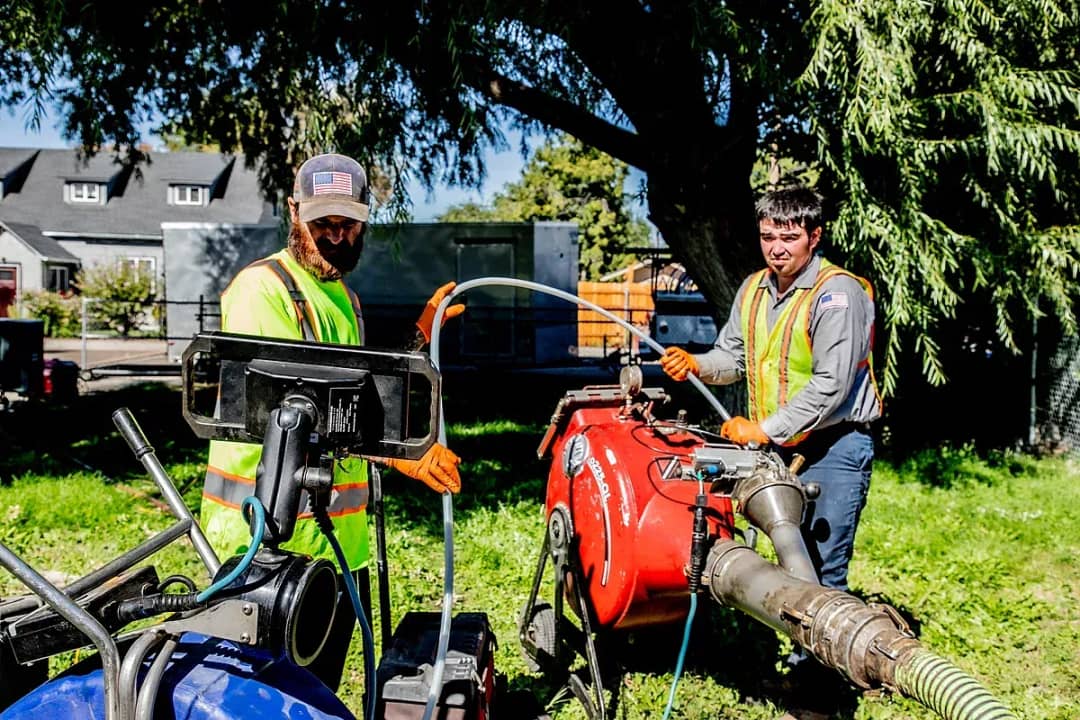
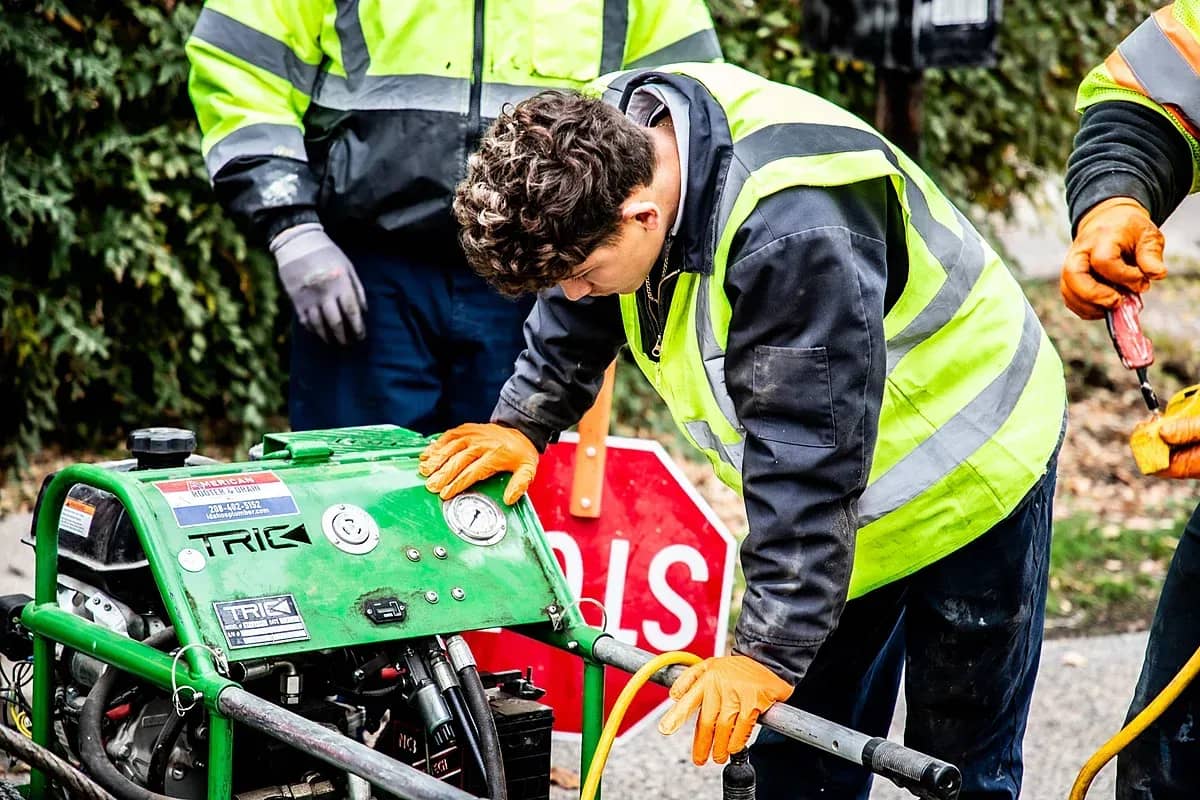
For a single fixture we pull the trap and run a cable through the trap arm into the branch with a small drum machine, usually a 1/4 or 5/16 inch cable, with a cutting head sized to the pipe rather than the biggest head on the truck. Oversized heads in a 1-1/2 inch line are how tailpieces and old fittings get wrecked. Most single-sink calls are one visit and under an hour once the cabinet is cleared. What adds time is a corroded trap that will not come apart without being replaced, a hard turn in the trap arm, or no accessible cleanout on that branch.
A cable is the right tool for hair and for solid obstructions. On a kitchen line with years of grease on the wall it punches a hole through the middle of the mat and the sink drains, but the pipe is still coated and it will be slow again. To restore the diameter you want hydro jetting, where a nozzle scours the pipe wall instead of drilling through the plug.
When a clogged sink is not a sink problem
Snaking the same drain three times in one year is money spent on a symptom. Escalate if:
- Both bowls of a double sink stand full at once. The bowls meet at a tee and share one trap arm. One bowl backing up while the other drains puts the restriction past the tee. Both bowls holding water puts it past the trap arm entirely.
- The dishwasher backs up into the sink, or water pushes out of the air gap when it drains.
- Another fixture reacts when you run the sink. The toilet gurgles, the tub bubbles, the washer discharge surfaces in a floor drain. Air forced through another fixture's trap means the blockage is on a line they share, which usually means the main.
- The same sink clogs again within months of a proper cable job. That is the pipe, not your habits: a belly holding water, an offset joint, roots at a joint out in the yard, or cast iron scaled nearly shut.
- You smell sewage at the sink or in the yard — treat that as emergency plumbing, not a routine clog.
Any of those and the next step is not another snake. It is a sewer camera inspection so we can see the inside of the line: the exact location, the pipe material, and whether it is grease, roots, a break, or a low spot holding water. That is a diagnosis on video, and it is what decides between jetting, a spot repair, and a lining. We run them across the valley, including sewer camera inspection in Caldwell, Nampa, Boise, and Meridian.
Neighborhood age predicts most of what we find. Older cores in Caldwell, Boise and Nampa still carry cast iron stacks in the walls and clay laterals in the ground, which scale, crack and take roots at the joints; newer PVC out in Kuna and Star does not corrode, so those clogs are usually a use pattern or a run that never got proper slope.
What it costs
Clearing a single branch line, one sink and not a main line clog, is covered by our $59 drain cleaning special. Past that, what moves the number is which fixture is involved, whether there is an accessible cleanout, whether the trap and tailpiece survive being taken apart, whether the line needs a cable or jetting, and whether the trouble is the branch or the main. We diagnose first, then hand you a flat price in writing that you approve before anything starts. Flat rate, not an hourly meter. On-site estimates are free.
Where we work
American Rooter & Drain was established in Caldwell, Idaho in 1945 and has worked the greater Treasure Valley since 1945. Sink calls go to Boise, Nampa, Caldwell, Meridian, Kuna, Eagle, Star, Middleton, Garden City, Emmett and the rest of the valley, plus Ontario, Nyssa and Vale in Oregon. For everything else that drains, see drain cleaning or everything we do in Caldwell. A single stubborn clog beyond the sink gets the same clogged drain repair service. For the other fixtures in the bathroom, see clogged toilet and clogged shower or tub drain. If the camera shows the trouble is out in the lateral, that goes to our sewer line repair crew. Call (208) 366-5771, days, nights, weekends and holidays.