This page covers the inspection as its own service: what the equipment does, when it's worth booking on its own rather than as the first step of a repair call, what a visit looks like, and what you walk away with.
What does a sewer camera inspection actually show?
The camera goes in through an existing cleanout or another access point and sends live video back to a monitor as it travels down the line, so you're looking at the actual condition of the pipe instead of a guess built from surface symptoms. On screen, different problems look distinct from each other, and that distinction is the point:
- Root intrusion — fine, hair-like roots reaching in through a joint or crack, sometimes a few strands, sometimes a dense mat that's narrowed the pipe to a fraction of its width.
- An offset joint — a visible lip or shelf where two pipe sections no longer line up flush, enough of a ledge that paper and debris start catching on it instead of flowing past.
- A belly, or sag — standing water that doesn't drain out of frame, because the pipe has settled into a low spot and holds water and solids instead of carrying them downstream.
- Scale and corrosion — a rough, narrowed interior in older cast iron or clay lines, sometimes with flaking material breaking loose as the camera passes.
- A collapse or major structural failure — unmistakable: the pipe's cross-section is crushed, deformed, or blocked outright, and the camera usually can't pass beyond that point.
Each finding points toward a different fix, which is exactly why we don't skip this step and go straight to a repair estimate.
How we do it
The equipment matters, because what the camera can actually resolve determines whether the inspection is useful or just a formality.
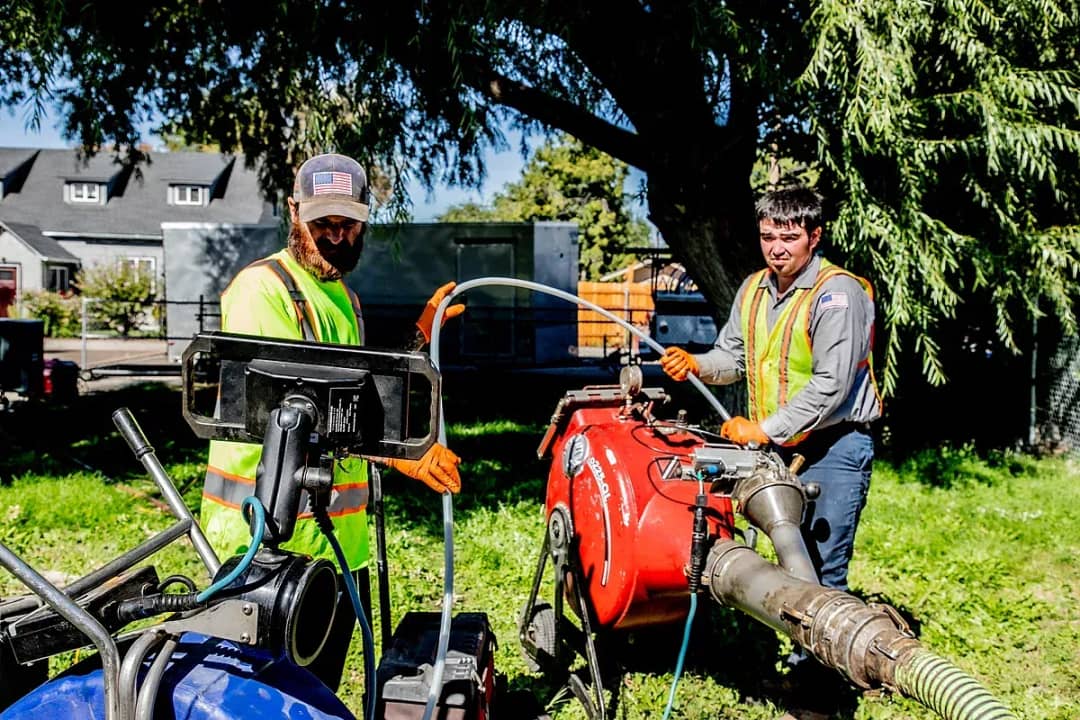
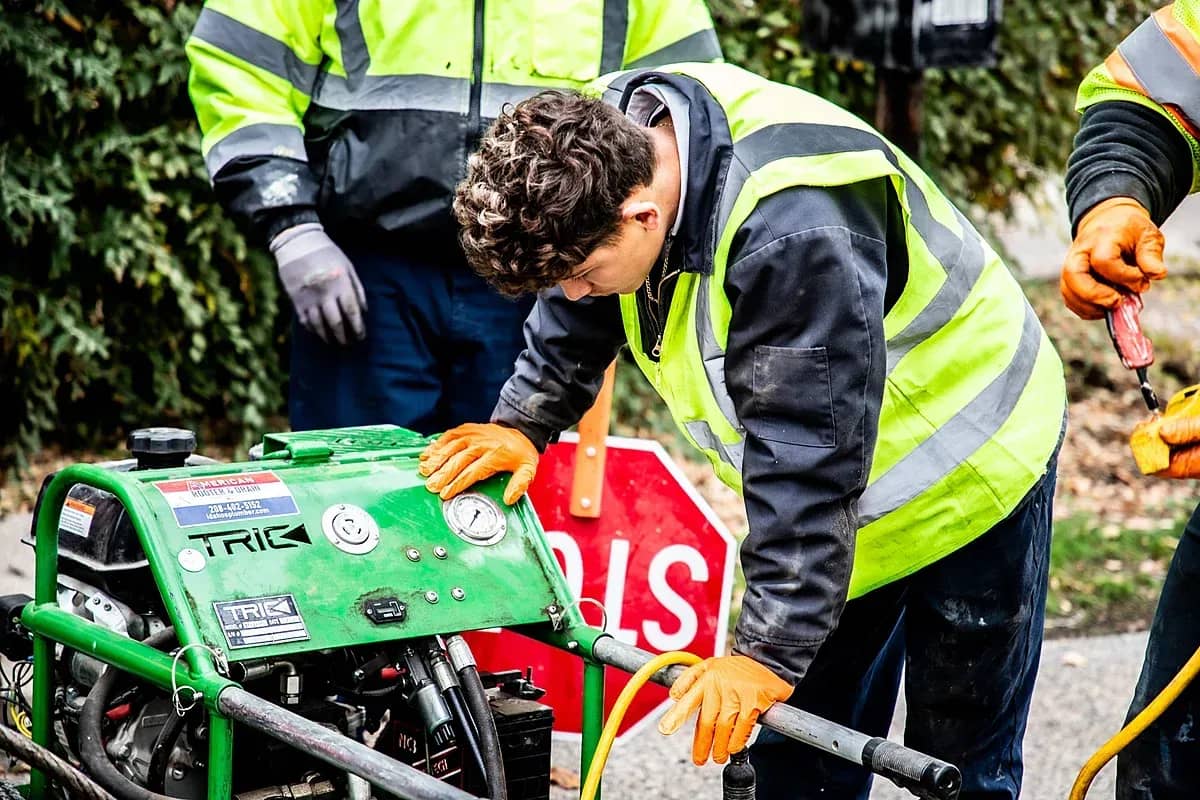
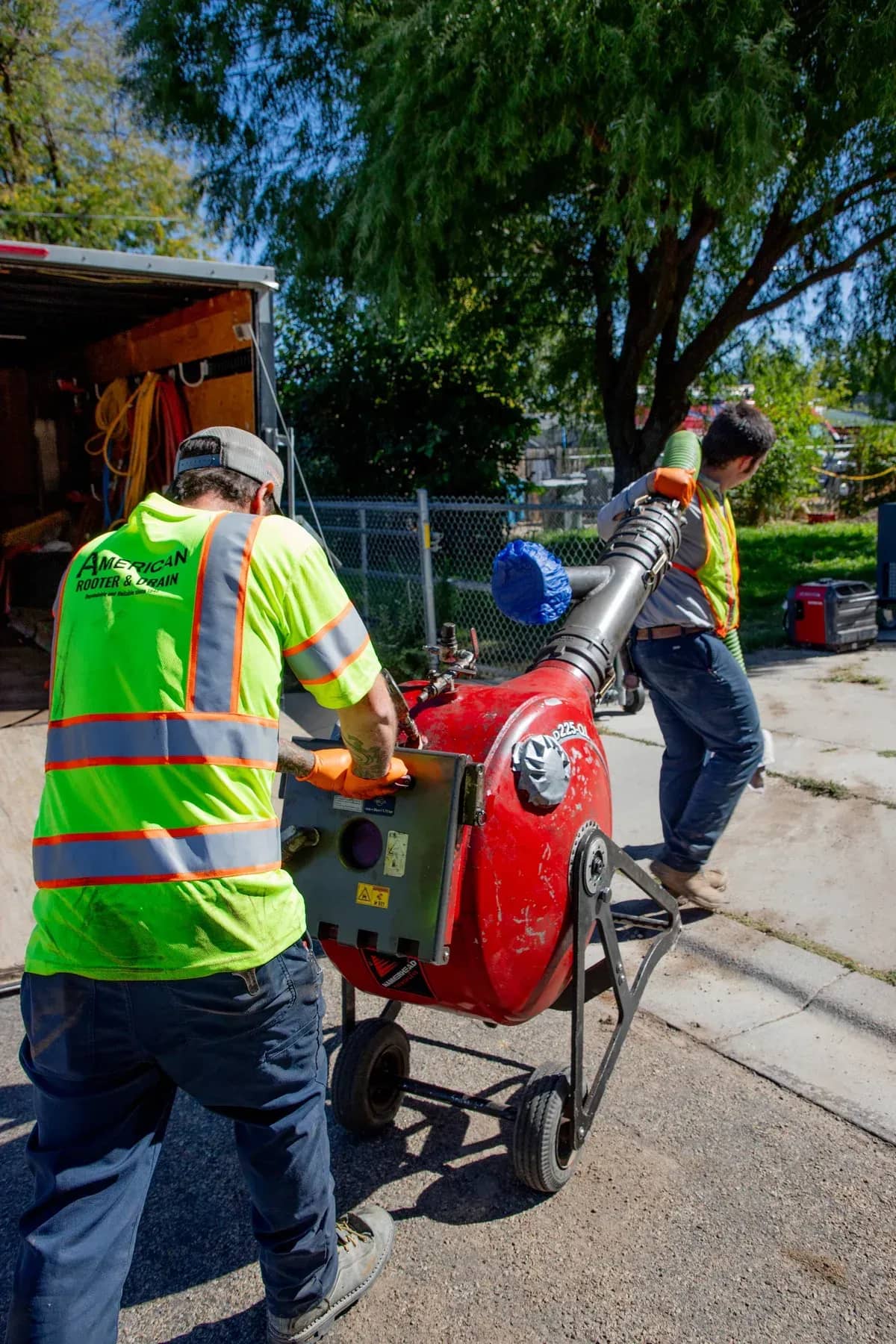
Waterproof push camera. The camera head is sealed and mounted on a flexible rod a technician feeds down the line by hand, working around bends and transitions a rigid tool couldn't navigate.
Self-leveling head. The image stays right-side-up as the camera rotates through the pipe, so what's on the monitor reads the way a person would actually see it, not a spinning, disorienting feed.
Locator and sonde. Many camera heads carry a small transmitter — a sonde — that a handheld locator wand traces from the surface. That's what lets a technician mark the exact depth and horizontal position of a problem area from the yard above, without digging first to find out where it is. If a repair ends up trenchless, that location becomes the access point; if it's excavation, it's where the dig starts.
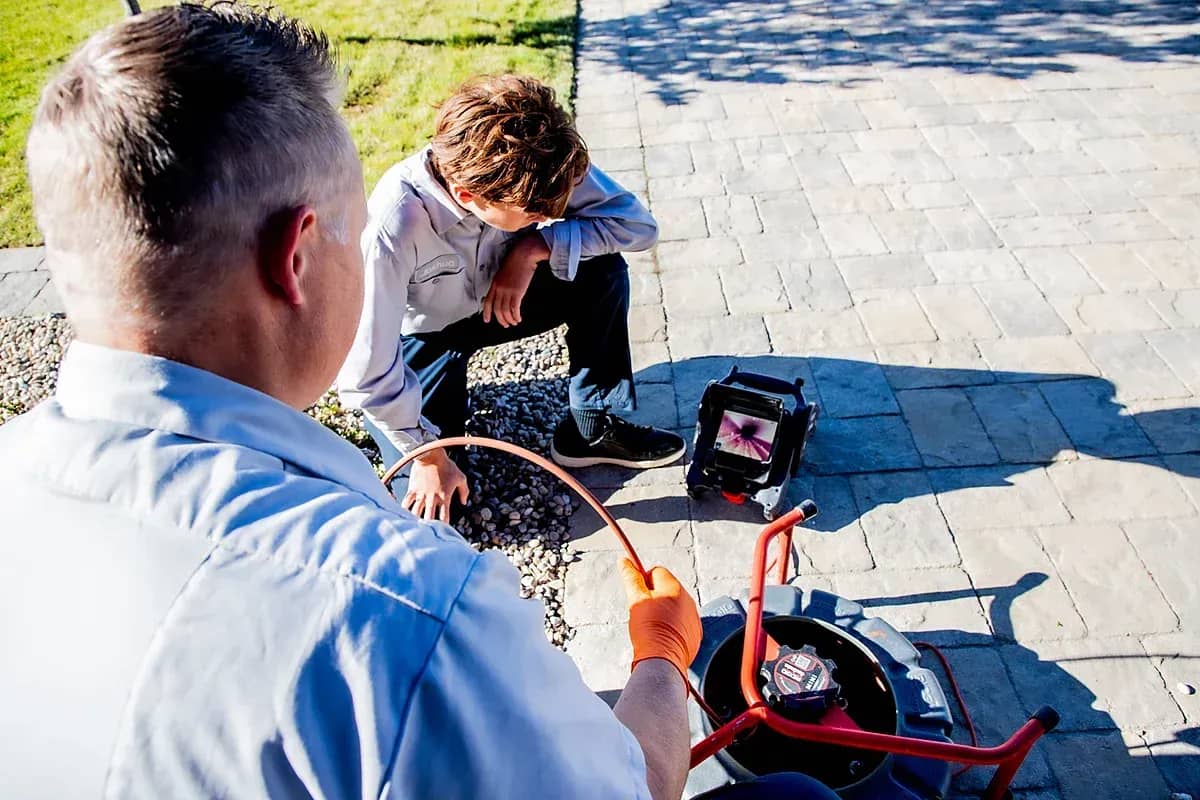
Real-time monitor. The feed runs live to a screen on-site, and you watch alongside the technician — you're seeing the same footage we're using to make the call, not just taking our word for it.
When to book a standalone inspection vs. when it's step one of a repair call
A camera inspection stands on its own as a service in a few situations that have nothing to do with an active backup:
- Buying an older home. A sewer camera inspection before closing tells you the age and material of the line, whether roots have already reached the joints, and whether a belly or offset needs attention — information a standard home inspection doesn't cover.
- Chronic, unexplained issues with no clear diagnosis. If drains have been slow or backing up on a pattern with no obvious cause, an inspection replaces guessing with an actual look at the pipe. Recurring drain backups are worth camera-diagnosing rather than repeatedly cleared and hoped away.
- Wanting documentation before a repair decision — your own copy of what the line looks like, independent of any one contractor's pitch.
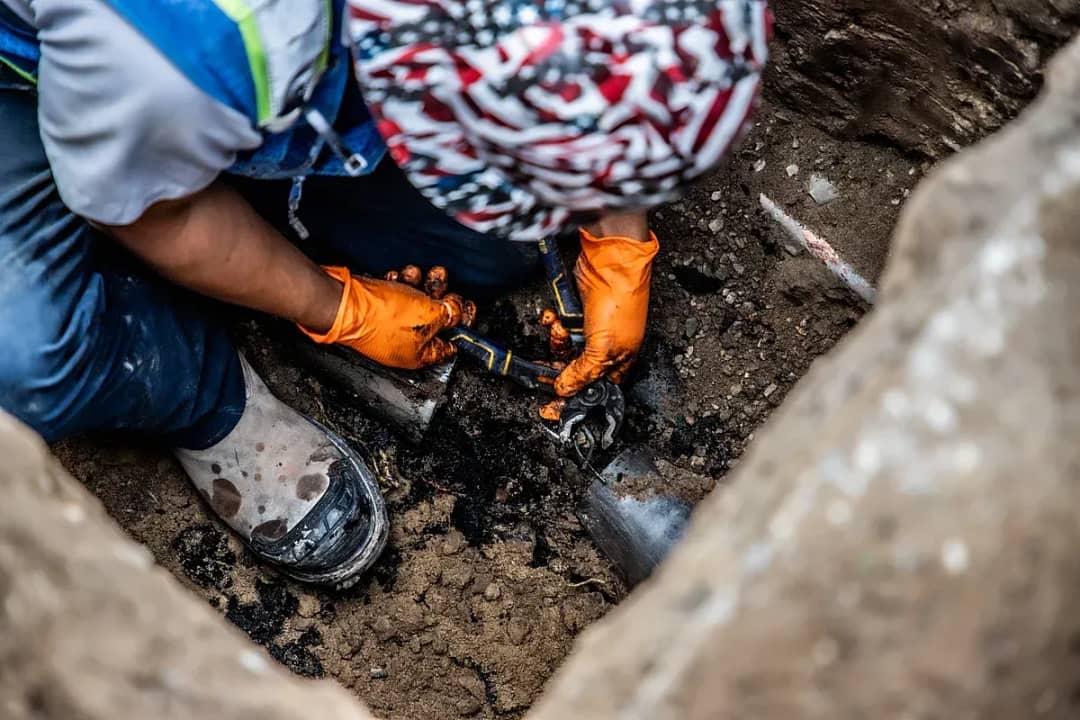
More often, the inspection is step one of a repair call: you've already got a backup, a clogged drain that keeps returning, or a sign pointing at the lateral rather than one fixture, and the camera turns "the line's bad" into a specific finding and plan. Either way, findings translate the same way. A belly, an offset joint, or root intrusion caught early is often a candidate for trenchless repair — lining or bursting through one or two small access points instead of an open trench. A collapsed section, or a long run shifted out of grade, usually calls for traditional excavation, and if that's what the camera shows, we'll say so plainly. Roots are common enough in older Treasure Valley laterals that we've covered how they get in and what they do to a line on our tree roots in sewer lines page.
What the visit looks like
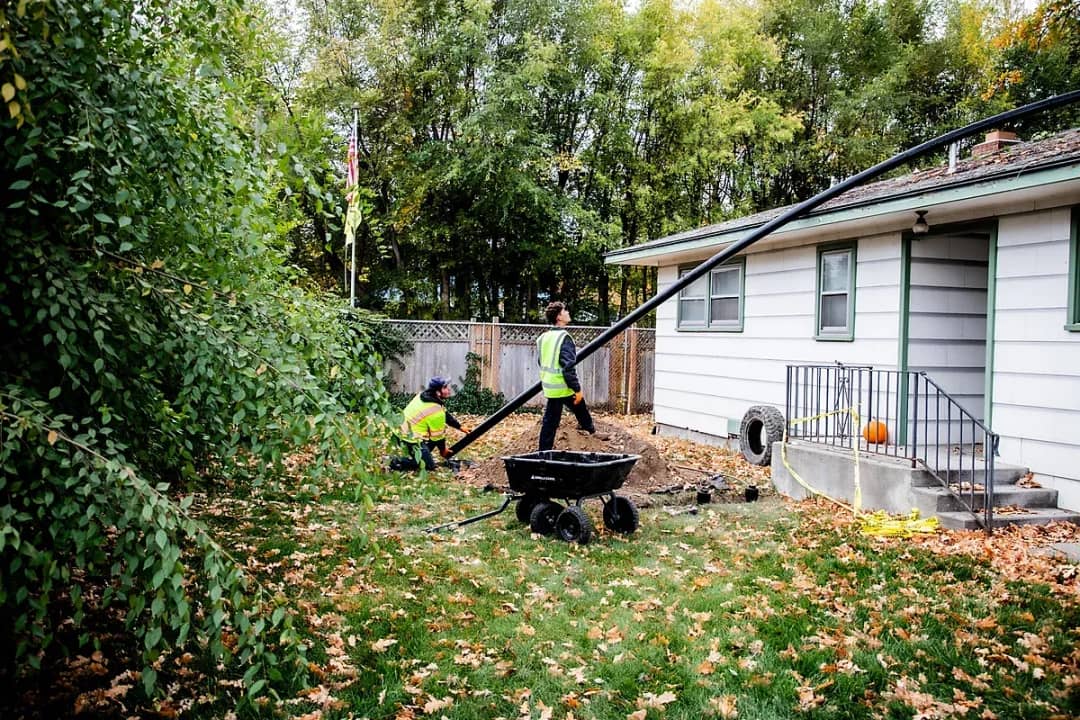
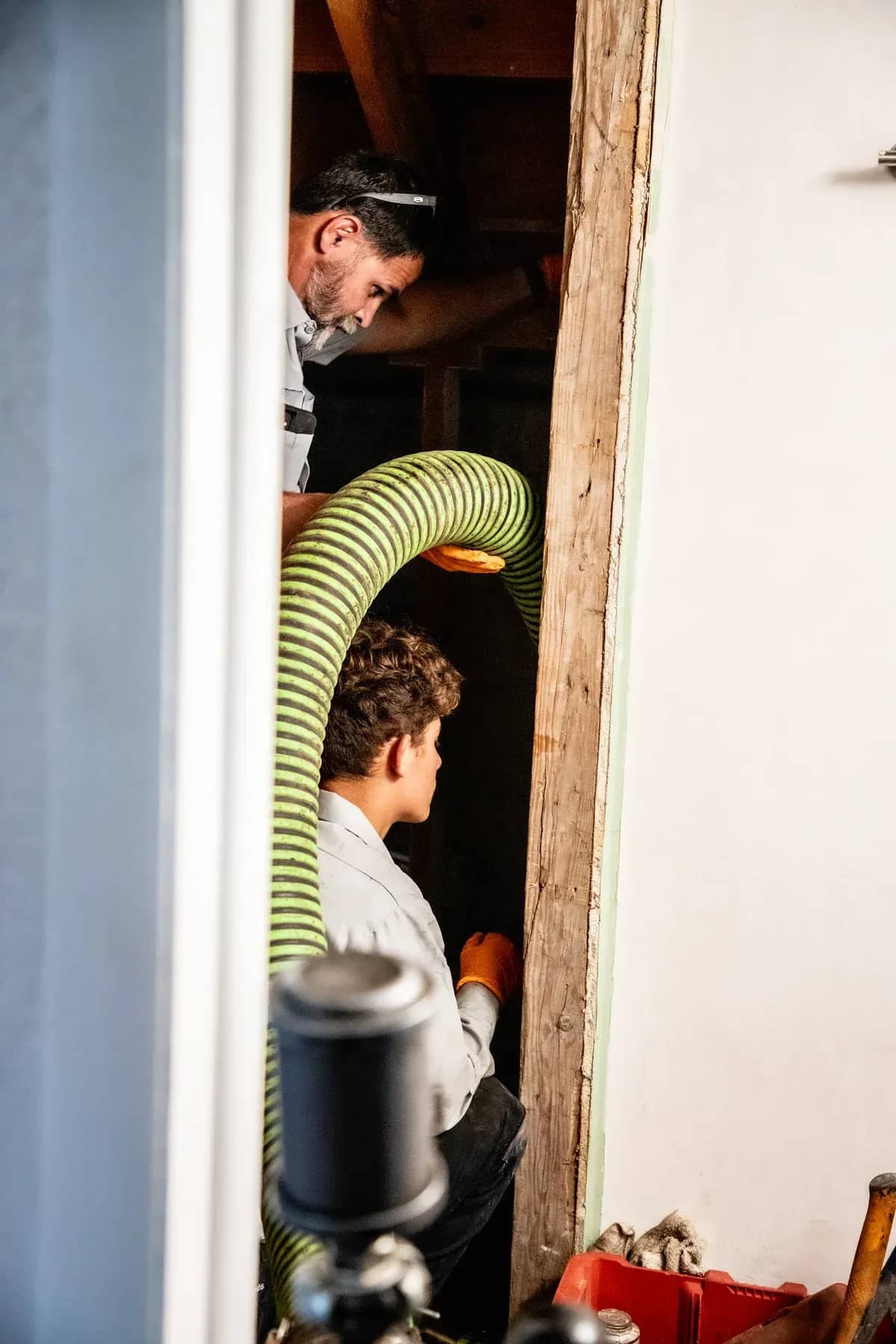
Finding the access point. Most homes already have a cleanout — a capped pipe fitting at ground level or in a basement or crawlspace. If there isn't an accessible one, a technician finds the next-best entry point, sometimes pulling a toilet or accessing the line from a roof vent.
Running the line. The camera feeds down the pipe at a controlled pace, working through bends and past branch connections, while the technician watches the live feed and narrates what's showing up.
Recording what's found. As problems appear on screen, the technician logs where each sits — distance down the line from the access point, and depth and horizontal position if the locator wand traces it from the surface. That's what turns video into a usable diagnostic record, not just footage.
Reviewing it with you. Before the technician leaves, you see what they saw and hear the plain-language version of what it means for your line.
How long does a sewer camera inspection take?
Most residential inspections are a single visit — access, run the line, document findings, review them with you. What extends a visit is fairly predictable: a longer lateral run takes more time to traverse, multiple branches or a difficult access point can mean repositioning the camera or trying a second entry point, and a heavily clogged section sometimes needs clearing before the camera can see past it at all — in that case we run a drain cleaning or hydro jetting pass first, then follow with the camera to confirm the pipe itself is sound. We won't promise a specific duration, since a straightforward single-run inspection and a longer commercial lateral with several access points are genuinely different jobs, but a technician can give you a realistic sense of it once they know your property.
How much does a sewer camera inspection cost?
What an inspection costs depends on real variables — the length of the run, how many access points it takes to see the whole line, whether the line needs to be cleared before the camera can pass, and whether locating and marking depth and position is part of the job. Rather than post a number that doesn't match your situation, call (208) 366-5771 for a free on-site estimate and get a real figure based on your line, not a range pulled from a brochure.
What you get afterward
You leave with a documented record of what's actually going on inside your line — specific findings tied to specific locations, not a verbal impression. If everything looks sound, that's useful on its own, especially for a pre-purchase inspection or a chronic-issue case that turns out to be something else entirely, like an isolated clogged drain rather than a lateral problem.
If the inspection does turn up a problem, those findings are what a repair quote gets built on. A technician walks through what the camera showed, which repair approach fits the pipe's actual condition — trenchless repair where the line supports it, traditional excavation where it doesn't — and puts a written estimate in front of you before any repair work starts. You're approving a plan based on what was actually found, not a guess.
Why This Matters in the Treasure Valley
Caldwell, Boise, and Nampa's older neighborhoods run on a mix of clay and cast iron sewer laterals, and those materials crack and shift at the joints as they age. The irrigation canals and laterals running through the valley keep soil moisture — and root growth — active most of the year, which is exactly what pulls roots toward an aging pipe joint. An inspection tells us precisely where a line stands before we ever recommend repair, so you're never paying to dig up a section that didn't need it.