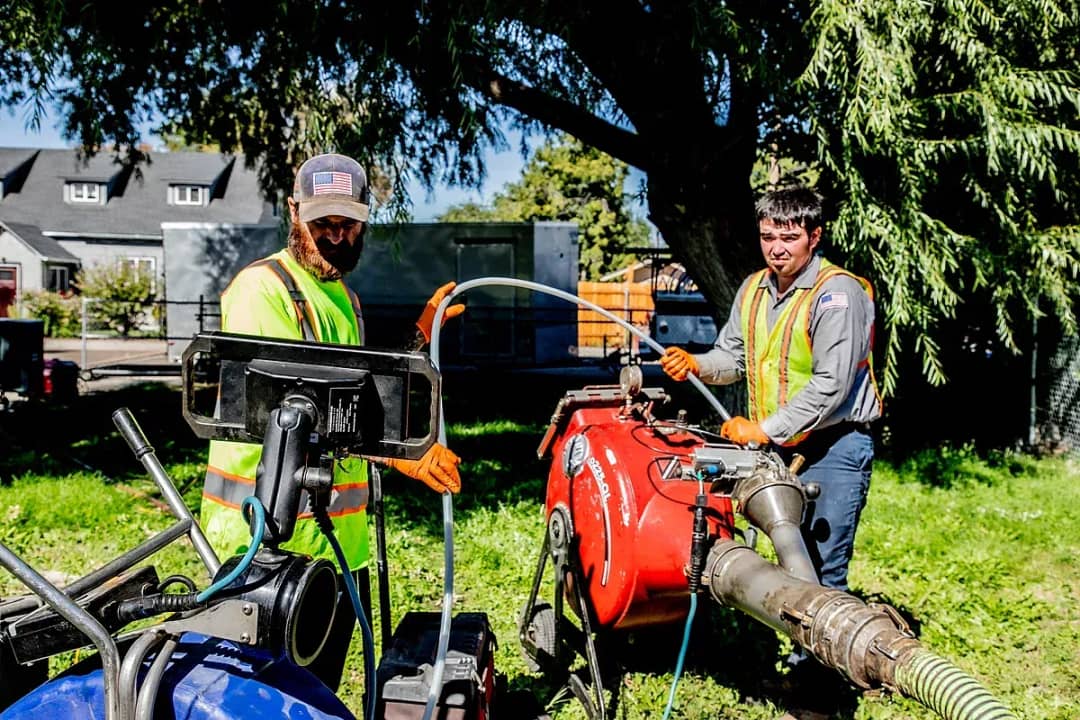
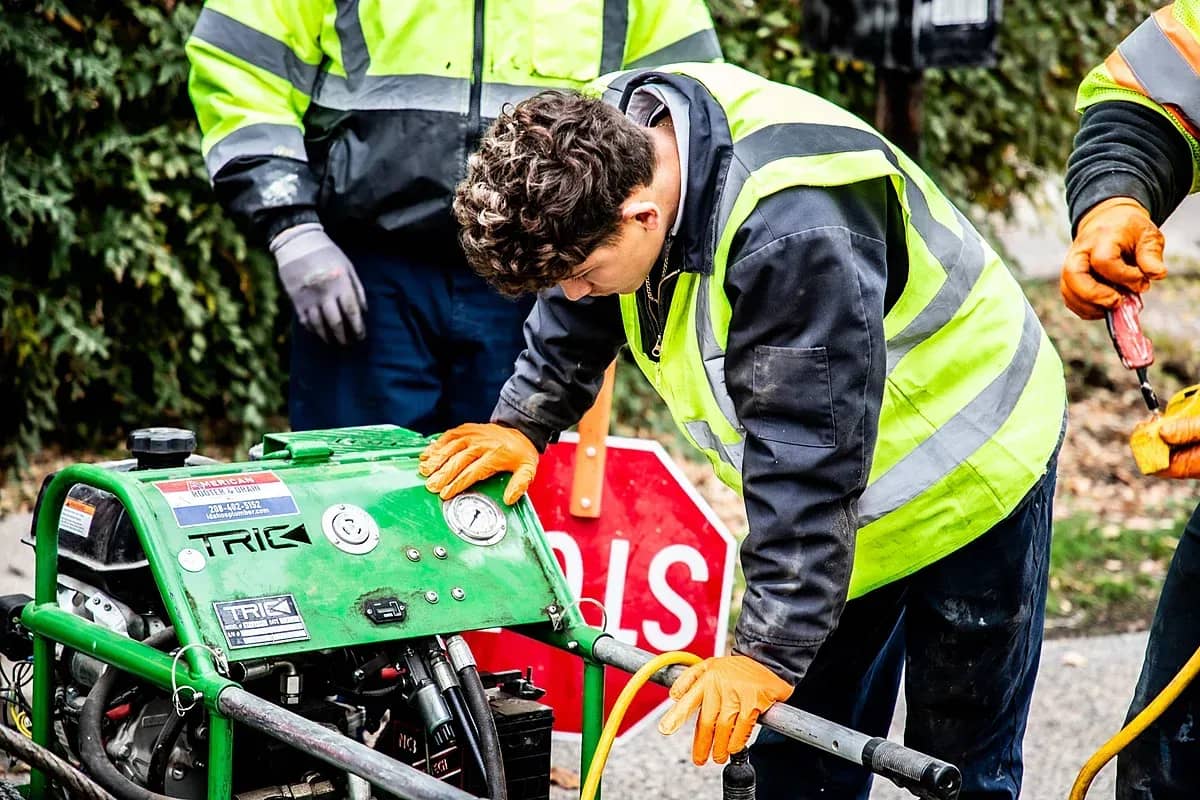
A camera inspection ends the guessing. We push a self-leveling color camera down the line from a cleanout, watch the pipe on the monitor as it travels, and you watch it with us. When we find something we mark where it is and how deep it sits, then talk about the fix that matches what is on the screen. American Rooter & Drain has worked out of Caldwell across the greater Treasure Valley since 1945, and Fruitland is a straight run west on I-84 for us.
Why orchard and windbreak roots find the sewer line first
The trees that cause us the most grief around Fruitland were never planted for shade. Lombardy poplar, Siberian elm, silver maple, and black locust went in as windbreaks along field and orchard edges because they grow fast, go up quick, and hold soil. They also root shallow, wide, and aggressively. A rule that holds up in the field here: a mature windbreak row throws roots out two to three times the width of its canopy, which means a forty-foot line of poplars set thirty feet off the house is sitting directly over the sewer lateral whether anybody planned it that way or not.
The irrigation calendar makes it worse. From water-up in the spring through the middle of October, the ditches and laterals are charged and there is free moisture in every direction, so roots have no reason to hunt. When the water goes off in the fall, the only reliably damp thing left underground is a sewer line weeping at a joint. The call pattern is consistent enough that we plan for it: root backups spike in late October and November, then again in March before water comes back on. If your line has plugged at roughly the same two points on the calendar for a few years running, that timing alone tells us something before the camera goes in.
Roots do not break into sound pipe. They enter at a joint that has opened, at a hairline crack, or at a sloppy connection, and a root fine enough to be invisible in the first season is a rope by the third. The camera tells us which situation we are in, and that changes the whole recommendation. A few hair roots at one joint is maintenance. A mass through six consecutive joints is a pipe conversation. If roots are already your known problem, our page on tree roots in a sewer line covers how we cut them out and what actually keeps them from coming back.
City main, private tank, or a leftover of both
Fruitland is split, and the split matters. Homes inside the city limits run a lateral out to the municipal main, and the pipe from your house to that connection belongs to you, not to the city. The city's responsibility starts at the main. Head out toward the orchards and the picture changes entirely: those properties are on a septic tank and drainfield, and no amount of camera work on the house side means anything if the tank is at capacity.
The interesting ones are the properties caught in between. When sewer came down a road, some places tied in and properly abandoned the tank, some tied in and left the old tank teed into the line, and some never tied in at all. We have run a camera down a Fruitland lateral and found it discharging into a tank the current owner did not know was there. We have also found dead legs, the abandoned branch out to the old tank still open and still collecting solids at the tee. You cannot diagnose either of those from standing in the yard. On camera it takes about ten minutes.
So before we scope anything we settle three things: which system you are actually on, where the line leaves the house, and where it is supposed to end up. If the answer is a tank, the inspection changes shape. We run the camera to the tank inlet and inspect the tank as a separate item, because past the inlet baffle there is nothing for a camera to look at.
Working both sides of the Snake River
A lot of Fruitland customers own something on the Oregon side, a rental in Ontario, a shop, a parent's place toward Nyssa, and they shop both sides of the river for a plumber. That is sensible. Two practical things are worth knowing before you start calling.
First, the state where the pipe is decides which rules apply, not the state on your driver's license and not where the plumber's truck happens to be parked. Work at your Fruitland house runs under Idaho requirements; the identical work at your Ontario rental runs under Oregon's. Ask any contractor you call to say plainly which side of the river they are set up to perform work on, before they roll a truck and before you are standing in a driveway sorting it out.
Second, permits and inspections follow the same logic on this side of the line. Inside Fruitland city limits it is the city; out in the unincorporated stretch it is Payette County. That becomes real the moment a camera turns up something that needs a repair rather than a cleaning, because the permit path is part of the schedule and it is better to know that on day one.
We work both sides. If the property in question is across the bridge, start on our Ontario, Oregon sewer camera inspection page instead. Same crew, same cameras.
What we actually see on a Fruitland line
Close to the river the ground is sandy and it moves. That produces a failure we see out here far more than we do up on the bench: fine sand migrating into the pipe through a crack or an open joint and packing along the bottom of the line. On the monitor it looks like a beach, a smooth grit shelf building along the invert and narrowing the pipe from the bottom up. It matters because a cable punches a hole straight through a sand pack, the line drains beautifully for a month, and then it does the same thing again. Nobody got cheated. The tool was simply wrong for the defect, and only a camera would have said so.
The rest of the list is what you would expect, and the camera separates them cleanly: the exact location and depth of a blockage, root mass at joints, offsets where a section has shifted out of line, bellies holding standing water, scale and channeling inside old cast iron, crushed or ovalled pipe under a driveway, and grease. When somebody has been living with the same problem for years, the honest explanation is usually on our recurring drain backups page, because repeat backups almost always mean a structural defect quietly re-collecting, not bad luck.
If the line is too plugged for the camera to pass, we clear it first and then inspect, in that order. Our $59 drain cleaning special covers a standard cleanout-accessible drain, and when the clog is heavier than that we will tell you before we start rather than after.
Buying an acreage or an older orchard house
On a Fruitland acreage listing, the word "sewer" can mean a city connection, a tank that was pumped last spring, or a tank nobody has opened in forty years. A standard home inspection does not put a camera in the ground, and it certainly does not tell you that the lateral runs under a windbreak row.
For a pre-purchase inspection we are after specific things: the material and rough age of the line, whether roots are already established and at how many joints, whether the run holds a belly, exactly where it goes and how deep, and whether a second structure such as a shop, guest house, or old bunkhouse is tied into the same lateral. That last one catches buyers regularly on ag-transition property, because the second building was often added by a previous owner with no permit and no record. We hand you the footage. Whether you use it to walk away, to negotiate the price, or simply to know what you own before the fifth year, that is your call to make.
What an inspection costs, and what changes it
We will not publish a made-up number for a job nobody has looked at yet. What is honest is telling you which variables move it. Access is the first one: an existing open cleanout is the easy case, and hunting a buried one or pulling a toilet is more work. Then run length, and whether the line crosses a driveway, a ditch bank, or a field access. Whether the pipe has to be cleared before a camera can pass. Whether you want the path located and marked on the surface. And whether we are inspecting one lateral or a house plus a shop or second dwelling on the same parcel.
So we come look at it. The on-site estimate is free, the price is flat and stated before anything starts, and if the footage shows a repair is needed you get the scope off the screen rather than off a symptom. Nothing gets dug, cut, or lined without your sign-off.
One more note specific to this end of the valley. If your trouble is out in the yard and the water is clean rather than sewage, a wet patch in the lawn that never dries, a jump in the water bill during irrigation season, that is a pressurized line and a different tool entirely. Start with outdoor water line leak detection, not a sewer camera.
Book a camera inspection in Fruitland
Call American Rooter & Drain at (208) 366-5771 and we will get a camera in your line and show you what is down there. The shop is at 1005 Commercial Way in Caldwell, established in Caldwell, Idaho in 1945, and we are up your way most weeks.
See everything we do in Fruitland, or compare the rest of the valley on the main sewer camera inspection page. If a line is actively overflowing, do not wait on an inspection. Read what to do when a sewer line is backing up and then pick up the phone.