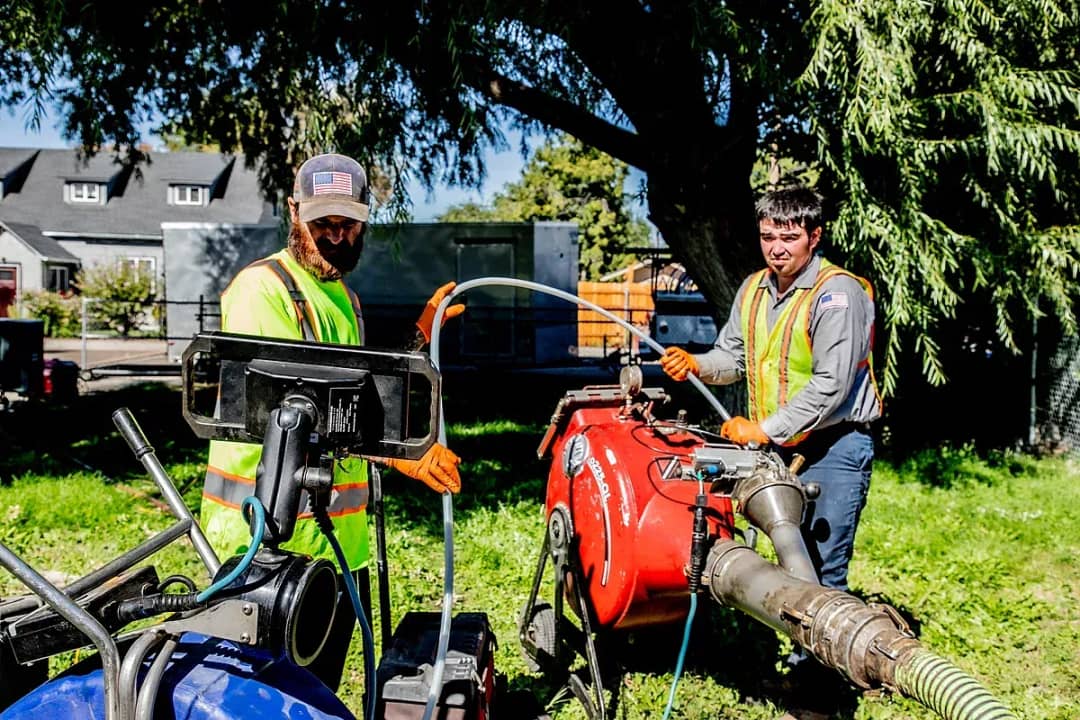
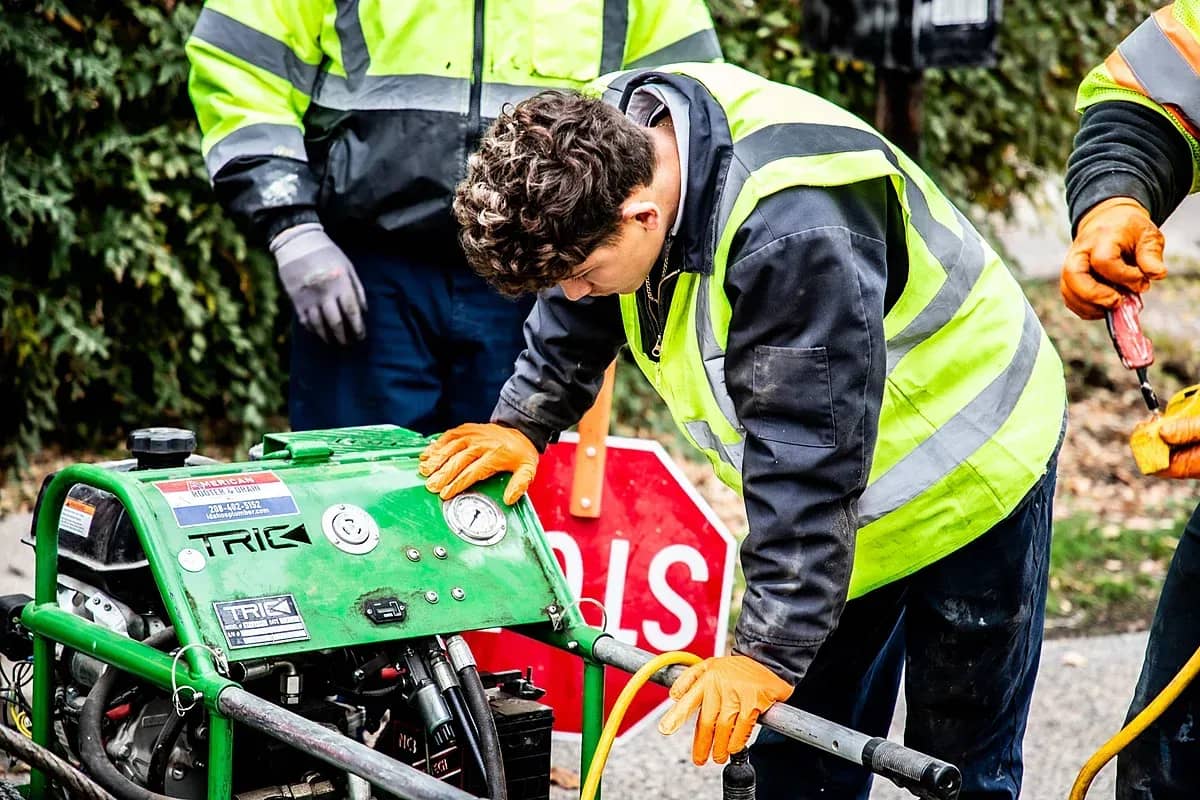
That is the whole argument for a camera in a town like this one. We are not diagnosing a stoppage, we are grading a piece of century-old infrastructure so you can make a real decision about it instead of paying somebody to open it again every spring. American Rooter & Drain runs a self-leveling color camera with a sonde in the head, which means the defect gets located and marked on the ground with a depth, not just described. Call (208) 366-5771.
A joint every two feet
Vitrified clay was manufactured in short lengths, so an old lateral is far more joint than most homeowners picture. A seventy-foot run is on the order of thirty-five separate joints, each one originally sealed with mortar or hot-poured compound, each one a place where a root can enter and where the pipe can shift out of line when the ground moves.
When we camera an old line near downtown, the number we care about is how many of those joints are compromised and whether they are grouped or scattered. That count is the decision. Three bad joints in an otherwise sound run is a spot repair, and you keep the rest of the pipe. Twenty bad joints spread the length of the run is a line that is finished, and every clearing after that is money spent renting a few more months. Nobody can give you that count from the surface, and a drain cable certainly cannot, which is why so many old houses here have a maintenance history and no diagnosis.
Orangeburg, and why the camera settles it in ten seconds
Anything built or re-plumbed from the late 1940s into the early 1970s may have bituminized fiber conduit in the ground, the material everyone calls Orangeburg. It is tar-impregnated wood pulp wound into a tube. Under decades of soil load it deforms out of round, blisters and delaminates on the inside wall, and eventually flattens.
On camera it is unmistakable. The cross-section stops being a circle, the inner wall looks like it is peeling, and you can watch the pipe go oval as the head travels. It cannot be repaired and no amount of cabling makes it round again. If you have been paying to have a line opened once a year and no one has ever put a lens in it, ruling this material in or out is the single highest-value thing you can do before spending another dollar on that pipe.
Alkali ground, hard water, and cast iron inside the walls
This is high desert. The soil is alkaline, and old unlined concrete and mortared joints do not enjoy that chemistry over the long term. The water is mineral heavy, and it leaves scale on everything it touches. Inside houses of this vintage the drain, waste and vent stacks are usually cast iron, and cast iron does not fail by cracking so much as by closing up: the interior wall tuberculates into a rough rind that narrows a four-inch pipe to something considerably less and grabs anything fibrous going past.
That produces a symptom pattern worth knowing, because it changes where we point the camera. When the whole house slows down at once and no single fixture is the culprit, the problem is usually in the stack or the building drain, not out in the yard. When one fixture misbehaves and the rest are fine, it is local. And when the house smells like sewer with no visible backup, you are usually looking at a cracked cast iron hub, a failed joint, or a trap that dried out. That is a real diagnosis with a real fix, and a sewer smell in the house covers how we chase it. If a single fixture is the whole story, start with a toilet that will not clear instead.
When replacing is honestly cheaper than clearing it again
Here is the part most companies will not put in writing. A clearing is inexpensive on the day you buy it. The only question that matters is how many of them you are going to buy. On a fifty-year horizon, a house with a structurally sound line and a root problem at two joints should be cleared and monitored, and anyone who tells that homeowner to replace is selling. A house with a distributed structural failure should be replaced once, and anyone who keeps cabling it every March is selling too, just more slowly.
The camera answers the four things that decide it. Is the defect structural, meaning the pipe has lost its shape or integrity, or is it accumulation that will genuinely respond to jetting. Is it in one place or spread along the run. What is sitting on top of the line, because a lawn, a mature shade tree, a concrete driveway and a sidewalk in the public right of way are four completely different jobs to get under. And is there room at each end for a pipe-bursting launch and receiving pit, because a trenchless replacement that only opens two small holes is a different proposition than trenching a yard end to end. Two of those four drive the cost of a replacement far harder than the length of the pipe does, which is why a number quoted before anyone looks is a guess.
So we do not quote one. The inspection carries a flat price we give you on site before the lens goes in, the estimate visit is free, and if the footage supports a repair we scope and price it flat with the video in front of you. If the answer is that your line has ten more good years in it and what you actually need is a cleaning, we will tell you that and hand you the $59 drain cleaning special, because we would rather have the next twenty years of your work than one oversold trench.
The longest drive on our board, and how we schedule it
From the shop at 1005 Commercial Way in Caldwell it is I-84 west to Ontario and then out the highway to Vale, and that is the furthest regular run we make, right at an hour of windshield time each direction. We are straight with people about the two consequences of that.
First, we batch. If your problem is not an emergency, ask for the next day we already have work headed that direction and you will get a tighter arrival window than we could otherwise honor. Second, we load to finish in one trip. The camera, the locator, the sectional machine and the jetter go out together every time, because sending a truck back to Vale to fetch a tool costs a full day for everybody. If it is an emergency, call anyway and we will tell you honestly when we can be at your curb rather than pad a window we cannot keep.
Buying an old house here
Nothing in a standard home inspection puts a camera in the sewer, and in this town that is the omission that matters most. Before you close, an inspection tells you the pipe material, how many joints are already gone, whether there is an existing cleanout to work from, and the path and depth of the run across the yard. All of that is a negotiating position while you are still a buyer, and a bill the day after you are an owner. On houses near the historic core we have found original clay, Orangeburg patched into clay, and lines rerouted decades ago in a direction nobody on the deed knew about.
Water in the yard that is not sewage
Old service lines fail out here too, and a wet spot is not automatically a sewer problem. If the ground is soft and the meter is turning with everything in the house shut off, that is a pressurized leak and it takes a different approach to pinpoint. See water leak detection for how we find those without excavating the yard on a hunch. And if the pattern is that everything is fine for a while and then it all comes back, recurring drain backups explains what we look for.
What you get when we leave
Footage of your actual line. A painted mark on the ground where the defect is with the depth written next to it. A plain description of what is wrong in language you can repeat to somebody else. And a flat written price for anything we recommend, given before any work starts. American Rooter & Drain was established in Caldwell, Idaho in 1945 and we still answer the phone at (208) 366-5771.
Everything else we do in town is on the Vale service page, and the parent sewer camera inspection page covers the rest of the valley.