Sewer gas is a safety topic too. It carries hydrogen sulfide and methane: low levels mean headaches and burning eyes, higher levels of hydrogen sulfide deaden your sense of smell, which is backwards from what you want in a warning sign, and methane is flammable. If the odor is strong, worse in a closed room, or makes people feel unwell until they step outside, treat it as same-day and call (208) 366-5771. One exception before you call a plumber at all: rotten eggs is also how the odorant in natural gas is described, so if the smell is strongest at the furnace, water heater, range, or gas meter rather than at a drain, leave and call the gas utility from outside.
1. A dry P-trap. Most common cause, and free to fix
Every drain has a U-shaped trap holding a plug of water that seals the sewer off from the room, and water evaporates. A guest bath nobody uses, a basement shower, a laundry sink, a garage floor drain, a rarely used tub: any of those loses its seal in a few weeks, faster in winter with the furnace pulling humidity out of the house.
Pour two or three quarts down every drain you can find, then add a splash of mineral oil to the ones that stay unused, since oil floats and slows evaporation for months. Wait a day. If the smell goes, you are done. Two traps people forget: the floor drain under a basement stair, and the trap on the AC condensate line.
2. A trap primer that quit
Newer construction in Meridian, Kuna, and Star puts a trap primer on basement and garage floor drains, a valve that bleeds water into that trap whenever a nearby fixture runs. When the diaphragm fails or our hard water scales the feed orifice shut, the drain goes dry and stays dry. The tell is a rhythm: refill the trap, the smell leaves for a week or two, then returns on schedule. Rebuilding the primer ends it permanently, in one visit.
3. A failed wax ring or a loose closet flange
If the smell sits at one toilet and is worse right after it is used, the seal between the toilet horn and the flange has failed. Gas escapes around the base long before water does, which is why people smell this for months before they ever see a stain on the subfloor. Grab the bowl and try to rock it; any movement at all is very likely your answer. When we pull the toilet we look at the flange, not just the wax. In older Caldwell and Boise homes it is often cast iron rusted thin at the bolt slots, which needs a repair ring rather than another wax ring stacked on a bad surface.
4. An open cleanout or an unsealed ejector pit
A cleanout plug left off in a crawlspace after somebody's previous drain cleaning is a wide-open pipe to the sewer. Same with an untrapped laundry standpipe, a capped fixture line cut and never plugged, or a basement sewage ejector pit whose lid gasket has gone hard. We find one of these most months.
5. Venting problems
Every drain needs air behind it or the trap water gets siphoned out as the fixture drains. If a tub or floor drain gurgles when a toilet flushes or the washer dumps, the system is pulling air through a trap it should not be, and it empties that seal every time. Usual causes: a vent stack blocked by a nest or leaves, an air admittance valve under a sink stuck closed, or a vent never tied in during a remodel. There is a local one too. On a hard January cold snap, warm moist sewer air hitting a cold roof stack can frost the opening nearly shut, so a house that never smells all year smells for two weeks in deep winter.
6. Failed pipe, in the walls or out in the yard
Now we are into real diagnosis, and this is where the camera earns its keep. Cast iron stacks in mid-century Boise and Caldwell homes rot from the inside out and weep gas through the pipe wall, often inside a cavity where nothing is visible; a cracked closet bend under a slab does the same. The pattern is odor strongest in one part of the house, tied to no single fixture, unresponsive to filling traps.
Outside, older neighborhoods across the valley still run clay laterals with root-packed joints, and a scattering of homes still have Orangeburg, the tar-paper pipe that deforms into an oval and then collapses. A cracked lateral vents gas up through the soil, so it often smells outdoors before it smells indoors, and wet or unusually green ground over the pipe run in July is the corroborating sign. On septic, odor at the tank lid or over the field points at a failed lid seal, a plugged effluent filter, or a field no longer accepting water.
Where the smell is tells you where to look
- One bathroom, worse after use: that toilet's seal, or that room's vent.
- One fixture, only with hot water running: biofilm in the tailpiece or overflow. Clean it. Not sewer gas.
- Rotten eggs in the water itself, hot side only: the water heater anode reacting with sulfate-reducing bacteria. Not your drains.
- Whole basement or crawlspace: dry floor drain, open cleanout, ejector pit, or a rotted stack.
- Worse when the washing machine drains: venting, or a main line partly blocked and surcharging.
- Outdoors near the foundation or over the yard: cracked lateral, or on septic, the tank or field.
- Every drain gurgles together: main line. Stop guessing and run the camera.
How we find it when the cheap fixes don't work
We work in order. Fill and observe first, because it is free and it settles most calls. If the smell survives that we isolate, running fixtures one at a time and checking every seal, cap, and vent termination. When it is still not obvious we smoke test the drain and vent system, pushing non-toxic smoke through the piping so it shows exactly where it escapes, hairline cracks inside a wall included.
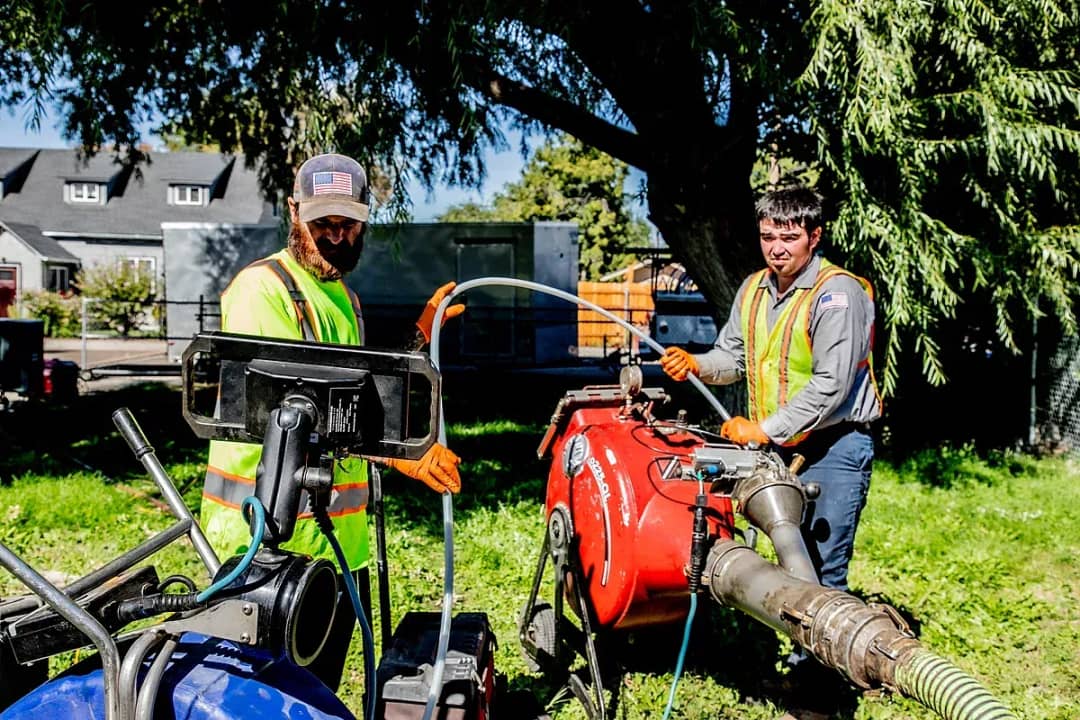
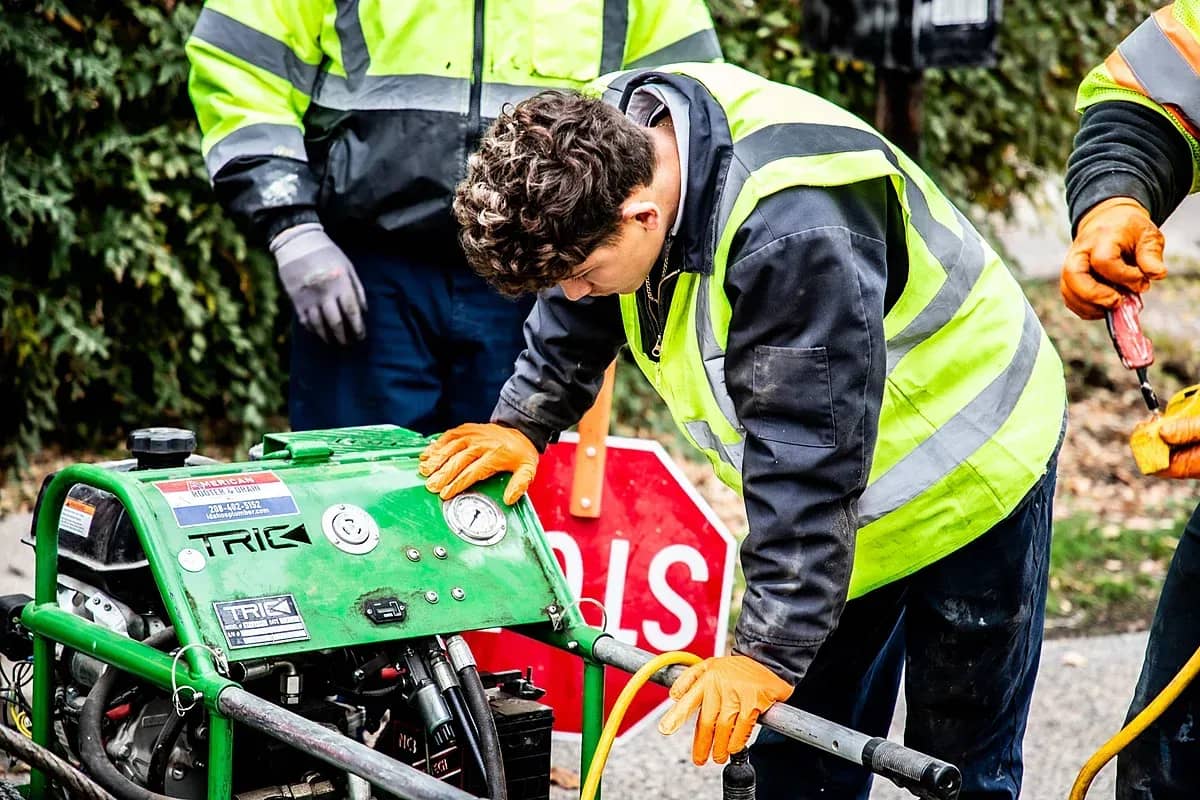
When the odor tracks with gurgling drains or anything below the floor, we run a sewer camera inspection and put eyes on the pipe instead of guessing from symptoms: roots at a joint, a belly holding standing water and gas, a break, or an offset. That call decides between a cable and jet job and a trenchless sewer repair. We run camera work daily in Boise, Nampa, Caldwell, and Meridian.
Timelines: a dry trap is minutes, a toilet reset usually under an hour, a vent clear or trap primer a single visit, a smoke test an hour or two with setup. A camera run down a residential lateral is normally under an hour once we have a good access point, and you watch the screen with us.
What it costs
We do not publish a number for a sewer smell diagnosis, because the honest answer depends on what we find. The variables: how many fixtures are involved, whether there is a usable cleanout or access has to be made, slab versus crawlspace, the pipe material, and whether the answer is one seal or a length of failed pipe. We come out, diagnose on site, and give you a flat price before work starts, and the estimate visit is free. Where the answer has a set price you get it up front: drain cleaning runs our $59 special, and a 1,000-gallon septic pump-out is $395. Our reasoning: why we won't quote a price over the phone.
Is the smell coming from one drain?
If it is one fixture, start with our guides to a smelly shower drain, a slow or smelly sink and what baking soda and vinegar will and will not do. On a septic system, see how often to pump a septic tank, whether septic additives work and the signs a septic tank is full. Each one gives the real steps and says plainly where to stop and call (208) 366-5771.
Book it
American Rooter & Drain has worked the greater Treasure Valley since 1945, out of the shop at 1005 Commercial Way in Caldwell. We do plumbing, drain and sewer, septic, HVAC, and electrical, so a sewer smell call does not turn into three contractors pointing at each other. Do the free things first: fill every trap, oil the ones you never use, check whether your toilets rock. If the smell is still there tomorrow, call (208) 366-5771. Related: sewer line repair, septic services, leach field inspection, emergency plumber.