Groundwater does not wait for a crack to become a hole
A sewer lateral is not a pressure pipe. It is a gravity line assembled out of sections with joints between them, built on the assumption that the dirt around it would be damp rather than saturated. On the river side of Chinden, and anywhere within a few blocks of the greenbelt, that assumption fails for months at a stretch. Once the water table climbs above the pipe, every hairline crack, every tired joint gasket, every root hole and every hand-cut tap becomes an inlet. Water pushes in steadily, quietly, and without ever backing anything up inside the house.
That is why so many lines here get diagnosed late. Infiltration does not slow a drain. It does not smell. It does not put water on a floor. What it does is carry silt and fines in with it, and over a season or two that silt settles into the flat spots and builds a bar you eventually do notice — as a slow tub, then a gurgling toilet, then a sewer line backing up into the lowest fixture in the house. By the time the symptom shows, the damage that caused it is years old.
What infiltration looks like on the screen
Anyone can push a camera down a pipe. Reading the footage is the job. On a Garden City lateral, here is what we are watching for:
- Clear water where there should be none. We ask you to shut off water use inside before we go down the line. If flow is still moving past the camera head, that water did not come from your house.
- Weepers at the joints. On clay tile and on early gasketed PVC, infiltration usually shows as a bright seam at the bell — a thin curtain of clean water coming in around the circumference, or one steady drip at the four o'clock position.
- Sand fans. Groundwater carrying fines drops them the instant it hits the slower flow inside the pipe. A small cone of clean sand just downstream of a joint is a fingerprint: that joint is open, and it has been open a while.
- Voided bedding. When infiltrating water washes the sand out from around the pipe, the pipe loses its support and sags. On camera that reads as a belly holding standing water, and that standing water is why the line keeps re-clogging no matter how many times a cable goes through it.
- Root hair at the wet joints. Roots go where the water is. In a saturated trench they are less desperate for the pipe itself, but the joint that is already leaking is exactly the one they find.
Every defect gets located to the foot with a sonde in the camera head and marked on the surface, so you know whether the bad joint is under lawn, under the driveway, or out past the fence line.
The lateral stock here is mixed, and that changes the diagnosis
Garden City has not redeveloped evenly, and the pipe in the ground reflects it. On one street there is a mid-century ranch on a clay lateral with mortared bell-and-spigot joints every three or four feet. On the next lot, new townhomes with fresh SDR-35 PVC straight to the main. In between are manufactured-home parks where several homes tie into one private lateral before it ever reaches the street, and older additions running Orangeburg — the bituminous fiber pipe that goes oval before it fails outright.
That mix matters twice over. First, the material tells us what failure mode to expect: clay cracks and shears, Orangeburg deforms, cast iron scales and channels out along the bottom, early PVC pulls apart at the gasket when the bedding washes away underneath it. Second, on a shared lateral the camera is the only thing that settles where the blockage actually sits and therefore whose problem it is. We have run calls here where the footage put the defect thirty feet past the last home's connection, which changed the entire conversation about who was paying to fix it.
Light commercial: kitchens, shops, and floor drains nobody documented
A large share of what we camera in Garden City is not residential at all. The corridor along Chinden and Adams is full of small commercial buildings that have been three different businesses in forty years — a machine shop that became a taproom, a warehouse that had a kitchen added to it, a body shop with floor drains and an interceptor nobody has opened since the last owner had the keys.
Commercial camera work is a different job than residential:
- Grease has to come out before the lens can see anything. On a restaurant or taproom line we jet first and camera second. Pushing a camera into a grease-choked four-inch line just produces video of the inside of a grease plug.
- We inspect the interceptor and the tie-in, not only the run. Sand-and-oil interceptors in old shop buildings are regularly bypassed, undersized, or plumbed backward from whatever the drawings claim.
- Abandoned trench drains and forgotten floor drains are common, and half of them go somewhere nobody wrote down. Locating them with the sonde before a tenant improvement or a slab pour costs far less than finding them with a concrete saw. Dry traps on those same forgotten drains are also the usual answer when there is a sewer smell in the building and nothing is backed up.
- Commercial building sewers run longer and deeper, which puts more of the run below the seasonal water table. Infiltration on a commercial line here can be moving real volume — and you are paying to treat every gallon of it.
What the water table does to the repair, not just the diagnosis
This is the part most people never get told. Finding a failed joint under six feet of saturated gravel is one problem. Fixing it so it stays fixed is a different one, and the groundwater dictates the method.
An open trench in wet sand will not hold a vertical wall. It has to be shored, and it usually has to be dewatered — well points or a trash pump running the whole time the hole is open. Bedding has to be rock that will not migrate, because the same water that undermined the original pipe will undermine the new one if you set it back into native sand. Buoyancy is real, too: an empty pipe in a flooded trench wants to float, and a section that floats up an inch has just lost the fall it needed to drain.
That is a large part of why we lean trenchless on the wet side of town whenever the footage supports it. Pipe bursting pulls in fused HDPE — one continuous piece of pipe with no joints at all, so there is nothing left for groundwater to get into. A cured-in-place liner seals the existing joints from the inside without opening the trench or disturbing the bedding. Neither is right for every line, and the camera is what decides: a collapsed or badly offset section rules out lining, and a belly caused by lost bedding is still a belly after lining. You only know which one you have because you looked.
Buying, selling, or remodeling on a Garden City lot
River-adjacent lots here trade hard, and plenty of them are bought for what is going to be built rather than what is standing. The one component that routinely survives a remodel or a full rebuild is the lateral — it is buried, it is not in the scope, and nobody looks at it until the new fixtures are in and the line will not carry the load.
Before you close, a camera run tells you the material, the depth, the path, whether the joints are already taking on groundwater, and whether there is fall the whole way to the main. None of that is in a standard home inspection. It is also the difference between negotiating a repair as a condition of sale and paying for it out of pocket in month four. If the plan is to add bathrooms or a second unit, the same footage tells you whether the existing lateral can handle the added fixture count or needs upsizing while the ground is open anyway.
One related note, since it comes up constantly on this side of the valley: wet ground near a foundation is not automatically a sewer problem. Between a high water table, old irrigation, and pressurized service lines, the source needs to be established rather than assumed. That is a water leak detection job on the supply side and a camera job on the drain side, and we do not guess between them.
Booking it, and what it costs
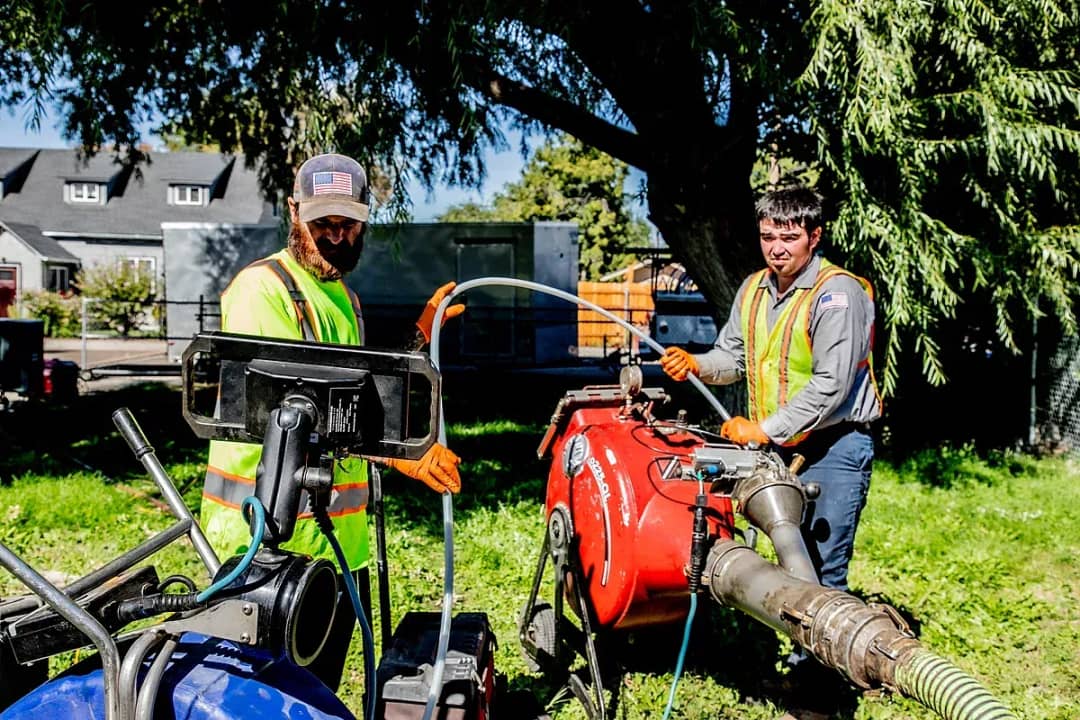
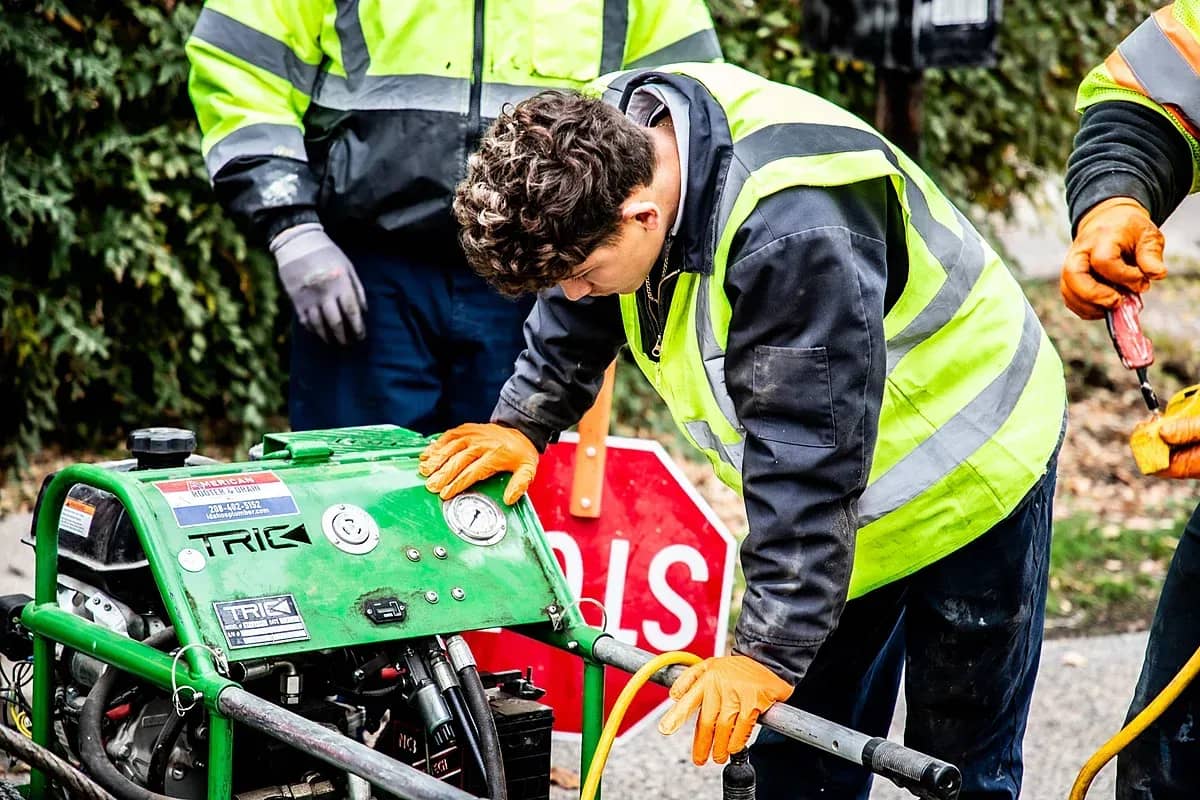
We work out of 1005 Commercial Way in Caldwell, and Garden City is a straight run in — same-day is normal. The truck rolls with the camera, a cable machine and a jetter aboard, so we are not scheduling a second visit just to clear a line before we can see down it.
Cost depends on things we can establish before quoting: whether there is a usable cleanout or we have to pull a fixture for access, how long the run is, whether the line needs clearing before the camera can pass, and whether you want the defect located and depth-marked on the surface. We name a flat price for the work before anything starts — no meter running — and if you want the line opened while we are there, our drain cleaning special is $59. When the footage turns up a defect, we walk the options with you in front of the actual video. Nothing gets dug, burst or lined without your sign-off.
If this is the third or fourth time the same fixture has gone slow, read up on why drains keep backing up after they have been cabled — on a Garden City line the answer is usually a belly, and a belly does not respond to another cable.
Call (208) 366-5771 to get on the schedule. American Rooter & Drain has served the greater Treasure Valley since 1945. See the full service overview on our sewer camera inspection page, or everything we do in Garden City.