Clay tile, a joint every three feet, and roots that know where the water is
Vitrified clay is decent pipe in one respect: it does not corrode, and hundred-year-old tile is often still round. The weakness is the joints. Clay came in short sections, bell-and-spigot, packed with mortar or oakum, and mortar does not stay tight through a century of frost heave, settlement, and truck traffic on a gravel lane. Once a joint opens even a hair, warm nutrient-rich vapor leaks into cold soil and a root finds it. What comes through the gap is a single hair. What it becomes three seasons later is a mass the size of a fist that has pried the joint wider to make room for itself.
Around here there is a second driver that most towns do not have: flood and gravity irrigation. On orchard ground and on the older residential lots that still take ditch water, trees have been trained by decades of surface watering to keep their feeder roots shallow and wide. When irrigation season ends and the ditches go dry, those roots go looking for moisture. The sewer lateral is the one thing in the yard still wet in October. That is a big part of why so many tree root sewer problems around Emmett surface in late fall and winter rather than mid-summer, and why a line that ran fine all season suddenly quits in November.
What a cable machine tells you, and what it hides
Plenty of homes in town have had a cable run through the same lateral every year or two for a decade. A cutter head opens a channel through a root mass, the drains run again, and for a season that is a legitimate fix. What it does not tell you is anything at all about the condition of the pipe.
Three lines that all cable open just fine can be in three completely different states:
1. Sound tile with a fine root screen at one joint. Cut it out, follow with a jetting cycle and a foaming root treatment, and it will hold for a long while.
2. Tile where the root has jacked the joint out of alignment. The channel closes fast because the offset lip catches everything that comes down the pipe, and each cabling buys a shorter interval than the last one did.
3. Tile that is broken or missing a section, with soil coming in and dirt riding along the invert. Cabling this one is actively making it worse.
The only way to tell them apart is to look. We push a self-leveling camera the full length of the run and grade what we find: where roots are entering, how many joints are involved, whether a joint is offset and by how much, whether the barrel is cracked or sheared, and whether there is consistent fall or a low spot holding water. Then we sonde the defect and mark it on the ground with a depth. On a big Emmett lot that is the difference between digging one hole in the right place and trenching a hundred feet of lawn on a hunch. If the pattern is repeat backups at shrinking intervals, that shrinking interval is itself the diagnosis — the pipe is getting worse, not the roots getting faster.
The rest of the older stock: Orangeburg, cast iron, and hand-cut taps
Roots get most of the attention out here, but downtown and in the older additions the camera regularly turns up problems that have nothing to do with a tree:
- Orangeburg. Bituminous fiber pipe went in through the 1950s and 60s and it does not crack, it deforms. On camera a failing Orangeburg run reads as an oval that flattens the farther you go, sometimes with the wall delaminating in blisters. It is not repairable in place — it gets replaced.
- Cast iron under the slab or in the crawlspace. Cast iron scales from the inside out. The bottom channels away while the crown stays thick, leaving a rough, restricted, snag-everything interior long before there is ever a hole in it.
- Hand-cut saddle taps. Side connections and additions were sometimes cut in by hand and mortared around. They leave a lip or a stub protruding into the flow, and that is a permanent snag point no amount of cabling will improve.
- No cleanout at all. A lot of older Emmett homes have no exterior access. We can go in through a pulled toilet or a roof vent when we have to, but if a line is going to need attention again, adding a proper cleanout is the cheapest thing anyone ever does for a sewer.
When a first-floor toilet is the fixture that gives up first, that is normally the lateral talking rather than the fixture — see what actually causes a toilet that will not clear before anyone starts replacing wax rings.
Acreage and septic: the run between the house and the tank
A lot of the Gem County addresses we drive to are not on a city sewer at all. On a septic property the camera work is different and, honestly, more useful, because the building sewer between the house and the tank is where nearly all of the recoverable problems live.
We camera that run for the same root and joint failures as anywhere else, then look hard at the tank inlet. A baffle that has dropped off, or an inlet buried in solids because the tank is years overdue, will back a house up exactly the way a failed lateral does — and no amount of cabling the house line fixes it. We can pump the tank on the same visit; a standard 1,000-gallon pump-out is $395. If the footage shows the trouble is downstream of the tank out in the drainfield, we will say so plainly instead of selling a repair on a pipe that is fine.
If you are buying acreage out this way, that camera run plus a tank inspection is the most informative money you can spend before closing. Drainfields are expensive, they are invisible, and a seller telling you it has never given them trouble is not the same thing as looking at it.
What a scheduled visit actually looks like out here
Emmett is a real drive from our Caldwell shop — up Highway 16 over Freezeout Hill, or around through Sand Hollow on 52 — and we plan around that instead of pretending otherwise. In practice that means:
- A real arrival window, not "sometime today." Gem County work gets built into a run, so you are not sitting at home for eight hours waiting on a truck.
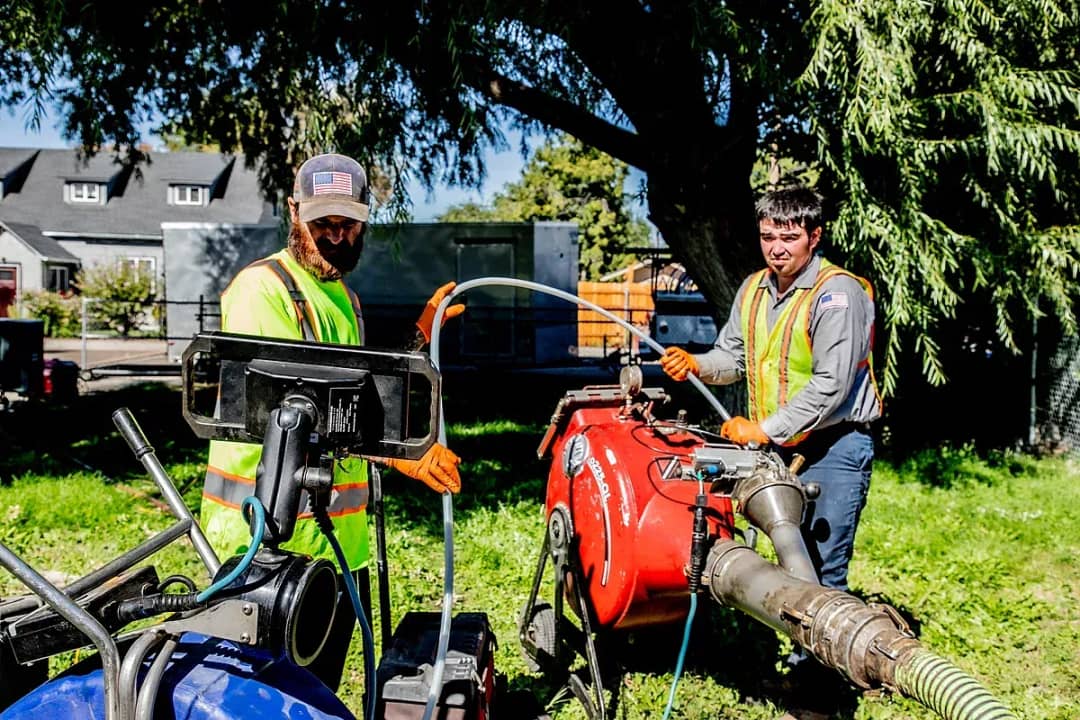
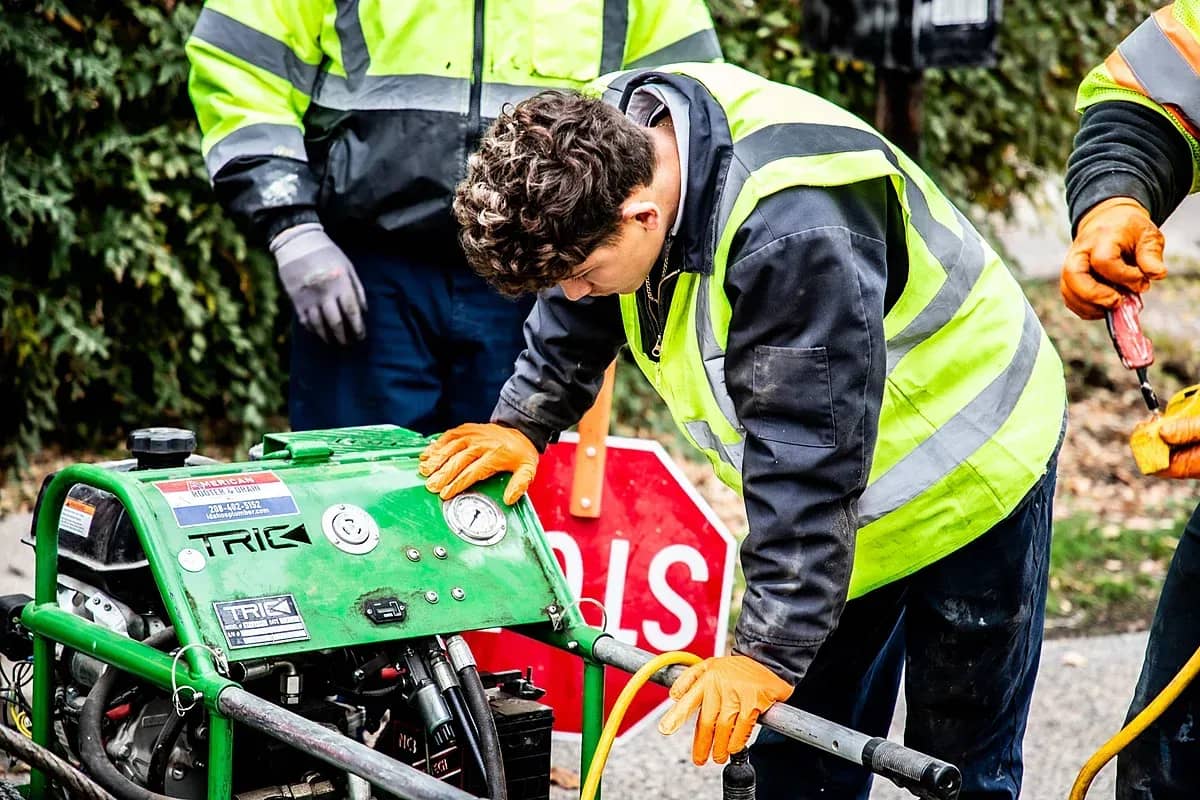
- The truck comes loaded. Camera, locator, cable machine and jetter all on the same vehicle. If a root mass has to be cut out before the lens can see past it, we clear it and camera it on the same visit. Sending a truck back over the hill a second time helps nobody.
- We arrive expecting no cleanout. Rural and older properties frequently have no exterior access, so the gear to get in through a pulled toilet or a vent stack is already on board.
- Winter gets planned for. Freezeout is the first grade in the area to go slick. When the weather turns we will tell you straight whether we are making it out that day rather than leaving you waiting on a truck that is not coming.
- Neighbors get batched. If somebody else on your road already has us scheduled, mention it when you call. Letha, Montour, Sweet and the bench roads get grouped, and it usually earns you a sooner slot.
Cost, and what happens once we have the footage
The number we give you comes before the camera goes in the pipe, and it is a flat number, not a meter. What sets it is straightforward: whether there is usable access, how long the run is, whether the line has to be opened before the camera can pass, and whether you want the defect located and depth-marked on the surface. Our drain cleaning special is $59 if you want the line cleared while we are out, and the $395 covers a standard 1,000-gallon septic pump-out on the same trip. Anything past that starts with a free on-site estimate, written, before a shovel comes off the truck.
Then we sit down with the video. You see the joint, the root mass, the offset, the standing water — the actual pipe, not somebody's description of it. From there the honest options are these: a cut-and-jet cycle with a root treatment where the tile is still sound; a spot repair where one joint or one section has failed and everything else is good; a cured-in-place liner where the barrel is intact but the joints are all taking roots; or a pipe burst that pulls in fused HDPE, one continuous piece with no joints for a root to ever find again, where the line is past saving. You decide what happens next. We do not open ground on a guess.
If the house is already backing up, do not wait on the schedule — call it in as a backup and read what to do about a sewer line backing up in the meantime.
Call (208) 366-5771 for Emmett, Letha, Montour, Sweet and the surrounding Gem County roads. American Rooter & Drain has been doing this work in the greater Treasure Valley since 1945, out of the shop at 1005 Commercial Way in Caldwell. The full service overview lives on our sewer camera inspection page, and everything we do in Emmett is listed on the city page.