
What's actually clogged, fixture by fixture
Not every stoppage behaves the same way, and where it's happening tells us a lot before we even open a toolbox.
Kitchen sink. Grease, coffee grounds, and food scraps are the usual suspects, and they build up gradually — a kitchen drain that's gone from slow to fully stopped over a week or two is almost always a grease clog sitting in the trap or the first few feet of branch line. If the garbage disposal is involved, a jammed impeller can look like a clog but isn't one, so we check that first rather than reaching for a cable on a problem a reset might solve.
Bathroom sink. Hair and soap scum are what typically narrows a bathroom sink drain down to nothing, usually right at the pop-up stopper or the trap just below it. These are often the easiest of the bunch to clear because the blockage sits close to the drain opening. Read more on clogged sink causes and fixes if that's the fixture giving you trouble.
Toilet. A toilet that won't clear on a second or third flush, or one that's inching toward the rim instead of draining, is the fixture we get the most panicked same-day calls about — for good reason, since an overflow is a mess nobody wants to manage twice. Wipes, "flushable" or not, are the single most common cause we find, along with excess paper or a toy that made its way in from a curious toddler. See our clogged toilet page for what to do in the first few minutes while you're waiting on us.
Tub or shower. Hair mixed with soap scum is almost always the culprit, and it tends to build slowly — a shower that drains a little slower every week until one day it doesn't drain at all. Older Boise Bench and North End bathrooms with narrower original drain lines see this faster than a newer Foothills build with a modern trap.
Floor drain. These sit lowest in the house — basements, utility rooms, sometimes a garage — and when one backs up, it's often a sign of trouble upstream in the line rather than a floor-drain-specific clog. A floor drain that fills or bubbles when the washing machine drains or another fixture runs is one of the clearest single signals that the problem isn't the floor drain at all.
My toilet is overflowing right now — what should I do before you arrive?
Shut off the water at the small valve behind the toilet at the floor, then stop flushing — every flush adds more water to a bowl that's already full. If it's close to overflowing rather than actively spilling, lift the tank lid and hold the flapper closed to stop the bowl from refilling further. A plunger with a good flange (the extra rubber piece that extends into the drain opening) can clear a lot of toilet clogs on its own: seal it fully over the opening, push slowly on the first stroke to force air out rather than splashing it back at you, then plunge with firm, steady strokes and pull up sharply on the last one. If six or eight solid strokes don't move it, stop — repeated aggressive plunging on a toilet that isn't budging is more likely to push the clog deeper than clear it.
Can I just pour a drain cleaner down it and be done?
We'd rather you didn't, especially in a North End or East End home. A lot of houses in those neighborhoods are still running original cast-iron drain lines and galvanized supply lines from the early-to-mid 20th century, and the caustic chemicals in liquid drain cleaner are hard on pipe that's already thinner from decades of internal corrosion — we've opened up lines where repeated chemical use accelerated a leak that started as a simple clog. Newer Foothills and other recent-construction homes running PVC and PEX handle an occasional dose better, but even there, a chemical cleaner that doesn't fully clear the blockage just leaves a caustic pool sitting in the pipe, which is unpleasant and sometimes dangerous to work around if we do end up cabling it afterward. Boise Bench and other older mid-city homes are a mixed bag — some updated, some not — so unless you know for certain your house has been re-piped, we'd treat it like the older stock.
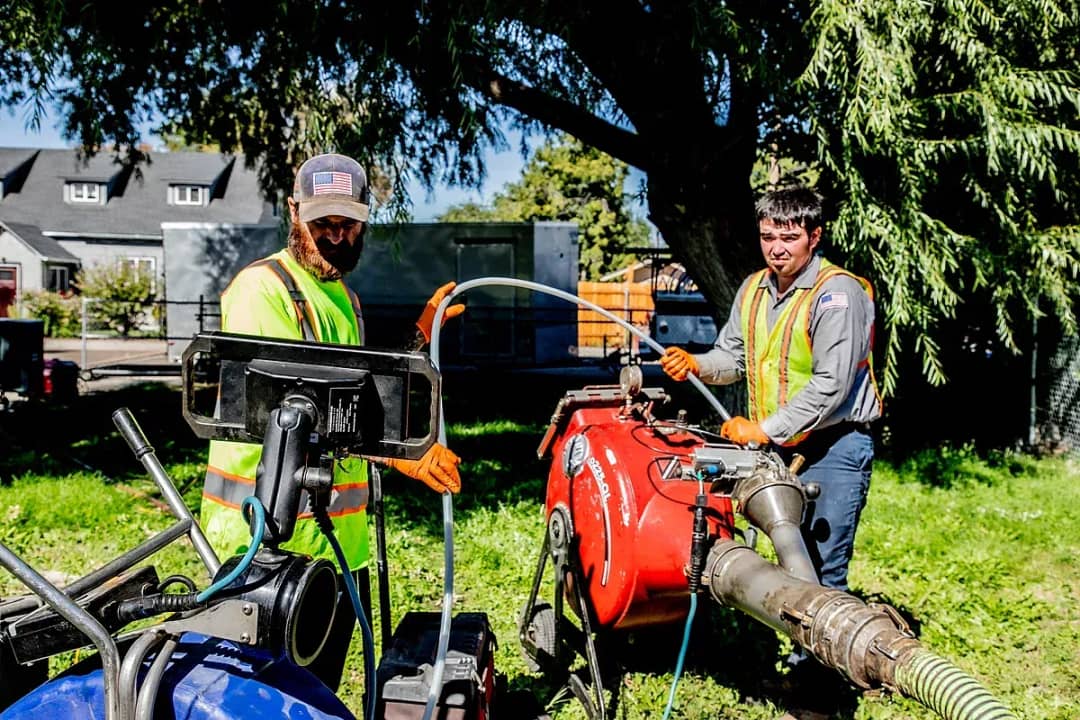
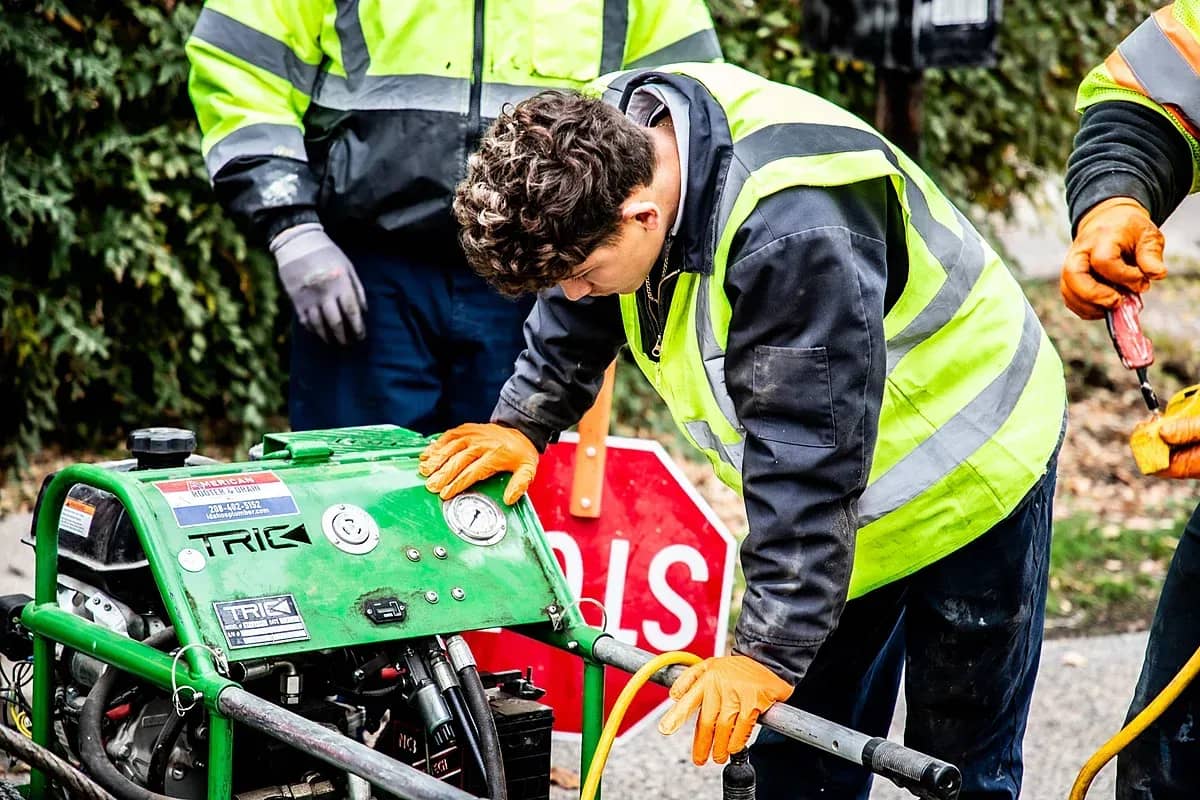
A hand auger (the small manual drain snake sold at any hardware store) is a reasonable next step for a single sink or tub that a plunger didn't fix, especially for a hair clog sitting within the first few feet of pipe. It's not going to help with a toilet clog beyond the trap, a clog further down the branch line, or anything that keeps coming back within days of clearing it — at that point you're dealing with something a 25-foot hand tool can't reach or diagnose, and it's worth calling in a cable machine that can actually get to it and tell us what's there.
Is this just one drain, or a bigger sewer-line problem?
This is the question that actually matters most for figuring out what you're dealing with. A single slow or stopped fixture — one sink, one shower, one toilet — with nothing else in the house acting up is usually an isolated clog local to that fixture's branch line, and it's typically a same-day fix.
Two patterns point somewhere else entirely, toward the main line rather than any one fixture:
- Multiple drains acting up at the same time — a bathroom sink that's slow and a tub that's slow and a toilet that's sluggish, all in the same window, rather than one fixture with a problem
- One fixture reacting when a different one runs — a toilet that gurgles or bubbles when the washing machine drains, or water backing up into a tub when someone flushes elsewhere in the house
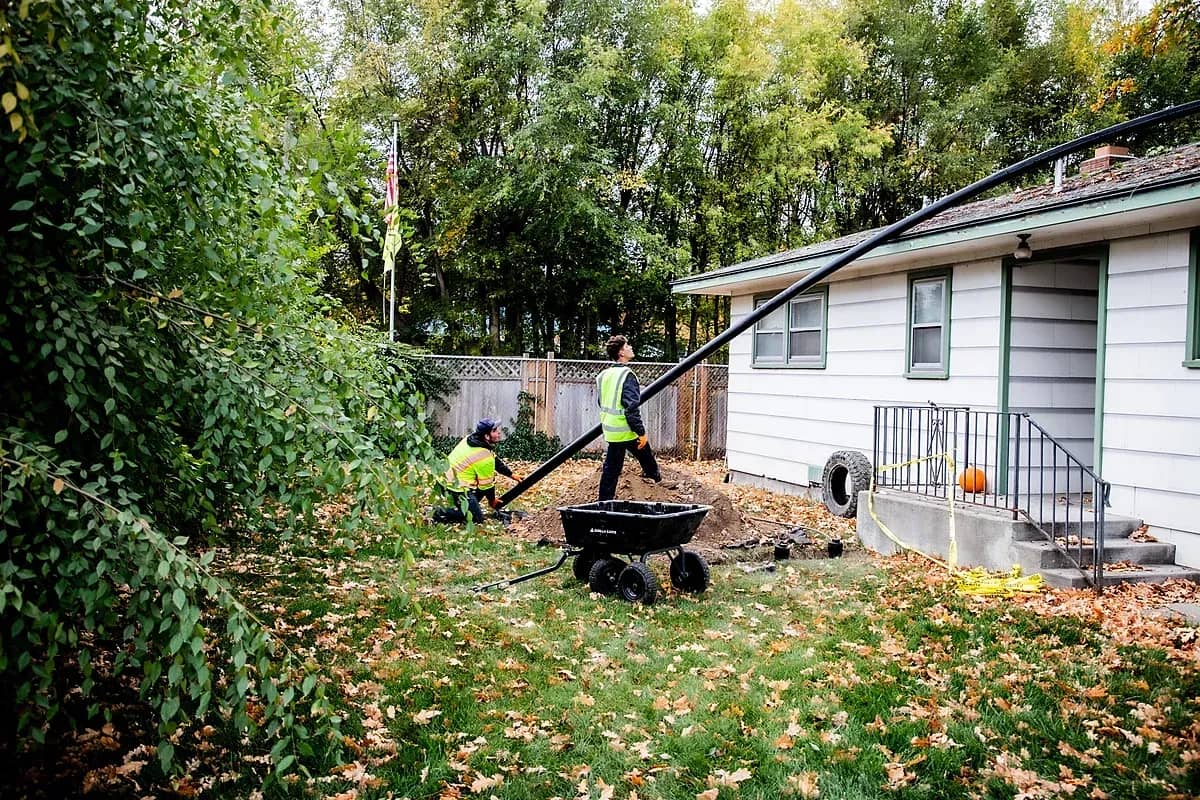
Either of those means the blockage is downstream of where these lines join, in the main line that carries everything out to the sewer, and clearing the one fixture you noticed first won't fix it — the same symptom will just show up again somewhere else in the house within days. If that's what you're seeing, a sewer camera inspection in Boise is the right next step so we can actually see what's happening in the line instead of guessing, and if it turns out to be a line issue rather than a clog we can clear, our sewer line repair team picks it up from there.
How fast can you get someone out today?
We run same-day scheduling across Boise when the day's calls allow for it, and an active clog — especially a toilet close to overflowing or a kitchen sink that's the only one in the house — gets prioritized over routine work. Call (208) 366-5771 and we'll give you a real answer on timing rather than a vague "sometime today." A technician looks at the actual fixture before quoting anything, explains what's causing it in plain terms, and puts a price in writing before doing any work past that initial diagnosis.
For a single, straightforward branch or fixture line — the kind of clog most of this page covers — we run a flat $59 drain-cleaning special. That price is for one line, not a main-line backup; if what looked like a simple clog turns out to be a sewer-line problem once we've had a look, we'll walk you through the actual variables — access, pipe material, whether the main line is involved — and get you a free on-site estimate before anything past diagnosis happens. No guessing, no surprise number once we're already inside the wall.
Worth doing once the immediate clog is handled
Clearing today's clog is the goal right now, but if this fixture — or the house in general — has a habit of backing up every few months, that's a pattern worth addressing rather than repeating this same call on a rotation. Our drain cleaning service in Boise covers the maintenance side of this: clearing lines before they fully stop rather than after, which matters more in older North End and East End homes on original cast iron than it does in a newer PVC-piped Foothills build, but is worth a look either way if repeat clogs are becoming a pattern.
For everything else American Rooter & Drain handles around Boise, our Boise plumbing page covers the full range, from leak repair to water heaters to sewer line work.
Ready when you are
A stopped drain doesn't get better on its own, and the longer standing water sits, the more it tends to back further into the house. American Rooter & Drain is licensed under Plumbing License PLB-C-13057, and every technician diagnoses the actual fixture before quoting anything, gives you a flat-rate number in writing, and offers a free on-site estimate for anything beyond the straightforward single-line clean. Call (208) 366-5771 now and we'll get someone headed your way.