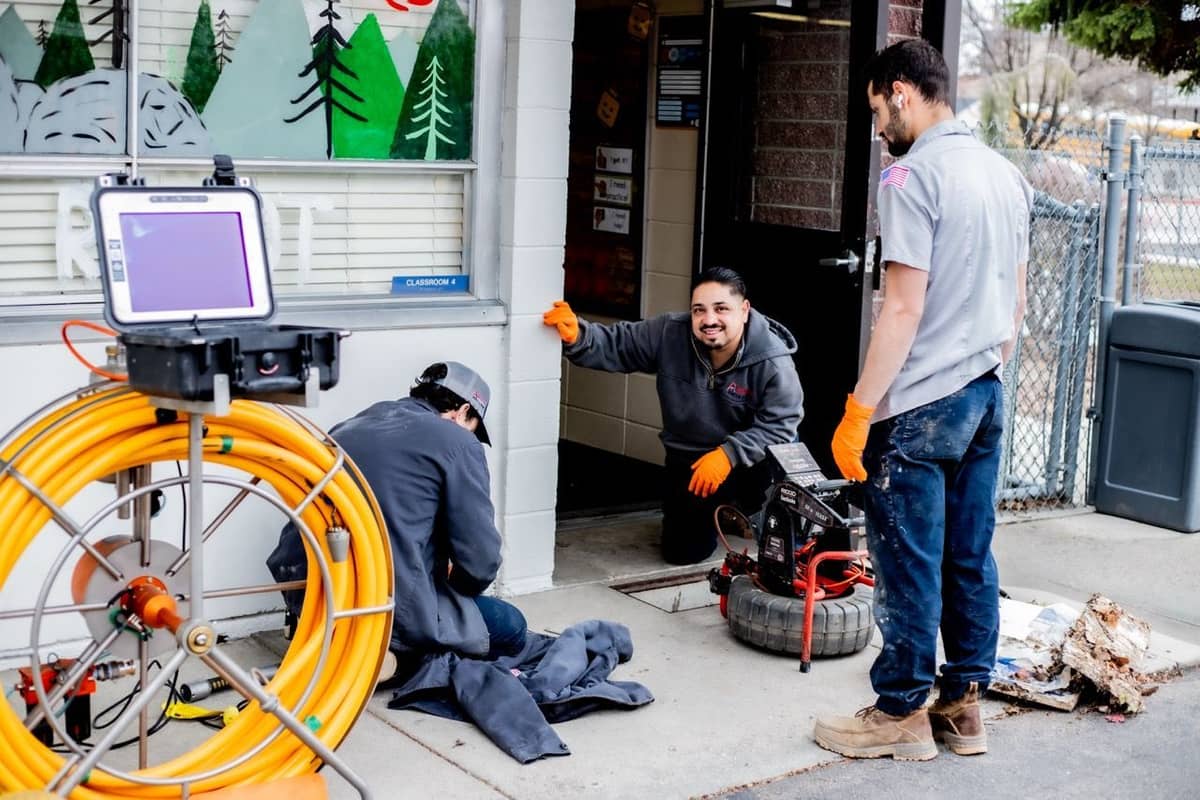
Why routine cleaning matters more here than it does in a lot of towns
Boise's housing stock spans close to a full century in some neighborhoods, and pipe age drives almost everything about how a drain line behaves. In North End and East End homes built in the early-to-mid 1900s, it's common to still find the original cast-iron branch lines running from the kitchen and bath out to the main. Cast iron corrodes from the inside out — the interior wall roughens and narrows over decades, and that rough surface is what grabs grease, soap curd, and hair instead of letting them pass through. A line that would flush clean in a newer house can catch and build a clog in an older one simply because of what the pipe itself is made of.
Boise Bench and the older mid-city neighborhoods are a mixed bag — some homes have been re-piped over the years, some haven't, and the honest answer for those addresses is that we can't tell you which situation you're in without looking. Out toward the Foothills, Harris Ranch, and the newer construction ringing the edges of town, it's almost all PEX supply and PVC drain line, and buildup from age just isn't the issue yet. What we see there instead is builder-grade fixtures failing early, or construction debris — a stray bit of drywall, a chunk of packaging — that got left in a line during the build and didn't show up as a problem until someone moved in and started using the house.
Cabling or hydro-jetting — how we decide
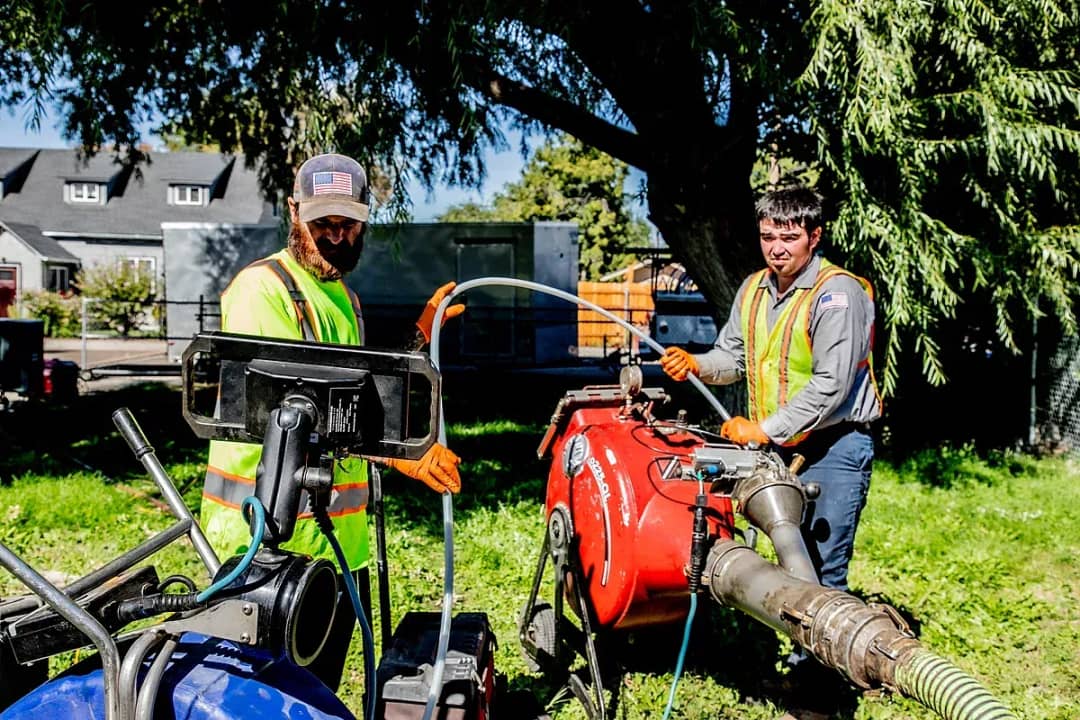
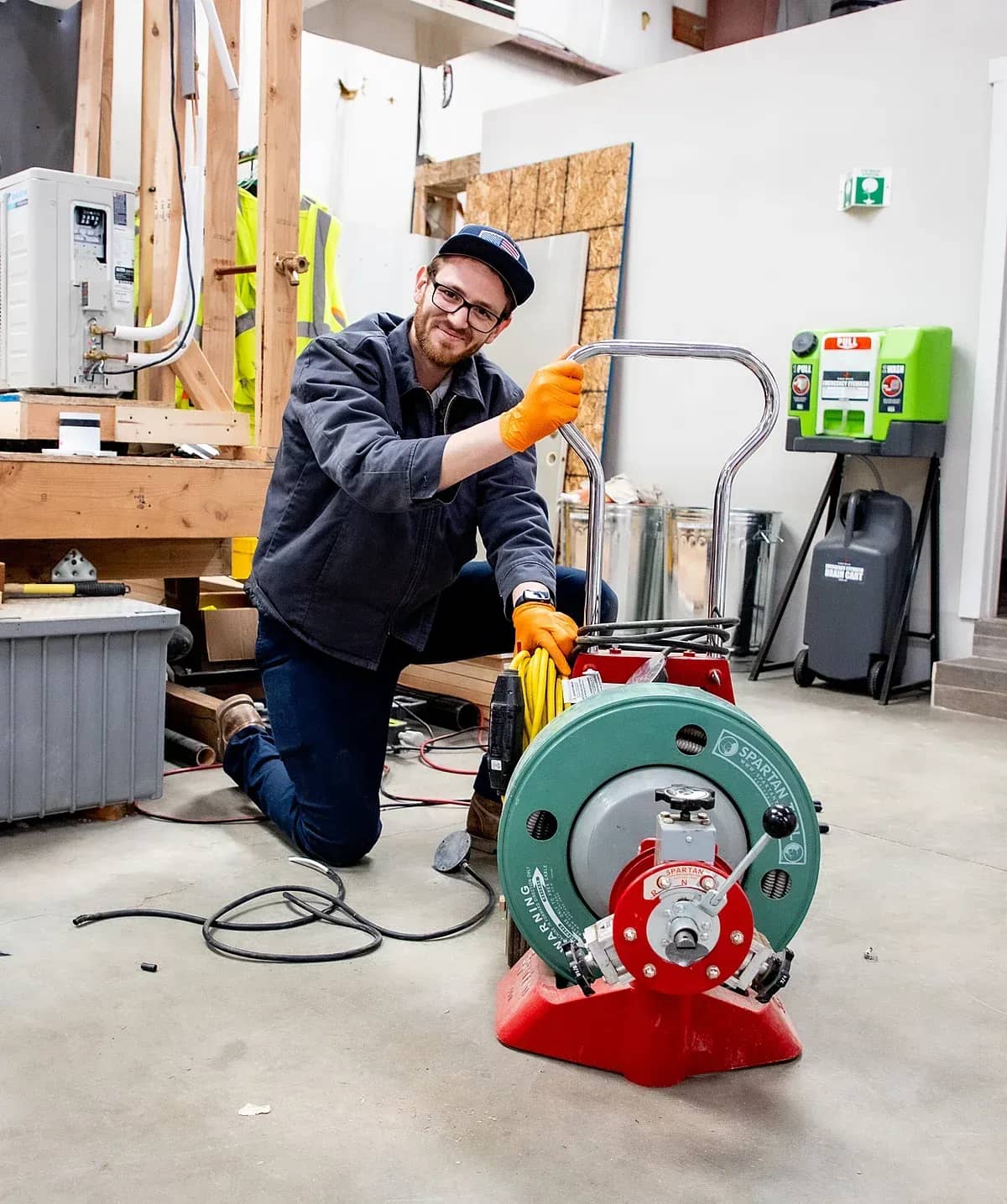
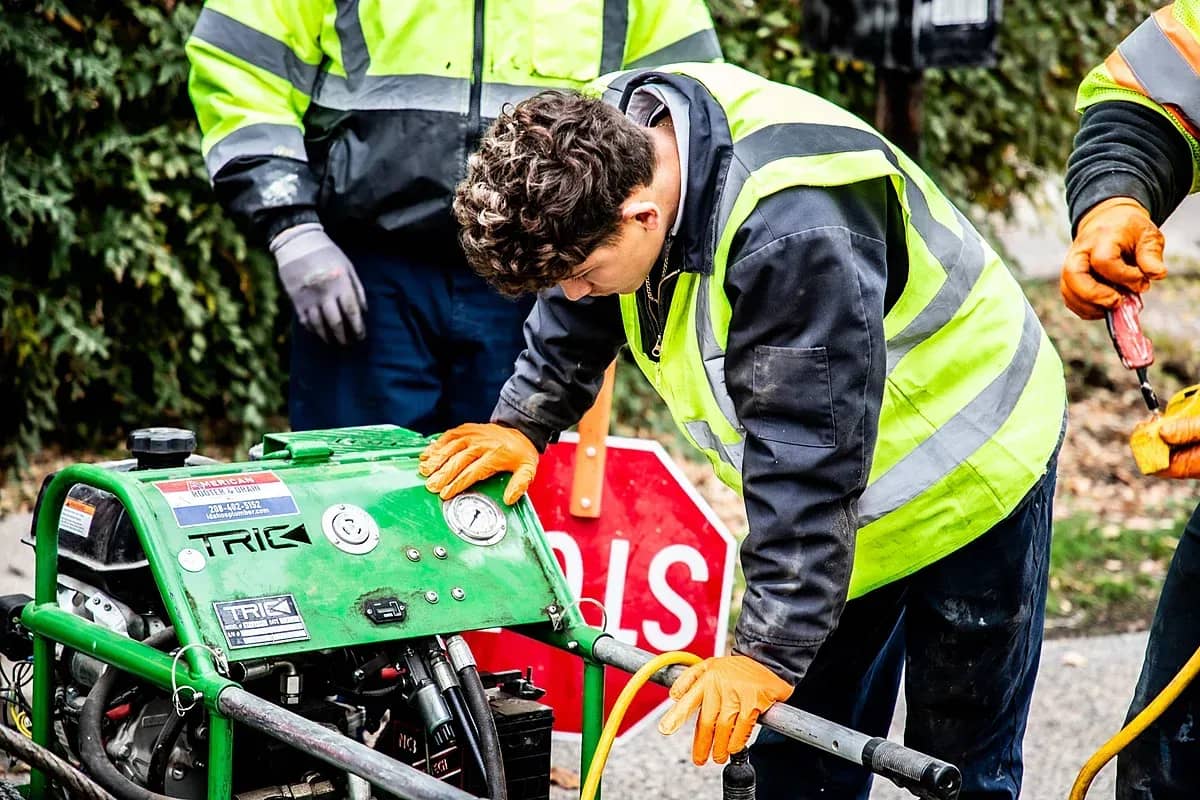
Both tools clear a line, but they don't do the same job, and using the wrong one on the wrong pipe can cause more harm than good. A cable auger spins a cutting head through the line to break up and pull back clogs, roots, and heavy debris — it's fast, effective, and the right first move on most calls. Hydro-jetting uses high-pressure water to scour the entire interior wall of the pipe clean, not just punch a hole through the middle of the clog, which is why it tends to buy more time before the next slowdown.
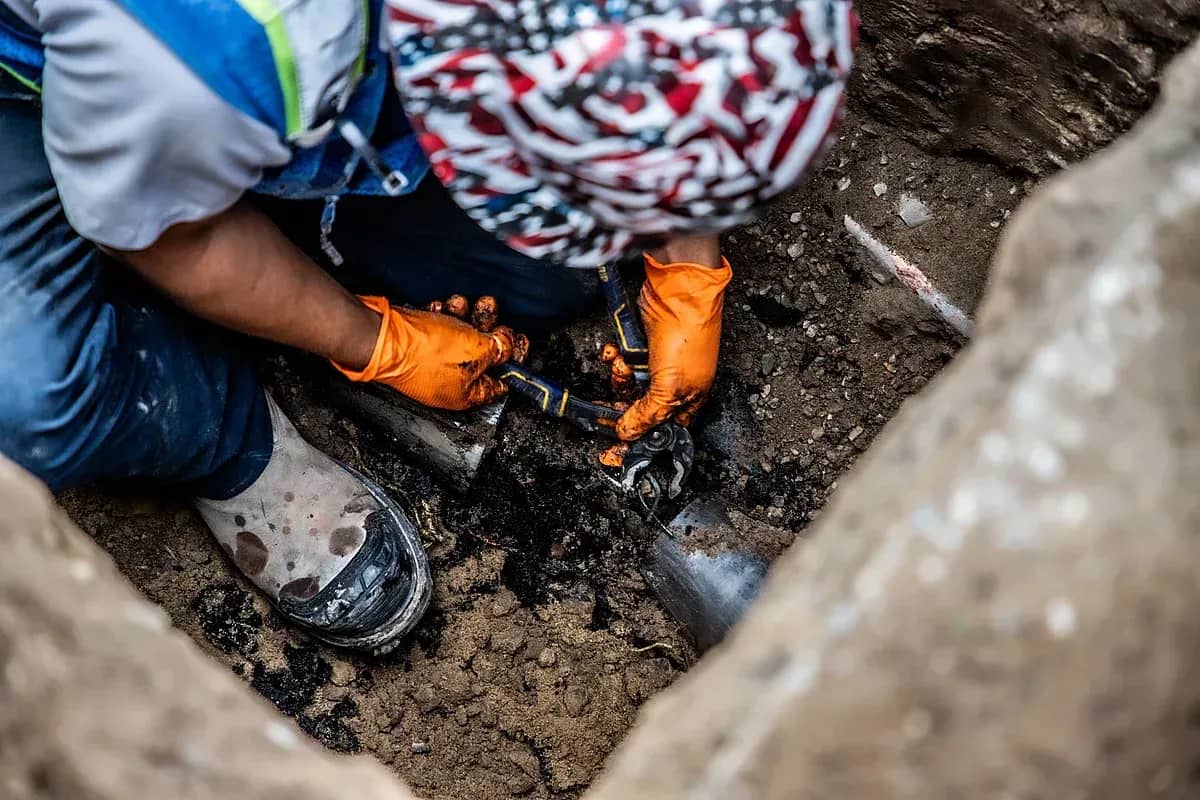
The catch is that jetting isn't automatically the better option everywhere. On a line that's already thin-walled or badly corroded, aggressive water pressure can be too much for the pipe to take. That's the main reason camera-first diagnosis matters so much on Boise's older lines — before we recommend jetting on a North End or East End lateral, we want to see what condition the pipe is actually in, not guess based on the age of the house. If a camera run turns up separated joints, a bellied section, or a fracture rather than ordinary buildup, that's no longer a cleaning job — it's a repair, and we'll walk you through sewer line repair in Boise instead of cleaning a line that needs to be fixed.
How often should a Boise home get its drains cleaned?
It depends less on a fixed calendar and more on the line's own history. A newer Foothills or Harris Ranch home on PVC drain lines can often go years between cleanings, since there's no decades of interior corrosion working against it — a slow drain there is more likely a one-off grease clog than a sign the whole line needs attention. An older North End or East End property with a documented pattern of slow drains is a different story; once we know a cast-iron line has already narrowed, a yearly or twice-yearly cleaning on the worst-behaving fixture line is often cheaper in the long run than waiting for a full backup. The honest way to answer this for your specific house is to have a technician look at the line's actual condition rather than go by the home's age alone.
Why fall is drain-cleaning season on the older streets
Boise's tree canopy is one of the city's best features and one of its more persistent plumbing headaches. North End streets in particular are lined with mature trees whose root systems have had generations to find their way into old clay and cast-iron pipe joints. Roots don't need a break in the pipe to get in — a joint that's shifted even slightly is enough for fine root hair to work through, and once it's inside a warm, wet line it grows into a mat that snags everything flowing past it. Fall leaf drop is when we see root-related drain calls climb, partly because the trees are shedding root mass along with their leaves and partly because heavier fall watering and irrigation shutoffs shift how much moisture is in the soil around old laterals. If you're dealing with a line that seems to slow down every autumn like clockwork, that's usually root intrusion, and it's worth having it looked at before winter rather than after the first hard backup.
Downtown and river-corridor infill puts extra strain on old lines
A lot of new building downtown and along the river corridor means new fixtures — additional bathrooms, accessory units, remodeled kitchens — tying into drain and sewer infrastructure that was originally sized for a much smaller household. Adding fixture count to a line that was never designed for it doesn't cause an immediate failure, but it does mean less margin: a line that used to handle occasional heavy use without complaint starts backing up sooner once it's carrying more daily volume. If your home or building has had work done that added plumbing fixtures without any corresponding look at the branch lines feeding them, that's worth a maintenance cleaning even if nothing has backed up yet.
Don't forget the floor drain
Foothills basements and daylight walkout homes almost always have a floor drain somewhere near the water heater, furnace, or laundry area, and it's the drain in the house most likely to be completely forgotten. A floor drain with a dry trap can let sewer gas into the basement, and a floor drain that's slowly collecting sediment won't show any symptoms at all until the day it's needed most — usually during a water heater leak or a laundry overflow, which is the worst possible time to discover it's already partially blocked. We check floor drains as a standard part of a full drain cleaning visit rather than treating them as an afterthought.
What if the drain keeps clogging even after it's cleaned?
A single cleaning that doesn't hold is telling you something. If a line backs up again within weeks of being cleared, that's usually not a cleaning problem anymore — it's a sign of a drain that keeps backing up no matter how often it's cleaned, which points toward a structural issue like a belly in the pipe, a partial collapse, or root intrusion that's regrowing faster than a cable can keep up with. That's a camera-inspection conversation, not another round of cabling. And if you're reading this because a drain in your home has already stopped completely rather than just running slow, routine maintenance cleaning isn't the right page for you — head to our clogged drain repair page instead, since that's a same-day situation, not a scheduled one.
What a maintenance visit costs
A single, straightforward branch or fixture line — a kitchen sink, a bathroom drain, a laundry line — cleaned on its own is our flat $59 drain-cleaning special. That price is for one branch line and doesn't cover a main line clog. Anything beyond that single-line scope — a main line, a line that needs camera diagnosis first, hydro-jetting on a longer or harder-to-access run — depends on what we actually find once we're on site: how the line is accessed, what the pipe is made of and how old it is, and how much diagnostic work it takes to know what we're dealing with. Rather than guess at a number over the phone, we'll look at the line and hand you a flat, written price before any work begins, and a free on-site estimate is always available if you want that number before committing to anything.
American Rooter & Drain is a licensed Idaho plumbing contractor, Plumbing License PLB-C-13057, and we've been serving the greater Treasure Valley since 1945. If a drain in your Boise home has been getting slower by the week, call (208) 366-5771 and we'll get it cleaned properly — cabled, jetted, or camera-checked first, whichever the line actually calls for — before it turns into the kind of backup that can't wait for a scheduled visit.