Is it a simple clog, or is it the sewer line itself?
A single slow drain is usually a local clog — hair, grease, or soap scum sitting in that one branch line. A sewer line problem looks and behaves differently, and it's worth knowing the difference before you call anyone out:
- More than one fixture backing up at the same time — a toilet that won't flush right when the washing machine drains, or a shower that backs up when you run the kitchen sink
- A gurgling toilet or floor drain when another fixture is draining, which usually means air trapped behind a partial blockage further down the line
- Sewage odor in the yard, the basement, or around a floor drain, rather than just near one fixture
- A soggy, unusually green, or sunken patch of yard, often tracing roughly the path the lateral takes from the house toward the street
- Backups that keep coming back on a schedule no matter how many times a single drain gets cleared
If what you're seeing is confined to one fixture, that's very likely a standalone clog, and our drain cleaning service in Boise is the faster, less invasive fix. If it's multiple drains backing up together or the problem is recurring on a pattern no matter what gets cleared, the lateral itself is the more likely culprit, and that calls for a camera, not another round of cabling.
Why camera inspection comes before any repair quote
We don't quote sewer line repair work off a guess. A sewer camera inspection in Boise is the first step on every lateral call, full stop — a technician feeds a waterproof camera down the line and watches, in real time, exactly what's happening inside the pipe: where a break or belly sits, how bad root intrusion has gotten, whether joints have separated, whether it's a short section or the whole run. That footage is what an accurate quote is actually built on.
Skipping this step and just quoting off symptoms means one of two bad outcomes: overcharging to cover the unknown, or underquoting and having to renegotiate mid-dig. Neither is fair to you, so we don't do it. You get to see what we saw, not just take our word for it.
Why do sewer laterals fail in Boise in the first place?
The cause tracks pretty closely with when and where a home was built.
North End and East End homes are Boise's oldest housing stock, and a lot of them are still running original clay or cast-iron laterals from the early-to-mid 20th century. Both materials age in predictable ways — clay pipe develops hairline cracks at the joints over decades, and cast iron corrodes and roughens from the inside. Either one gives tree roots exactly the kind of opening they're looking for.
Tree roots are a real problem on Boise's mature, tree-lined older streets and along the Boise River Greenbelt corridor, where established canopy has had fifty-plus years to grow root systems that reach well past the property line. A root doesn't need a hole to get into a pipe — a hairline gap at a joint is enough for a root hair to work its way in, and once it's inside the pipe, it thickens fast, because it's sitting in a steady, nutrient-rich water source. Left alone, root intrusion narrows the line, catches paper and debris, and eventually can crack or collapse the pipe around it.
Foothills and Harris Ranch construction runs PVC laterals, which don't have the root-intrusion or internal-corrosion problems older materials do. When a newer line fails, it's usually a different mechanism entirely — a bellied section where the trench backfill settled unevenly after construction, creating a low spot where solids collect and slow the flow, or leftover construction debris that never got flushed out of the line before the house was finished.
Downtown and river-corridor infill brings its own wrinkle: new construction or a remodel often ties into an older section of lateral that was never sized for a modern household's fixture count and water use. The new work can be flawless and still back up if the old connection point downstream can't keep up.
Trenchless repair vs. traditional excavation — what actually decides it
Once the camera inspection shows us what's wrong, the pipe's condition (not our preference) decides which repair method makes sense.
Trenchless repair — pipe lining or pipe bursting — rehabs the line from one or two access points instead of digging a trench along its full length. Pipe lining inserts a resin-saturated liner into the existing pipe and cures it in place, creating a new pipe within the old one. Pipe bursting pulls a new pipe through the old line's path while breaking the old pipe outward as it goes. Both avoid tearing up mature landscaping, an established driveway, or hardscaping above the line, which matters a lot on North End and East End lots where the yard has had decades to mature. Trenchless methods need the existing pipe to be in a condition that can support the process — a badly collapsed section or a line with major offset joints isn't always a candidate.
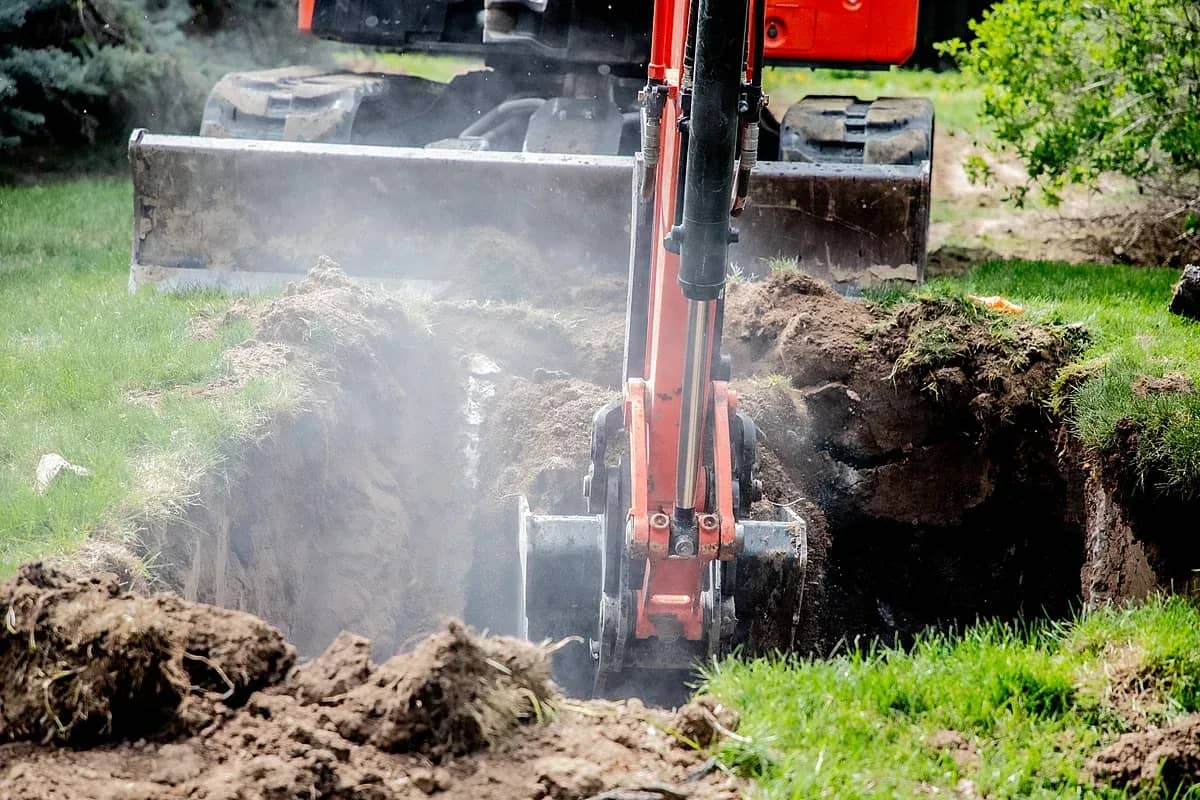
Traditional open-cut excavation digs down to expose and replace the damaged section directly. It's the more disruptive option to the yard, but it's the right call when the pipe has collapsed, shifted, or deteriorated too far for a liner or burst head to work reliably, or when the damaged section is shallow and easy enough to reach that excavation is actually the more efficient path.
Depth and length of the run, the pipe's material and current condition, how much of the line is even accessible for trenchless equipment, and how much surface restoration a dig would require all factor into which method we recommend — and into the final number. We won't put a dollar figure on any of this in the abstract, because it genuinely depends on what the camera finds at your property. A free on-site estimate is how you get an actual number, not a range pulled from a brochure.
What Boise permitting adds to the timeline
Any job that involves a full sewer line replacement or a meaningful amount of excavation requires a permit and inspection through the City of Boise and Ada County. That's not optional paperwork we're padding the job with — it's a real requirement for lateral work of that scope, and it adds both a fee and a scheduling step beyond what a smaller repair needs. We handle the permitting process as part of the job rather than leaving it for you to sort out, but it's worth knowing upfront that a full replacement isn't a same-day turnaround the way a localized repair often is.
How much can a sewer lateral problem actually cost you if it's ignored?
Beyond the inconvenience of repeat backups, an unaddressed lateral issue tends to get more expensive to fix the longer it sits — a hairline root intrusion left alone becomes a fully compromised joint, and a minor belly that's just slowing flow can progress toward a section that's collapsed enough to force excavation where trenchless repair might have worked earlier. We're not going to attach a number to that here, since it depends entirely on what stage the damage is at when we look at it, but catching a lateral problem on camera early is consistently the cheaper outcome compared to waiting for a full backup.
What to expect from an on-site visit
A technician runs the camera first, walks you through exactly what it shows — location, material, and cause of the problem, not just "your line's bad" — and then puts a flat-rate price in writing before any repair work beyond that diagnosis begins. If trenchless repair is a realistic option for your line's condition, we'll say so and explain why; if the pipe's condition calls for excavation instead, we'll explain that too, including what the permit and inspection step means for your timeline. You approve the plan before we start digging or lining anything.
Ready to get a real answer on your Boise sewer line?
If you're seeing multiple drains backing up together, catching a sewage smell that keeps returning, or noticing a soft spot in the yard, don't keep feeding another bottle of drain cleaner into the system — it won't reach a problem that's this far down the line. Call (208) 366-5771 for a free on-site estimate and camera inspection, and see what our technician's already worked on across Boise's older and newer neighborhoods for the full range of plumbing service we run in Boise — American Rooter & Drain, serving the greater Treasure Valley since 1945.