Downtown Nampa's clay laterals were never built to keep roots out
The blocks around 1st Street, Front Street, and the 1903 depot — ZIP 83651 — still run on vitrified clay sewer laterals and cast-iron drain stacks. Clay pipe itself holds up fine underground for a century or more; the problem is the joints. Older clay sections were never sealed the way modern PVC and ABS are glued and gasketed, so every joint in a downtown lateral is a hairline gap a root can find. A mature street tree only needs one gap to send hair roots into the pipe, and once they're in, they mat across the flow path and catch everything moving past — paper, grease, anything solid enough to snag.
Move out from downtown and the picture gets less predictable, not more. The mid-century belt around Lakeview Park and Northwest Nazarene University mixes clay, early cast iron, and later repairs on the same street, so build date alone doesn't tell you what's in the ground. The 1970s-through-90s ring along Karcher, Midland, Greenhurst, and Garrity runs mostly ABS and PVC, sidestepping the clay-joint problem entirely. New construction toward Franklin Road, Northside Boulevard, Ustick Road, and Lake Lowell runs PEX and PVC with its own failure mode instead: construction debris — mud, adhesive, wood scrap — left inside an otherwise sound line during the build, rather than root intrusion or age.
How can you tell a lateral problem from a simple clog?
A simple clog and a failing lateral start out looking identical, and that's exactly what causes homeowners to pay for a cable clearing two or three times before anyone asks the right question. The distinction is what happens after the drain clears.
Clear a normal clog and it stays clear. Clear a lateral problem and it comes back — often on a rough schedule, because the same root mass or the same low spot in a bellied pipe refills at roughly the same rate every time. If your drains have backed up more than once recently, or if a drain that keeps backing up has become a pattern rather than a one-off, that's the signal to stop cabling and start diagnosing. The same goes for more than one fixture backing up at once — a kitchen sink, a tub, and a floor drain all acting up together points at the shared lateral, not any single fixture. See sewer line backing up for what that combination usually means.
Offset joints, bellies, and crushed pipe all present the same way
Here's what makes guessing expensive: an offset clay joint, a bellied section where the ground settled over the pipe, and a fully crushed segment all produce the exact same symptom from inside the house. None of them announce themselves — a root mat working through one bad joint, a low spot holding standing water, and a section crushed by decades of soil settling all just look like "the drain backed up again."
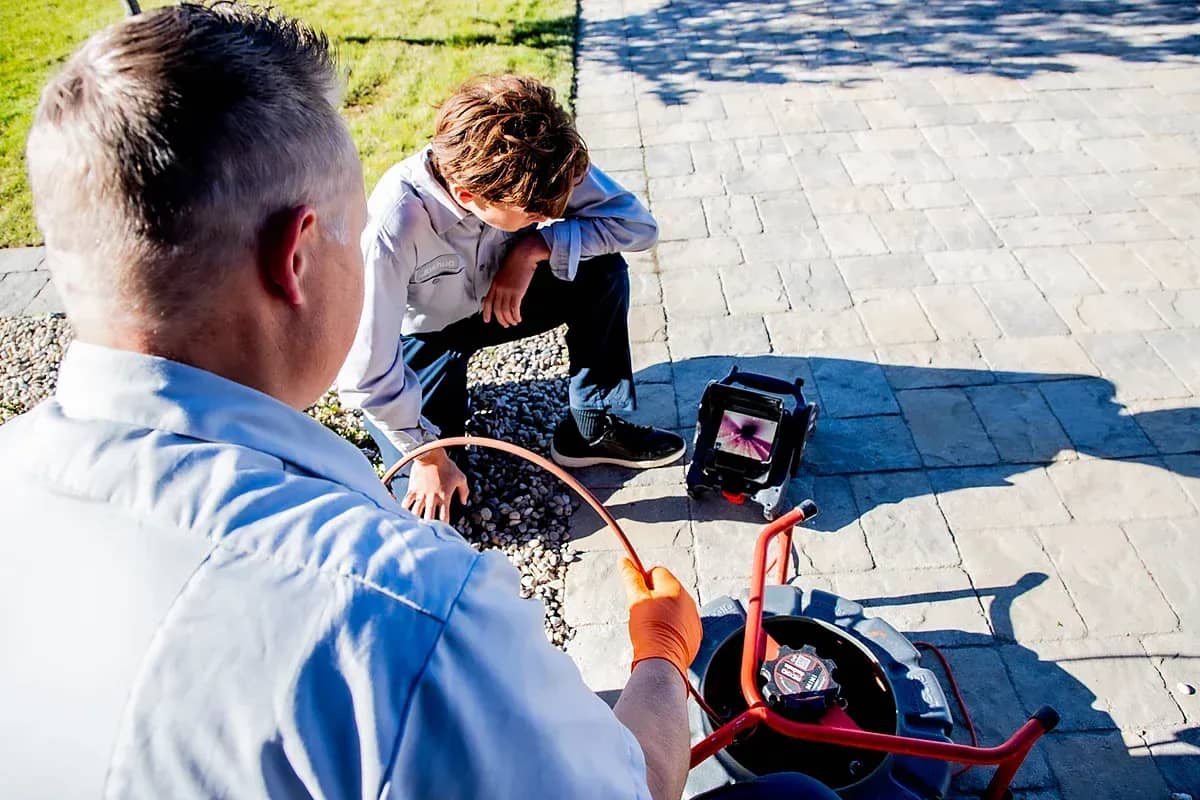
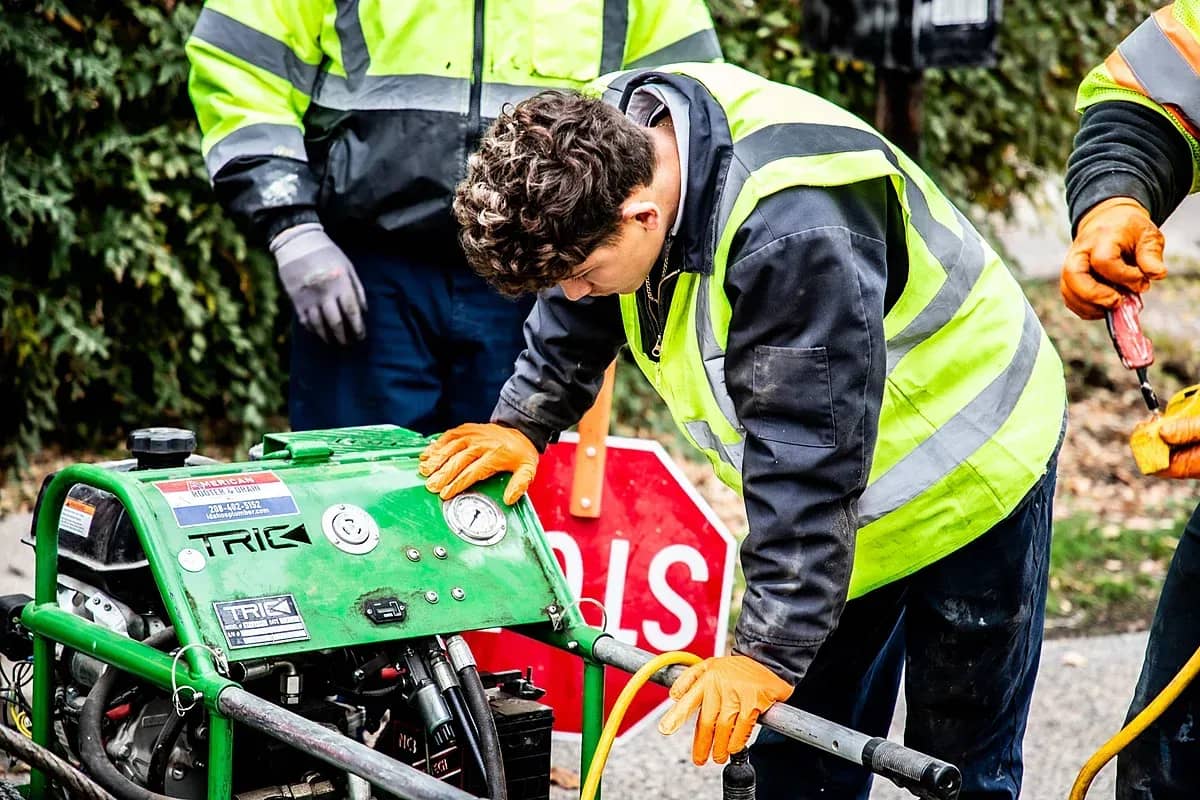
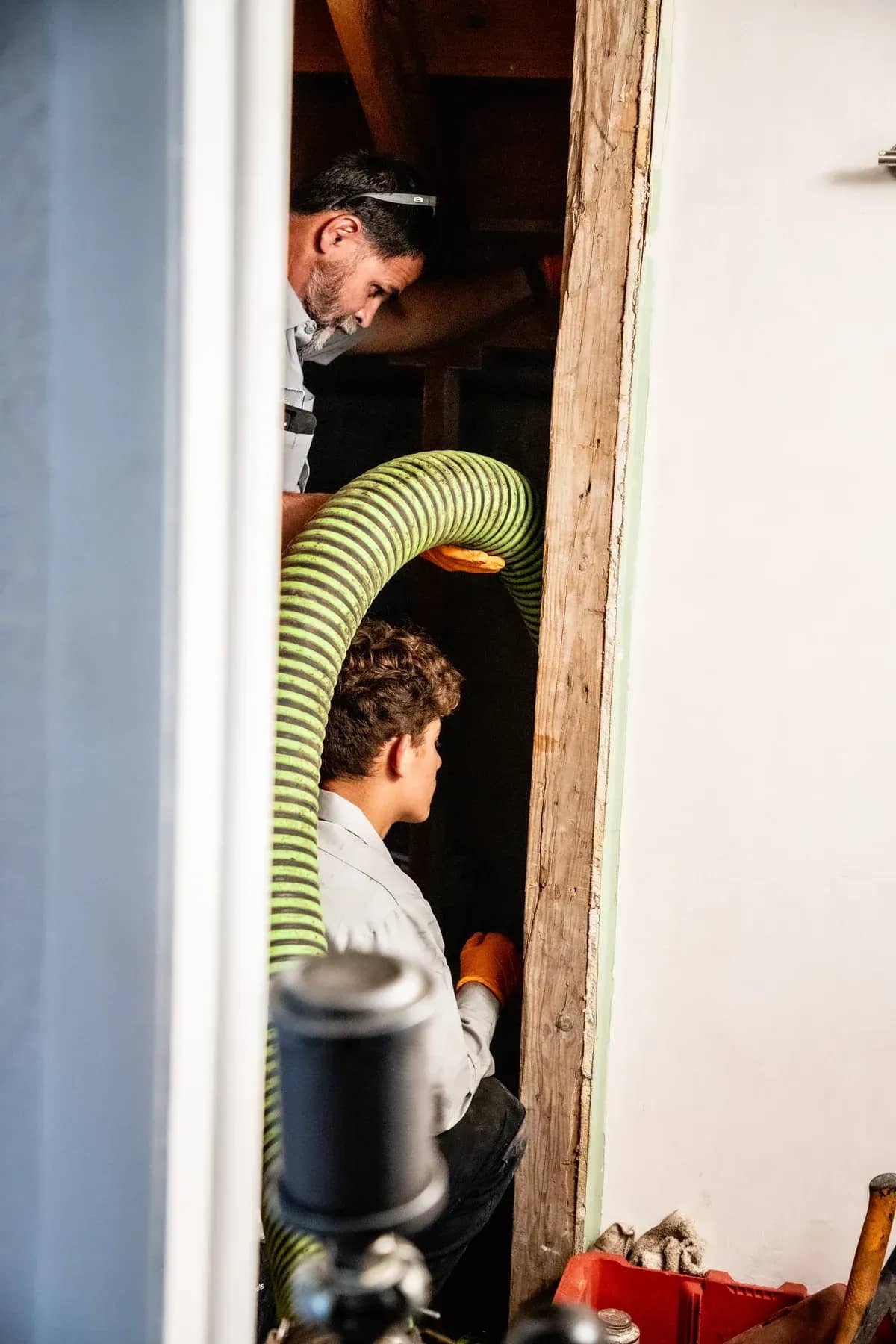
That's why we run a full sewer camera inspection in Nampa before quoting a single sewer line repair. A camera run down the lateral takes about an hour and tells us where the problem sits, what it looks like, and how long a run of pipe is affected — a bad six inches of joint versus forty feet of bellied pipe are two different jobs, and no amount of experience substitutes for seeing it. If tree roots in the sewer line are the culprit, the camera also shows how far the roots have spread, which matters for whether a targeted repair still makes sense.
We won't quote a repair off a description of symptoms — pricing that way means either padding the number to cover what we can't see or renegotiating once we're in the ground. Camera first, quote second, every time.
Spot repair or full trenchless replacement — which does your line need?
Once the camera shows what's actually wrong, the repair usually falls into one of two categories.
Spot repair targets a single failed joint or a short damaged section. If the camera shows one offset joint letting roots in while the rest of the clay run is sound, there's no reason to replace forty feet of working pipe to fix six inches of bad one — excavate or access that section, cut it out, and rejoin the line.
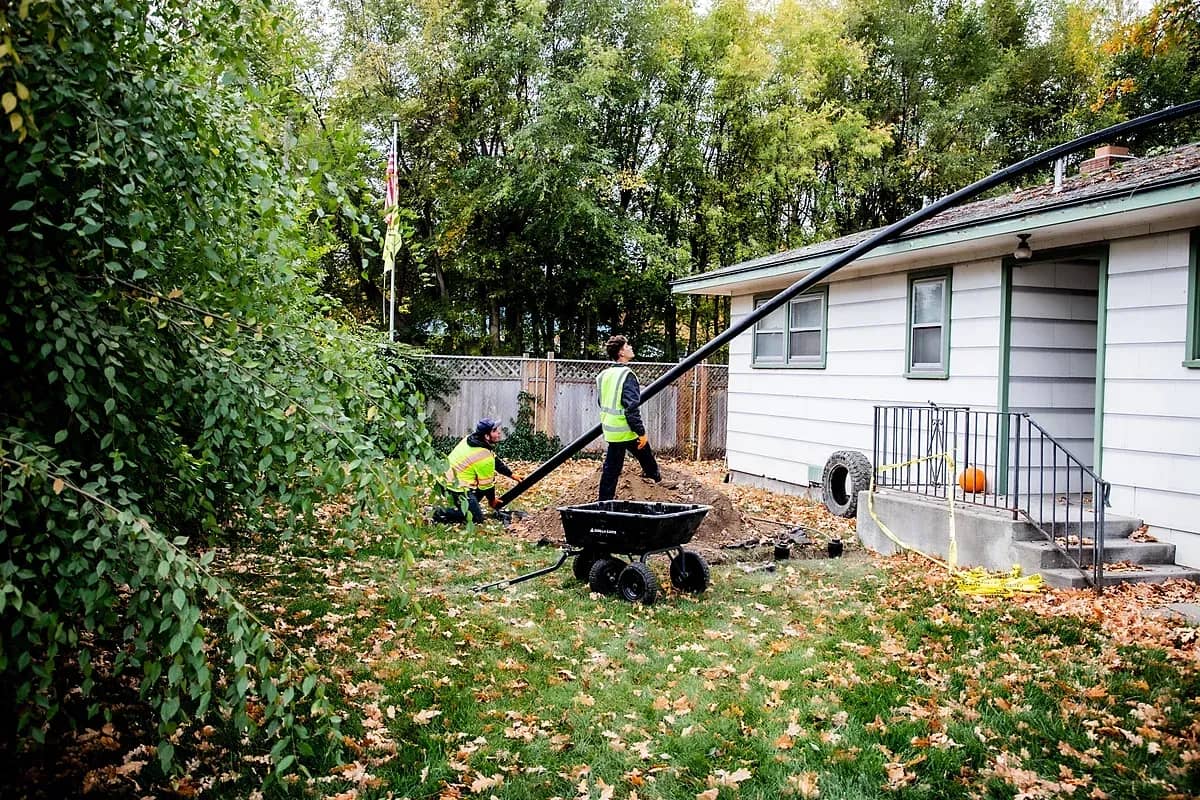
Full trenchless replacement makes sense when damage is spread across the run — a long bellied section, multiple failed joints, or a lateral old enough that patching one spot just buys a few years before the next spot fails. Trenchless pulls a new pipe through the old one's path from a couple of access points instead of digging a continuous trench, and that distinction matters most in Nampa's older, mature-canopy neighborhoods. Downtown yards and the streets around Lakeview Park carry decades-old trees and established beds that a full open trench would tear through and take years to recover. Where trenchless is viable, it's usually the better call there — not because it's automatically cheaper, but because the alternative is trenching through landscaping that took decades to grow in.
Which option applies to your line isn't something we guess at over the phone — it comes out of the camera footage, which we'll walk you through before recommending either path.
Does Nampa require a special permit for sewer line work?
Yes, and it's a detail most homeowners comparison-shopping quotes never hear about until it causes a problem. Nampa requires any excavation contractor installing a private sewer or water service line to hold a Nampa-specific qualifier before the city will issue a permit — not a blanket rule across the valley, and a contractor who can legally pull a permit in a neighboring city can't necessarily pull one here. If a bid comes in well under everyone else's, ask about this directly: a crew without the qualifier can still do the physical work, but the job stalls at inspection, and untangling that after the trench is backfilled costs more than the savings ever did. We carry the Nampa qualifier and handle permitting and inspection scheduling as part of the job.
City sewer or septic near Lake Lowell?
Most of Nampa proper is on city sewer, and that's the assumption behind everything above. But the band of Nampa-addressed property around Lake Lowell — the 1909 Boise Project reservoir that now anchors the Deer Flat National Wildlife Refuge — and land toward the county edge still runs private septic in places. That distinction changes the diagnosis: a repeat backup on septic isn't automatically a lateral problem the way it usually is on city sewer, and chemical drain treatments that are merely unhelpful on a sewer line can actively harm the bacteria a septic tank depends on. If you're near that edge of town and aren't sure which system your property is on, tell us before we diagnose anything — it changes where we start looking.
What actually determines the cost of a sewer line repair
Sewer line repair is a larger scope of work than a routine drain-cleaning call, and we won't publish a price range for it — a range does more harm than good on a job this variable, since everyone anchors on the low end and feels shortchanged when their job lands elsewhere. What moves the number:
- Depth and length of the run to the main — a shallow, short lateral is a different job than a deep run under a long front yard.
- Pipe material and condition — a single bad joint in otherwise sound clay repairs differently than a run with widespread cast-iron failure.
- Whether trenchless is viable — the camera inspection determines this, and it's the biggest factor in both cost and how much of your yard gets disturbed.
- Permit scope — a spot repair and a full service-line replacement carry different inspection requirements under Nampa's rules.
- Surface restoration — pipe under mature landscaping, a driveway, or hardscape costs more to put back than pipe under open lawn.
We diagnose with a camera first, then give you a flat-rate number in writing before any work beyond that diagnosis begins — the number you approve is the number on the invoice.
Ready to get a straight answer on your line?
If your drains keep backing up on a schedule, or you already suspect roots have found an old clay joint, don't keep cabling the same symptom. Call (208) 366-5771 for a free on-site estimate and a camera inspection that tells us — and you — what's happening underground before anyone talks about a repair. American Rooter & Drain is licensed under Plumbing License PLB-C-13057, with a Nampa office at 1214 12th Ave S Suite 3, Nampa, ID 83651, and flat-rate pricing in writing before work begins beyond diagnosis.