
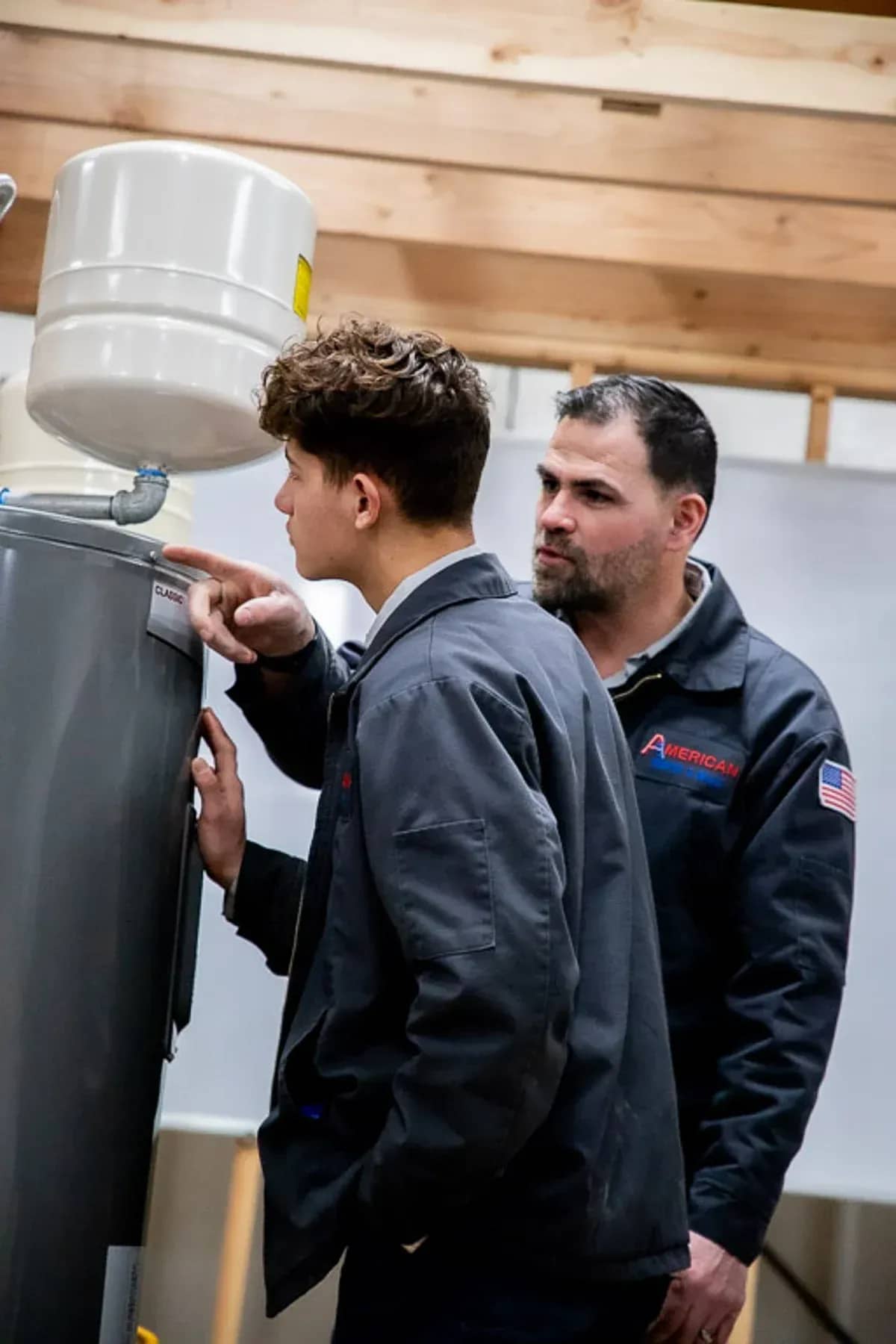
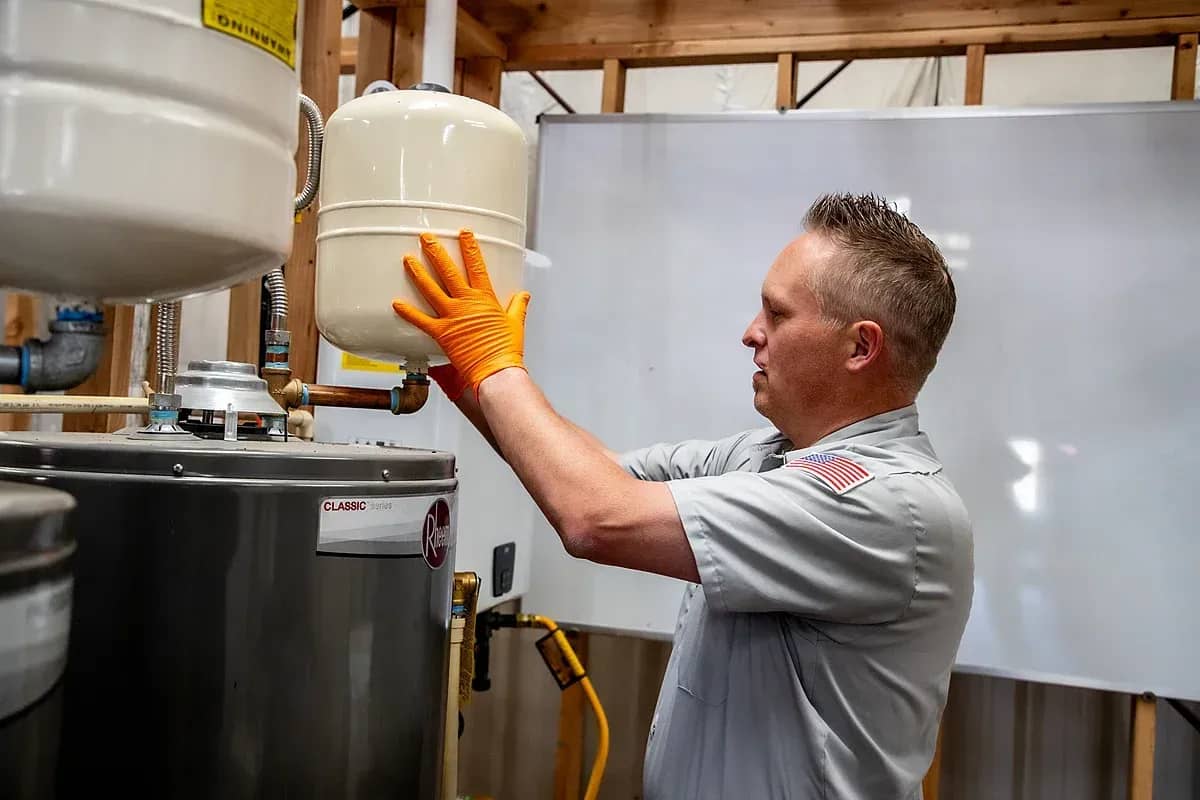
In Boise the hard part is usually not the heater. It is where the heater lives. Boise's housing stock runs from the oldest North End homes with the tank at the bottom of a narrow basement stairwell, through Bench-era houses with the water heater wedged into a hall closet or dropped through a crawlspace hatch, out to the newer subdivisions on the south and west sides where it stands in the garage with open floor around it. Same tank, genuinely different jobs — different time on site, different tools, sometimes a different install plan entirely.
Most of the water heater work we do in Boise ends in a replacement rather than a repair. If you just need somebody out today, the number above does that.
How long does it take to replace a water heater in Boise?
A like-for-like swap — gas tank out, same-size gas tank in, same spot, existing vent and gas line already correct — is a morning's work rather than an all-day job, from the time the truck is in your driveway to a tested heater making hot water again. A good chunk of that is draining the old tank, and it is the part nobody can speed up. The whole tank has to leave through a garden hose before anyone carries anything, and a tank thick with mineral buildup drains slowly.
What adds time, in roughly the order we run into it in Boise:
- Stairs. A basement install in the North End or the East End means the old tank goes up the stairs still heavy with residual water and the new one comes down. On a straight open run that is a short add. On a stairwell with a turn at the landing and a low header, it is longer and it takes a second set of hands — which is why we would rather know about it when you call than discover it on arrival.
- A doorway narrower than the tank. Older Boise utility rooms were framed around whatever water heater was set in place before the wall went up. If the opening is tighter than the new tank's diameter, the options are a taller-and-narrower model of the same capacity, or pulling the door and casing. Both are workable. Neither is a surprise we want to hand you mid-job.
- Shutoff valves that will not shut off. A gate valve nobody has turned in decades can refuse to seat again once it moves. When the cold inlet valve fails we replace it as part of the work, which is a short add. When the home's main shutoff also fails, we are waiting on the water utility to key off the meter — and that is what turns a short job into an all-afternoon job.
- Venting that was never right. An older gas install can have a vent connector with too little rise, too long a horizontal run, or a diameter that no longer matches the heater going in. We check it before the new tank is set and we correct what needs correcting, because a gas water heater spilling into the room is a carbon monoxide problem rather than a paperwork problem — but the correction is real work, and we price it before we do it.
- Switching from a tank to tankless. Plan on most of a day. The gas line usually has to be upsized to feed the burner, the venting path is different from a tank's and often has to be re-routed, condensate has to drain somewhere, and it needs power for its controls.
We tell you which of those categories your job falls into before we start, not after.
Does it cost more if my water heater is in the basement or crawlspace?
It can. Where the heater sits decides how long the job takes, how many people it takes, and what has to be corrected on the way in — and those are the things a price is built out of. Here is what each location means on our end.
Garage installs are the standard in Boise's newer south and west side construction, and they are the easiest job on this list — open access, a slab that can take a spill, and room to work. A couple of things still get checked. A gas water heater is typically set on a raised platform so the burner sits above floor level, unless that specific model is listed for installation directly on a garage floor, and we confirm which rule applies to the heater going in rather than assuming. And the tank needs physical protection anywhere a vehicle can reach it.
Basement installs show up in the older core — the North End, the East End, parts of the Bench. Access is the whole story: stairwell width, the turn at the landing, headroom, and how far the tank sits from a floor drain. A basement leak is also the quiet kind. Nobody notices a weeping tank down in the basement until the drywall tells on it, which is why we look hard at the pan, the drain routing and the age of the supply connections on any basement water heater we are called out to.
Interior closets and crawlspaces are the trickiest. A closet install needs adequate combustion air and clearance to combustibles, and a closet in an older Boise home was framed around whatever heater stood in it at the time, not around what is sold today. A crawlspace water heater has to physically fit through the hatch, sit on proper support, and stay serviceable once it is down there — if the next technician cannot reach the drain valve or the anode rod that keeps the tank from rusting out, the install has created a maintenance problem that costs somebody money later.
Anywhere above finished living space — an upstairs closet, a tank over a finished basement — needs a drain pan piped to somewhere a leak can actually go without taking a ceiling with it. A pan is cheap to add during a replacement and expensive to wish you had.
Can you give me a price over the phone?
Not a real one, and it is worth saying why rather than just refusing. Before we price a replacement we check:
1. Model and serial on the existing water heater — the manufacture date is encoded in the serial.
2. Whether it runs on gas or electric, and whether both are available at that location.
3. Tank capacity today versus what the household actually needs.
4. Doorway, hallway, stairwell and hatch dimensions on the path in and out.
5. Vent type, diameter, rise and clearance — and whether it is shared with a furnace.
6. Gas line size at the heater, which decides whether tankless is even on the table without additional work.
7. Condition of the cold inlet shutoff, and of the home's main shutoff.
8. Whether there is an expansion tank, and whether the system is closed.
9. Static water pressure at a hose bib.
10. Drain pan, pan outlet, and the nearest floor drain.
11. Working clearance in front of the heater for future service.
Any one of those can change the price, and not one of them can be assessed down a phone line. That is the whole answer — it is eleven things somebody has to put eyes on before a number means anything. The visit to get you that number is free.
Do I need a permit to replace a water heater in Boise?
Yes. A water heater replacement is permitted work. Which office issues the permit depends on your address rather than your mailing city — a house with a Boise mailing address can sit inside the city limits or in unincorporated Ada County, and those are different jurisdictions with different inspectors. We confirm which one covers your address, pull the permit, and schedule the inspection as part of the job. You do not chase any of that yourself.
What the inspector is actually looking at:
- The temperature and pressure relief valve and its discharge line — correctly sized, running downward, terminating where a discharge is visible and cannot scald anyone.
- The vent: type, diameter, rise, connector length, and clearance to combustibles.
- The gas connection, the shutoff, and the sediment trap.
- Strapping and bracing where the jurisdiction requires it.
- The drain pan and its outlet where the heater sits above finished space.
- An expansion tank on a closed system.
- Combustion air and clearance for a heater in a confined space.
It is a fair question why any of that matters when a swap can physically be done in an afternoon without it. The answer is that an unpermitted water heater is one of the things a home inspection turns up at resale, and it is exactly what an adjuster asks about after a water loss or a carbon monoxide call. The permit is cheaper than the argument.
Should I repair my water heater or replace it?
A few questions settle it almost everywhere: how old the heater is, what specifically failed, and what the repair costs against a replacement. A thermostat, heating element, thermocouple or gas control valve on a fairly young tank is usually worth fixing. A leaking tank is not repairable at any age — a tank that has rusted through gets replaced, full stop. Once a heater is past its warranty life, a major repair is money spent on something that is going to ask again soon.
Here is the part specific to a house with hard access. When the water heater sits at the bottom of a North End stairwell or down through a crawlspace hatch, a meaningful share of the labor is simply getting to it — and you pay that labor twice if you repair a marginal tank now and replace it a few months later. On an easy garage install, repairing a borderline older tank is a defensible gamble, because the second trip is cheap. On a hard-access heater the same gamble is worse than it looks. We say so out loud when that is the situation, and we will still do the repair if that is what you want.
Why do I have no hot water?
We do not guess and swap parts. The sequence depends on what you have.
Gas tank. Confirm gas is on and the control is calling for heat. Check the pilot or igniter, then the thermocouple or thermopile — the small sensor that proves the flame is actually lit and lets the gas valve stay open — then the gas control valve itself. Check the vent for blockage, because a blocked flue can trip a safety and shut the burner down for reasons that have nothing to do with the burner. Verify the thermostat setting against the temperature actually delivered at a tap.
Electric tank. Check the breaker, then the high-limit reset on the upper thermostat. A tripped reset is a quick fix — but a reset that trips again is telling you something, and it should not simply be pushed a second time. Then test the upper element and thermostat, then the lower. Lukewarm water that runs out fast usually points at the lower element; no hot water at all usually points higher up.
Tankless. Read the error code first, because it narrows the field immediately. From there it is typically scale in the heat exchanger, a flow sensor, not enough gas volume at the burner under demand, or a venting or condensate fault.
Water on the floor. Where it is leaking decides everything. Water at a fitting, at the relief valve, or at the drain valve is repairable. Water coming from the tank body itself is not, and that heater is on borrowed time no matter how it is currently behaving.
Can I put a tankless water heater in an older Boise house?
Tankless makes real sense for a household that keeps running out of hot water, and it gives back the floor space a full-size tank is currently eating. In a newer Boise home with a garage install there is room to work and a short path out through the wall, and the conversion is straightforward.
In an older North End house it is a bigger project, and you should hear that before you commit rather than after. The existing gas line was sized for a tank that draws a fraction of what a whole-house tankless burner does, so it has to be measured against the new load and may have to be upsized back toward the meter. The venting is different in kind — a tankless heater vents through its own dedicated path, so an existing chimney or B-vent, the double-wall metal flue an old gas tank uses, is not reusable for it. It also makes condensate, and that has to drain somewhere. And it needs an electrical circuit for its controls. All of it is doable in an old house. It is also most of a day with real material behind it, and pretending otherwise would only set you up for a number you did not expect.
If you want the long-form comparison before deciding, we wrote one: tankless versus tank water heaters and what each actually costs to run in Idaho.
Why do water heaters wear out early in Boise?
Rumbling and popping. That noise is sediment. Our water carries enough dissolved mineral that every gallon through the tank leaves a little behind, and it settles on the bottom. That layer insulates the burner from the water it is trying to heat, so the heater runs longer for the same result, and it eventually hardens into a crust that traps heat against the steel. An annual flush clears it out before it gets that far, and it is a job worth watching us do once so you can decide whether you want to take it over yourself.
A relief valve that drips for no reason is usually thermal expansion. Water expands as it heats, and if the house is on a closed system — a backflow preventer or a check valve at the meter makes it one — that expanded volume has nowhere to go, so pressure spikes on every heating cycle. It shows up as a valve that weeps for no obvious reason, and it shortens the life of the tank. The fix is a correctly sized and correctly charged expansion tank, which is also one of the things the inspector will look for on a replacement.
Water pressure that is too high matters for the same reason. If the pressure at the house runs above the code threshold, a pressure-reducing valve belongs on the service line, and it takes the strain off every fixture in the house, not just the water heater. We test static pressure at a hose bib on every replacement, because it takes two minutes and it changes what we recommend.
For the do-it-yourself end of this, including where your pilot light, thermostat, shutoff and drain valve actually are, see our water heater troubleshooting walkthrough.
What size water heater do I need?
Bigger is not automatically better. An oversized tank costs more to buy and more to keep hot, for no benefit you will ever notice. What matters is how much hot water it can deliver during the busiest hour of your day, not the number on the label. A house where the showers and the laundry all overlap on a weekday morning needs a different answer than a couple who staggers everything. We ask how your household actually uses hot water, look at the fixture count, and size to that. If the current tank has been fine for years except for one specific pinch point, sometimes the right answer is the same capacity with a faster recovery rate rather than a bigger tank you then have to find room for.
How much does it cost to replace a water heater in Boise?
The honest answer is that it depends — and the variables are not vague, they are the checklist above. Repair or replacement. Tank or tankless. Capacity, and whether it runs on gas or electric. Whether the shutoff, vent, gas line, expansion tank or pan need correcting to pass inspection. How hard the heater is to reach. Which jurisdiction the permit comes from.
We will not put a number on it over the phone, and we will not hand you a low figure just to get a truck in the driveway. A technician looks at the actual install — the access path, the vent, the shutoffs and the pressure, not just the symptom you described on the phone — tells you what failed and why in plain language, and gives you a flat-rate price in writing. You approve it before any tool comes off the truck. The on-site estimate is free.
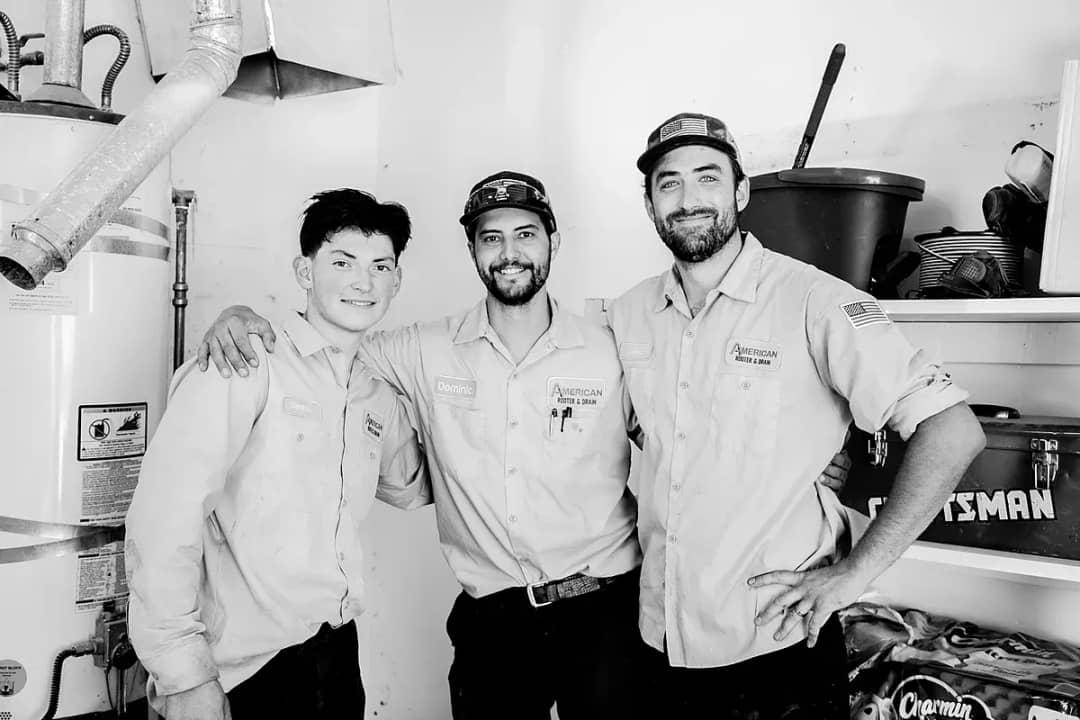
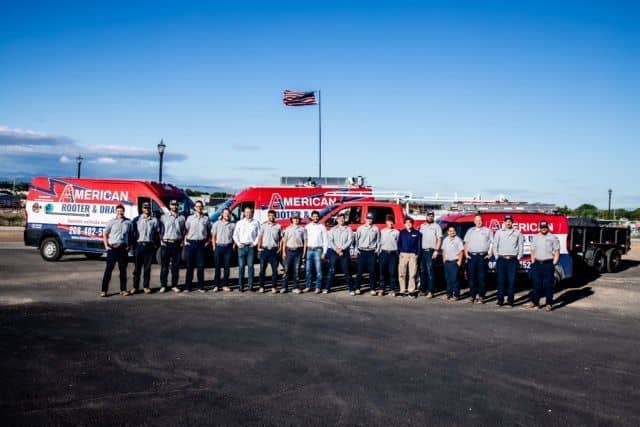
On a replacement, finishing the job means confirming the vent draws correctly, testing the relief valve, checking for leaks under pressure, and running the heater through a full heating cycle before we call it done. We haul the old tank away, we handle the permit and the inspection as part of the work, and we leave the space cleaner than we found it. American Rooter & Drain has been doing licensed, bonded and insured plumbing work in the greater Treasure Valley since 1945. If it is not right after we leave, we come back and make it right.
Who do I call for water heater repair in Boise?
Call (208) 366-5771. Tell whoever answers where the water heater lives — garage, basement, closet, crawlspace — and roughly how old you think it is. Those two answers let us send the right technician with the right parts on the truck.
Need more than the water heater looked at? See everything we do in Boise, ID, or plumbing repair in Boise, water line repair in Boise and gas line installation in Boise.