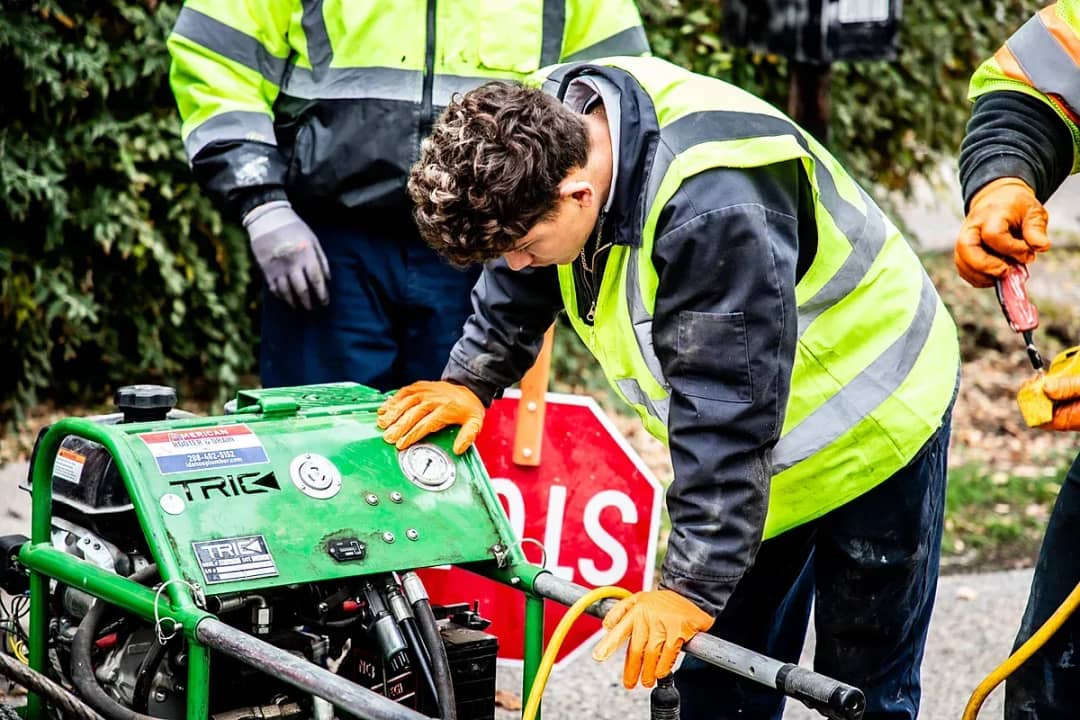
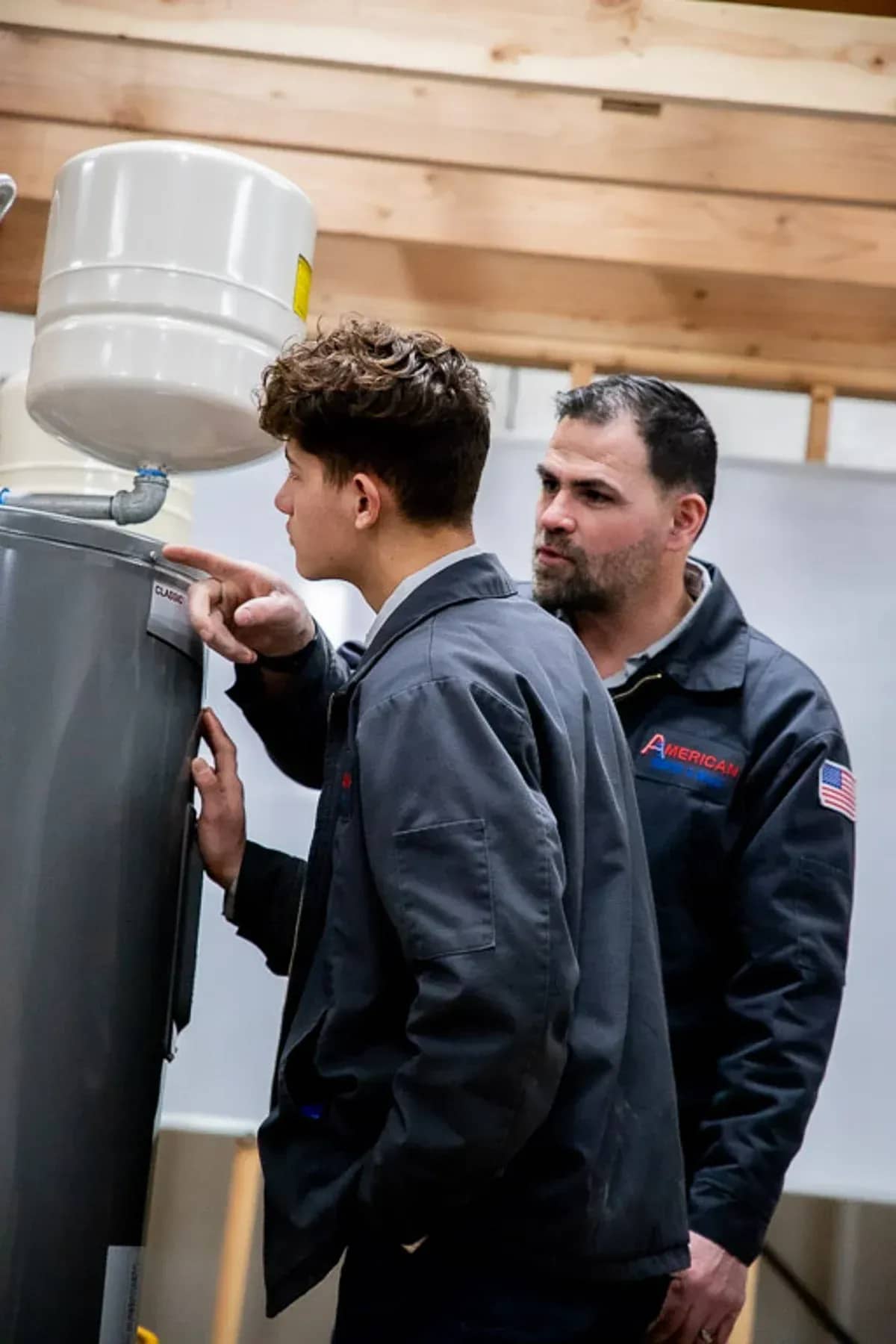
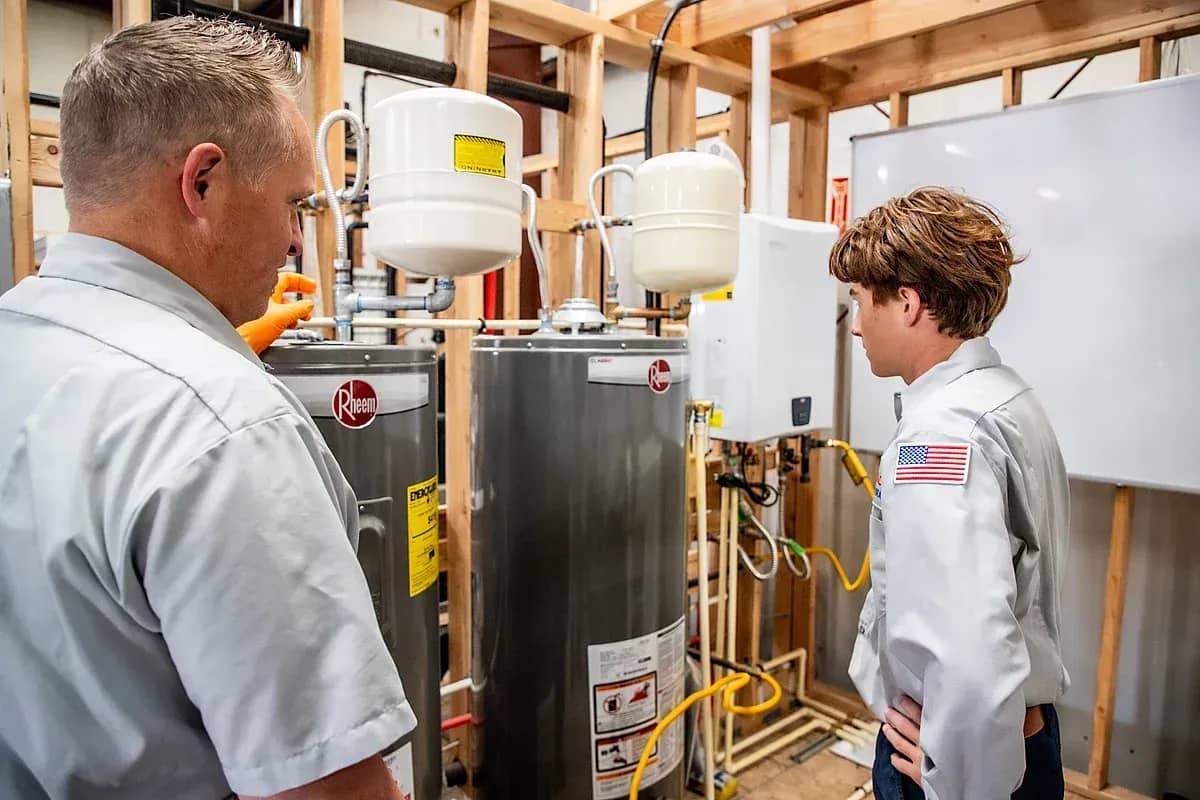
We are up this way constantly rather than occasionally. Across every trade we run, our job records show technicians completed service work at Weiser addresses on 135 separate days in the last twelve months, across 224 jobs — drain and sewer line work, camera inspections, furnace repair and tune-ups, and water line and pipe leak repairs among them. Widen it to the whole northern run — Weiser, Payette, Fruitland and New Plymouth — and it is 698 completed jobs on 244 separate days across the same twelve months. Those are completed jobs only. Estimate visits, free inspections, walk-throughs, return trips on our own prior work and cancelled appointments are all left out of both figures.
Does well water wear out a water heater faster?
It does, and the reason is not that well water is dirty. It is that nothing has been taken out of it. On a municipal connection, hardness minerals, iron and suspended solids are dealt with before the water reaches your street. On a private well, whatever the aquifer holds at your depth arrives at the house, goes down into the bottom of your tank, and stays there.
Two different things are doing the damage, and they behave differently.
Scale is chemical. Calcium and magnesium stay dissolved in cold water and drop out of solution when the water is heated. Every heating cycle leaves a little more behind, and it settles on the floor of the tank. On a gas heater the burner sits directly under that floor, so a sediment layer insulates the steel from the flame — the burner runs longer to satisfy the thermostat, and the steel above the layer runs hotter than it was built to run. The rumbling or popping people describe is small pockets of water flashing to steam underneath the deposit. On an electric heater the lower element is submerged in that layer, and scale bakes onto the element sheath until it can no longer shed its heat into the water. It cooks itself and fails. The symptom is specific enough to recognize from the kitchen: hot water that runs out much faster than it used to, rather than disappearing altogether.
Sand is mechanical. Scale arrives dissolved and comes out of solution inside the tank. Sand arrives already solid — off a well screen that is wearing, a loose formation, or a pump that has been pulled and reset. It is abrasive, it settles in the same place, and it does one thing scale does not: it packs the seat of the drain valve, so the valve will not seal again once it has been opened. You normally see it elsewhere in the house at the same time, in aerators that clog and toilet fill valves that stick.
A well also does not deliver evenly. Anything done to it — a pump pulled, a pressure tank replaced, the well shock-chlorinated, or a dry season dropping the water level — stirs the borehole, and for days afterwards a load of fine material moves through the house. Your water heater is the only fixture in the building shaped like a settling basin. If the water went cloudy after somebody worked on the pump and then cleared up on its own, that material did not leave. It settled where it always settles.
The last piece is the one that catches people. None of this announces itself. A tank on untreated water does not give you a run of small warnings first. It behaves normally for years while the floor loads up and the lining works harder than it should, and then it fails in the one way that cannot be repaired.
Why does my hot water smell?
If the smell is rotten eggs and it is on the hot side only, it is hydrogen sulfide being generated inside your water heater. Nothing is broken. And a new water heater will not fix it, which is the part that saves people real money.
The reaction needs three things at once. Sulfate, which is ordinary in groundwater and harmless by itself. Sulfate-reducing bacteria, which live in plenty of wells. And a source of free electrons to drive the reaction — which is where your water heater comes into it, because the magnesium anode rod hanging inside the tank is deliberately the most electrically reactive metal in there. That reactivity is the entire point of the part; it is what keeps the steel from corroding. But in a well carrying those bacteria, the same reactivity feeds the reaction that produces the gas.
You can confirm it at your own sink in about two minutes. Draw a glass of cold water, let it stand a moment, and smell it. Then draw a glass of hot. If only the hot glass smells, the reaction is happening inside the tank. If both smell, the source is upstream of the heater and the well is where to look. Two other patterns point the same way: the smell is worst first thing in the morning or after a few days away, because the water has been standing on the rod; and it clears for a day or two after somebody drains the tank, then comes straight back.
Two responses are common, and both are wrong.
Replacing the heater. We have met homeowners who scrapped a perfectly sound tank over this smell and had it back inside a week, because the new tank shipped with the same magnesium rod and the well still had the same bacteria in it. If somebody quotes you a replacement for a sulfur smell and never mentions the rod, ask about the rod.
Pulling the rod out and leaving it out. It does stop the smell. It also removes the only thing standing between hot water and bare steel, which trades an odor you can smell for corrosion you cannot, and that bill arrives quietly years later as water on the floor.
What actually resolves it is changing the chemistry rather than the appliance: an aluminum-zinc rod in place of the magnesium one, or a powered anode that protects the steel with a small impressed current instead of by sacrificing metal. That is usually paired with disinfecting the well itself, so the bacteria population is knocked back rather than only its symptom. A part and a visit, not a new water heater.
What is an anode rod and does mine need replacing?
It is a sacrificial metal rod threaded into the top of the tank and hanging down nearly the full height of it, and its only job is to corrode so the steel does not. Whether yours needs replacing is answered by pulling it out and looking at it — not by a date on a calendar, and not by anything anybody can tell you over the phone.
Here is why it is in there. The inside of a steel tank is glass-lined, and no glass lining is perfect: there are always flaws and pinholes where bare steel meets hot water. Put a more electrically reactive metal in the same tank and the corrosion goes after that metal first. The rod is that metal. It is a consumable part, like a filter cartridge, and it is the only consumable on a water heater that most homeowners have never been told exists.
Nobody can honestly hand you a number of years for well water. How hard your water is, how much sulfate and dissolved oxygen it carries, how hot you keep the tank, and how much water the household actually moves through it all change the answer — and two identical tanks on two different wells can end up years apart. So the answer is to look, and looking is cheap next to what it protects.
A rod still doing its job comes out looking like a rod: pitted and eaten, but substantially there. A spent one comes out as a bare steel core wire with a few crumbs of metal clinging to it. Once it looks like that, the tank has been defending itself with its own steel for however long it has been that way, and the clock on the shell has been running the whole time. Catching that moment is the single highest-value thing anyone can check on a well-fed water heater.
Two practical things decide whether it can be done at all, and both are worth knowing before you book:
- Clearance overhead. The rod has to come straight up out of its fitting, and it is nearly as long as the tank is tall. In a low crawlspace, under a joist, or in a closet with a shelf above the tank, there may simply not be room. A segmented rod that comes out and goes back in sections solves that without moving the heater.
- A seized fitting. A rod nobody has touched since the day the tank was set can be locked in hard enough to need real leverage and a braced tank to break loose. That is the honest reason this job gets skipped on exactly the tanks that need it most.
One point catches out people who did the right thing: if you softened your well water, you shortened the rod's life rather than lengthening it. Softened water is more conductive and more aggressive toward the anode, so it gets consumed faster. Softening is still worth doing for the scale, the fixtures and the tank floor — it just means the rod wants looking at sooner, not later.
How often should I flush my water heater?
On a private well, more often than the manual assumes — and the honest answer is that your own water sets the interval, which you find out by flushing it once and looking hard at what comes out.
The manufacturer's schedule was written for treated municipal water. It has no idea whether your well throws fine sand, or whether it is unusually hard. So treat the first flush as a measurement rather than a chore:
- It runs clear the whole time. You are ahead of it, and the manufacturer's interval is fine.
- A slug of gray-white grit comes out and then it clears. That is hardness precipitating out on every heating cycle. Shorten the interval and watch it.
- Rust-brown water. That is corrosion product rather than mineral, and the next thing to check is the anode rod, not the flushing schedule.
- Actual sand. That is the well rather than the heater, and no flushing interval fixes it. The answer is a sediment filter upstream of the tank.
The method matters more than the frequency, because a straight gravity drain lifts nothing off the floor of the tank — the water leaves and the deposit stays put. Shut off the gas control or the breaker first, so the burner or the elements are not firing into an emptying tank. Close the cold inlet at the top. Put a hose on the drain valve and run it somewhere that can take hot, dirty water. Open a hot tap somewhere in the house to break the vacuum. Then, once it is draining, crack that cold inlet open in short bursts — that is what stirs the floor and carries the sediment out with the water instead of leaving it behind. Repeat until it runs clean, and expect it to take longer than you thought on a tank that has spent years on a well.
Two things surprise people, and both are why first flushes turn into phone calls.
The drain valve often will not re-seat. The factory valve on most tanks is plastic, and on well water its seat packs with grit the moment you open it after years of sitting. It then drips, and it keeps dripping. On any tank that has lived its life on a well, the right move is to plan on swapping that plastic valve for a full-port brass one at the same time — which has the second benefit that the next flush passes the sediment instead of choking on it. Anybody who does this work on wells brings one out with him.
Starting late is riskier than starting early. On a tank that is old and heavily loaded, the deposit has been sitting over the steel, and disturbing it can uncover a spot that was already thin. That is not an argument for never flushing. It is an argument for flushing from early in the tank's life rather than deciding to start at the far end of it — and for letting somebody who can deal with what turns up do the first one on a tank with unknown history.
How far out do you come, and how long does it take?
Weiser is a stop on a regular route, not a special trip. We run north out of the shop in Caldwell, up through Payette and Fruitland, and Weiser is on that line — as are New Plymouth and Midvale off it.
Here is what the speed looks like in our own records. Of the completed Weiser jobs we can time from the booking to the finish, 309 out of 443 were finished on the same day they were booked, and 382 of the 443 within a day of it. That is across every trade rather than water heaters alone, and it counts only completed jobs carrying both a booking time and a completion time.
The thing distance genuinely changes is not how fast we get there. It is the cost of being wrong about what to bring. In Caldwell, a part nobody loaded is a run to the counter. Out here it is most of a day gone, another slot on the board, and another night without hot water for you. So a Weiser call gets planned backwards from that: the questions on the phone run longer, the truck leaves heavier, and the aim is to finish the work while a technician is already standing in your utility room.
How long the work itself takes depends on which job it turns out to be. Pulling and replacing an anode rod, or swapping a grit-packed drain valve for a brass one, is short work once there is clearance and the fitting breaks loose. A like-for-like tank swap — same fuel, same capacity, same spot — is a single visit. Anything that changes the fuel, the capacity or the location is not that job at all; it becomes gas or electrical work on top of the plumbing, and that decision is worked through on our main water heater page.
The short list of things that honestly push a Weiser job past one visit:
- A capacity or configuration we do not stock — which is exactly why the label questions get asked before anyone leaves the shop.
- A conversion to a tankless unit, which is a different installation rather than a swap.
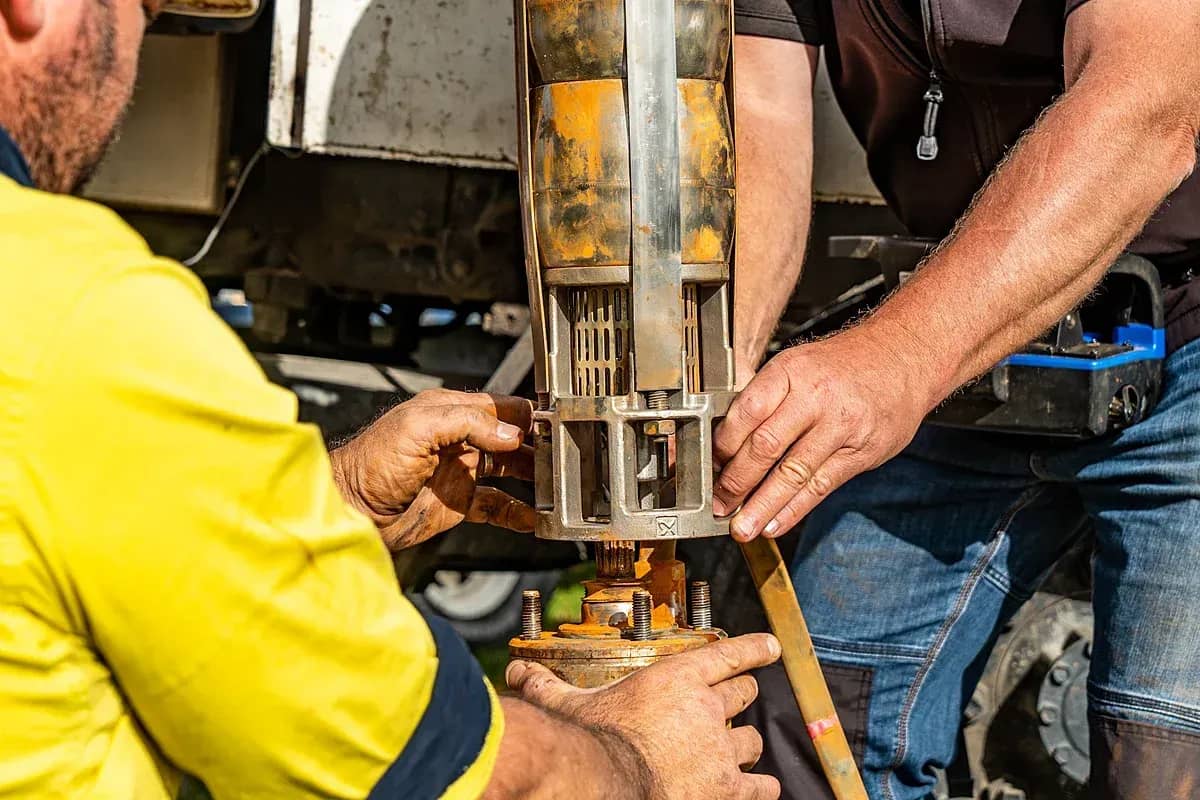
- Work at the well or the pressure tank that has to happen before the heater is worth touching at all. That is well pump repair territory, and it comes first.
If your call sounds like one of those, we would rather say so while you are still on the phone than after the drive.
Will you have my water heater on the truck the first trip?
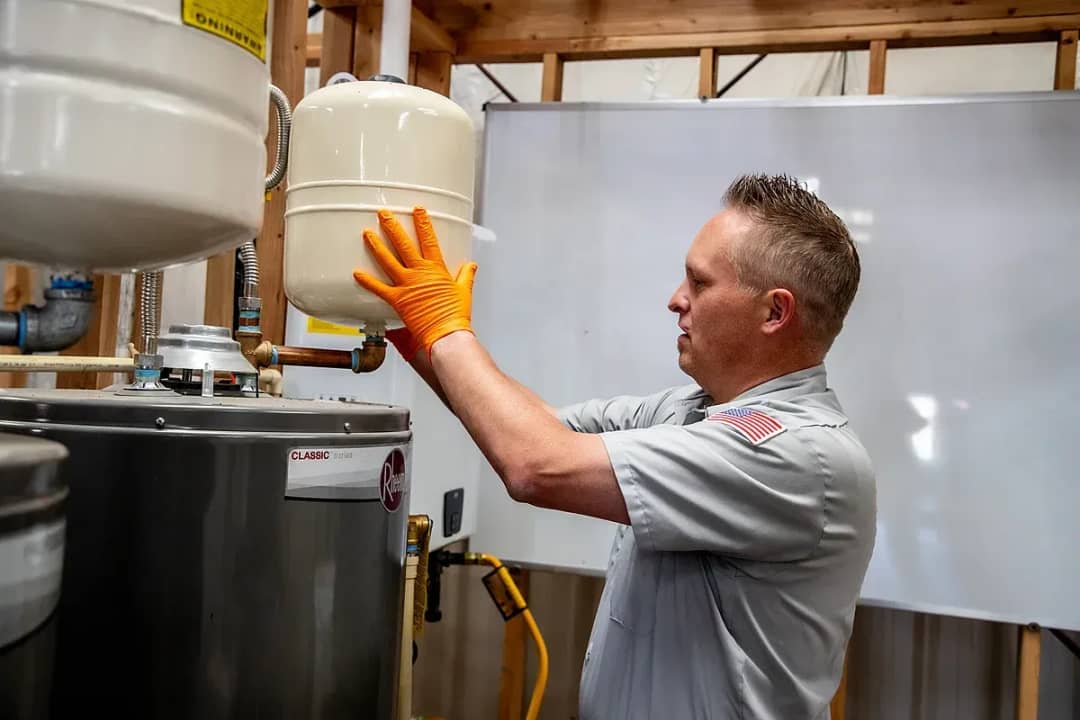
That is decided during the phone call rather than at your house. When the description points at a tank that has to come out, the replacement is loaded in Caldwell before the truck leaves — which is why a Weiser call takes a few minutes longer than a Caldwell one. The loading decision gets made a long way up the road from you, and it has to be right.
Four things off the label do most of that work, and the label is on the front of the tank:
- Gas or electric. It changes the unit, the parts and which technician comes.
- The capacity in gallons, printed on that same label.
- The serial number. It encodes the build date, so if you can read it to us we can tell you roughly where your unit sits in its life before a wheel turns.
- The brand, because serial formats differ by manufacturer and the date is decoded differently for each one.
Then come the questions most companies never ask, and out here they change the load-out as much as the tank size does. Are you on a well or a city connection? Is there a softener, a sediment filter, an iron filter, or nothing at all? Does the water stain fixtures or smell? Has anybody been into the well lately? Those answers decide what else rides along: an anode rod in the right alloy rather than the default magnesium, a full-port brass drain valve to replace a plastic one packed with grit, a sediment filter housing, and a shutoff valve that will actually close — because the original one on a tank of that age very often will not.
Where the unit lives is the other question, and out here the answer is far more often "not in the house" than it is in town — a pump house, a shop, a barn, or a utility room off a back porch. That changes the access, the freeze exposure, and above all how long a slow leak runs before anybody notices it.
For the record, this is not unfamiliar work at this end of the valley: 21 completed water heater jobs at Weiser addresses, of which 12 were repairs or no-hot-water calls rather than replacements, and 113 completed water heater jobs across Weiser, Payette, Fruitland and New Plymouth addresses in total. Estimate visits are excluded from all three of those figures.
What moves the price is a short list, and none of it is guessable down a phone line: whether this is a part, a rod and a valve, or a whole tank; gas or electric and what capacity; where the unit sits and what it takes to get the old one out of there; the condition of the shutoff, the connectors and the drain valve after years in mineral-heavy water; whether the old unit has to be hauled away; and whether treatment upstream is the better place for the money. So a technician looks at your actual tank in your actual well house, tells you what he found, and puts a flat price in writing before anything is disconnected. The on-site estimate is free, and the number does not move once the work is underway.
Is a water softener worth it for my water heater?
For the water heater on its own, sometimes — but that is the wrong way round to decide it. The right question is what your water is doing to the rest of the house, because the heater is rarely the only thing paying for it.
You can run that test yourself before anybody quotes you anything. If the heater rumbles and nothing else in the house is complaining, then a flush and an anode rod are the proportionate answer, and we will say so rather than talk you into equipment. If the same water is also clogging aerators, leaving a film on the shower glass that will not come off, staining sinks and laundry, and chewing through toilet fill valves, then the heater is one casualty among several — and treating the water upstream fixes the whole set instead of one appliance at a time.
If you do treat it, the order matters on a well:
1. Sediment first. A whole-house sediment filter ahead of everything else is the cheap end of water treatment, and it is the single thing that most protects a tank on a well — because it catches the mechanical material, the sand and the fines, that a softener cannot remove and that will foul a resin bed if you send it there.
2. Hardness next. That is what a softener is for, and it is what stops the scale layer building on the tank floor and baking onto an electric element.
3. Iron and manganese are a separate problem. Out here nobody takes them out for you. They stain fixtures and laundry, and they show on the hot side first because heat drives them out of solution. A standard softener carries only a limited amount of iron before the resin fouls; past that it is an iron filter, which is a different appliance and a different conversation.
And the caveat worth repeating, because it is genuinely counterintuitive: softened water consumes the anode rod faster. Soften the water, then have the rod checked sooner than you otherwise would, and you get the benefit of both instead of trading one for the other.
This is ordinary work on this route rather than a specialty — 20 completed water treatment jobs at Weiser addresses, 13 of them softener or whole-house filtration installations, and the rest repairs and tune-ups on systems already in place. What each type of equipment actually does is laid out on our water softener and filtration page.
The one thing we will not do is sell you a water heater to solve a water problem. A new tank fed by untreated water does exactly what the last one did, on roughly the same schedule.
Call (208) 366-5771 and a person answers — days, nights, weekends and holidays. Two things to have ready if you can get to them: the label on the front of the tank, and the answer to whether you are on a well and what, if anything, is treating the water before it reaches the heater. Those two decide what leaves the shop with the technician, and at this distance that is the whole difference between one trip and two.
American Rooter & Drain was established in Caldwell, Idaho in 1945. Licensed, bonded and insured. The on-site estimate is free, and the price goes in writing before anything is disconnected.