How Each Type Actually Works
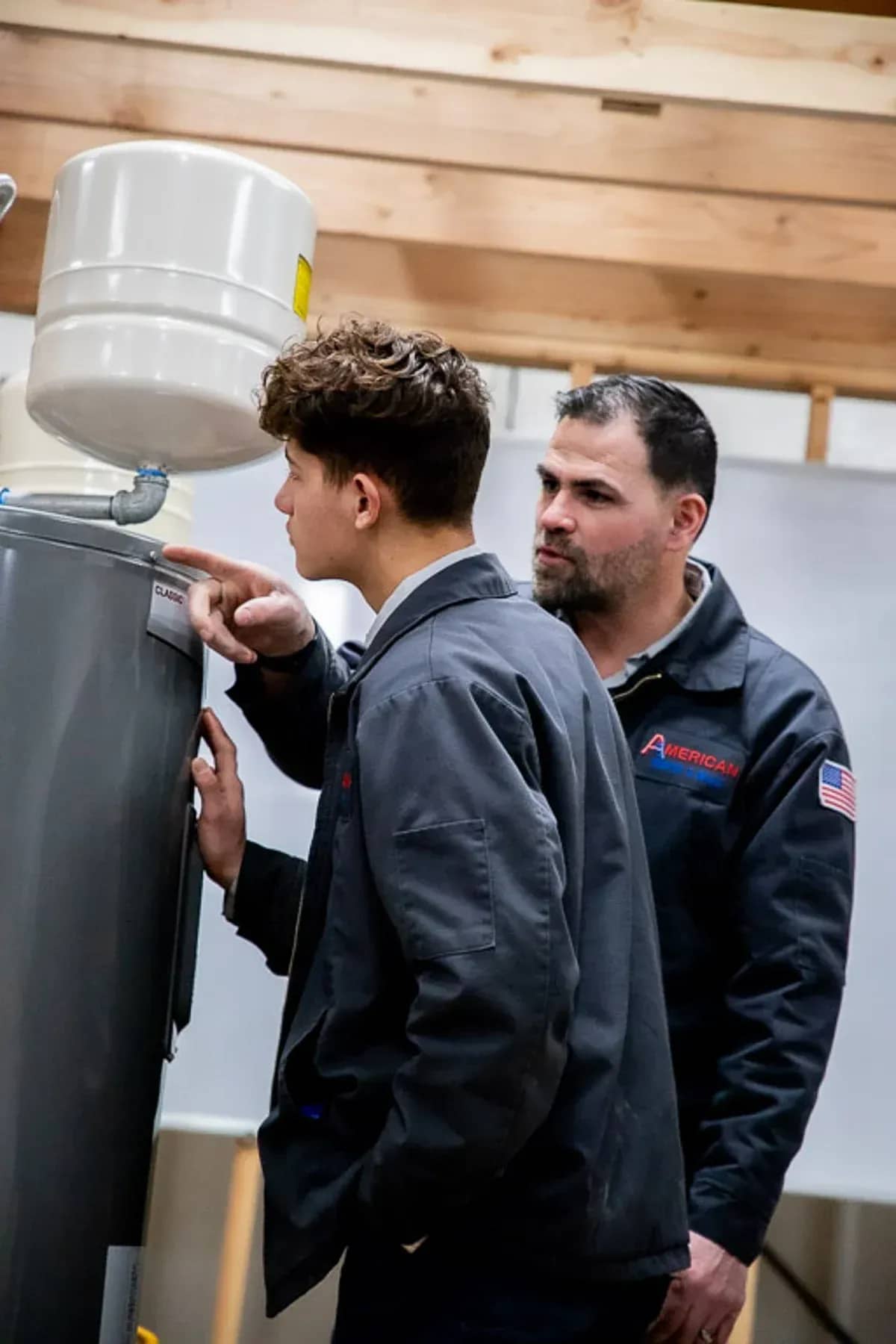
Tank water heaters store 30–80 gallons of hot water at a set temperature around the clock. A thermostat cycles the burner or heating element on and off to keep that stored water hot, ready the moment you turn on a faucet. The tradeoff is standby heat loss — energy spent maintaining a full tank's temperature even when nobody's using hot water, especially overnight or while you're at work.
Tankless water heaters don't store water at all. Instead, a high-output burner or electric element heats water on demand as it flows through the unit, only running when a hot water fixture is open. This eliminates standby loss entirely, but it also means the unit's flow rate — how many gallons per minute it can heat to your target temperature — sets a hard limit on how many fixtures can run hot water simultaneously.
Upfront Cost: Tankless Costs More to Buy and Install
This part is straightforward: tankless units typically cost more than a comparable tank unit, and installation is often more involved — particularly for a retrofit, where the existing gas line, venting, or electrical service may need upgrading to support the tankless unit's higher output demands. A straight tank replacement is usually the simpler, less expensive installation. If you want exact numbers for your home, that's worth a real quote rather than a rule of thumb, since gas line sizing, venting changes, and electrical requirements vary house to house.
Operating Costs: Where It Gets More Nuanced
Standby loss is the tank's main disadvantage. A tank water heater is essentially always "on," reheating water that's slowly losing heat to the surrounding air, even during the 20+ hours a day nobody's using it. Tankless units skip this entirely by only firing when hot water is actually being drawn.
But usage pattern matters enormously. A household that uses hot water in frequent, short bursts throughout the day may not see the efficiency gap that a household with occasional, high-volume use does. And a tankless unit cycling on and off frequently for very short draws (like a bathroom sink) runs less efficiently per-use than during a longer draw, since there's a brief warm-up lag each time it fires.
Fuel source changes the math. Gas tankless units generally show a bigger efficiency advantage over gas tank units than electric tankless does over electric tank, because gas tank standby losses (heat escaping up the flue) tend to be larger than electric tank standby losses. If you're comparing electric-to-electric, the operating cost gap between tank and tankless tends to be smaller than the gas-to-gas comparison.
Household hot water demand affects sizing, not just cost. A tankless unit sized too small for a household's peak simultaneous demand — two showers and a dishwasher running at once, for example — will struggle, whereas an appropriately sized tank simply draws down its stored reserve. Getting tankless sizing right up front is the difference between "efficient and reliable" and "efficient and frustrating."
Lifespan: Tankless Generally Wins, With a Catch
Tank water heaters typically last around 8–12 years before tank corrosion, sediment buildup, or component failure makes replacement more sensible than repair. Tankless units often last considerably longer — many manufacturers rate them well beyond that range — because there's no tank to corrode and internal components are generally replaceable.
The catch: that longer lifespan assumes proper maintenance, and tankless units are noticeably more sensitive to water quality than tank units are.
Why Idaho's Hard Water Changes the Equation
This is the piece that gets left out of most tankless-vs-tank comparisons, and it matters a lot here. Much of the Treasure Valley has hard water, meaning higher mineral content (calcium and magnesium) than many other regions. Hard water causes scale buildup inside water heaters over time — but tankless units are hit harder by it than tank units are.
In a tankless heater, water passes through a compact heat exchanger at high velocity and temperature. Mineral scale builds up on those internal surfaces faster than it would on the interior of a large storage tank, and scale buildup in a tankless unit directly reduces flow rate and heating efficiency — sometimes fairly quickly in genuinely hard-water conditions. Left unaddressed, this shortens the "considerably longer" lifespan advantage tankless units otherwise have.
Two things meaningfully offset this:
- Annual descaling maintenance (flushing the unit with a descaling solution) keeps a tankless heat exchanger clear and preserves efficiency and lifespan.
- A whole-home water softener removes the hardness minerals before they ever reach the water heater, dramatically reducing scale buildup in either a tank or tankless unit — but especially protects a tankless unit's more scale-sensitive internals.
If you're on Treasure Valley hard water and considering tankless, pairing it with a water softener isn't a nice-to-have — it's one of the biggest factors in whether you actually get the tankless lifespan and efficiency advantage you're paying extra upfront for.
Cold Groundwater and Tankless Output
One more Idaho-specific factor: tankless units heat water to your target temperature based on the incoming groundwater temperature, which runs colder here in winter than in warmer climates. Colder incoming water means the unit has to work harder (and the effective flow rate at full temperature rise drops) during winter months compared to summer. This doesn't make tankless a bad choice — it just means proper sizing needs to account for winter groundwater temps, not just a manufacturer's best-case flow rate spec.
Which One Makes Sense for Your Home?
- Tank heaters tend to make sense for lower upfront budgets, homes without the gas/electrical capacity for tankless without upgrades, and households without a strong efficiency-driven reason to pay more upfront.
- Tankless heaters tend to make sense for households prioritizing long-term efficiency and space savings, homes with the gas/electrical infrastructure to support it (or budget to add it), and homeowners willing to commit to descaling maintenance — ideally paired with a softener given local water hardness.
What to Expect When You Call Us
We'll walk through your household's hot water usage, your home's existing gas or electrical capacity, and your water hardness before recommending tank or tankless — with a clear, upfront estimate either way. No upselling, just what actually fits your house.
Weighing tankless vs. tank for a replacement or new install? Call American Rooter & Drain at (208) 366-5771 or book online to schedule a visit. We serve Boise, Meridian, Nampa, Caldwell, and communities throughout the Treasure Valley and Eastern Oregon.
Learn more about our water heater repair, replacement, and installation services.
Frequently asked questions
How does a tankless water heater work?
A tankless water heater has no storage tank. Instead, a high-output burner or electric element heats water on demand as it flows through the unit, activating only when a hot water fixture is opened. This eliminates the standby heat loss that tank units experience from keeping stored water hot around the clock.
Is a gas or electric water heater cheaper to operate?
It depends on local utility rates and the unit's efficiency, but gas tankless units generally show a larger efficiency advantage over gas tank units than electric tankless shows over electric tank, because gas tank units typically lose more standby heat through venting. Comparing your specific utility rates for gas versus electricity in your area is the most accurate way to estimate real operating costs.
How long do water heaters last?
Traditional tank water heaters typically last around 8–12 years before tank corrosion or component failure makes replacement more practical than repair. Tankless water heaters often last considerably longer since there's no tank to corrode, but that lifespan depends heavily on regular descaling maintenance, especially in hard water areas.
Does hard water affect tankless water heaters more than tank water heaters?
Yes. Tankless units heat water through a compact heat exchanger at high velocity, and mineral scale from hard water builds up on those surfaces faster than it would inside a larger storage tank, directly reducing flow rate and efficiency over time. Annual descaling and pairing the unit with a whole-home water softener significantly reduce this issue.