What rooter service means
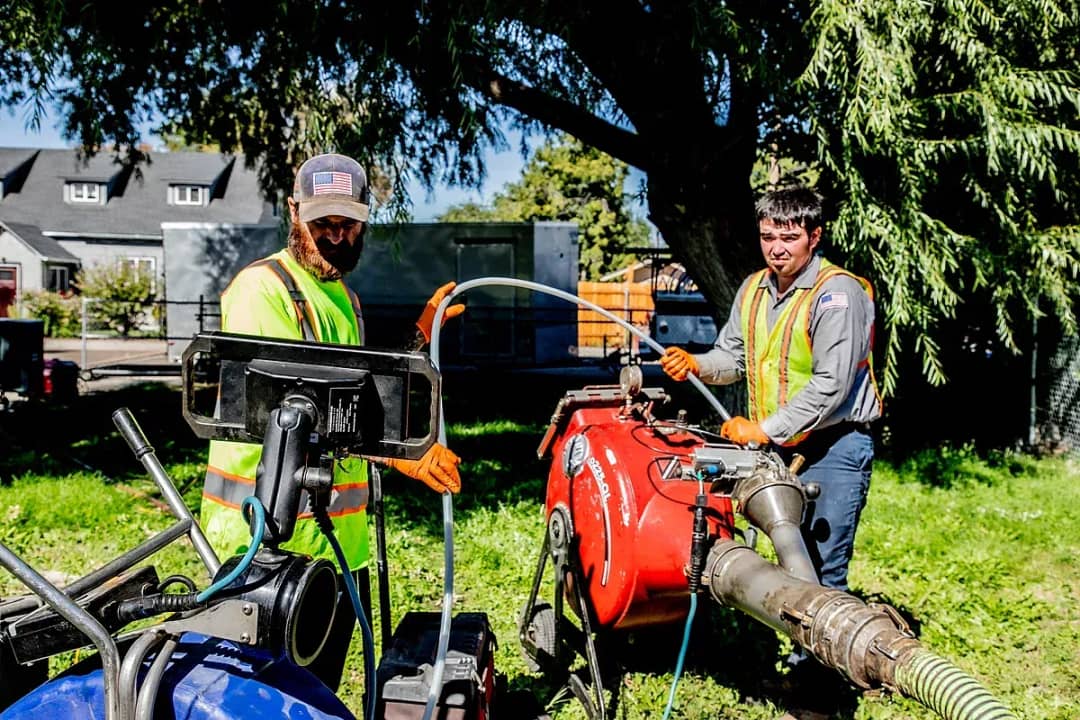
The word comes from roots. The first machines were built to cut tree roots out of clay sewer lines, and the name stuck to every cable machine that does that work. Today a plumber who "roots" a line is feeding a rotating steel cable, with a cutting head on the end, down the pipe until it reaches the blockage. The drum spins the cable, the head chews through the plug or cuts the roots back to the pipe wall, and the line drains again.
Rooter service covers more than roots. The same machine clears hair and soap in a branch line, a wad of paper in a toilet drain, grease that has set up in a kitchen line, and the soft debris that collects in a sewer lateral. What changes from job to job is the size of the machine and the size of the cutting head. A small drum machine with a light cable is made for a sink or tub. A heavier machine with a larger cable and cutters is made for a 4 inch main line running out to the street.
The three tools, and which one your drain needs
A rooter, or cable, is one of three ways to deal with a stubborn line. They do different things, and a good plumber chooses by what is in the pipe, not by habit.
- Cable (rooter). Bores through a blockage and cuts roots. It is the right tool for a single clog, a first-time backup, or roots that have grown into a joint and need to be cut back. It clears a channel through the middle of the pipe and leaves the walls alone.
- Hydro jetting. High-pressure water from a rotating nozzle that scours the whole inside wall of the pipe. It is the right tool for grease coating, mineral scale and fine root hair, and for lines that keep clogging after repeated cabling. See hydro jetting for how we decide on it.
- Camera inspection. Not a cleaning at all. A camera on a flexible rod shows what is actually in the pipe, whether that is roots, a cracked joint, a low spot or a collapse. It is the right first move when the cause is unclear or when a line has backed up more than once. See sewer camera inspection.
Most calls start with the cable, because most clogs are a plug in one place. If the camera or the history shows the whole pipe wall is coated, jetting follows. And if a clog keeps coming back, the answer is usually a look inside the pipe, not another pass with the cable. That is the pattern covered on our clogged drain repair page.
When a rooter is the right call
Rooter service is the fit when:
- One drain is slow or stopped and the rest of the house drains normally.
- A drain that has been fine for years suddenly backs up, which usually means something new lodged in the line.
- Roots are the suspect. Older clay and cast iron laterals, mature trees and irrigation-fed soil are common across the valley, and roots find the joints. A rooter cuts them back to restore flow.
- The toilet gurgles or backs up and a plunger has not helped.
- You want it handled in one visit at a flat price.
A rooter is not the right first answer when several drains back up together, when sewage is coming up in the lowest fixture in the house, or when the same line has clogged again within a few months of being cabled. Those point at the main line or at damage in the pipe. See sewer line backing up before you run more water.
What roots do to a sewer line
Roots do not break into a healthy pipe. They follow moisture to a joint that has opened a little or to a hairline crack, push in as fine threads, and then grow into a mat that catches paper and grease. A cable cuts that mat out and gets the water moving again. It does not stop the roots from growing back through the same opening. How fast depends on the tree, the soil and how bad the joint is. The full story is on our tree roots in sewer line page.
That is why rooter service on a root problem is honest about what it does. It restores flow now. If the camera shows the joint is open or the pipe is cracked, the lasting fix is a repair, and we will show you the footage before anything is recommended. Our sewer line repair crew handles it when it comes to that.
What happens on a rooter service visit
1. You call and describe it. Which drain, how long it has been slow, whether other fixtures are affected, and whether you poured anything in. If you used a chemical opener, tell us. It changes the protection we bring.
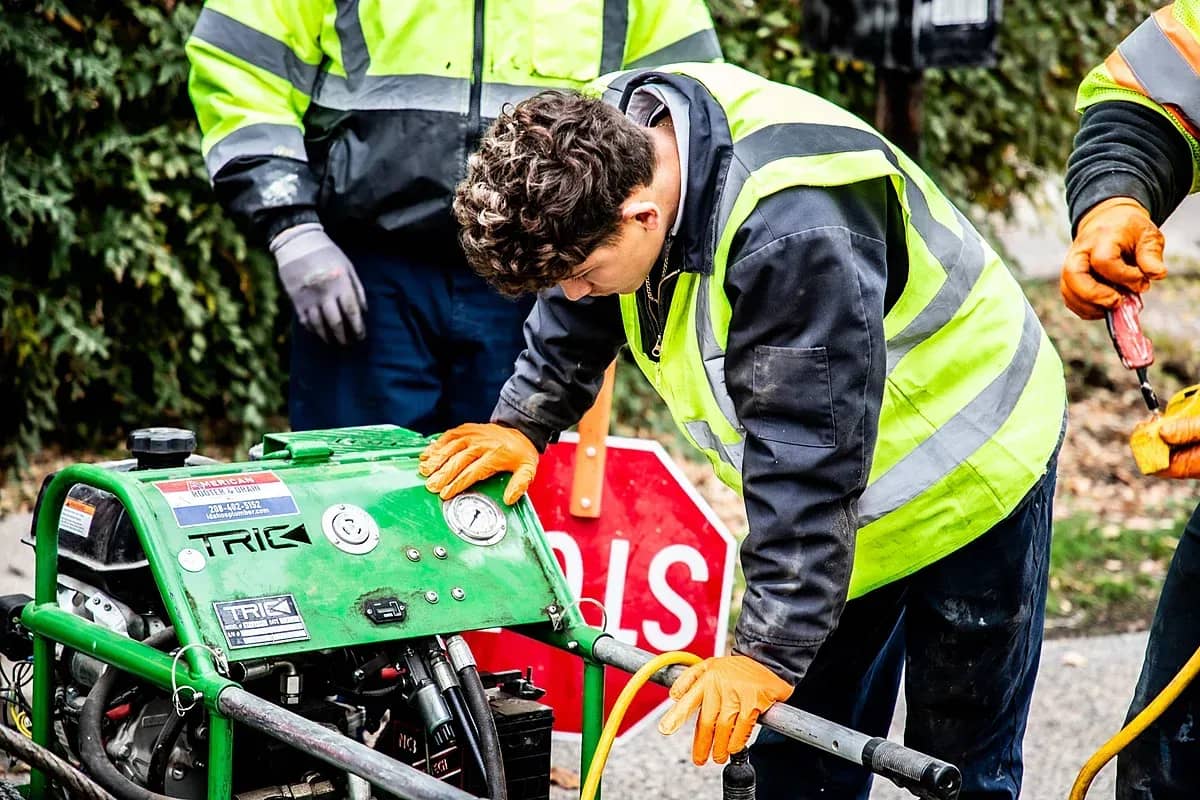
2. We send the nearest technician with a machine sized for the line you described.
3. We find the way in. A cleanout is the best access to a main line. Without one, the cable goes in through the fixture, or through a roof vent or a pulled toilet on a main line.
4. We run the machine with a cable and cutting head sized to the pipe. An oversized head in a small line is how old traps and thin pipe get damaged, so size matters.
5. We confirm the line is clear. Water running again is not the same as a clean pipe. On a main line or a repeat clog we run a camera to verify, instead of just taking the water's word for it.
6. You get a flat price in writing for anything beyond the basic clearing, and you approve it before more work starts.
Most single-drain calls are one visit. What adds time is a long run to the street, a cleanout that is buried or missing, roots dense enough to need more than one pass, and older pipe that has to be handled gently.
Rooter service for a main sewer line
A main line clog is a bigger job than a sink or tub. The line is larger, it runs farther, and it is where roots do the most damage. Signs of a main line problem are water rising in the lowest tub or shower when you flush a toilet or run the washer, more than one drain slow at once, gurgling from fixtures that are not in use, and sewage smell or dark water coming up from a floor drain.
For a main line we use a heavier machine and larger cutters, and on most main line calls we put a camera down the line to find the cause instead of clearing it blind. Clearing the plug without finding out why it formed means you are likely to be calling again. If the water is already coming up into the house, stop running water and call us. We take it as an emergency.
Cost, and what drives it
Clearing a single branch line, one sink, one tub or one floor drain and not a main line clog, is covered by our $59 drain cleaning special. A main line, roots that need cutting back, or a line that needs jetting costs more, and what moves the number is which line is blocked, how far the cable has to run, how much access there is, and what the camera finds. We diagnose first, then hand you a flat price in writing that you approve before anything starts. It is a flat rate, not an hourly meter. On-site estimates are free, and if another shop has already given you a written quote, we will look at it for free.
Where we work
American Rooter & Drain was established in Caldwell, Idaho in 1945 and has worked the greater Treasure Valley since 1945. Rooter service calls go to Boise, Nampa, Caldwell and Meridian, and out to Kuna, Eagle, Star, Middleton, Garden City, Emmett and the rest of the valley, plus Ontario, Nyssa and Vale in Oregon. For everything else that drains, from sinks to floor drains, see our drain cleaning page.
Looking for rooter service near you in the valley? Call (208) 366-5771. Tell us what the drain is doing, and we will send the nearest technician with the right machine for the pipe.