Do I have a septic tank, or am I on the Eagle Sewer District?
Settle this first, because it decides who you call and what you can pour down the drain. Eagle Sewer District collects sewage across much of the valley floor inside the city. Properties outside that boundary — acreage along the Boise River and out toward Eagle Island, larger lots north of State Street, foothill homes climbing toward Beacon Light and the Boise Ridge — handle their own wastewater in a tank and a drain field on the property. Two houses on the same road can land on opposite sides of that line. A few tells:
- No sewer charge on a monthly utility bill is a strong hint you are on septic.
- There is a round or rectangular lid out back — sometimes a green plastic cap, sometimes just a suspicious dip in the lawn — between the house and the back of the lot.
- One strip of yard greens up first in spring and stays greener in August. That strip is usually the drain field.
- Your closing paperwork mentions a septic permit, a system design, or a health-district record.
If you are on septic, one rule matters more than the rest: caustic drain cleaner is not your friend. The tank runs on bacteria that digest solids, and a bottle of chemical opener sterilizes the very thing keeping your system alive. Mechanical cleaning is the right answer on a septic property — that is drain cleaning in Eagle work, a different call than a pump-out.
How much does it cost to pump a septic tank in Eagle?
Flat, by tank size, published up front:
- 500 gallons or less — $100
- 1,000 gallons — $395
- Up to 1,500 gallons — $495
- Up to 2,000 gallons — $595
Every one of those tiers includes a full tank inspection with a written condition report, and lid access up to 6 inches below grade at no charge. There is exactly one fee that can be added: $99 to expose a lid buried deeper than 6 inches.
We confirm your tank size and lid depth on-site, in writing, before the hose comes off the truck. That is a confirmation, not a re-quote — the number you approve at the curb is the number on the invoice. Look at it and decide today is not the day, and you pay nothing. No trip fee, no dispatch charge.
Which tier will you land in? Across every septic pump-out we have billed, the 1,000-gallon line has been written 26 times, the 1,500-gallon line 4 times, the 750-gallon line twice. The 1,000-gallon tank is the workhorse of this valley, and a 750-gallon tank bills at that same $395 tier. Older acreage systems and houses added onto over the decades are where the larger tanks turn up.
Can you look at the sewer line while you are here?
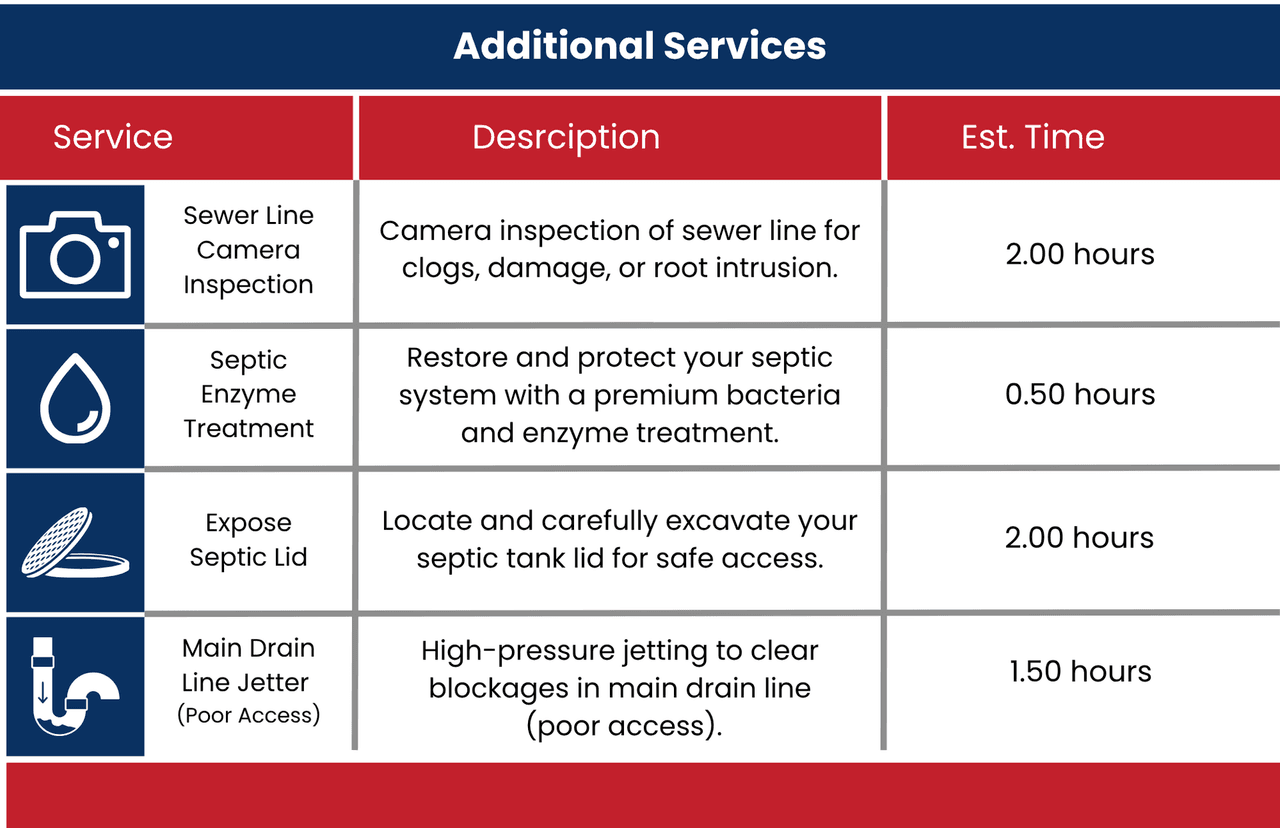
Yes, and for a lot of Eagle properties that is the smarter visit. Septic pumping full service is $785 and bundles three things into one trip: the complete pump-out with pre- and post-pumping tank inspection, a high-definition camera run down the main line through the cleanout or the septic outlet, and a whole-home plumbing evaluation.
The reason to bundle them is simple. A tank that filled fast, or a house with slow drains that did not improve after the last pump, is often telling you the problem lives in the pipe between house and tank — roots at a joint, a bellied run, a broken hub — and not in the tank at all. Running the camera while the tank is open and empty is the one moment you get a clear picture down that pipe with no water in the way. A recording is available for your records.
How do I know when my tank needs pumping?
Septic systems give warning. The warnings are subtle first and dramatic later, and the subtle stage usually gets recognized only in hindsight. Watch for:
- Slow drains in more than one fixture at once. One slow sink is a clog in that fixture's own trap or branch. Kitchen, hall bath and laundry all dragging together points at the main line or the tank.
- Gurgling after a flush, or when the washer dumps. That noise is air being pushed back up the line because water cannot get away fast enough at the far end.
- A toilet that flushes fine at 7 a.m. and poorly at 7 p.m. Daily volume is stacking up faster than the tank can pass it along.
- Odor. Outdoors near the tank or the field, or a sulfur note indoors near a floor drain. Odor means gas has found a path it should not have.
- Wet ground, spongy turf, or grass that is greener and taller than everything around it, still soggy days after the sprinklers went off. Effluent is surfacing instead of soaking in. In Eagle that one hides inside irrigation season, which is exactly why it gets missed.
- You inherited the house and nobody can produce a pumping record. No record is a reason all by itself.
Any single item on that list justifies a phone call. Two or more together — especially odor plus wet ground — means the drain field is involved and the clock is running. A pump-out at that stage is maintenance. The same conditions six months later can become drain field work, which is the expensive end of septic ownership.
How often should an Eagle septic tank be pumped?
Anyone who answers this with a single number, sight unseen, is guessing. The honest answer is that the interval depends on things that vary house to house:
- Tank capacity against household size. A 1,000-gallon tank under a five-bedroom house fills on a very different schedule than the same tank under a couple, and every additional resident shortens the interval.
- Garbage disposal use. A disposal sends food solids into the tank that would otherwise have gone in the trash, and heavy-disposal households build a sludge layer noticeably faster.
- Laundry rhythm. Six loads on a Saturday pushes far more water through in one day than one load a night, and surge volume stirs settled solids toward the outlet.
- Whether the house sits empty part of the year. A part-time property builds sludge on occupancy, not on a calendar.
- What is actually in there right now. This is the only variable on the list that is not a guess.
That last one is why the written condition report matters. When we pump, we record what came out and what the tank looked like empty — sludge depth on the bottom, scum thickness on top, how the baffles are holding up. That measurement sets your interval, and it is on the report we hand you. Next time you are working from your own tank's history instead of a rule of thumb.
Where is my tank, and what if nobody knows?
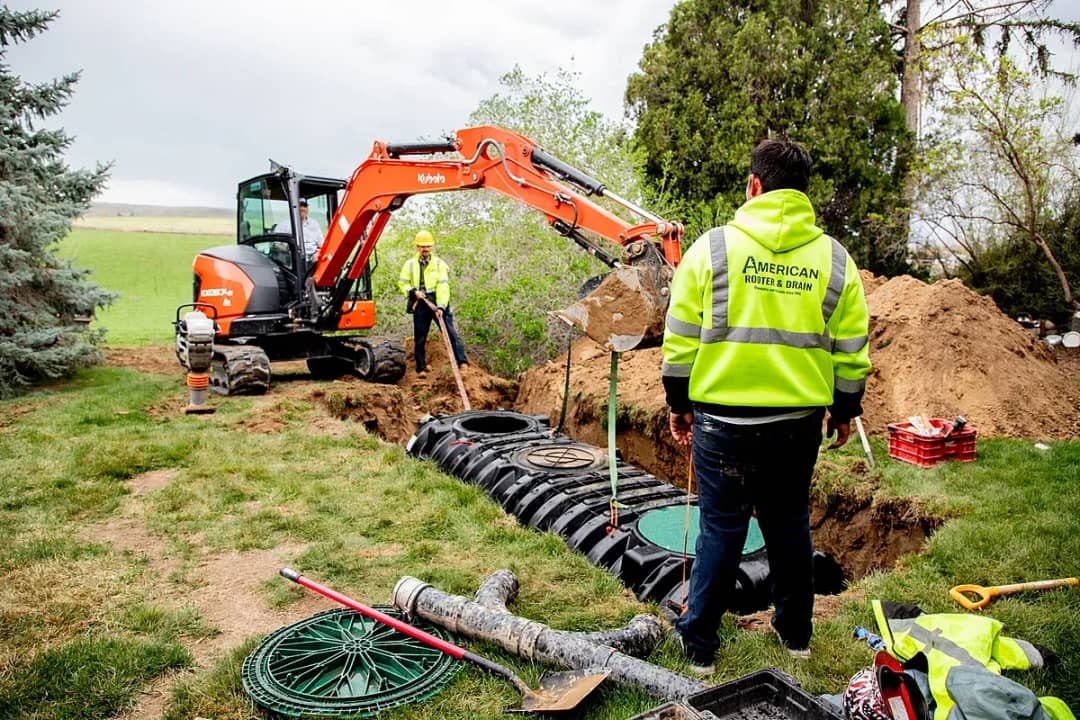
On Eagle's larger lots this is a real problem, and we run into it constantly. Years of landscaping, a lawn regrade, a shed, a patio poured over the access point, or a builder who set the lid an inch under sod and never marked it — any one of those makes a tank effectively invisible.
Finding it is part of the job, not a surprise charge at the curb. We work in order:
1. Records first. Ada County septic permitting runs through Central District Health, and a permitted system usually has a site drawing on file showing tank and field location relative to the house.
2. Read the plumbing. The main line leaves the house on one side, generally below the lowest bathroom, and runs to the tank in a straight line. That narrows the search to a wedge of yard instead of the whole property.
3. Probe and read the ground. A soil probe finds a concrete lid fast once we are in the right area, leaving nothing but a pencil-width hole. Settled soil over a tank, a dry patch in an otherwise wet lawn, the spot the mower always bounces — the yard tells on the tank if you know what to look at.
Once we find it, we mark it. Install a riser and you never search again: a riser brings the access lid up to grade under a sealed, screw-down cover you can open by hand. On a property where the next owner or the next crew will face the same hunt you just did, a riser earns its keep the second time somebody needs in.
My lid is buried. What does that mean for the job?
Lid access down to 6 inches is included in every tier. Below 6 inches, hand digging becomes real work, and that is the $99 exposure fee — assessed only when it applies, and confirmed with you before a shovel moves.
Two things worth knowing. Depth is not difficulty: 10 inches of loose loam digs easier than 7 inches of compacted caliche and river cobble, and Eagle's river-bottom lots have plenty of the latter. And digging blind over a tank is genuinely dangerous. An older concrete lid that has sat under a lawn for decades can be spalled thin from the underside, where sewer gas has been quietly eating at it, and it looks perfectly solid right up until it does not hold weight. A septic tank is a confined space with an oxygen-poor, hydrogen-sulfide atmosphere. Nobody should stand on that lid, and nobody — ever — should climb in after a dropped phone.
What about tanks near the river, or up in the foothills?
Eagle has two septic environments and they fail in opposite directions.
Down along the Boise River and out around Eagle Island, the water table is shallow and it moves with the season. Spring runoff lifts groundwater close to the surface on ground that was bone dry in September. Two consequences follow. A drain field sitting in saturated soil has nowhere to send effluent, so a system that behaved perfectly all winter starts backing up in April for reasons that have nothing to do with the tank. And an empty tank in saturated ground is buoyant — a fully pumped tank in a high water table can float, crack its inlet and outlet connections, or tip out of level. That is a known hazard, it changes how a pump-out gets handled on those lots, and it is a good argument for pumping a river-bottom tank ahead of runoff rather than in the middle of it.
Up toward the foothills, the problems are slope and rock instead. A drain field on grade has to be laid so effluent distributes across the whole field rather than running downhill and drowning the low corner. Access is the other half — a long uphill hose pull past a switchback driveway is a different job than backing into a flat cul-de-sac. Tell us about the driveway when you call. It costs nothing and it means the right truck shows up.
Every job we have run in Eagle — 444 of them across plumbing, drain and septic work — has been in ZIP 83616. We know the roads out here.
What actually happens when the truck shows up?
- We locate and open the tank. Both lids where there are two, because a two-compartment tank pumped through a single opening is a half-finished job.
- We look before we pump. The liquid level tells a story before anything comes out. Level above the outlet means water is not leaving the tank, which points at the drain field. Level below the outlet means water is leaving somewhere it should not, which points at a leak. Level right at the outlet is a tank doing its job.
- We pump it out completely — liquid, the scum layer on top, the sludge on the bottom. A pump-out that skims liquid from the middle and leaves the sludge is why some tanks seem to need pumping every single year.
- We check the baffles and tees. The inlet baffle slows incoming flow so solids settle instead of churning; the outlet baffle keeps the scum layer from washing into the drain field. They are the cheap parts that protect the expensive part. Corroded, broken or missing, they go on the report, and septic repair in Eagle gets priced separately once we have seen it.
- We clean the effluent filter if the system has one. A clogged filter mimics a full tank exactly — slow drains, backups, the whole show — and clearing it is a five-minute job that is easy to skip.
- We look at the tank walls and the lid for cracks, root intrusion at a seam, or a lid gone soft — then reseal, backfill and put the yard back. You get the written condition report before we leave.
How soon can someone come out?
Of the completed septic pump-outs on our books where we can compare the date the call came in against the date the work finished, 9 of 12 were done on the same calendar day the customer called, and 11 of 12 within a day. That is our record, not a promise about your particular Tuesday — routes fill up, and a truck already committed to a job in Weiser is not coming to Eagle that afternoon.
What helps most: call in the morning rather than at four in the afternoon, and say what you are actually seeing. "Slow drains, no backup yet" and "sewage on the basement floor" are different urgency levels and get scheduled differently.
Where does the waste go after you pump it?
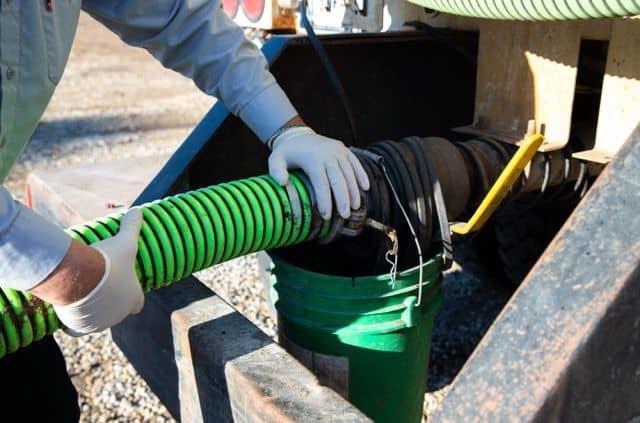
Off your property, in the truck, and discharged at a permitted treatment and disposal facility. It is not spread on your back acreage, it does not go in a ditch, and it does not go into a storm drain. That is a fair question to ask anyone who pulls a hose off a truck in your yard, and a straight answer is a reasonable thing to expect.
What should I do before you get here?
Not much, but a few things save real time. Move the cars, because the truck needs a path to get its hose within reach of the lid and hose length is finite. Kennel the dog — open tank, open gate, crew moving around the yard. Skip the laundry marathon an hour before we arrive. Point us at the lid if you have any idea at all; even "somewhere along that fence" cuts the search down. Dig up whatever paperwork exists, whether that is a prior pumping receipt, a system design, or an inspection from when you bought the place. And tell us what changed — new residents, a remodel that added a bathroom, a backup last month, a soggy patch that showed up this spring. Context turns a pump-out into a diagnosis.
We are buying or selling a house in Eagle. Does the tank need pumping first?
Often yes, and septic is the item most likely to hold up a closing that was otherwise ready to sign. The buyer's lender or agent asks for documentation that the system works, and a seller who waits until the inspection contingency is already running has neither leverage nor time.
What you want in that situation is a septic inspection in Eagle — a documented, eyes-on assessment of tank condition, baffles, liquid levels and drain field behavior that produces a report an agent, a lender or the health district will accept. A pump-out is usually part of it, because nobody can properly assess a tank they cannot see the bottom of. Book them together and it is one visit instead of two.
What if pumping does not fix it?
Sometimes it does not, and you deserve to hear that before you spend the money rather than after. A tank that refills to the outlet within days of being emptied is not a tank problem — that is water coming back from a drain field that has stopped accepting it, or groundwater entering through a failed seam. Slow drains that persist over an empty tank point upstream instead, into the line between house and tank. Either way the pump-out was not wasted; it was the diagnostic that ruled the tank out. Where it goes from there is drain field services in Eagle or a sewer camera inspection in Eagle, and either one gets looked at, explained in plain language, and priced in writing before anyone commits you to anything. We do not quote drain field work over the phone. Nobody has ever seen a drain field over the phone.
Who do I call?
More on what drives the price: septic pumping and the septic pumping cost guide. Everything else out here: septic service in Eagle and all services in Eagle. Also listed on our parent company's main site as American Rooter & Drain: septic pumping in Eagle.