Those are drain field symptoms, and in Eagle they turn up on the properties with the most yard to lose: acreage north of Floating Feather, older places out toward Eagle Island, homes climbing toward Beacon Light where city sewer never reached. This page covers the buried half of your system: how we read it, what we try before condemning it, who signs off on a new one, and what a replacement does to a yard.
What exactly is a leach field, and where is mine?
Leach field, drain field, leach lines, absorption field. Four names, one part, and the part nobody has ever seen. It sits downstream of the septic tank, and it is where your wastewater is actually treated — not in the tank. The tank only separates. The soil does the work.
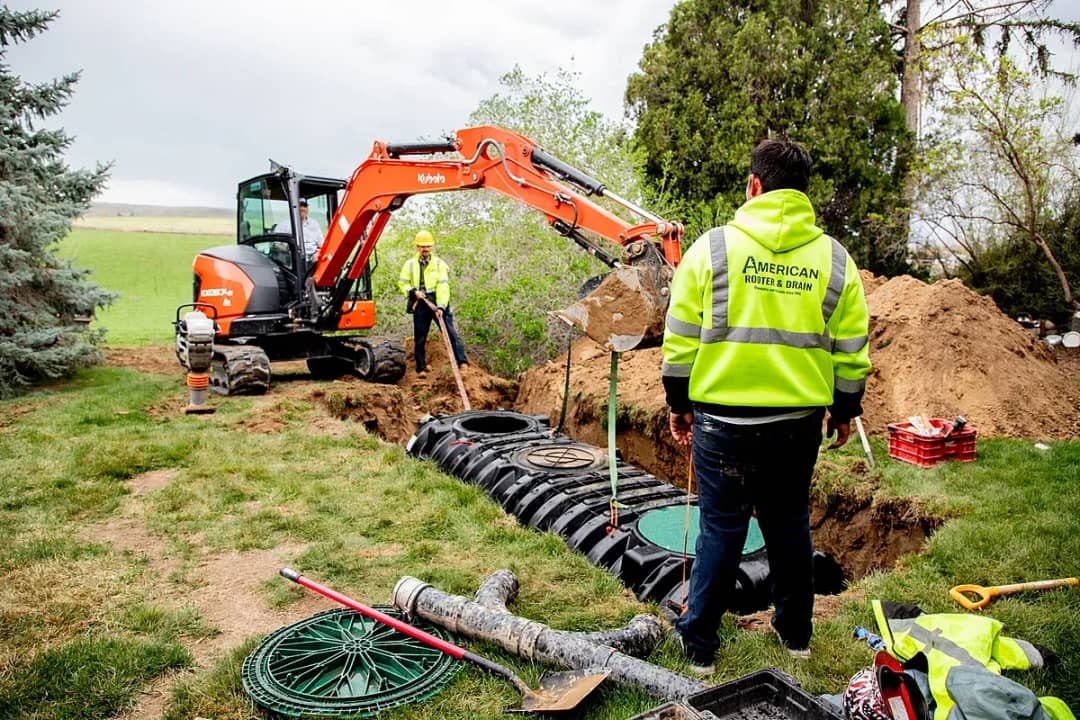
Effluent leaves the tank outlet, runs to a small buried box called a distribution box, and the box splits the flow between the laterals — perforated lines bedded in gravel or plastic arch chambers under the trenches. From there the water seeps sideways and down through undisturbed soil, and a thin dark biological film along the trench walls does the treating on the way. That film is supposed to be there. A field dies when it thickens faster than the soil can keep up, and the water has nowhere left to go.
Finding yours is the first job on the visit. The main line leaves the house below the lowest bathroom and runs straight to the tank, and the field is always past the tank. From there we use the as-built drawing if your copy is still in the closing folder; the grass, because turf over a working lateral greens earlier in spring and holds it longer in August; and a soil probe, which reads native ground against a backfilled trench and leaves a pencil-width hole.
We hunt for the distribution box specifically, because it is the cheapest thing in the system to fix and a common single point of failure. Mark the layout once and nobody searches again — a field nobody can find is the one the next contractor parks a mini excavator on.
Is my sewage backing up because of the drain field or the pipe?
They feel identical from inside the house and cost nothing alike, so sort it before anyone gets a shovel out. A single slow tub or lone gurgling toilet is that fixture's own branch or trap and has nothing to do with the field. The rest divide up like this.
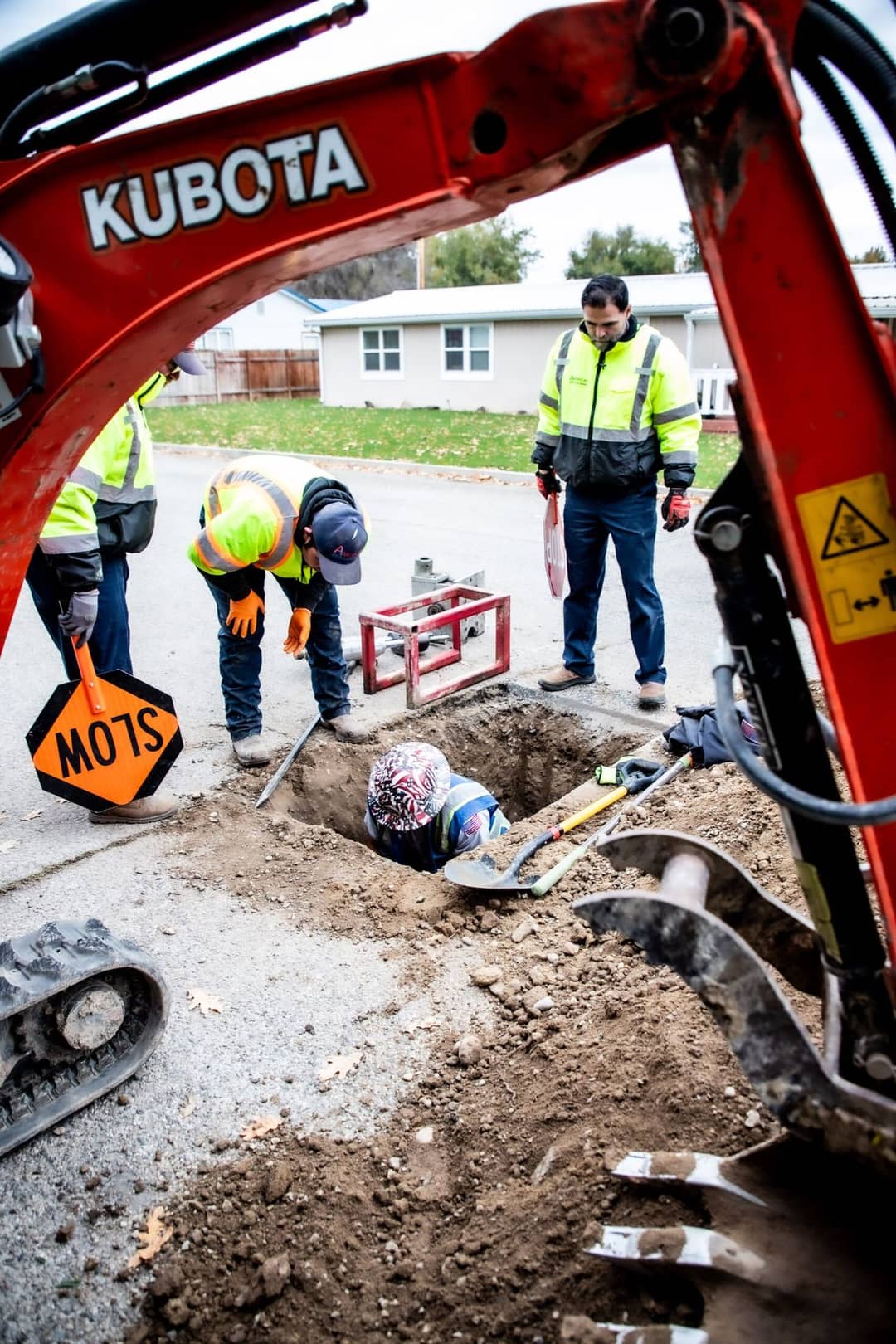
Everything at once, and the yard is dry. Kitchen, hall bath and laundry all dragging together, no wet ground outside, no smell — that points at the line between house and tank, or a tank nobody has pumped. Roots at a joint, a bellied run holding water, a broken hub. Those are pipe problems, and a camera settles them. We have run 24 camera inspections on Eagle addresses and jetted six more, which is why we do not guess at this one.
Wet ground outside and the house barely complaining. Now you are looking at the field. Effluent that cannot soak away goes up, because up is the only direction left. Treat that water as untreated sewage: keep kids, dogs and horses off it, and do not open it with a spade to see how bad it is.
Backing up again days after a pump-out. This is the one that decides it. A tank empty on Monday and back to the outlet by Friday is not a tank problem — that is water returning from a field that has stopped taking it.
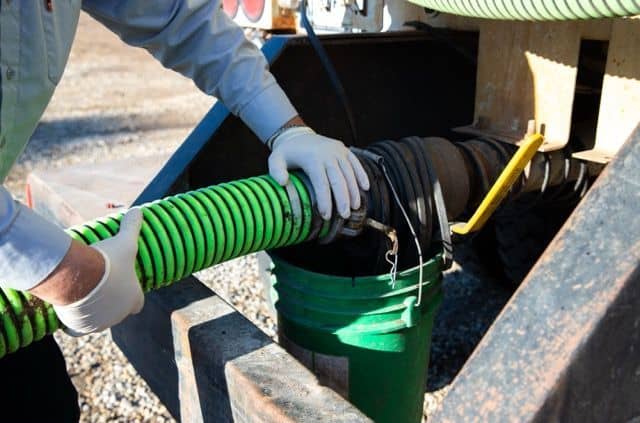
That last test is also the cheapest thing in septic. At $395 for a 1,000-gallon tank, a pump-out lifts the entire household load off the field, and we can come back and read the ground with nothing draining into it. Two of the pump-outs inside the Eagle replacement described below were exactly that: diagnostic visits scheduled into a larger job. If the answer is the pipe instead, that is sewer camera inspection in Eagle or drain cleaning in Eagle work, and a better day for your budget.
What makes drain fields quit early in Eagle?
Age is the boring answer and rarely the whole one. On Eagle ground, four causes dominate.
Too many gallons per day. Absorption is a speed limit, not a bucket. A flapper leaking overnight, a softener dumping regeneration into the tank, a sump or downspout plumbed into the sanitary side, a household that grew from two people to six — none look like plumbing faults, and all run the field past the gallons-per-day figure it was designed around.
The water table climbing into the trench. This is the Eagle-specific one. Once the canals are running and the ground for a mile in every direction is under pressurized irrigation, shallow groundwater on the valley floor rises with it. Your field has not moved. The dry soil below the trench — the part doing the treatment — has been flooded from underneath. That is why a system behaves impeccably through February and surfaces in the second week of July. A field that only fails in irrigation season has nothing left in reserve; go at it while repair options are still on the table.
Weight and lids. Acreage brings machinery. A gooseneck standing over the laterals through a wet winter, horses milling on soaked ground, a shed on skids, a poured pad, weed barrier under bark. Soil around a trench has to breathe for the biomat to keep eating itself; press the air out or cap it over and the layer only thickens.
Solids escaping the tank. When sludge climbs high enough to reach the outlet, grease and settled material wash into the laterals and blind them from the inside. Alone on this list, it is free to avoid. Keeping septic pumping in Eagle on a schedule is not an add-on sale; it is the difference between a $395 truck visit and a machine in the back yard.
Can you fix just the bad leach line instead of the whole field?
Often, and it deserves a hard look before anybody prices a replacement. Our estimating sheet carries the small repairs as their own priced items, which is the tell that we sell them rather than skip past them.
- A camera run down the field, written as its own line. It picks up collapsed pipe, roots pushing through the perforations, and a lateral that was never set to grade — each of those a repair.
- Lateral cleaning, branch by branch. One branch and three are priced separately. When a single run has plugged and the others still take water, that is a partial failure, not a dead field.
- Distribution box work. A d-box that has tipped or cracked sends the entire house down one branch. That branch floods; the rest stay dry. Above ground you cannot tell it from a field that has expired. Below ground it is a small fix, and a four-hole distribution box is a part we carry rather than order.
- The run between tank and field. Its own component, its own suspect, its own price. A caved outlet line will flood a field that had nothing wrong with it.
That is not a brochure list. In January 2026 an Eagle property came to us as a sump pump complaint, and what followed was a camera inspection, a jetting run through the lines, and a second camera pass to confirm what the jetting opened — five visits, first call on the 17th, last closed out on the 28th. Nothing was replaced. The estimate was written as a septic pump-out with the leach field jetted, and that is what the homeowner bought.
The signals that stop us recommending repairs: the field never draws down once the tank has been emptied and rested, effluent breaks the surface over the entire footprint rather than one run, and each attempt buys a fortnight rather than a decade. That is soil exhaustion, and no jetter reaches it. Short of that, you are in ordinary septic repair in Eagle territory.
Who has to approve a new drain field in Eagle?
Not us, and this catches people out. Eagle sits in Ada County, so subsurface sewage disposal here is permitted through Central District Health — and they, not the contractor, decide how much absorption area your property needs and which type of system your ground qualifies for.
1. Empty the tank and look. Nobody diagnoses a septic system through a full tank, so this comes first every time.
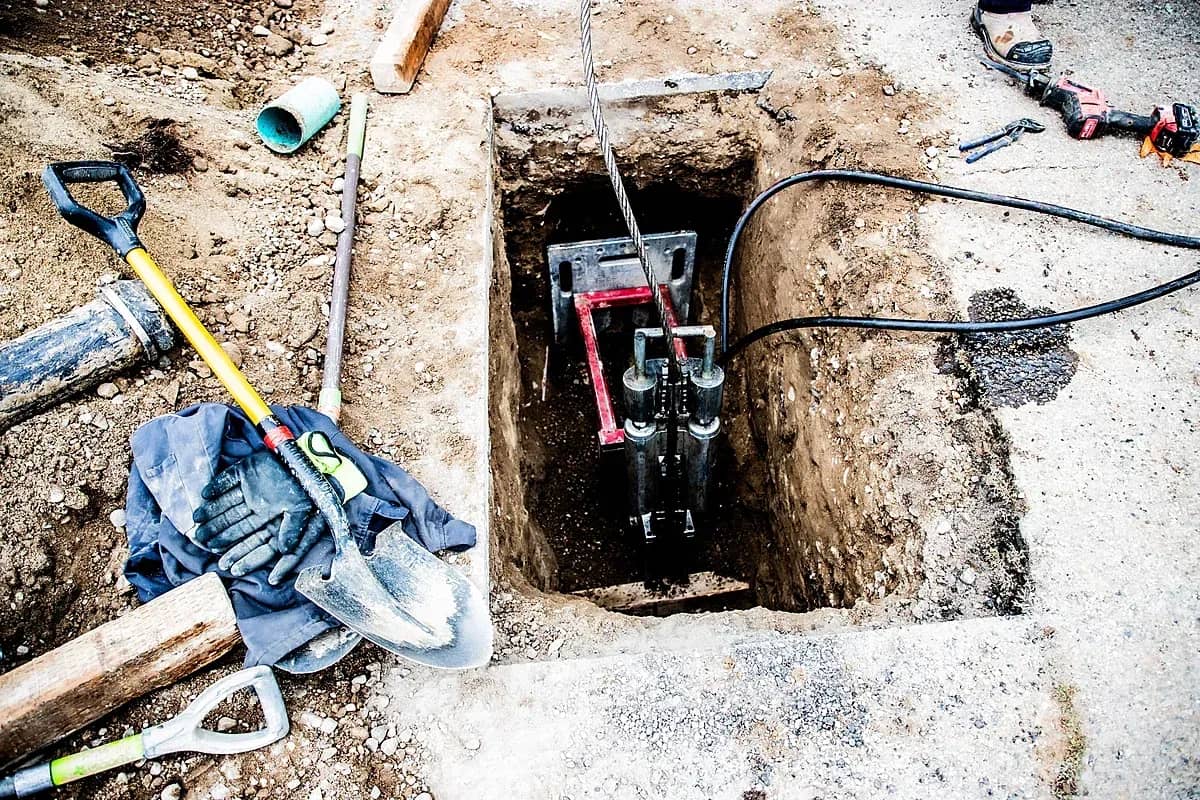
2. Open test holes on the ground you would build on. The soil profile gets logged so the district can rule on it. We schedule this as a job type of its own, because your dirt dictates the design, not the reverse.
3. Assemble and lodge the paperwork. A septic documentation preparation fee covers it, and it does not refund — the filing is already done by the time the answer arrives, whichever way it goes.
4. Wait on the district. They review the design and issue the permit, and that timing is theirs. A firm dig date offered before a permit exists is somebody guessing.
5. Inspection with the trenches still open, ahead of any backfill.
6. Backfill, grade and restore.
Keep the permit and the inspection record somewhere you will find them in ten years. A buyer's inspector asks for them first, and they stop a future contractor trenching a water line through your laterals.
How long will my yard be torn up?
Longer than the digging. The trenching is fast; what sets your calendar is the permit in front of it, the ground condition on the day, and the restoration behind it.
Here is a real Eagle drain field replacement as it sits on our books. The estimate was written on 28 January 2026 and sold on 4 February. Three weeks later the same property added a required holding tank, an ejection pump and a dedicated electrical circuit, because the only soil that qualified for the new field would not take flow by gravity. Two pump-outs were scheduled into the middle of the work, on 10 March and 23 March. The final inspection closed on 15 April, and the landscape restoration — its own scheduled visit — closed on 28 April. Eight separate jobs, one property, one address in 83616.
That is a record, not a promise about your particular February. What drew it out is what draws most of them out: a design that grew a lift requirement halfway through, and February ground. Dig through waterlogged soil and the bucket polishes the sidewall closed, sealing the very face the field has to breathe through — so a wet week pushes excavation back even with a permit on the dash.
Putting the yard back is a phase in its own right. Backfill and landscape finish are separate job types with their own scheduling and crews: nine landscape finish and five backfill visits on Eagle addresses. Assume the trench lines sink over the following twelve months and want topping up, and assume the turf will not knit back that same summer. A more recent Eagle job closed on 3 September 2026: a 1,500-gallon drain field replacement, a 1,500-gallon tank replacement and fifteen feet of new sewer line, on one invoice alongside the septic documentation fee.
Will the tank have to come out too?
Not automatically. Tank and field are different components that wear out on different schedules, and a finished field says nothing about the concrete upstream of it. On our estimates the two sit as separate items, each priced by capacity, in 1,000, 1,500 and 2,000-gallon versions — forty of those lines have been invoiced across our books.
They often go together, though, because the thing that killed the field was frequently the tank. On the Eagle job that closed in September the answer was both: new field, new tank, new outlet run. On the January job, neither.
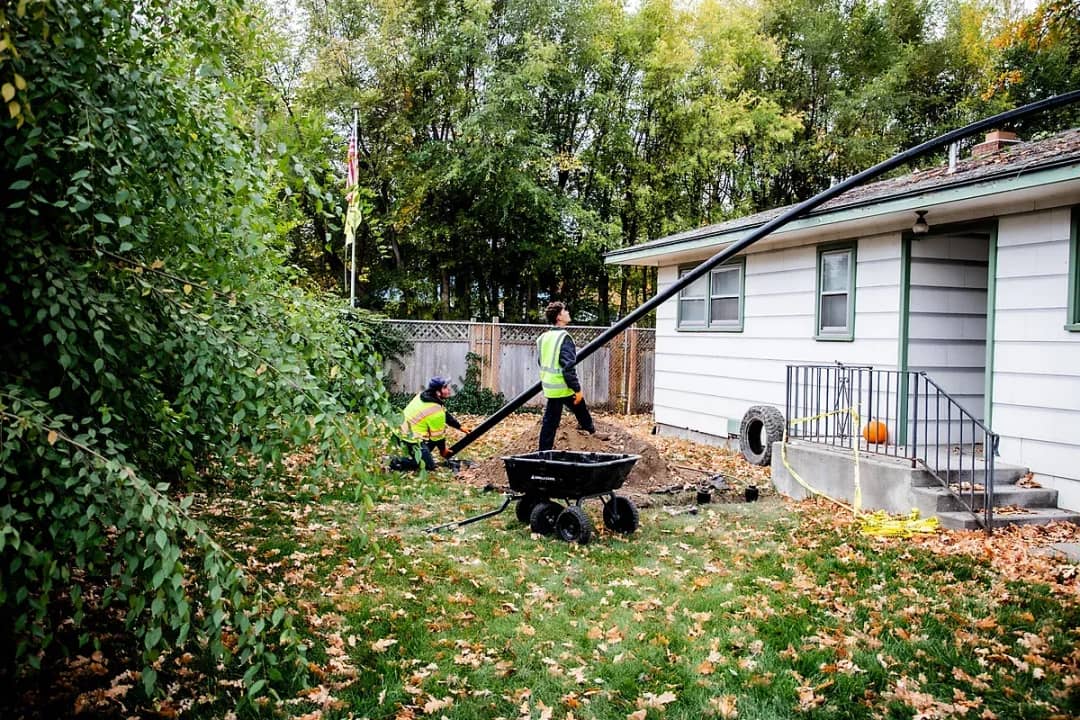
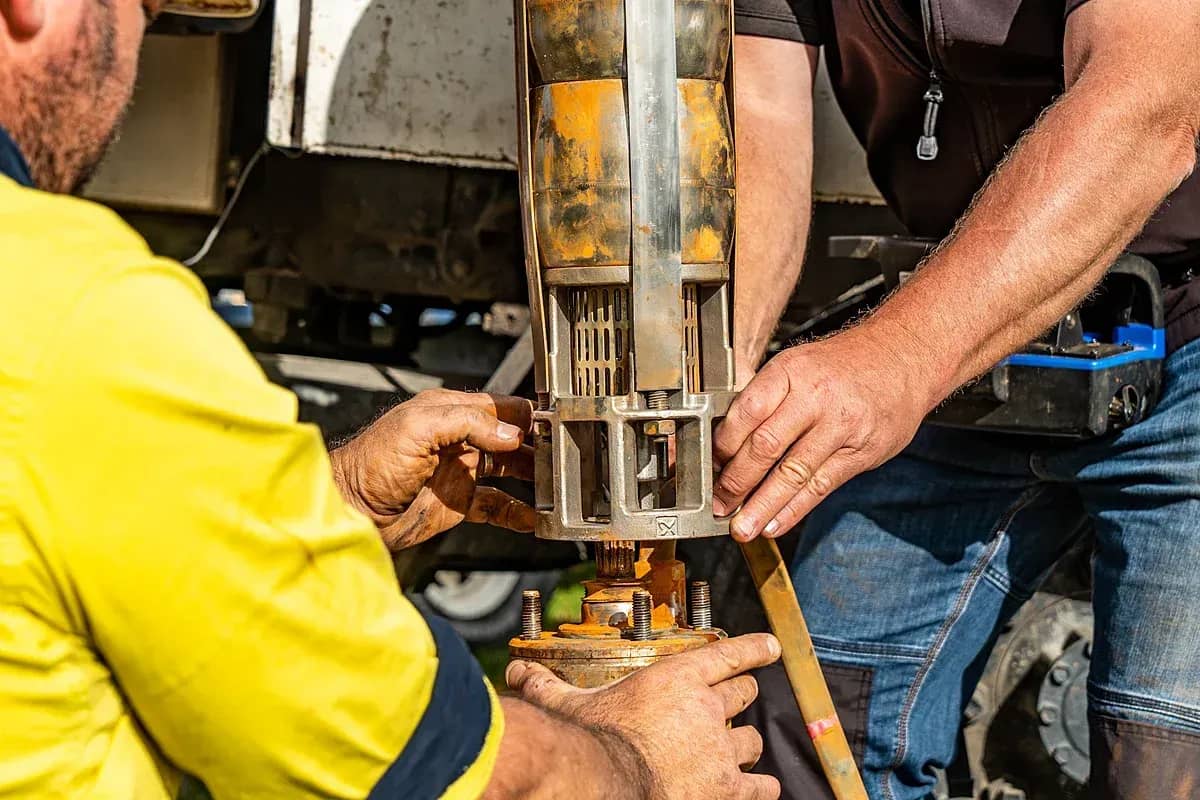
Elevation is the other pairing worth knowing early. Gravity is cheap and simple, so a gravity field is what we build wherever the ground permits one. If the only dirt that passes sits above the tank, the drawing gains a holding tank and a pump — and a pump means a dedicated electrical circuit trenched out to it, another trade and another line on the estimate. That is exactly what happened on the Eagle replacement above, three weeks after the field itself was sold. If the tank is what actually failed, septic tank replacement is the page you want instead.
Why won't you quote a drain field over the phone?
Because the number that moves the price most is not ours to set. Central District Health fixes the required absorption area once they have read your soil, and before that reading exists any figure we gave you would be invented.
What swings it, roughly in order:
- The absorption area the district requires for your house on your soil.
- The design your ground will carry — plain gravity trenches, a chambered or gravelless field, a wide shallow bed, or advanced treatment.
- Whether it runs downhill on its own or needs a lift station, which adds hardware, a power feed and a maintenance obligation for as long as the system lives.
- The distance from tank to new field, and how much of the original footprint is still usable.
- Everything that has to be removed and reinstated — driveway, fencing, irrigation mains, a gate too narrow for the machine.
- The condition of the outlet run, which can quietly become a large item.
Clearances matter more here than acreage. Well separation is the biggest and there is no bending it; on a tighter Eagle lot that radius alone can erase the buildable ground. Boundaries, ditches, canal easements, footings and the buried water service all have to clear as well.
So the number comes after the visit, in writing, before anyone starts. The on-site estimate is free. We have written 99 separate drain field and leach field estimates; twenty have sold. Most people who ask for a number are not buying that week, and we would still rather they had it. The wider picture on septic pricing is in our new septic system cost guide, and the deeper technical version of this work is on our drain field repair and replacement page.
What wrecks a brand-new leach field fastest?
A replacement resets the clock. What happens afterward decides how long it runs, and all of it comes back to keeping the soil under those trenches breathing.
- Keep wheels off it, permanently. A mower is the heaviest thing that should ever cross it. One loaded truck on soft ground counts, and so does the trailer parked there November to March.
- Turf and nothing more. Skip the trees, the shrub border, the vegetable beds, the weed fabric, the gravel pad and the skid shed.
- Steer water away. A spray zone reaching across the field, gutters discharging onto it, or a hollow that puddles above it will each drown the soil you need dry — and if the softener still regenerates into the tank, reroute it, because that is a slug of volume nobody designed the field to take.
- Watch the small leaks and the big wash days. A toilet running silently overnight and six loads of laundry in one afternoon are the same problem: gallons per hour.
- Keep the pump-outs on the calendar. Holding solids back is the single duty the tank performs on the field's behalf.
If you are buying an Eagle property on septic, the field is the half nobody can see and the half that costs the most to be wrong about. A leach field inspection puts its condition in writing before you sign; a full septic inspection in Eagle covers the tank and baffles too.
Who do I call, and what should I have ready?
Three things make the first visit faster. Say what you are seeing and where — "wet stripe in the yard, drains are fine" and "sewage in the basement" are different visits. Dig out any paperwork: a pumping receipt, the system design, the health district record. And tell us what changed — new residents, an added bathroom, a backup last month, a soggy patch this spring. Context turns a service call into a diagnosis.
Drain field work elsewhere in the valley: Star, Meridian and Boise, or the service overview for the whole list. The rest of what we do on this side of the valley sits on septic service in Eagle and the Eagle service index.