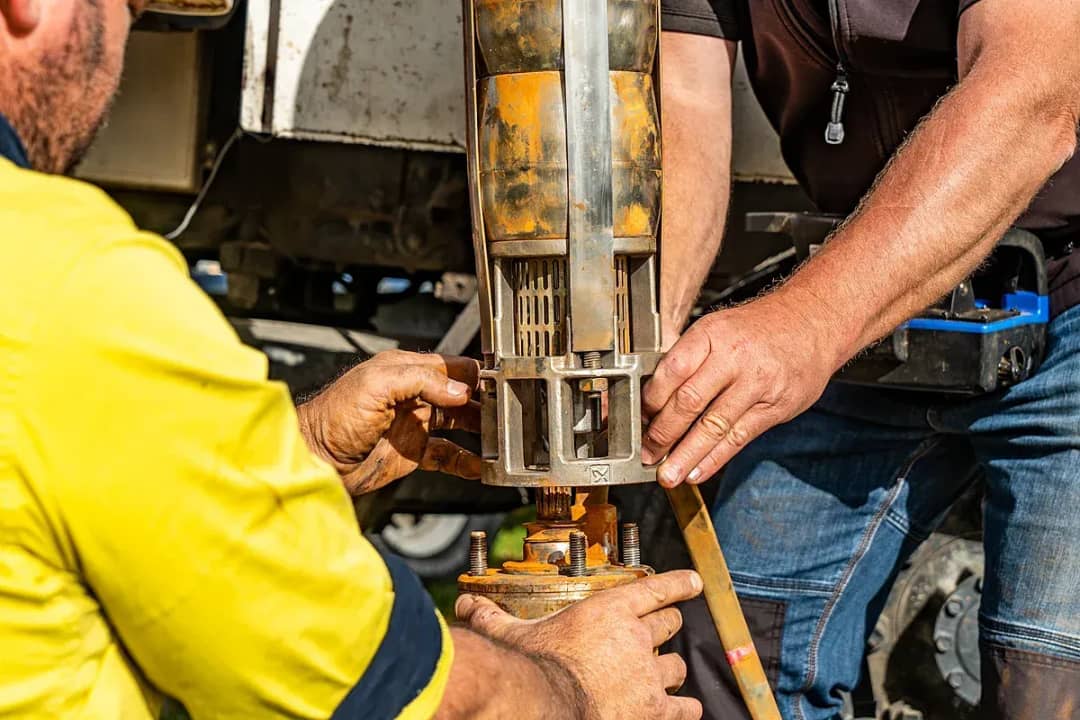

Those are four different problems and they get four different visits. What follows is what actually happens on each, and what you are holding when we leave.
How long does an electrical inspection take?
We reserve a two-hour block on the schedule for a whole-home electrical inspection. That is the block we book more often than any other, and it is the one to plan your morning or afternoon around.
It is the appointment window we set aside, not a stopwatch reading off the work, because the house decides the rest. A small single-story with the panel hanging in the garage, one service, and nothing added since it was built finishes early. A house with a detached shop on its own subpanel, a finished basement, a crawlspace you have to crab through on your elbows, and decades of undocumented work in the attic will use all of it and occasionally ask for more. If it is heading that direction, the electrician tells you while he is standing there rather than after.
One visit, one report. There is no second trip built into it, and nothing gets opened up or changed during the inspection itself, because this is a look-and-find visit rather than a repair visit. If something needs fixing, that is a separate decision you make afterward with a written price in front of you.
What does the electrician actually check?
In this order, because each step tells him what to look for in the next one.
1. The panel, with the cover off. This is where the visit starts and where most findings come from. The metal cover comes off — an electrician calls that the dead front — and he looks at the main breaker and the size of the service, meaning how much power the house is set up to draw at once. Then the condition of the bar the breakers clip onto, whether the breakers even match the panel they are sitting in, two wires jammed under a breaker built for one, wire that is too thin for the breaker protecting it, and whether the white and the bare wires are kept apart where they are supposed to be. Corrosion, heat discoloration, scorching, insect or rodent evidence, water staining from above: all of that is visible with the cover off and invisible with it on. The brand of the panel and roughly how old it is get written down here too.
2. The ground. Where the heavy bare wire leaving the panel actually goes, whether there is a ground rod driven into the dirt outside, whether anything is still attached to it, and whether the water pipes are tied in — an electrician calls that last part bonding. This is the quiet half of an electrical system. It does nothing at all until the moment something faults, and then it is the whole thing. It is also the half that quietly goes missing: a ground rod clamp corrodes off, or a plumber replaces a run of galvanized pipe with plastic and the bond that used to travel through that pipe now stops at the new fitting. Nothing in the house behaves any differently the day it happens, which is exactly why nobody notices.
3. Where the power comes into the house. The meter, the pipe carrying the wires up the side of the house, the point where the utility line lands, and whether any of it has rusted through, pulled loose from the siding or sagged down into a tree. In older Caldwell and Nampa neighborhoods, and out toward Weiser and Payette where the spans between poles get long, this is where age shows first.
4. Outlets, switches and lights, room by room. Outlets get tested for correct wiring and for a real ground behind them, not just the presence of a third hole in the wall plate. The safety outlets with the little test and reset buttons on them — an electrician says GFCI — get checked wherever the kitchen, bathrooms, laundry, garage, exterior and any unfinished basement or crawlspace would call for them, and checked means actually tripped and reset, not looked at. A device that will not reset is a finding. So is one that resets but never tripped in the first place. Switches, fixtures, junction boxes, and anything obviously modified by hand.
5. The attic, the crawlspace and the garage. Where the wiring is out in the open, this is where the real story is. Splices floating outside a box, wire buried under blown-in insulation, dead circuits that turn out to still be live, cable run bare where it belongs inside protective pipe, and, in the oldest houses out here, the cloth-and-porcelain wiring called knob-and-tube.
6. The specific-hazard sweep. Knob-and-tube. Aluminum wiring feeding the ordinary outlets and switches, which insurers ask about by name. Panel brands with a known history of breakers that do not shut off when they should. And a service that is simply too small for what the household is running now. These come up often enough in Treasure Valley houses that they get looked for deliberately instead of stumbled on.
Do I get a written report?
Yes: photo-backed, in plain language, and sorted by what you should do about each item rather than by which room it happened to be in. That sorting is the part that makes it useful.
- Stop using this now. Anything that is a live hazard today: scorched or heat-damaged connections, an ungrounded circuit feeding something that has to be grounded, a breaker that does not match the wire it is protecting, bare live wires you can touch.
- Fix it, but it can be scheduled. Real defects that are not going to hurt anybody this week. Missing safety outlets where they are now called for, an over-full panel, worn-out devices, a bad splice in the attic.
- Know about it. Conditions that are not defects but that you should have in writing, because they affect what you can add later and what a future buyer's inspector will say. A service size that is fine for the house as it stands and will not carry an EV charger and a heat pump on top of it. Aluminum wiring where the connections have already been redone correctly and the right answer is to watch it rather than replace it.
- Checked and fine. What we looked at and found nothing wrong with. This half of the report gets skipped by a lot of companies, and it is the half that lets you show an insurer or a buyer that something was actually examined.
Photos are attached to the findings. If you are sending this to an underwriter, a lender or the other side of a real estate deal, a description of a panel is worth much less than a picture of it.
Do I need an electrical inspection?
If one of the four below describes you, yes. If none of them does, an older house still on its original wiring is worth one look for its own sake, and a recently built house already wired with modern breakers and test-and-reset safety outlets generally is not.
You are buying an older Treasure Valley house. A general home inspector is a generalist by design and by license. They check what is visible, they do not take the cover off your panel, and they are not electricians. That is not a criticism, it is scope. The line you got that says "recommend evaluation by a licensed electrician" is the general inspector doing the job correctly and handing the question to somebody who can answer it. Get it done inside your inspection window rather than after closing, because before closing the findings are a negotiating document and after closing they are a bill. If the house is old enough to worry you electrically, it is old enough to worry you underground too: a sewer camera inspection on the same house answers the other question worth answering before you own it.
Your insurer asked. Carriers ask about knob-and-tube, about aluminum wiring feeding the outlets and switches, and about a short list of panel brands, and they ask because those three have loss histories attached to them. What an underwriter wants is not reassurance, it is a licensed electrician's written statement of what is actually in the house, where it is, and what condition it is in. Sometimes the honest answer is that a house everyone assumed had knob-and-tube does not have it. That answer is worth having in writing.
A panel brand keeps coming up. Federal Pacific Stab-Lok and Zinsco are the two that get named most often, and both are still in service across the older parts of Caldwell, Nampa and the Boise Bench. The failure that worries people is not a dramatic one: it is a breaker that looks normal, resets normally, and does not shut off when the circuit actually faults. You cannot judge that from the panel door, which is exactly why people end up asking. We identify the panel, write down its condition, and tell you plainly what we would do about it, and we will not sell you a single breaker as a fix for a problem that is the whole panel.
A breaker has started tripping. "Started" is the important word. A circuit that has been fine for years and is now tripping has changed, and something caused the change. It may be a genuine overload from a new appliance, and it may be a connection going bad and heating up under load. A breaker doing its job is not the problem, it is the notification. If it is one circuit and one obvious cause, that is a repair call rather than an inspection. If you cannot point at what changed, or it is happening on more than one circuit, the whole-home look is the one that finds it.
What does this inspection not cover?
Here is where the visit stops, so nothing surprises you later.
- It is not a code-compliance certificate. Work is inspected against the code in force when it was permitted. An older house being different from today's code is normal and is not automatically a defect. We tell you which findings are genuine hazards and which are simply "not how it would be done today," because those are very different sentences.
- It is not a permit inspection. Permitted electrical work in Idaho is inspected by the state, through the Idaho Division of Occupational and Professional Licenses under the Idaho Electrical Board, not by the city, not by the county, and not by us. Our inspection is for you. Theirs is for the permit. Neither substitutes for the other.
- It is not destructive. We do not open walls or ceilings. Everything above is done by looking, by testing with meters, and by getting into the spaces that are already open to us. If a finding genuinely cannot be settled without opening something up, the report says so instead of guessing.
- It is not a general home inspection. Electrical only, and considerably deeper on electrical than a general inspection goes.
What happens if you find a problem?
You get the report either way. It is yours whether or not you have us do a single thing about it. When a finding does need work, you get a flat price in writing for that specific repair before anyone touches it, and you decide. Findings that turn into work usually land in one of two places: everyday electrical repair for devices, circuits and wiring faults, or a panel upgrade when the panel itself is the problem or the service will not carry what the house needs. Capacity findings often connect to something you were already planning, such as a generator or an EV charger, and it is a great deal cheaper to know the panel answer before you buy the equipment than after.
If you carry our American Premium Membership, an electrical inspection is part of what the membership covers. It is a real scheduled job on our board with its own slot and its own electrician, not a sales visit dressed up as one.
How much does an electrical inspection cost?
You will have the number for the inspection itself before it goes on the schedule rather than after, and if you carry the membership it is covered. There is no hourly meter running while somebody is in your crawlspace; the visit is the visit.
What we will not do is put a price on the repairs before we have seen them, and the reason is specific to this trade: the price is set by what is behind the wall. Whether a circuit can be reused or has to be re-run. Whether the panel has room, headroom, both or neither. Whether the walls are drywall or plaster-and-lath. Whether the attic and crawlspace are genuinely reachable, or whether reaching them means moving somebody's storage out of the way first. Whether the last person who worked in there did it correctly, or left a splice that has to be undone before anything new can go in. Any number quoted before those are known is a guess, and we would rather not guess at your house. Estimates for repair work are free and on-site, given after the inspection with the findings in front of both of us.
Do you work in my area?
Yes, across Idaho's Treasure Valley and into Eastern Oregon. American Electrical Services runs licensed electricians in Boise, Meridian, Nampa, Caldwell, Eagle, Star, Kuna, Middleton, Garden City, Hidden Springs, Mountain Home, Emmett, Marsing, Homedale, Parma, Wilder, Payette, Fruitland and Weiser in Idaho, and Ontario, Nyssa and Vale in Oregon. See everything we do in Boise, Nampa, Caldwell, Payette and Mountain Home.
Idaho Electrical Contractor LIC# 3671445. American Electrical Services is an Idaho DBA of American Rooter & Drain, with the same ownership, its own license and its own line.
To book an electrical safety inspection, call (208) 782-8268. If you are buying a house and want the plumbing and the sewer line looked at in the same week, American Rooter & Drain's main line is (208) 366-5771 and a plumbing inspection covers that side. For a broader look at what these houses hand you, our write-up on plumbing, HVAC and electrical problems in older Idaho homes is the companion to this page.