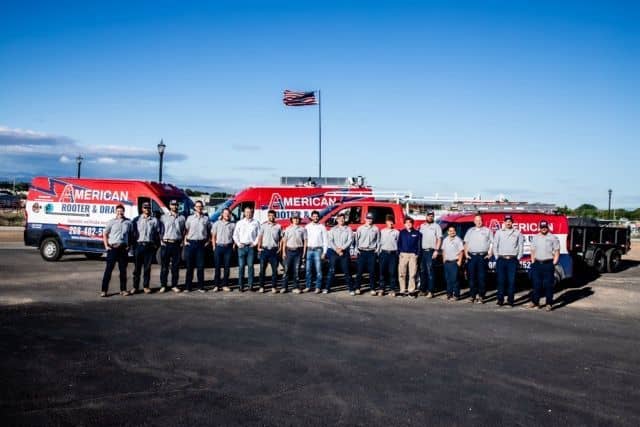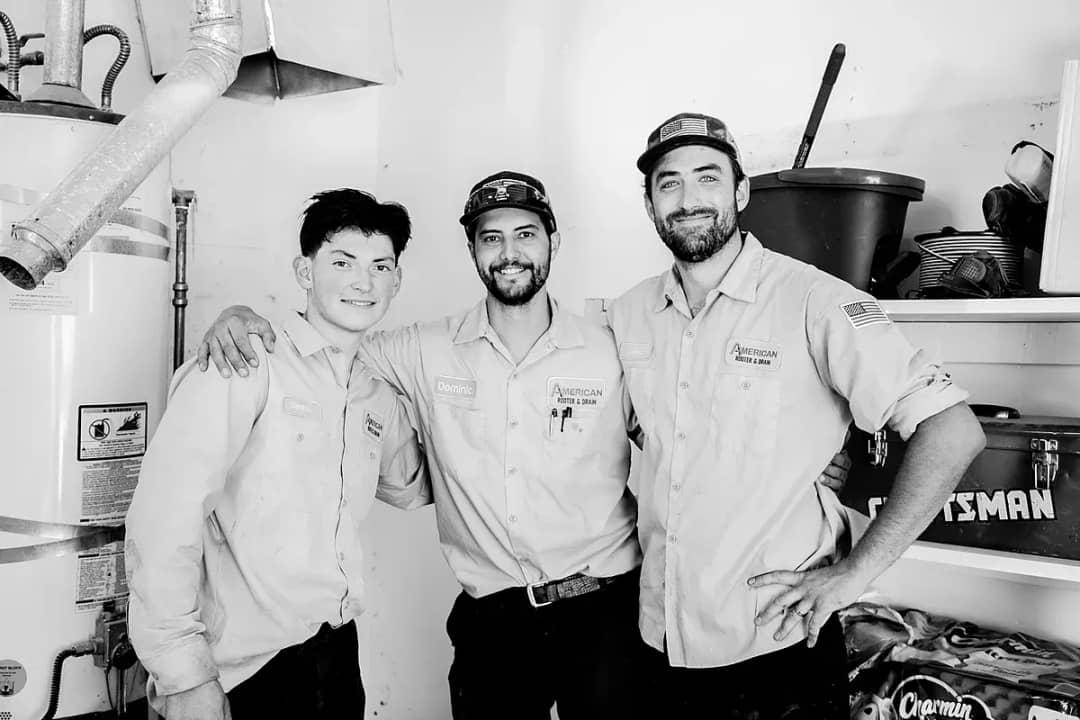


American Electrical Services is the electrician division of American Rooter & Drain, established in Caldwell, Idaho in 1945 and serving the greater Treasure Valley since. Our shop is at 1005 Commercial Way, Suite A, Caldwell, ID 83605 — the same building the plumbing and septic trucks roll out of. Idaho electrical license no. 3671445. The electrical line is (208) 782-8268.
Below is what we check, in what order, what the inspector looks for, and what surprises people on Caldwell homes.
Will my Caldwell home's panel handle a Level 2 charger?
The answer lives at the panel, not the car, and four things decide it.
Service size. Look at the main breaker at the top of your panel. If it reads 200, you are in good shape for almost any residential charger. If it reads 100 — common on Caldwell houses built before the mid-2000s, and near-universal in the older grid south and west of downtown — a charger is still very often possible, but the math has to be done rather than assumed. A fuse box instead of breakers is a different conversation, and we will have it honestly with you.
Bus rating and breaker space. The panel's internal busbar carries its own rating, and some panels are rated below their main breaker. We also need two adjacent open slots for a double-pole breaker. Tandem "skinny" breakers already crammed in are a sign somebody has been solving space problems the cheap way, and some panels do not permit them at all.
Panel make. Certain older brands — Federal Pacific Stab-Lok and Zinsco chief among them — turn up in Idaho houses of a certain vintage, and we will not add a continuous 48-amp load to one. If you have one we will show you why.
The load calculation. Most homeowners have never heard of this, and it decides the job. The standard calculation adds up square footage, appliances, HVAC and the new charger on paper. It is conservative, and it fails plenty of otherwise-fine 100-amp homes. The alternative the code allows is to pull a full year of your actual metered demand, take the highest recorded peak, add 125 percent of the charger's continuous load, and compare that against your service. Real houses rarely draw what the paper says, so this method rescues a lot of homes that "fail" on paper — and not everyone bothers to run it, which is why one company tells you that you need a service upgrade and the next one does not.
Do I need a panel upgrade before the charger goes in?
Sometimes yes. Often no, and the difference is worth real money.
You genuinely need one when the load calculation does not clear even on measured demand, when the panel is full and cannot be extended, or when the panel is one of the makes above. Then the job grows: a new meter-main, possibly a new mast and service entrance conductors, coordination with Idaho Power to disconnect and reconnect the drop, and a separate inspection. That is a two-visit job, and we say so before you commit.
You do not need one nearly as often as people assume. Three ways around it:
- Dial the charger down. Nearly every Level 2 unit lets the installer set its maximum output during commissioning. A 48-amp charger configured to 32 amps drops the circuit from 60 amps to 40 and still delivers many times what your garage outlet does. If the car sits in the garage overnight, you will never notice.
- Load management. The code permits an energy management system that watches whole-house load and throttles the charger when the dryer, oven and air conditioner all fire at once. Some chargers have it built in; standalone devices clamp onto the service conductors. This is how a 100-amp Caldwell house legally hosts a charger a raw calculation says it cannot.
- A subpanel. If the problem is breaker space rather than capacity, a small subpanel fed from the main is far less disruptive and does not involve the utility at all.
If an upgrade is genuinely the right answer we do that work too — panel upgrades in Caldwell. We would rather sell you one you need than an EV circuit that trips every February.
Should the charger plug into an outlet, or be wired straight in?
Both are legitimate and they are not equivalent. Installers who only ever do one of them are usually doing the one that is faster for them.
Receptacle install (NEMA 14-50). We mount a 240-volt receptacle and your charger plugs in. The upside is portability — you take it when you move, and a failed unit swaps out without an electrician. The constraint: a 50-amp circuit legally supports a 40-amp continuous draw and no more, so this caps you at a 40-amp charger. The code also requires ground-fault protection here, meaning a GFCI breaker, and those occasionally nuisance-trip against the charger's own monitoring.
Hardwired. The conductors land directly in the unit. No plug, no GFCI-breaker interaction, one fewer connection to loosen over years of thermal cycling. It is the only option above 40 amps — the full 48 requires hardwiring on a 60-amp circuit — and the better answer outdoors, where a plug and receptacle have to survive Caldwell's winter damp and summer heat swings.
The sizing rule underneath all of this is non-negotiable: an EV charger is a continuous load, so the circuit is sized at 125 percent of the charger's rating. A 32-amp charger needs a 40-amp breaker. A 40-amp charger needs a 50-amp breaker and 8 AWG copper. A 48-amp charger needs a 60-amp breaker and 6 AWG copper. Anyone who puts a 48-amp unit on a 50-amp breaker to save on wire has built you a problem that shows up in year three.
What does an EV charger installation cost in Caldwell?
We will not put a number on this page and will not give you one over the phone, because every variable that matters is invisible from a phone call:
- Distance from the panel to the parking spot. Copper is priced by the foot.
- The route. Open crawlspace, straight shot — easy. Finished walls, blown-in insulation, a fire-rated garage separation to penetrate — not easy.
- Amperage. 6 AWG copper costs meaningfully more than 8 AWG, and a 60-amp breaker more than a 40.
- Indoor versus outdoor. Exterior work needs wet-rated conduit, a weatherproof enclosure and proper flashing at the wall.
- Whether the panel needs anything. A breaker swap, a subpanel and a full service upgrade are three very different numbers.
- Trenching, if the charger is going to a detached building.
- Permit and inspection, which we pull and schedule.
Instead we come out, look at the panel, measure the run, and hand you one flat number in writing before anyone touches a wire. The estimate visit is free. Longer version here: why we won't quote a price over the phone.
What actually happens when your electrician shows up?
1. Panel first. Cover off, service size confirmed, bus rating read, breaker inventory taken, open slots counted, existing load documented, panel photographed.
2. Walk the route. From the panel to where you actually park — not where the previous owner parked. What is behind the drywall, where the joists run, whether the crawlspace is passable.
3. Confirm the charger. Rating, mounting pattern, cable length, whether it is hardwire-capable, and whether it matches the car you own.
4. Talk about placement. People undervalue this. Which side is the charge port on? Do you back in or pull in? Does the cable cross a walkway where somebody trips over it in the dark? Height matters too — high enough that the cable is not lying in February slush, low enough that you are not reaching over your head every night.
5. Number in writing, approved before work begins.
6. The install. Breaker in, conductors pulled, conduit run and secured, unit mounted, terminations torqued to the manufacturer's spec with an actual torque screwdriver. Loose lugs are the most common cause of heat damage on circuits like this.
7. Commissioning. Output set to match the circuit, voltage verified under load, ground path confirmed, and your car plugged in so we watch it pull current before we leave.
8. Paperwork. Panel directory updated by hand so the next person knows what that 60-amp breaker feeds, and the permit record handed to you.
How long does the whole job take?
We give you the expected on-site time in writing with the quote, because it depends almost entirely on the run. A charger on the garage wall a few feet from the panel, on an open stud bay, is the fastest version and a single visit. Add a long run through finished space — fishing wire through insulated walls, drilling top plates, patching behind yourself — and the wiring stops being the slow part; the access is. Exterior conduit grows it again. Trenching to a detached building is a different day entirely.
The two-visit jobs are the ones where the utility gets involved. If your service has to go from 100 to 200 amps, Idaho Power pulls the meter and reconnects it, on their calendar rather than ours. We sequence it so your power is down for the shortest stretch possible.
The charger works the moment we energize it — you are not waiting on an inspector to start charging — but the permit stays open until inspection is signed off, and scheduling that is our job, not yours.
Can you get a charger out to my detached garage or shop?
Yes — that includes acreage out toward Sunnyslope, along Homedale Road, and the larger parcels north of the river. Three things to understand first.
Trenching. Buried conduit needs proper cover: for PVC on a residential branch circuit the code table calls for 18 inches, more for direct-buried cable, with separate figures under a driveway. Depth is not the interesting part — what is already down there is. Irrigation lines are everywhere in Canyon County, and the older ditch and lateral infrastructure around Caldwell is not always where anyone thinks it is, so we locate before we dig. From roughly December through February the ground also freezes hard enough to turn a straightforward trench into a machine rental — a real reason to schedule this work for spring if you can wait.
Voltage drop. This separates a real design from a guess. Over a long run, conductor resistance eats voltage, and a charger fed at the bottom of its range runs hot and charges slowly, so we upsize conductors beyond what the breaker alone requires. If a bid for a 200-foot run to your shop quotes the same wire gauge as a 20-foot run inside the garage, that bid is wrong.
Feed the building, not the charger. If we are already trenching, better value is a feeder to a small subpanel in the outbuilding with the charger off that — lights, receptacles and a welder circuit for a fraction of what a second trench costs later.
Do I need a permit, and who inspects the work?
Yes, and you want it that way. In Idaho the electrical permit and inspection for residential work in Canyon County run through the state electrical program rather than a city counter. We pull the permit, schedule the inspection, and hand you the record.
What the inspector looks at: breaker size against conductor size, conductor size against the charger's continuous rating, grounding and bonding, conduit support, an approved wet-location enclosure if any part is outdoors, fire-stopping where the run penetrates the garage separation wall, and a legible panel directory. Sloppy work gets a correction notice and a second visit.
Beyond the inspection, the permit is a documented record when you sell — buyers' inspectors ask — and some homeowner policies care whether high-amperage work was permitted. A charger pulling 48 amps overnight is one of the hardest-working circuits in the house.
Which charger should I buy for my car?
We install whatever unit you choose and do not mark up hardware you can buy yourself. If you have not bought one:
Match the amperage to your car, not the biggest number on the box. Every EV has an onboard charger with a fixed maximum AC intake. If your car accepts 32 amps, a 48-amp wall unit on a 60-amp circuit charges it at exactly the same speed as a 32-amp unit on a 40-amp circuit — you paid for copper you cannot use. Check the owner's manual first.
Plug type. The industry has converged on the NACS connector and most new vehicles ship with that port, while J1772 remains everywhere on older cars. Adapters run both directions and work fine.
Hardwire-capable, if you want 48 amps. If the spec sheet says plug-only, you are capped at 40 amps no matter what your panel can do.
Outdoor rating and cable length. Anything living outside needs a wet-location-rated enclosure, not an indoor unit tucked under an eave. Measure your parking spot first — an 18-foot cable and a 25-foot cable are sometimes the difference between reaching the charge port and buying a second charger.
Scheduling. A charger that lets you set a start time is worth having if you are on Idaho Power's optional time-of-day pricing.
What goes wrong on these installs?
The failures we get called out to fix are boringly consistent.
- Undersized conductors. A 48-amp charger on wire rated for 40. It works, right up until it does not.
- Loose terminations. Lugs never torqued to spec, found later as discolored insulation.
- GFCI nuisance tripping. A receptacle-fed charger tripping every few nights. Sometimes a genuine fault; often the breaker and the charger's own monitoring arguing with each other.
- A charger mounted where the cable cannot reach. Right wall, wrong end of it — or the wrong side entirely for the car's charge port.
- The garage firewall left open. A hole drilled through the rated separation between garage and living space and never sealed — a code violation, invisible the moment the drywall patch goes on.
- No permit, which surfaces years later, during a sale.
- A panel already at its limit. The charger was not the problem, just the last straw. If breakers were tripping before the EV showed up, tell us — electrical repair in Caldwell may be the right conversation first.
Do you work on the older homes near downtown Caldwell?
Constantly. Caldwell grew up around the railroad from the 1880s, and the housing near the depot and around the College of Idaho is the oldest electrical stock in town — exactly where the interesting EV jobs are.
The split runs roughly along ZIP lines, mostly 83605 and 83607. The 83605 side carries most of the older core: smaller services, some fuse panels still in place, alley-loaded detached garages never wired for more than a light and one receptacle, and the occasional run of cloth-insulated branch wiring behind the plaster. Those homes are good candidates — they just need the panel question answered honestly first.
The 83607 side, and the newer subdivisions toward Middleton Road and along Ustick, are generally 200-amp meter-mains with room to spare, and a fair number were built with a conduit stub already run into the garage. If yours has one, say so on the call.
Our electricians have run 354 electrical jobs across the greater Treasure Valley, 39 of them at Caldwell addresses, and the Caldwell location's Google profile carries a 4.8-star average across 1,680 reviews. This is the town the company started in.
How soon can someone come out?
Call (208) 782-8268 and we will get you on the schedule, same day when the calendar allows. The estimate visit is free, it happens at your house because that is the only place the real answer lives, and you get one flat number in writing before work begins. Every electrician who comes to your door works under Idaho license no. 3671445, and the workmanship is guaranteed. See what else our licensed electricians handle beyond EV circuits on our electrician services page.
We are at 1005 Commercial Way, Suite A, Caldwell, ID 83605. While we are there we can also handle panel upgrades in Caldwell, lighting installation in Caldwell, generator installation in Caldwell and electrical repair in Caldwell — or see everything we do in Caldwell and the EV charger installation overview. Charging up elsewhere in the valley? We cover Nampa, Middleton and Boise too.