If your old system has already quit, call (208) 782-8267. If you are still weighing whether it has another season in it, the repair-or-replace walkthrough shows how that decision gets made.
How soon can a new system be in my Nampa house?
There is a scheduling record behind this rather than a promise, which is worth more.
Our installation records begin in March 2023. Since then we have run 39 heating-and-cooling installation and installed-equipment jobs at Nampa addresses for 25 separate households, the most recent on 29 July 2026 — 2 of those 39 are full system installations, and the other 37 are installed-equipment or sold-work jobs from an estimate (component replacements included). Fifteen were in 83687 out toward the northeast of town, thirteen in 83651 across the middle and west, eleven in 83686 running south toward Lake Lowell. Thirty-three of the 39 are closed out as completed — 2 full installs and 31 installed-equipment/sold-work jobs.
Across all of our Nampa heating and cooling jobs with both a call date and a finish date on file — 142 in total — 119 closed the same calendar day and five the next day; the remaining 18 fall into neither bucket, which the data does not explain further. A repair is a same-day animal; a replacement is not, because the equipment has to be the right size and the right cabinet width and sitting in a warehouse before anyone carries it through your door. Every one of those 39 installation and installed-equipment jobs was scheduled on a weekday — eleven Wednesdays, nine Fridays, nine Tuesdays, five Mondays, five Thursdays, not one on a Saturday or Sunday.
The step before it moves faster. We have made 116 estimate and inspection visits to Nampa homes across 99 households — 32 scheduled for the day of the call, 58 within a day, 77 within three days. That is where a technician looks at your equipment, your ducting and your house, and it has to happen before any number exists. The gap between that visit and installation day is mostly you: among Nampa households who had an assessment and went ahead, the shortest was a single day and the longest ran into weeks.
If the timing is yours to choose, choose a shoulder month. Company-wide, our 464 completed installation and installed-equipment jobs land heaviest in July (69) and June (46), then August (44), January and November (43 each), and May and October (41 each); the quietest is February, at 21. Nampa's own 33 completed installs and equipment jobs cluster in April, May and October (5 each), then January, March, July and September (3 each). July and January are heavy because that is when equipment fails in front of people — nobody chooses to replace a system during a heat wave, the heat wave chooses for them. In March or October you pick your own date; an annual service visit is often where that starts.
Heating and cooling is only part of what we do here. Since October 2020 we have run 4,255 jobs at Nampa addresses for 1,521 households, 445 of them heating and cooling. Those dispatch records begin in October 2020, when the current system went in — the company is a great deal older than the database. The rest is listed near you in Nampa.
What actually happens on the day the crew is here?
Take the record first. Of the 33 completed Nampa installation and installed-equipment jobs — 2 full system installs and 31 installed-equipment/sold-work jobs — 20 finished on the day the crew started and eight finished the following morning. Two ran a day or two beyond, one to four days, one to eight. Twenty-five were a single appointment; seven took two; one took five.
A day, usually. What pushes a job into a second is almost never the equipment — it is the sheet metal, the venting, or something found behind the old unit once it comes out.
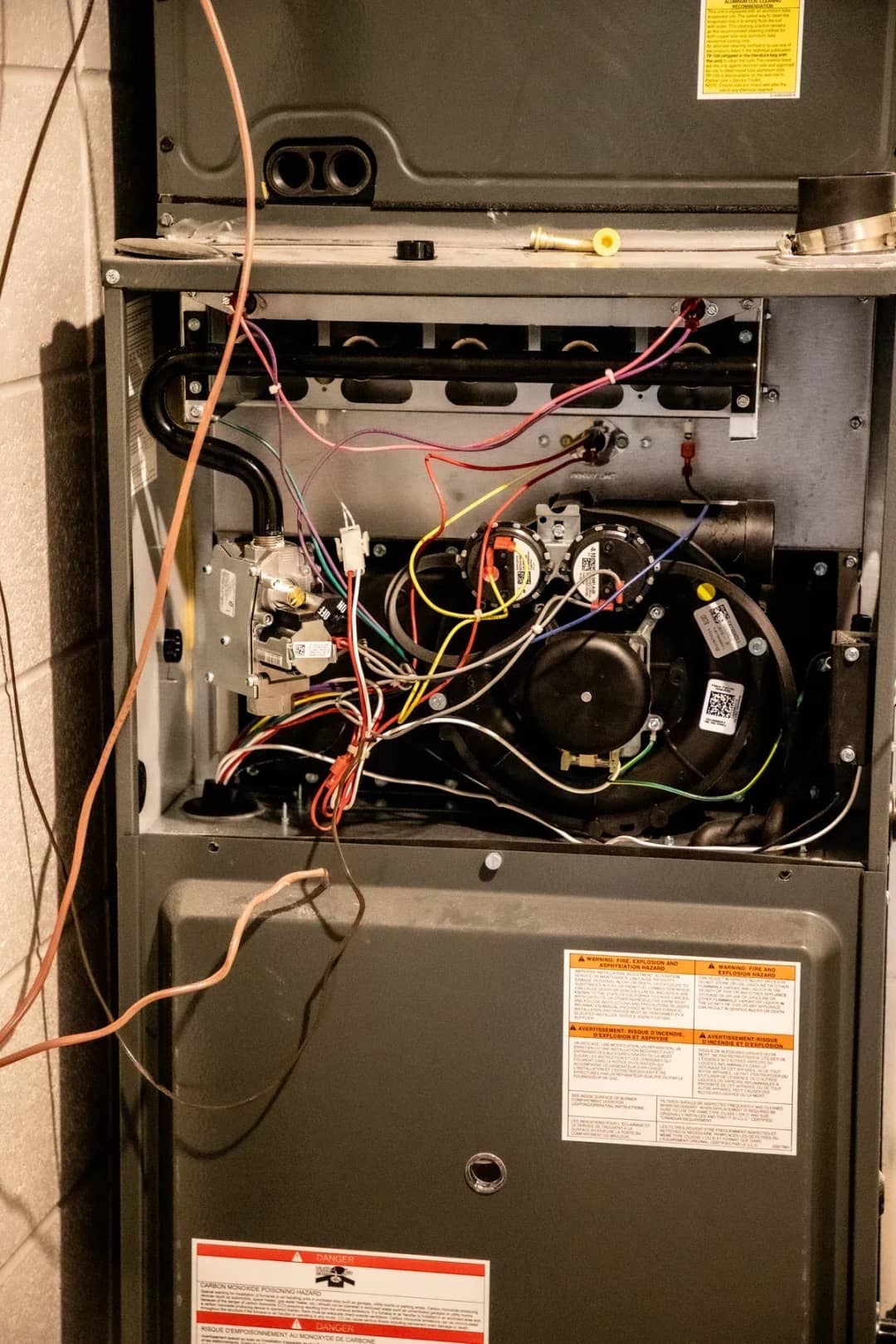
Refrigerant out, then the old equipment. On any job with a cooling side the existing charge is recovered into a cylinder before a line is cut — federal law, not a courtesy. Then gas off and capped, power off at the disconnect, flue disconnected, condensate line pulled, furnace walked out. If you wondered which part of the day is loud, this is it: cutting the old plenum out of a hall closet or a garage corner with shears and a hammer.
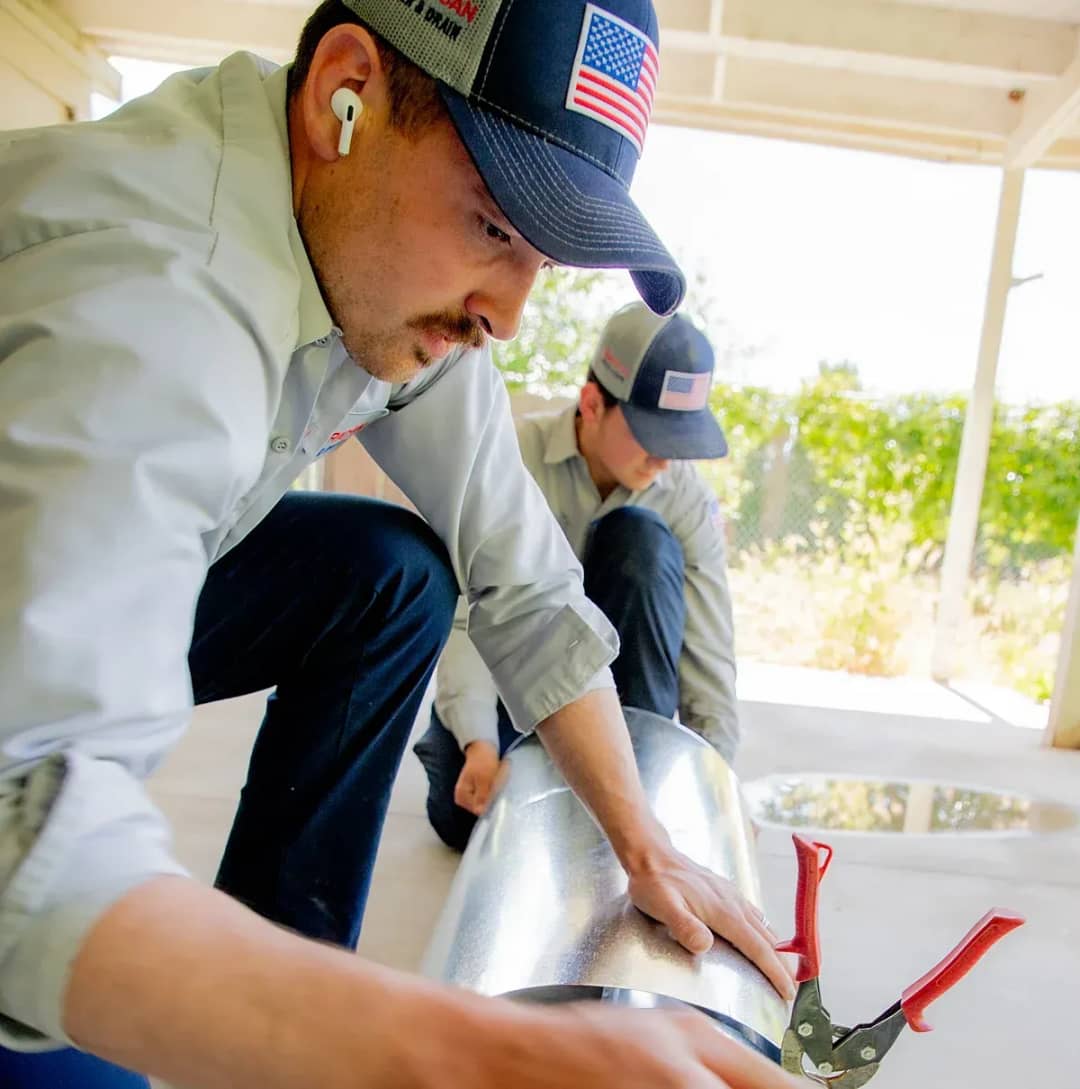
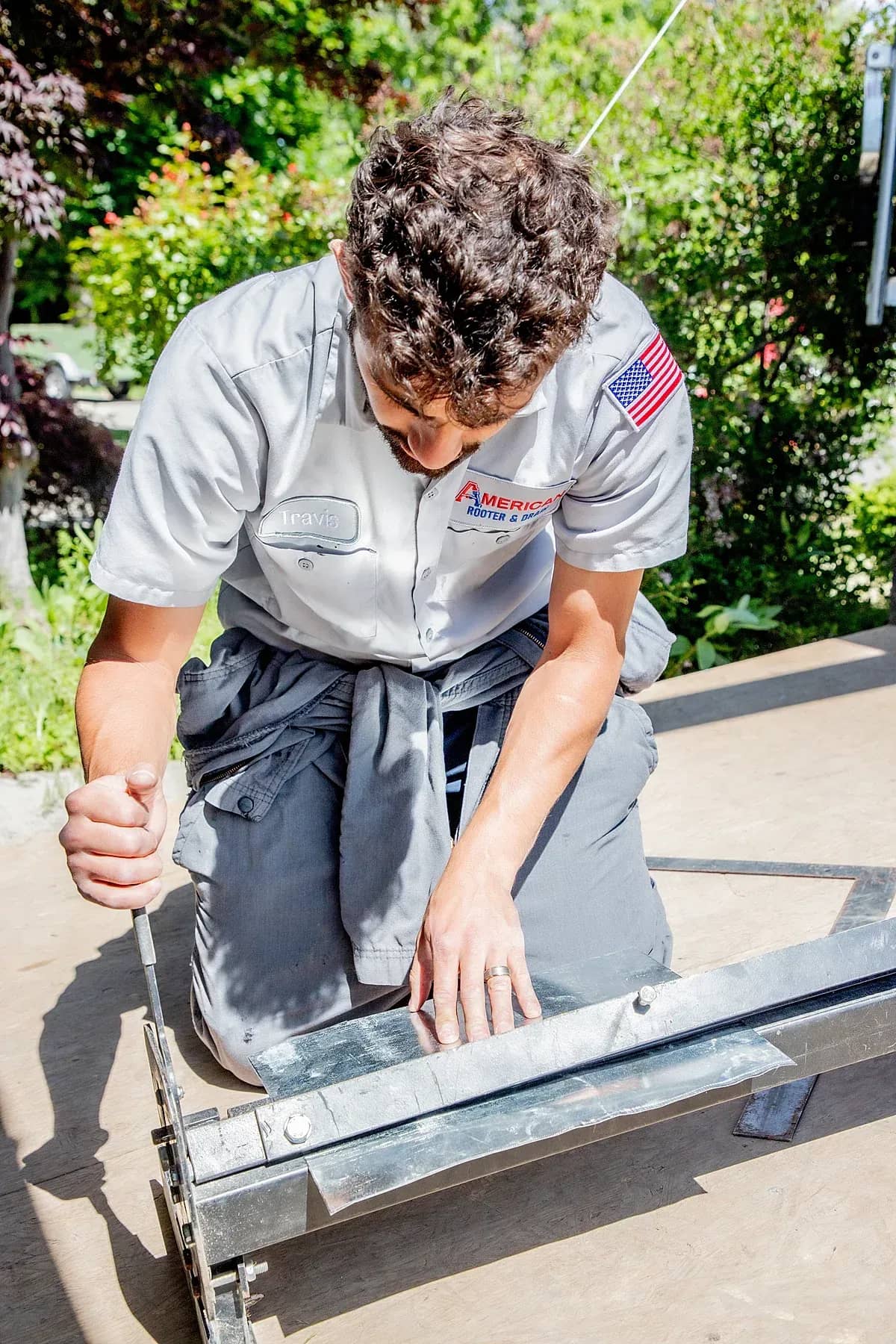
The new furnace set, squared, married to new sheet metal. Level matters more than it sounds — a furnace out of level drains condensate the wrong way in a 90-percent-plus unit and can hold water in the secondary heat exchanger. Supply plenum, return drop and coil transition are fabricated on site, because old cabinets and new equipment are almost never the same dimensions. That is where the hours quietly go. Gas is then re-piped and leak-checked before anything is lit.
Venting, the item people do not see coming. An 80 percent furnace vents into B-vent or a lined chimney. A 90-plus condensing furnace does not — it needs PVC intake and exhaust out a sidewall or the roof, meaning a new penetration through the wall of your house and a condensate drain that did not exist before. Going from 80 percent to high efficiency is not a like-for-like exchange, it is a small remodel, and it belongs on the written estimate before anybody talks about price.
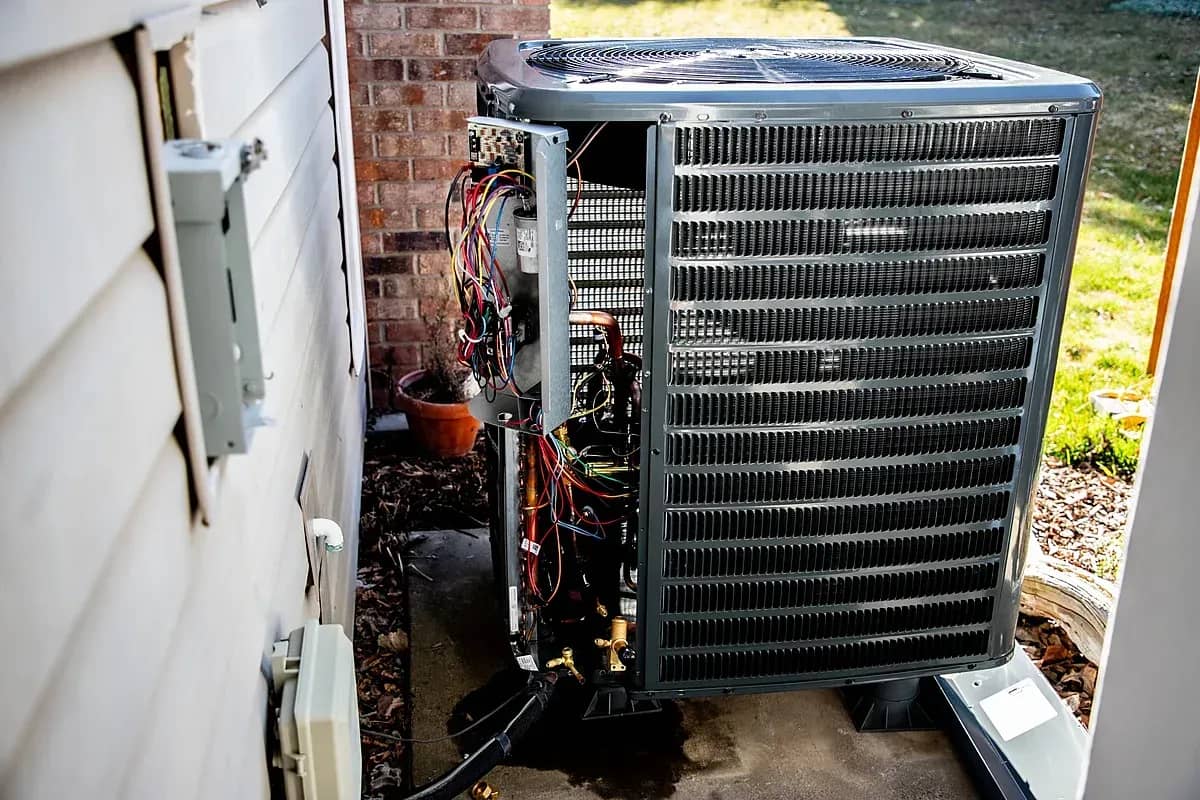
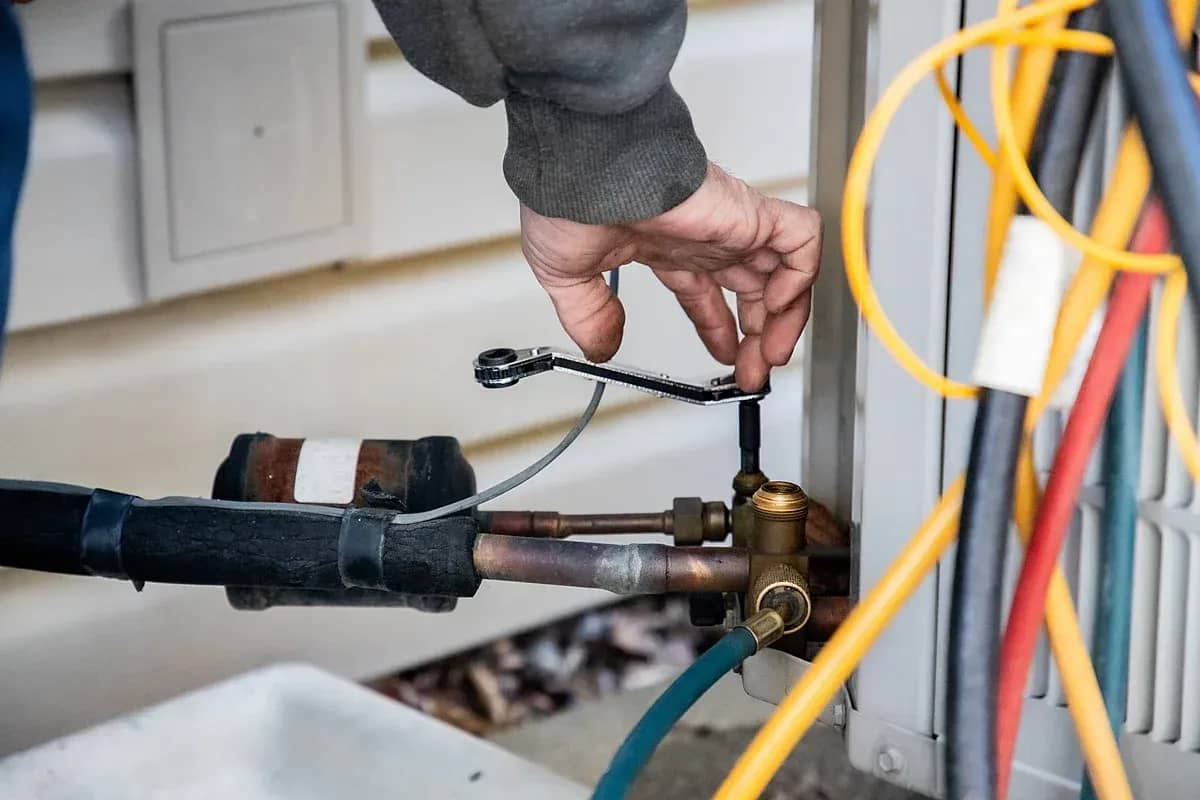
The cooling side. New pad set level outside, lineset replaced or flushed, filter drier fitted, the system pulled into a deep vacuum and held to prove it is tight and dry, then the charge weighed in.
Commissioning, which nobody watches and everybody pays for. Temperature rise across the heat exchanger against the range printed on the rating plate. Static pressure both sides of the air handler. Manifold gas pressure. Blower amp draw. Superheat and subcooling. Combustion readings. A system installed but never commissioned still runs — it just does not run the way the label on its side says.
One thing catches people out: the house is without heating or cooling most of the working day, so in January or July, plan around it.
Why does the size of the equipment matter more than the brand?
Because a correctly sized mid-range system will outperform an oversized premium one every day of the year, and sizing is the thing most often got wrong on a replacement.
Square footage is the smallest input in a proper load calculation. What else goes in: which way the house faces and how much glass sits on the west side, the real insulation depth in the attic, whether ducts run through conditioned space or a vented crawl, ceiling height and envelope leakage. Oversizing is the common error, because the fastest thing anyone can do is read the tonnage off the old condenser and match it. That is not evidence — it tells you what somebody guessed, possibly in 1994, before your windows were replaced and before anyone blew insulation into the attic.
An oversized air conditioner satisfies the thermostat in short bursts, never runs long enough to pull humidity out of the air, leaves the far bedrooms stuffy and wears its compressor out on start-ups. An oversized furnace short cycles and drives temperature rise past what the rating plate allows. Undersizing is rarer: it runs flat out through the first real heat of July and never recovers on the coldest nights.
Nampa hands us two very different houses on the same day. Downtown and through the older grid streets, bungalows and post-war ranches with basements, some still carrying octopus ducting from a gravity system converted to forced air decades ago. South of the interstate and out toward Lake Lowell, twenty-odd years of subdivisions: flex duct in an unconditioned attic, the furnace in the garage or a hall closet, two-storey great rooms that stack heat at the ceiling. Those houses do not want the same equipment and they do not fail the same way.
What equipment do you actually put in?
This is what has gone into houses, off our own invoices.
Gas furnaces. Ruud and Rheem are the bulk of what we set: the R801T at 80 percent, the R951T at 95 percent, and the R962V, a two-stage unit on a variable-speed ECM blower. We also install Ducane, for instance the 96G1DF045BE12K, a 96 percent single-stage downflow furnace on an ECM motor.
Air conditioners and heat pumps. Rheem RA13 and RA14 condensers in the common residential sizes from one and a half through four tons, and RP14 heat pumps where a heat pump suits the house better. If you are weighing one against a gas furnace, heat pump services in Nampa covers how they behave through a Treasure Valley winter.
Manufactured homes. These take purpose-built equipment — Revolv and Style Crest furnaces such as the E7ED-015, a 15 kW electric unit, or the MG1E-056, an 80 percent 56,000 BTU gas furnace in a 20-inch cabinet with a matching coil box. Say so when you call; it changes the parts list entirely.
One thing worth knowing before you shop anywhere: the refrigerant has changed. New cooling equipment now ships charged with R-454B in place of R-410A. It is a mildly flammable A2L blend and it is not interchangeable with what is in your system. Pairing a brand-new outdoor unit with a ten-year-old indoor coil is a far worse idea than it used to be. Our own stock reflects the changeover — the Ducane cased coils we fit are R-454B units.
Do my old ducts have to be replaced too?
Usually not replaced. Often measured, sometimes modified, and occasionally they are the actual reason your last system disappointed you.
The measurement is static pressure across the air handler. A system fighting restricted ductwork behaves exactly like a system with a fault: not enough air at the far registers, temperature rise past the plate on heating, a coil that wants to freeze on cooling, a blower drawing more current than it should. Put new equipment on that duct system and you have bought a better machine to lose the same argument with.
Return air comes first, always. An undersized return is the most common duct fault we find, and one central grille sized for a smaller, older furnace will starve a modern variable-speed blower. That is why a Nampa installation this April went in alongside new 14x14 and 20x20 return air grilles — not an upsell, just giving the blower something to breathe through.
Flex duct in the attic. In the newer subdivisions, runs get crushed under stored boxes, sag into long bellies that hold static, or pull out of a boot altogether. A room that has never been comfortable is far more often a duct problem than an equipment problem. Most leakage lives right at the equipment — the plenum and boot connections, in the last three feet.
If the ducts are sound but filthy, that is a separate and much smaller job: duct cleaning in Nampa.
Does a new system have to be permitted and inspected?
Yes, and the inspection is a real appointment on our schedule rather than paperwork somebody files and forgets. The permit is pulled against our Idaho HVAC contractor licence, LIC# 029771, and it buys you an independent set of eyes on the gas piping and the venting, an equipment warranty that stays intact, and a record that holds up when you sell.
What the inspector generally looks at: gas piping, the sediment trap and the shutoff; combustion air, which matters a great deal when the furnace lives in a closet or a garage; vent termination clearances from windows, doors and the property line; condensate disposal; and whether what went in matches what was permitted.
What does a new system cost in Nampa?
You will not find a number on this page, and that is deliberate. A price quoted before anybody has opened the closet is a price for a house nobody has seen, and it can only move one way afterward.
What genuinely moves the figure:
- Gas or electric, and how many pieces. A furnace alone, a condenser and coil alone, or the whole system together are three different jobs with three different parts lists — then tonnage, BTU output, and whether the equipment is single-stage, two-stage or variable-speed.
- Whether the venting changes. Moving from an 80 percent furnace to a condensing one means new PVC intake and exhaust, a new penetration through the wall, and a condensate drain.
- The cabinet, the ducts and the electrical. A coil of a different width means new transitions get fabricated. Adding a return, sealing a plenum, a new disconnect or a circuit run to the equipment sit here too.
- Access, and what the assessment turns up. A furnace with clear floor around it in a garage and one wedged at the far end of a crawl space are not the same day of work. A cracked heat exchanger or a starved return changes the job again.
What you get instead of a phone number: the on-site assessment costs nothing and obligates you to nothing, the options come in writing with the equipment named, and nothing is ordered until you say so. Plenty of those 116 Nampa assessment visits ended with a homeowner keeping what they had another season. If spreading the payments matters, we work with GoodLeap, and those options come attached to the same estimate.
Should I replace the furnace and the air conditioner at the same time?
Sometimes, and genuinely not always — anyone who tells you it is always both is selling.
The case for doing both is real. The evaporator coil sits in or on the furnace cabinet, so replacing either one usually means opening the other, efficiency ratings are published for matched pairs rather than for whatever ends up bolted together, and with the refrigerant changeover, pairing new outdoor equipment with an older indoor coil has become harder rather than easier.
The case against is just as real. If the furnace died in January and the air conditioner is a few years old and working, replacing the working half is spending money to solve nothing. We do it both ways in Nampa — the work there breaks out into furnace-only jobs, cooling-only jobs and full-system jobs. One recent full-system job shows the shape of it: a homeowner in 83686 called on 24 April 2026, the work went on the calendar for 30 April and finished on 1 May — a Ducane 96 percent single-stage downflow furnace, a Ducane 13 SEER2 condenser and a matched downflow cased coil built for R-454B, across two appointments. If only one half of your system is in trouble now, furnace repair in Nampa and AC repair in Nampa are where to start.
What if part of my house has no ductwork at all?
Then a ducted system is the wrong tool, and forcing one in is how people end up with a brand-new furnace and a bedroom still miles off. Ductless mini splits handle the spaces the main system was never asked to reach: converted garages, shops, a room built over a slab where nobody wanted to trench in ducting, and the upstairs bedroom in a Nampa two-storey that gets whatever the return leaves over.
Two Nampa jobs this year show what is involved. In April, a Gree Livo 9,000 BTU 19.5 SEER2 system on 230 volts: a 25-foot 1/4 by 3/8 lineset, four-conductor 14 AWG communication wire, a 30 amp disconnect and a non-metallic whip, a composite pad, a condensate pump, and Speedi-Channel lineset cover so the exterior run looks like it belongs on the house rather than draped across it. Called 15 April, finished 22 April. In July, a Gree Livo 12,000 BTU 18 SEER2 unit on ordinary 115 volts — called 29 July, finished 30 July.
The voltage matters before you plan anything. A 115 volt unit can often work with a standard circuit; a 230 volt unit needs a dedicated one run to it, and that is electrical work belonging on the estimate rather than turning up as a surprise on installation day.
Who is going to be in my house, and are they licensed?
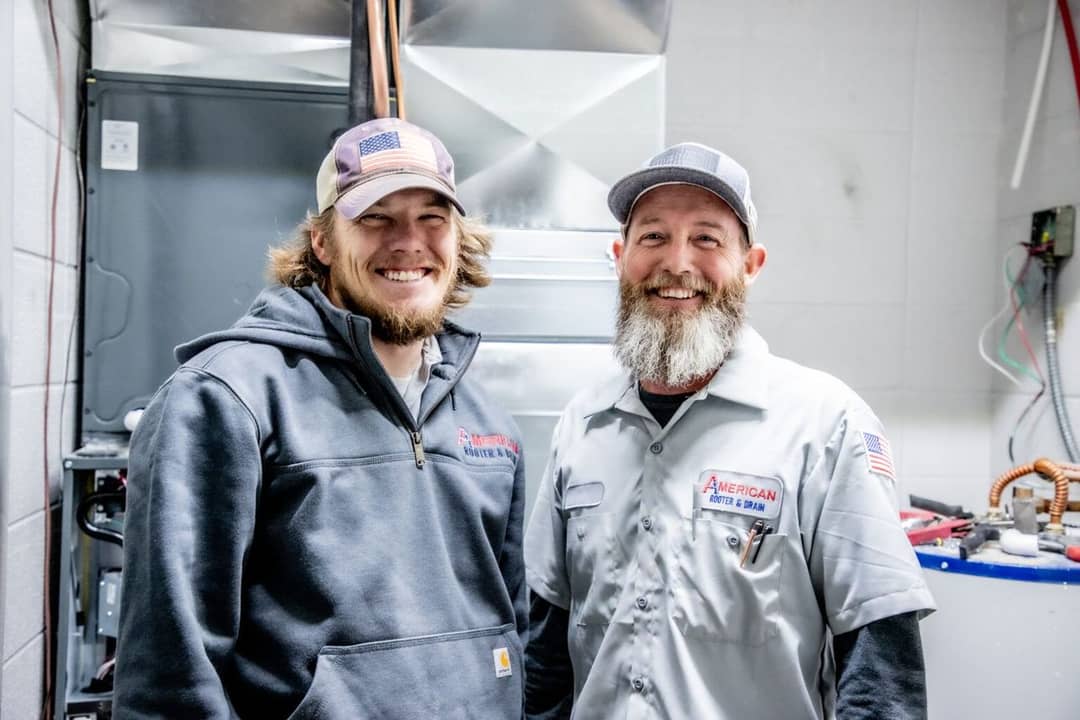
American Heating & Air is the heating and cooling side of American Rooter & Drain, established in Caldwell, Idaho in 1945, and we have worked the greater Treasure Valley since 1945. Mechanical work is performed under Idaho HVAC Contractor License LIC# 029771, out of the Caldwell shop at 1005 Commercial Way, Caldwell, ID 83605 — close enough that our vans are on your side of the valley all day.
Seventeen different technicians have run an installation or installed-equipment job at a Nampa address; 31 have worked heating and cooling here; 95 have been to a Nampa address on some kind of job since our records begin in October 2020. And of the 1,521 Nampa households on our books, 727 have called more than once. That last number is why the same company handles your drains, your water heater and your electrical — when a bedroom will not heat because a duct came loose in the crawl space, nobody has to hand you another phone number.
To get an assessment on the calendar, call (208) 782-8267. Tell us what you have — gas or electric, roughly how old, where it lives in the house, and what it is doing wrong — because that description decides who we send and what they load before leaving Caldwell. To see how installation works across the rest of the valley, start with the HVAC installation overview.