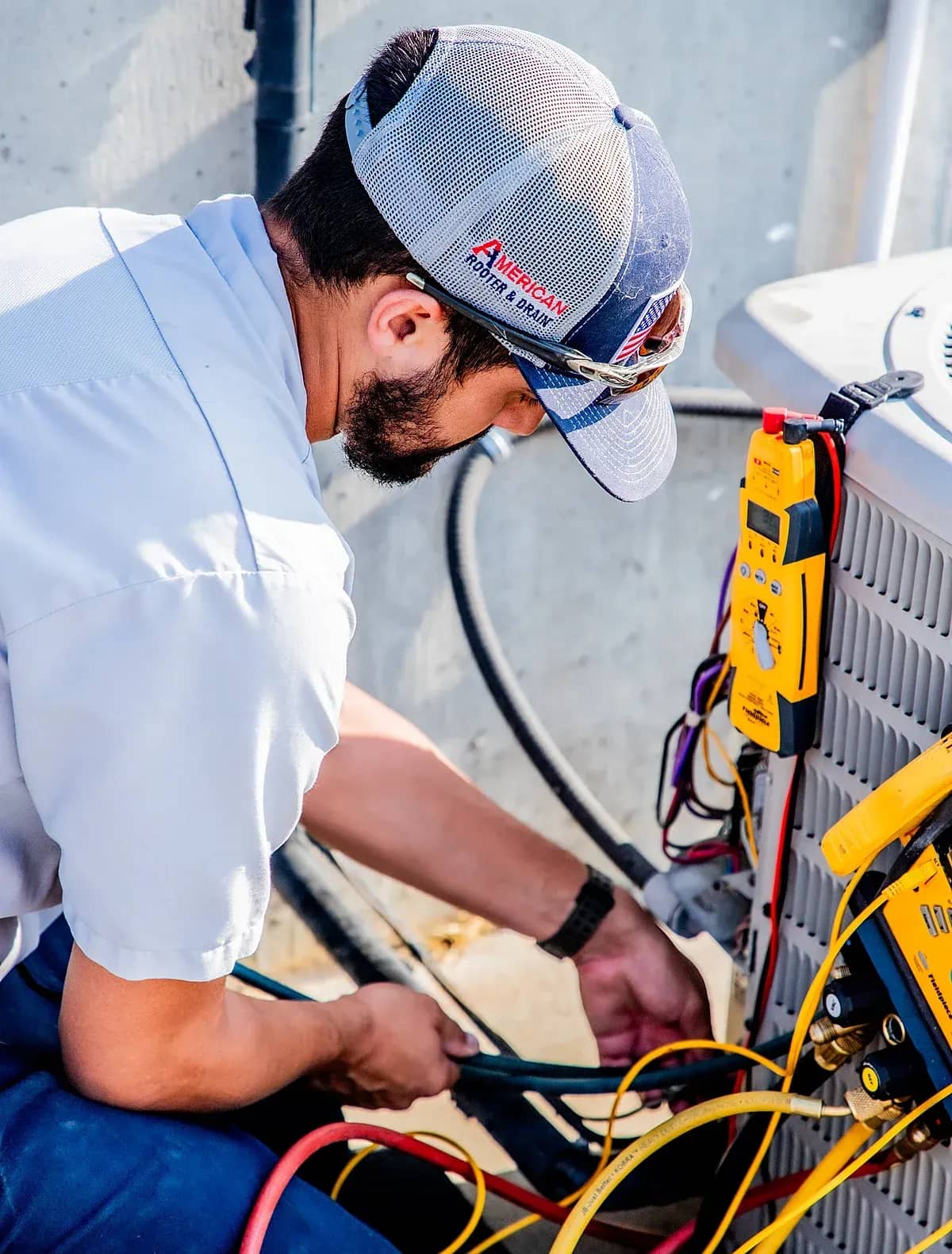
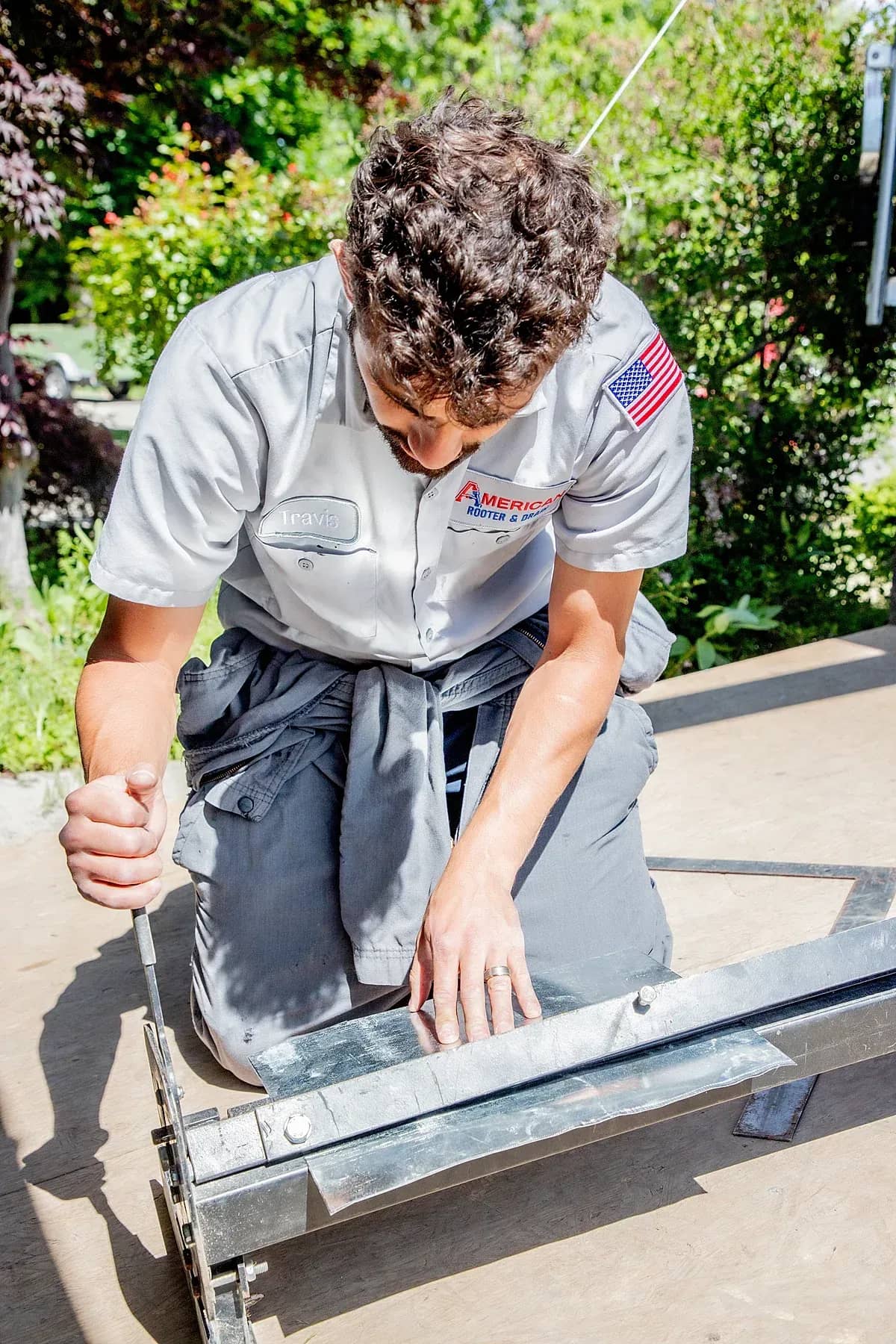
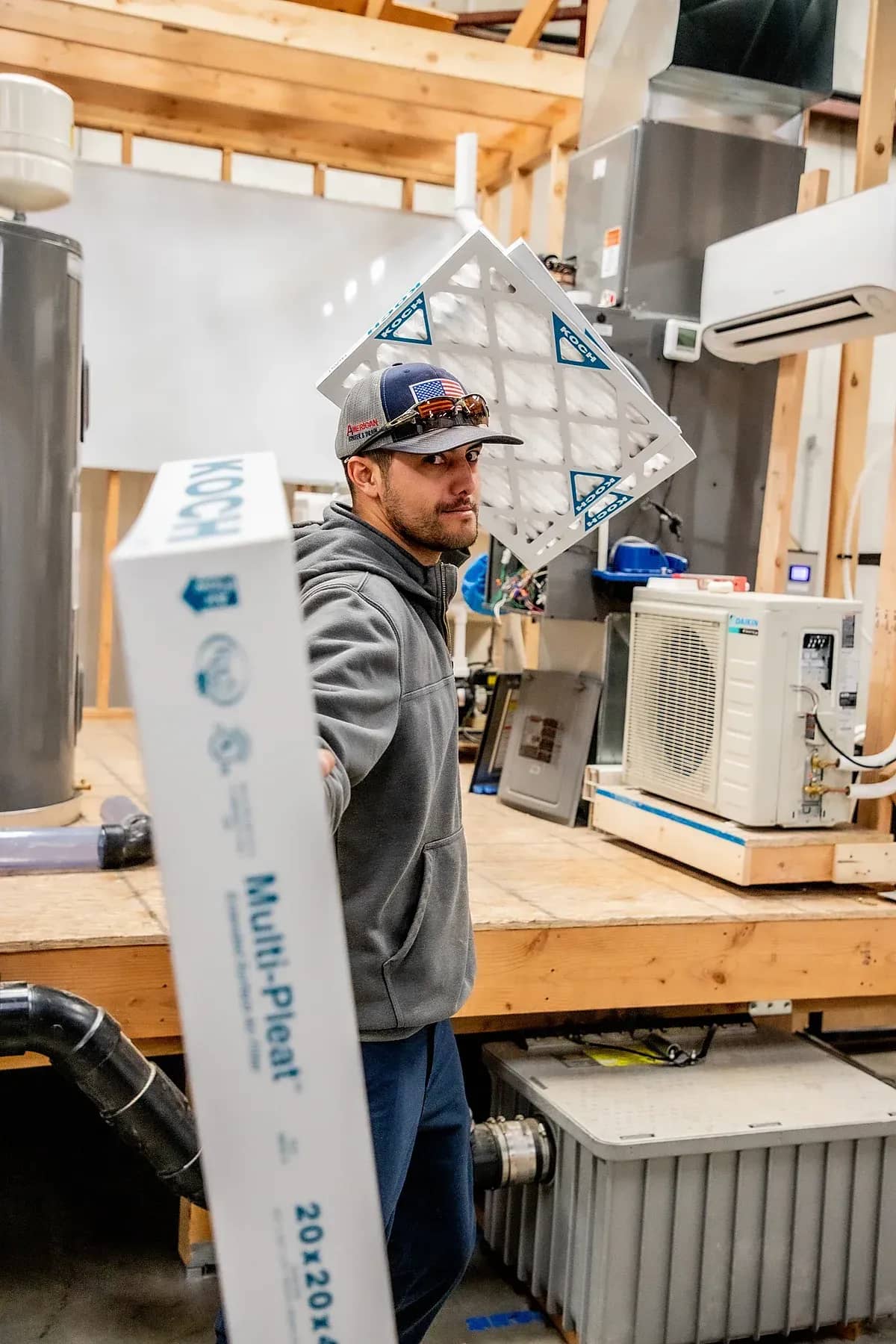
If the house is already cold, call (208) 782-8267 first and read the rest while the truck is on its way. If you would rather match the symptom before you call, the furnace-not-working guide sorts the common failures by what you are seeing and hearing.
Do you actually come out to Vale, or is that past your service area?
We come out, and the job records say so. Since our current dispatch system went in — those records start in October 2020, although American Rooter & Drain itself was established in Caldwell, Idaho in 1945 — we have completed 663 jobs at 173 Vale addresses for 179 customers, every one in ZIP 97918. The heating and cooling side is younger: the first completed heating or cooling job in Vale dates from March 2023, and the count since stands at 119 completed heating and cooling jobs for 49 customers. Forty-eight of those were the call this page is about — what our software logs as a furnace no-heat call, a furnace repair, a furnace service call, an A/C not-cooling call, an A/C service call, or an HVAC diagnostic — completed for 29 Vale households between March 2023 and June 2026.
On our dispatch map Vale shares a zone with Ontario and Huntington, set up for service Monday through Saturday. The trucks start the day at 1005 Commercial Way in Caldwell, so a Vale call is usually routed alongside an Ontario or Nyssa stop rather than sent out alone. That routing is how the drive stays off your bill.
Where in Vale? Our completed heating and cooling list runs from the lettered streets and numbered avenues downtown — A Street West, 2nd Avenue West, West Main Street South, 14th Street North — out to the county roads: Graham Boulevard, Kochsmeier Road, Russell Road, Hope Road, and the places strung along U.S. 20 and the John Day Highway.
My furnace is dead this morning. Is same-day realistic this far out?
Often, and here is the count. Of the 43 completed Vale heating and cooling jobs in our records that carry both a booking timestamp and a completion timestamp, 32 were finished the same calendar day they were booked and 1 the next calendar day; the remaining 10 do not fit either pattern, and the data does not support guessing why for any single job in that group. If it is Sunday night, say so when you call and you will get a straight answer about Monday morning rather than a vague one about tonight.
Across our whole service area the pattern holds at scale: since March 2023 we have completed 1,154 furnace and air-conditioner no-heat, not-cooling, service, and diagnostic calls for 772 customers, so a fast Vale turnaround is not a fluke of a small sample. The exception is the arctic stretch — the week in December or January when every marginal furnace between Weiser and Vale gives up at once. That is the week the day you call and the day we arrive are most likely to differ, and calling early genuinely moves you up the board.
What does the technician check first, and in what order?
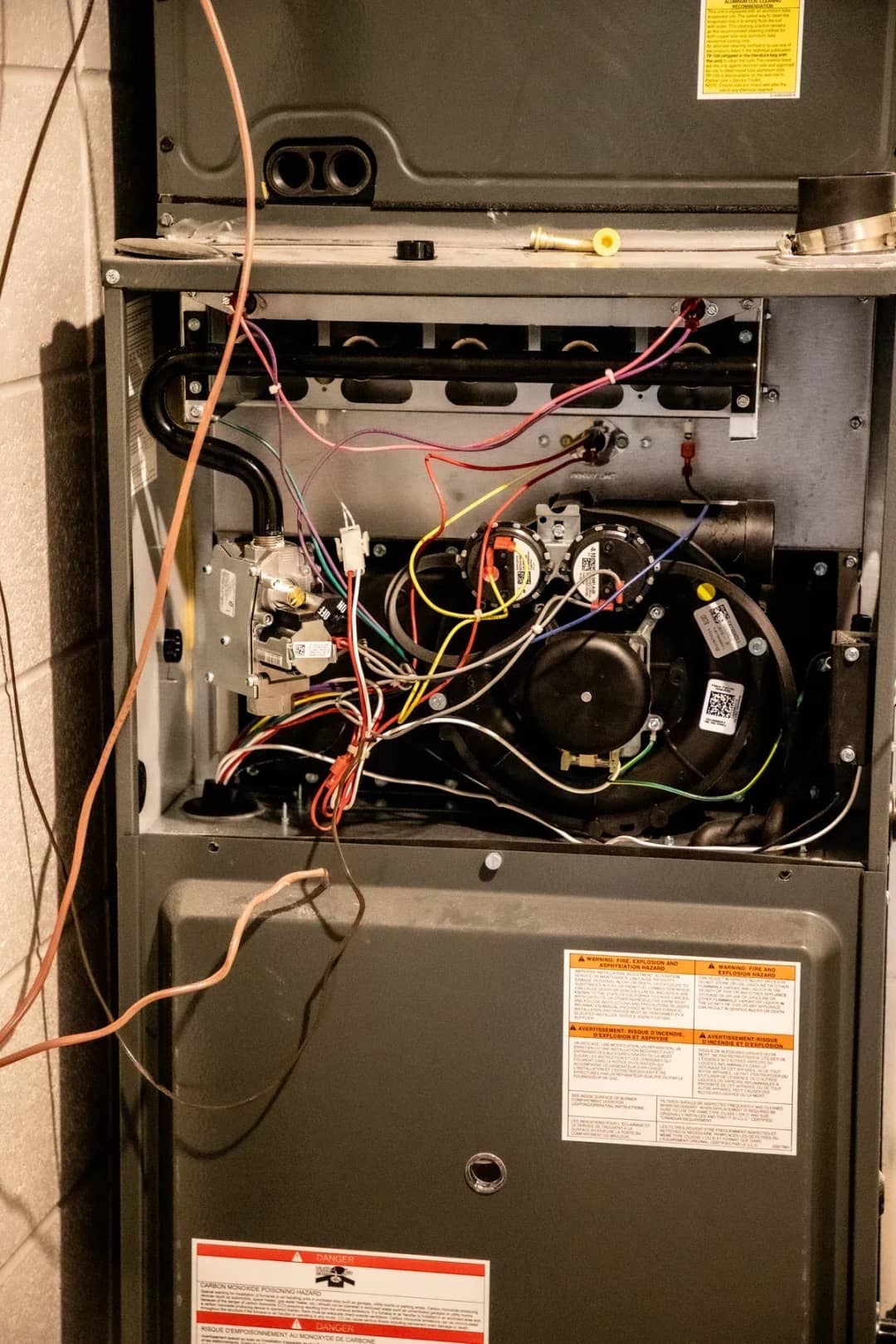
A gas furnace fails in sequence, so it gets diagnosed in sequence. First the cheap things that stop everything: power at the switch and the breaker, the door switch on the blower compartment, the filter, the thermostat's call for heat, and the fault code blinking on the control board, which remembers what went wrong last. Then the technician watches a full cycle from the top: inducer spinning up, pressure switch proving the draft, igniter glowing, gas valve opening, flame sensor holding the burn, blower starting after its delay. Somewhere in that chain a handoff fails, and the visit is about catching which one.
After that comes measurement, because a furnace can look fine and read wrong: microamps at the flame sensor, microfarads on the blower capacitor, amp draw on the motors, manifold gas pressure, temperature rise across the heat exchanger, and a combustion check with a look at the exchanger itself, since a crack there ends the repair conversation on safety grounds. And finally the part people in a hurry skip: what killed the part that died. An igniter that cracked because the furnace was running hot on a starved filter will crack again if the filter is not dealt with.
That is why a two-hour appointment block is our standard scheduling window for a breakdown call — some faults only show themselves across a full heating cycle and then a second one. If you can safely pull the front panel before we arrive, the model and serial number on the rating plate are worth a text to the office; they decide which parts get loaded in Caldwell.
Will it take one trip, or will you have to come back with a part?
One trip, nearly always — the parts most likely to fail on a Vale furnace are common enough that the truck already carries them out of Caldwell. Across our service area the same pattern holds for furnace and air-conditioner repair calls generally.
The parts that fail on cold nights are the common ones, and the common ones are stocked: hot surface igniters, flame sensors, induced draft motors for 80 percent and 90 percent furnaces, universal blower motors and wheels, dual run capacitors, pressure and high-limit switches, a universal ignition control board, single-stage gas valves, thermostats, and the cartridge fuses that leave an electric furnace dead with nothing visibly wrong.
What forces a second trip is a part built for one cabinet and no other: an OEM gas valve for a furnace long out of production, an inducer assembly molded for a single brand, a board a supplier has to order from the manufacturer. Vale is a long way to drive twice, so if your furnace lands on that list you hear it before the technician leaves, with the part ordered and a date attached.
When do Vale furnaces usually give out?
November most, then July, then October. Sorted by the month the job was completed, our full count of 119 completed Vale heating and cooling jobs of every kind — breakdown calls, tune-ups, installs and estimates together, not split out by which — runs 16 in November, 14 in July, 13 in October, and as few as 6 each in March and August. The July and October showings likely fold in air-conditioner and inspection visits alongside furnace calls, since this count is not broken out by which. The explanation for November holds regardless of the exact split: a furnace that has sat idle since spring gets its first long run of the season, and that is when a tired igniter cracks, a flame sensor that oxidized over the summer stops proving the flame, and an inducer bearing that whined in October seizes.
Does living in Vale change anything about the repair?
For the furnace itself, no. For what feeds it and what surrounds it, a few things.
Gas. In town, natural gas comes from Cascade Natural Gas, the same utility that serves Ontario and Nyssa. That matters on the coldest nights, because low pressure at the meter looks exactly like a failing gas valve — burners light weakly, or light and drop out — until a manometer is on the manifold. If the whole street has trouble at once, it is a utility call before it is a furnace call. Out on the county roads, some furnaces run on propane instead of natural gas — more on that below.
Old houses. Vale is the county seat and has the oldest built ground in Malheur County. Others had central heat added long after the house was built — a furnace in a closet or a shallow crawl space feeding ducts threaded wherever they would fit, with returns too small or missing — and those systems short-cycle on the high-limit switch no matter how many parts get replaced, because the fault is air, not ignition.
Wind and dust. Vale sits at the edge of open desert, and the wind gets a clean run at the windward side of a house. A high-efficiency furnace vents through two plastic pipes on an outside wall; wind-driven snow packs the intake, the pressure switch will not close, and the furnace locks out with nothing broken. Farm dust is the slow version: a thin filter loads far faster here than the packaging suggests, the furnace runs hot, and igniters and limit switches age early; a thicker media filter is the cheapest upgrade on this page.
Permits. A repair needs no permit. A replacement does, and in Vale it is pulled under Oregon's rules rather than Idaho's; the paperwork is ours to handle, not yours.
Is it going to be an igniter, a flame sensor, or something worse?
Match what you are seeing. Everything runs, nothing lights — inducer spins, a click or two, no flame, then lockout — is the hot surface igniter most of the time, a brittle ceramic element with only so many heat-ups in it; confirmed by reading its resistance, and stocked. Lights, runs under a minute, drops out, tries again is the flame sensor: a steel rod in the flame carries a tiny current back to the board as proof of fire, an oxide film cuts the signal, and the board shuts the gas off to be safe. Cleaned in minutes; replaced if the reading will not hold. Burners light, no air ever comes out is the blower side — a run capacitor reading weak, a motor that has quit, or a wheel so packed with dust it moves a fraction of its rated air — and then the limit switch trips and the whole thing repeats. Something worse is a cracked heat exchanger, found by inspection and combustion readings; it stops the repair on the spot and turns the conversation to repair versus replacement.
What can I safely do tonight before you arrive?
Check the obvious first: the furnace switch (it looks like a light switch, and it gets bumped), the breaker, the filter, and the thermostat batteries. If you have the two plastic pipes on the outside wall, clear snow or ice from the ends by hand, not with a tool. If the furnace has locked out, one reset is fair: off, a moment, on. Repeated resets are not — each attempt puts a little gas into a cold heat exchanger, and the fault will still be there.
If it is going well below freezing, open the cabinet doors under sinks on exterior walls and let a thin stream run at the farthest fixture; a burst pipe in a cold house is the one call we would rather not take from you, and emergency plumbing in Vale is the same long drive. Space heaters are fine for the room you are in; nothing that burns fuel belongs indoors.
How is the price of a Vale furnace repair worked out?
Not on the phone, and not from a menu. A price given before anyone has opened the cabinet is a price for a furnace nobody has looked at. What builds the real number: which part failed, and whether it is a stocked universal part or a manufacturer-only assembly; whether the furnace burns natural gas, burns propane, or runs on electricity — three different parts lists; how reachable the unit is, because a furnace with room on all sides and one at the back of a low crawl space are not the same hour of labor; and whether a safety condition turns up.
What you get in exchange is a fixed price in writing before anything is taken apart, and the plain right to say no to it. The drive to Vale is built into how the day is routed, not added to the repair. If the honest answer is a new furnace, the visit that lays repair and replacement side by side is free; we have completed 29 of those estimate and inspection visits at Vale addresses for 22 customers.
At what point does repairing my furnace stop making sense?
When the repair buys less time than it costs. Three questions decide it: what the part is (an igniter on a sound furnace is an easy yes; a heat exchanger is a no on safety grounds alone), how old the furnace is against what else is likely to go next, and whether this is the second or third repair in one winter. A furnace repaired twice since October is telling you something.
Fourteen completed heating and cooling installs at Vale addresses are in our records for 11 customers, so the replacement path is one we have run in town, not a theory. HVAC installation in Vale covers sizing, venting and install day; the repair-or-replace walkthrough shows the arithmetic. Either way the decision is yours, with the numbers in front of you.
Can a tune-up keep me off this page next winter?
Sometimes. A tune-up is a snapshot: the igniter with a visible crack, the flame sensor reading low, the inducer that has started to whine, the filter that should have been changed in July — caught in September with a warm house and an open schedule instead of in December with the nearest truck already committed in Ontario. What it cannot do is guarantee that a part with no warning signs will make it to March.
Vale homeowners have had 16 tune-up visits completed with us — furnace and air-conditioner tune-ups together — for 10 customers, against 48 no-heat, not-cooling, service, and diagnostic calls, the reverse of the ratio we would like to see this far from the shop. HVAC maintenance in Vale lays out what a visit includes; if the furnace is healthy and you just want it looked over before the cold, start at furnace tune-ups.
We heat with propane out here. Does that change who you send?
Same technician, different setup at the gas end. A propane furnace runs smaller orifices at higher manifold pressure than a natural gas one, and a converted unit needs the right conversion kit and a pressure check afterward. Propane also has one failure natural gas never does: the tank. A long cold stretch pulls a tank down faster than the delivery schedule assumed, and low tank pressure imitates a failing gas valve convincingly. Check the gauge before you call.
Electric furnaces are a different machine — no burners, no flame sensor, no flue. What fails is the sequencer that stages the elements, the contactor, or the cartridge fuses in the disconnect, which leave the furnace dead with nothing visibly wrong. If your heat is a heat pump with electric backup strips, start at heat pump services in Vale.
Can you fix the water heater or a drain while the truck is already in Vale?
Yes, and in Vale that is common sense as much as convenience. American Rooter & Drain began as a plumbing and drain company, and of the 49 Vale customers with completed heating-and-cooling work on our books, 31 (63%) have also had completed plumbing, drain, septic, or other non-heating work from us at a Vale address. The Vale ZIP sits inside the dispatch zone where our $59 drain-cleaning special applies, and a wet spot beside the furnace — condensate or a plumbing leak — gets sorted in the same visit.
Common pairings on a Vale trip: water heater service, gas line work, drain cleaning in Vale, and duct cleaning in Vale. Everything we do in town is on the Vale services page.
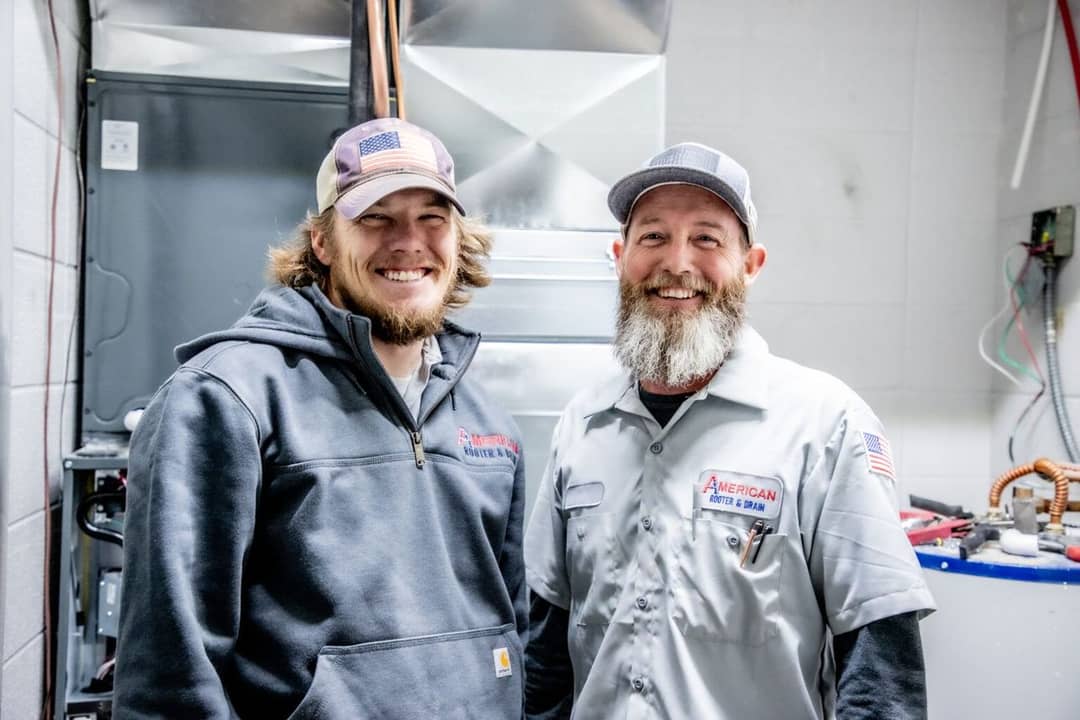
Who is going to be in my furnace room, and are they licensed for Oregon?
American Heating & Air is the heating and cooling arm of American Rooter & Drain — established in Caldwell, Idaho in 1945, working the greater Treasure Valley since 1945, furnace trucks based at 1005 Commercial Way in Caldwell. The heating division holds Idaho HVAC Contractor License 029771. On the Oregon side, American Rooter & Drain is licensed with the Oregon Construction Contractors Board as CCB 234256, the number a Vale homeowner can look up on the CCB website before opening the door.
If the heat is off, call (208) 782-8267 and tell whoever answers what the furnace is doing: clicks without lighting, lights without blowing, blows cold, cycles on and off, or nothing at all. That sentence, plus the model number off the rating plate if you can reach it, decides what gets loaded in Caldwell before the truck heads up the river to Vale.