
My furnace quit in Nampa. How soon can a technician be at my door?
Our dispatch software holds 445 heating-and-cooling jobs booked at Nampa addresses, 187 different customers and 392 of those jobs completed, from October 2022 through July 2026. Of that 445, 121 were booked as what our own records group together as a no-heat, not-cooling, repair, service or diagnostic call — one bucket, because a furnace that will not fire and a furnace that runs but is doing something wrong get triaged the same way — and 108 of the 121 were completed. Scheduling is a promise; finishing is what you care about. Looking at every kind of Nampa heating-and-cooling job with both a booked time and a completed time on record — 142 of them — 119 were finished the same calendar day they were booked and 5 more the next day.
A house with no heat goes to the front of the board, and a fall tune-up does not. The remaining 18 of those 142 measured jobs land outside the same-day-or-next-day window; on some of those, the booked-time on the record reflects when an earlier estimate was sold rather than a scheduling promise, so we do not count that group as evidence any one job dragged on.
The phone at (208) 782-8267 is answered around the clock. Nine of the 153 Nampa furnace jobs were scheduled on a Saturday; none has yet landed on a Sunday, so if it is Sunday morning and the house is cold, say so when you call and we will tell you honestly what the board looks like.
Does it matter whether I'm in old Nampa or a newer subdivision?
It changes where the furnace is and what is attached to it. Nampa furnace jobs in our records split 64 in 83651, 51 in 83686 and 38 in 83687, and those three ZIP codes are three different kinds of house.
The 83651 side takes in the original grid Nampa laid out around the Oregon Short Line tracks and the blocks that filled in west toward Karcher. In the older bungalows near the depot, the furnace can be in a basement or a converted coal room, standing where something that burned coal or oil stood before it, with a masonry flue and a gas line that may still be the original black iron. Furnaces down there can be 80-percent units venting into a chimney, and when they are, the failures lean toward the draft side: pressure switches, inducer motors, and flue problems that show up as a furnace that lights, runs briefly, and gives up.
South Nampa in 83686, out toward Lake Lowell and along Greenhurst and Southside, includes ranch homes and subdivisions where the furnace can be in a garage, a hallway closet, or on a platform in the crawlspace. North and east Nampa in 83687, toward the Idaho Center and the Meridian line, includes newer construction, where a furnace can be a 90-percent-plus condensing unit with white PVC venting and a condensate trap — a clogged trap or an iced-over intake pipe is a classic cold-morning shutdown there. That is why the dispatcher asks where the furnace is.
Walk me through the visit. What gets checked, and in what order?
A furnace has one job with a fixed sequence, and diagnosing it means following that sequence until something fails to happen. The technician starts at the thermostat, the furnace switch, the breaker and the blower-door safety switch, because a call for heat that never reaches the furnace looks exactly like a dead furnace.
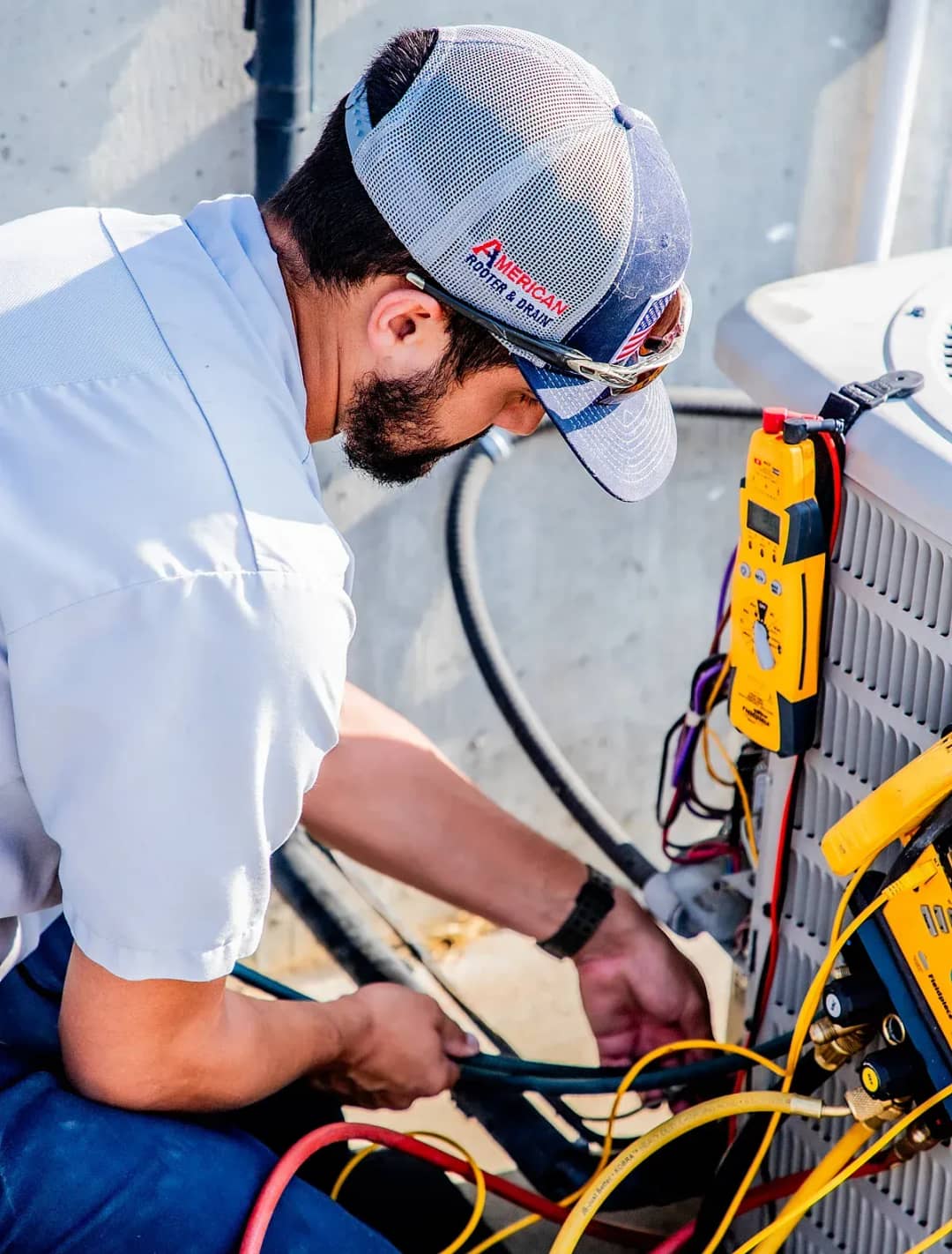
With power confirmed, the tech watches the furnace try to start. The inducer motor spins up and proves draft to the pressure switch. The pressure switch closes and tells the control board it is safe to light. The hot surface igniter glows, the gas valve opens, the burners light across, and the flame sensor has to see fire within seconds or the board shuts the gas off. Only then does the blower come on. Every step is a place the furnace can stop, and the board usually records which one as a flashing code behind the door. We read the code but do not trust it blindly; a board that says pressure switch is often describing a plugged inducer port or a blocked flue, not a bad switch.
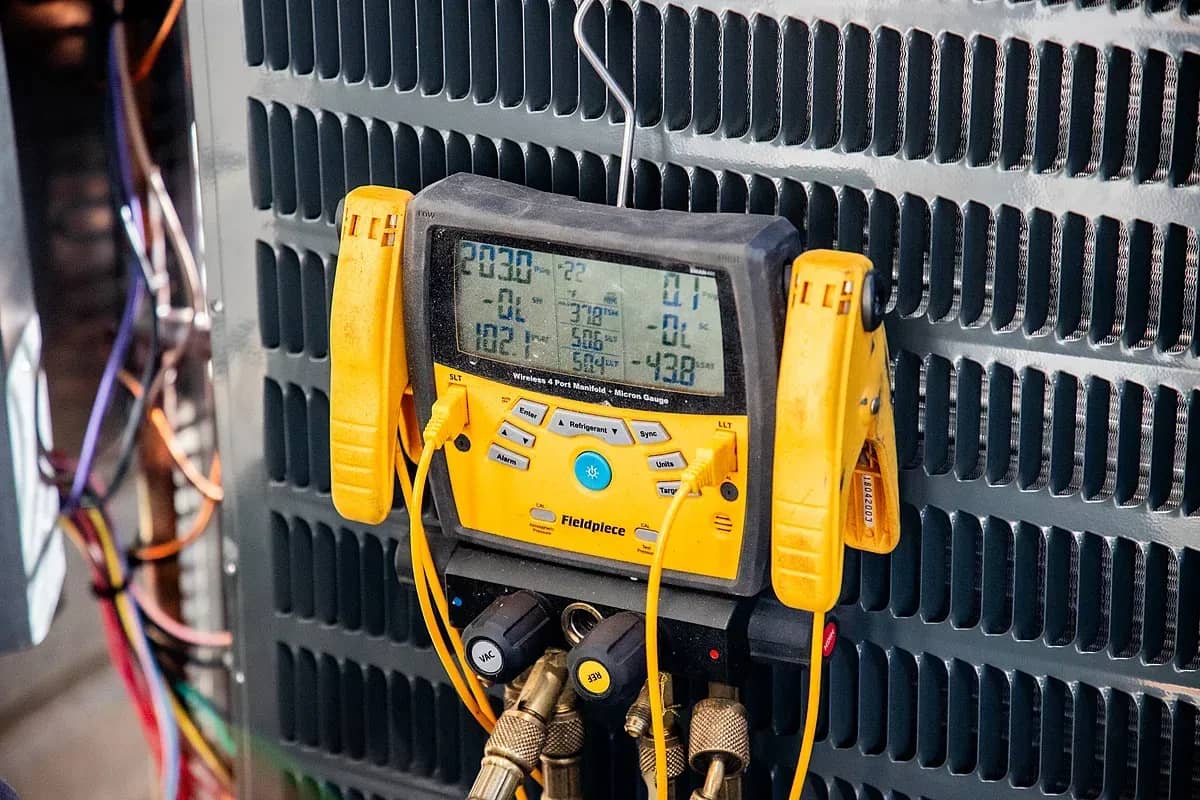
Once it is running, we measure temperature rise across the heat exchanger, check the filter and blower wheel, and on gas furnaces test for carbon monoxide at the supply registers. On an older unit we look at the heat exchanger itself, because a crack there ends the repair conversation and starts a different one. Then you are told what failed, what it takes to fix it, and the flat price for that repair, before any part comes off the truck.
Is it going to be a small part or a big one?
A furnace has a short list of parts that wear out, and they are small and common enough to stock. The parts invoiced on furnace repair and no-heat calls across our service area read like that list: hot surface igniters, universal furnace pressure switches, induced-draft motors in 80-percent and 90-percent versions, universal electronic-ignition gas valves and single-stage gas control valves, universal high-limit switches of the open-on-rise type rated 135 to 175 degrees, universal control boards, universal 115-volt blower motors in the 1/6 to 1/2 horsepower range, blower wheels, dual-run capacitors, and non-programmable thermostats. Flame sensors get cleaned far more often than replaced.
The big ones are the heat exchanger, the ECM blower motor on a variable-speed furnace, and a factory board on a communicating system that will not accept a universal replacement. Those get ordered rather than pulled off a shelf.
A Nampa example from this past February, in 83651: the call came in, was scheduled, and was finished on the same day, and the invoice shows a universal 115-volt blower motor, a new blower wheel, a universal high-limit switch, and the evaporator coil pulled and cleaned while the blower was out. That is about as big as a same-day repair gets, and the house still went to bed warm.
Are you going to have to come back a second time?
We can answer that from the record. Of the 56 no-heat and furnace-repair jobs at Nampa addresses that were completed, 53 were finished in a single appointment and 3 needed a second visit. Across our whole service area the shape is the same: 599 of 660 completed no-heat and repair jobs were one appointment, 46 took two, and a handful ran longer waiting on a factory part.
A second trip happens for three reasons: the part is proprietary and not on the truck, the heat exchanger needs a camera inspection the first visit did not have time for, or you asked for a day to think over a repair-versus-replace decision. When we know a second trip is coming, we say so before you pay for the first one. Only one of the 153 Nampa furnace jobs in our records was logged as a recall, meaning a return trip on the same complaint after the repair.
What time of year do you get the most heating and cooling calls from Nampa?
May, per our own dispatch records — not the month most people would guess. Heating-and-cooling work of every kind at Nampa addresses is heaviest in May (47 completed jobs) and July (46), with April (43), October (36) and January (35) close behind and December (21) and August (22) the quietest months. That count covers every kind of visit — no-heat and not-cooling calls, tune-ups, installs, duct work and estimates together — because our records do not split the monthly pattern out by call type. The spring and early-summer months carry the furnace-to-air-conditioner changeover and the tune-ups that go with it; the true no-heat emergencies still cluster around the first cold snap in fall and the depth of winter.
Across our whole service area we have completed 1,154 no-heat and not-cooling calls since March 2023, for 772 different customers. The first cold snap catches the marginal furnaces; deep winter catches the worn-out ones.
Is it safe to keep resetting it until you get here?
A furnace that shuts itself off is doing what its safeties told it to do. Turning the power off and on clears the lockout. One reset is a test; repeated resets are a diagnosis, not a repair. If it keeps locking out, stop, because a furnace cycling on its limit switch is cooking the heat exchanger, and one cycling on flame failure is dumping unburned gas into the burner box before every retry.
Before you call, check the things that cost nothing: the thermostat is set to heat and its batteries are alive, the furnace switch and breaker are on, the filter is not packed solid, and the blower door is fully latched. If the furnace has white PVC pipes out the side of the house, look at the intake and exhaust for snow, ice, or a bird's nest. These checks are laid out by symptom on our furnace not working page.
Two things you do not reset. If you smell gas, leave the house, then call Intermountain Gas and us from outside. If a carbon-monoxide alarm sounds, get everyone out and call from the driveway; we treat that as the first call on the board.
What decides whether this is a cheap fix or an expensive one?
We will not give a repair price over the phone, because nobody who does that has seen your furnace. We diagnose first and then quote the repair flat, in writing, before any work starts. The number moves on a short list of variables:
- Which part failed. A flame sensor cleaning and a control board replacement sit at opposite ends of the same visit.
- Universal or factory. A universal igniter, pressure switch, or limit switch is stocked and priced accordingly. A factory-only board, an ECM blower motor, or a two-stage gas valve is ordered and priced as ordered.
- Where the furnace is. A unit standing in a garage is a different labor job from one on a platform in a crawlspace or wedged behind a water heater in a downtown basement.
- What else is wrong. A furnace that failed because the filter went unchanged has a dirty blower wheel and a heat exchanger that has been running hot; fixing the symptom without the cause buys a second failure.
Once you have the written quote, the decision is yours. If the honest answer turns out to be replacement rather than repair, the on-site visit that puts both options side by side in writing is free and carries no obligation.
Are you going to try to sell me a new furnace?
Here is the honest number. Of the 61 no-heat and furnace-repair jobs at Nampa addresses in our records, our records separately show 2 completed system installations and 31 more installed-equipment or sold-work jobs from estimates (component replacements included) at Nampa addresses — 33 sold installs and equipment jobs together. Some, but not all, of that work follows an earlier no-heat or repair call, though we do not cleanly isolate how many happen inside a specific window afterward. The repair is the expected outcome; a replacement is what happens when the repair stops making sense.
When does it stop making sense? A cracked heat exchanger on a furnace old enough that the manufacturer no longer supports it. A second major part failing within a season of the first. A furnace so badly sized for the house that it short-cycles no matter what you replace. In those cases the technician says so, shows you the crack or the readings, and sets up a separate estimate visit. How to weigh it is on repair or replace, and what a new system involves here is on HVAC installation in Nampa.
Do I need a permit from the City of Nampa for a furnace repair?
A repair does not. Replacing an igniter, a motor, a board, a gas valve, or a limit switch on an existing furnace is maintenance in the eyes of the code, and no inspector comes out. What does get permitted is a replacement furnace, a new or extended gas line, a change to the venting, or a new electrical circuit run to a unit. Inside Nampa's city limits that permit goes through the city's building department; outside the limits, through the state's building division. Either way we pull it, and a final inspection is scheduled after the install.
What the inspector looks for on a replacement is the same list we check on a repair visit: a drip leg and an accessible shutoff on the gas line, proper flue clearance and termination, condensate routed to a drain and intake and exhaust spaced correctly on a condensing furnace, an electrical disconnect within sight, adequate combustion air, and a working carbon-monoxide alarm. If we see one of those wrong on a repair call, we tell you. Gas piping that needs replacing is on gas line installation in Nampa.
What if my heat is a heat pump with a furnace backup, or an electric furnace?
We work on both, and the diagnostic changes. A heat pump in a Nampa winter spends real time in defrost, and the parts that fail are the defrost control board, the ambient or coil thermistor that tells the board when to defrost, the contactors, and the dual-run capacitor on the outdoor unit. A heat pump iced over solid on a January morning points at the defrost circuit before it points at refrigerant. The heat pump page for Nampa goes deeper.
An electric furnace, or an air handler with strip heat, has no gas, no igniter, and no flue. It has a bank of heating elements, sequencers that stage them on, a blower, and fuses; a 30-amp dual-element fuse and a 15-kilowatt heat kit with its own breaker are both real line items we have installed. Strip heat can fail one element at a time, so the symptom is a furnace that runs constantly and never catches up.
Propane is the other variation. Inside town, Nampa is on Intermountain Gas mains; out past the edge of town toward Lake Lowell and Melba, some houses run on a tank. A propane furnace has different orifices and a gas valve regulated for propane pressure, and natural-gas settings on it are how burners get sooted. We confirm which gas you are on before we touch gas pressure, so tell the dispatcher if you have a tank.
Would a fall tune-up have caught this?
Sometimes, and we will not oversell it. A tune-up cleans the flame sensor and burners, checks the igniter, tests the pressure switch and limit, measures gas pressure and temperature rise, and looks at the heat exchanger. It catches a weak igniter before it becomes a no-heat call and a cracked exchanger before it becomes a carbon-monoxide call. It does not stop a blower motor from quitting on a cold morning. Eighteen of the 56 no-heat and repair jobs at Nampa addresses were placed by customers who already had a tune-up on our books, which tells you a tune-up is a screening, not a guarantee.
Nampa homeowners do book them: our records show 103 completed tune-up visits at Nampa addresses for 65 different customers. The right window is after the air conditioner is done for the season and before the first frost. Booking is on HVAC maintenance in Nampa.
You're a plumbing company. Why would I call you for a furnace?
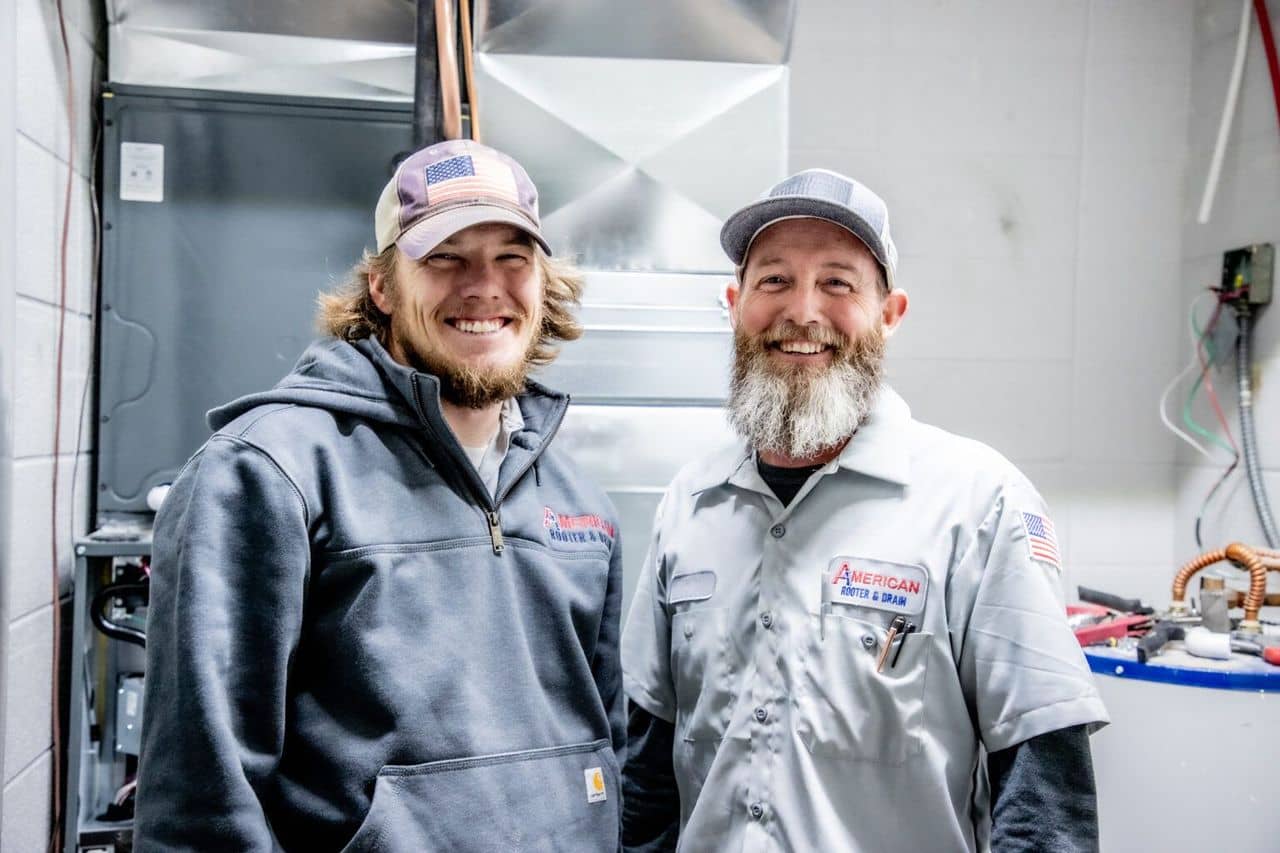
Because the heating division is not a side line. American Heating & Air is the heating and cooling arm of American Rooter & Drain, a company that has served the greater Treasure Valley since 1945. Our dispatch records hold 4,255 jobs booked at Nampa addresses for 1,521 different customers, 3,818 of them completed; 445 of those are heating and cooling jobs, 392 of them completed, for 187 customers. American Rooter & Drain keeps an office in Nampa at 1214 12th Ave S, Suite 3, in 83651, and the heating trucks are based at 1005 Commercial Way in Caldwell, a short run down the Boulevard to any part of town.
The practical advantage shows up on cold days. The same company that fixes the furnace can handle the water heater that quit the same week (water heater service in Nampa), the floor drain the condensate line dumps into (drain cleaning in Nampa), or the circuit a new unit needs (electrical repair in Nampa). And 35 of the 84 Nampa customers with furnace work on record have called us for furnace work more than once, which is the only review that really counts.
How do I check that the person at my door is actually licensed?
Ask for the license number and look it up. American Heating & Air works under Idaho HVAC contractor license 029771, which you can verify with the Idaho Division of Occupational and Professional Licenses before we arrive. The technician who comes is an employee driving a marked truck, not a subcontractor, and 18 different primary technicians have run furnace calls at Nampa addresses in our records, 8 of them on no-heat calls.
What you can expect from whoever it is: a diagnosis explained in plain language, a written flat price before work starts, the old part left for you to see, and a furnace that has its safeties tested before we leave. If you are outside Nampa, the same crew covers Caldwell, Meridian and Kuna, and the Nampa service area page lists the rest. The number for heat is (208) 782-8267, any hour.