If the house is cold right now, call (208) 782-8267 and read this later. To put a name to what the furnace is doing first, our furnace symptom guide sorts dead silent, blowing cool, and lighting-then-quitting.
Is Emmett inside your furnace repair area, or is it a long shot?
Inside it, and we can show you rather than tell you. Our dispatch records for Emmett addresses begin at the end of November 2020 — the company is decades older than the software — and from then through July 2026 they hold 299 completed jobs at 129 Emmett addresses for 132 customers. Every Emmett job on those books carries ZIP 83617.
Heating and cooling is the smaller part of that. Thirty-eight of the 299 were heating-and-cooling jobs: 8 completed furnace and air-conditioner repair, service and diagnostic calls for 6 customers between May 2023 and July 2024, seven completed furnace and air-conditioner tune-ups for four customers between September 2023 and December 2025, and 15 completed estimate, inspection and other heating-and-cooling visits for 11 customers. The rest is what this company was built on — drains, water heaters, sewer lines, wells and septic. What 38 does tell you is that an Emmett address is a normal line on our dispatch board, not a favor. Everything else we do in town is collected near you in Emmett.
If I call this morning, can it be fixed before tonight?
Often, and here is the record instead of a slogan. Of the completed heating-and-cooling jobs at Emmett addresses that carry both a booking timestamp and a completion timestamp — 11 of them — all 11 were completed on the same calendar day they were booked. Eleven is a small sample and we treat it that way: a record, not a guarantee.
Two things shape whether a morning call becomes an afternoon repair. The schedule: we block a two-hour slot for a furnace diagnostic, because several of the commonest failures only show themselves when someone watches a full heating cycle from cold start to blower-off. And the drive: Emmett is not on the way to anywhere else we work, so whoever comes is coming on purpose, and on an inversion morning the grade down Freezeout Hill can be glazed while the valley floor is merely foggy. The honest caveat is the cold snap. When the valley drops hard overnight, every marginal furnace between the river and the bench fails inside the same two days, and that is the week a same-day answer can turn into a next-morning one.
What cannot wait: gas smell, a carbon monoxide alarm, or soot around the burner door — leave the house, then call. No heat with the outside air below freezing earns the earliest van, and a furnace that lights, runs a minute and quits, over and over, should not wait long either. Rattles, whistles, one cold bedroom, or the dust smell on the first October firing can take a normal appointment.
What is the technician going to check, and in what order?
He lets the furnace tell on itself before he touches it. Most control boards keep a record of the last fault, blinked through a small light behind the door or spelled out on a display, and cycling the power at the breaker wipes it — so once it has failed, leave it alone and let him read the code first. Then the walk-around, where a surprising share of repairs end: breaker, cabinet switch, the blower door seated far enough to press its safety switch, the filter, the thermostat actually asking for heat, and on a high-efficiency furnace the two white plastic pipes outside and the condensate trap inside.
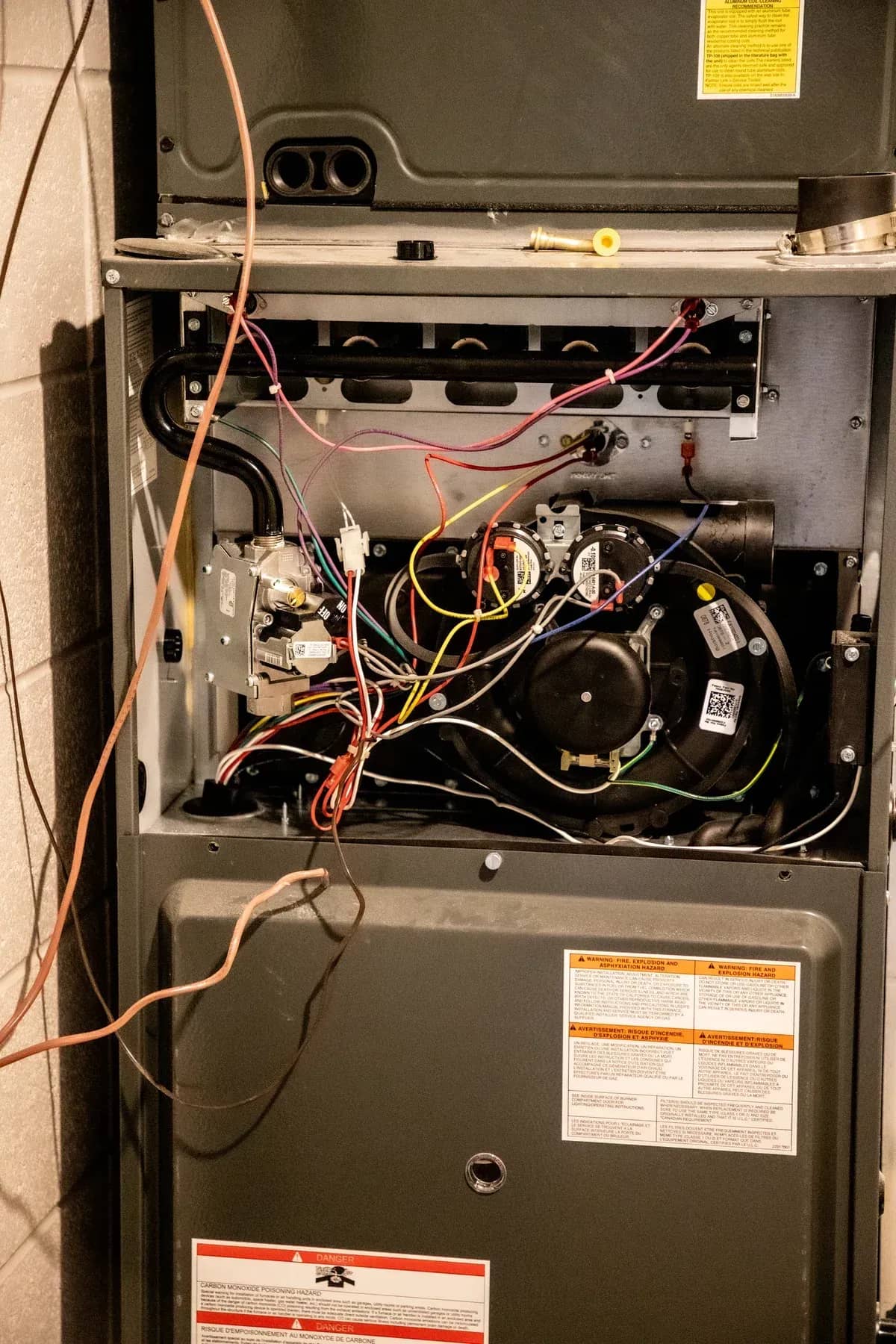
After that it is a matter of watching the sequence. A gas furnace does not simply turn on; it asks permission at every step. The thermostat asks. The board wakes and checks itself. A small fan — the inducer — pulls a draft up the flue, and a pressure switch has to feel that draft before anything further is allowed. The igniter glows. The gas valve opens. The flame sensor has to see fire within a few seconds or the board closes the valve again. The blower starts after its delay, and a limit switch stands guard the whole time. The step that does not happen is the diagnosis.
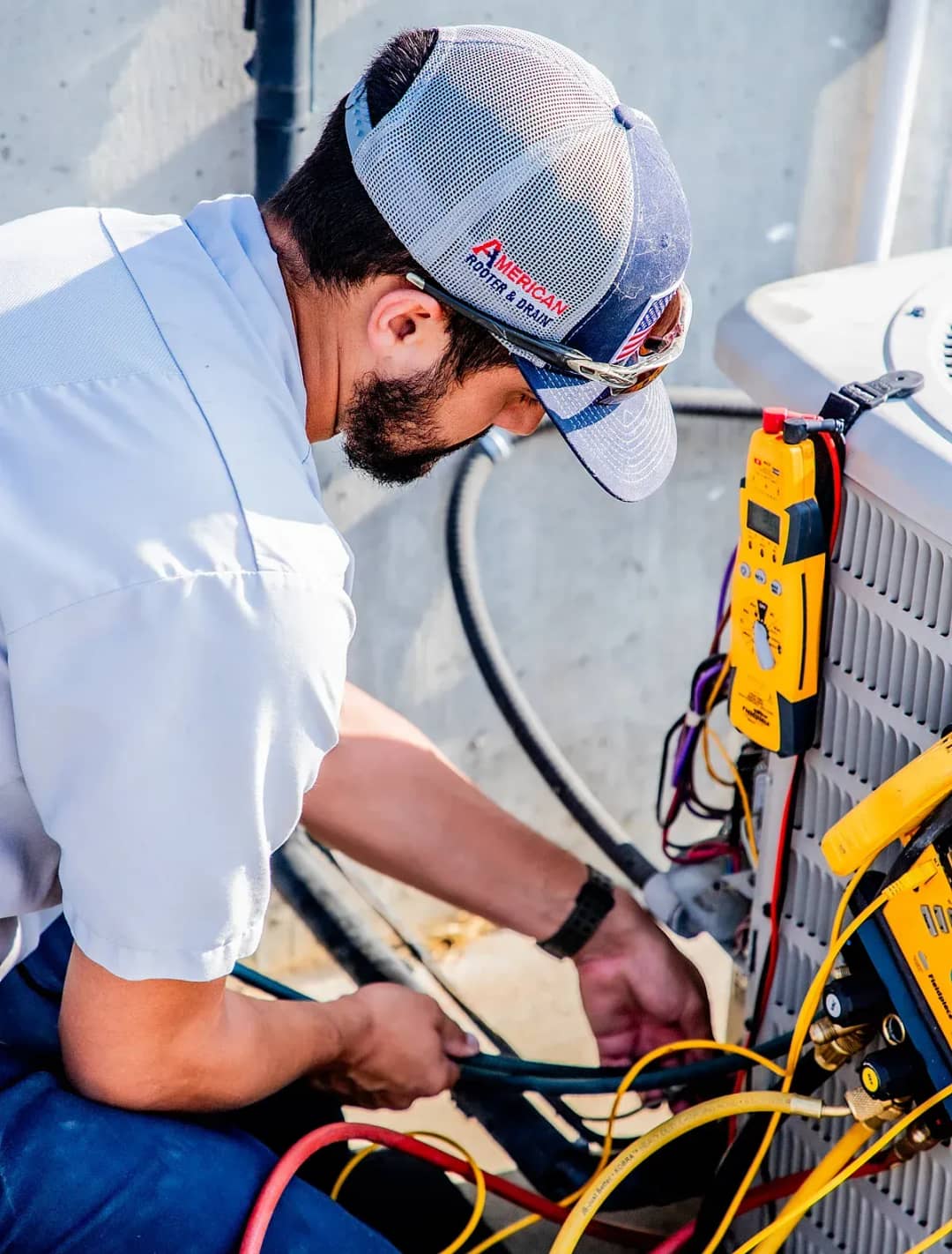
He measures rather than guesses: current through the flame sensor, the strength of the blower capacitor, what each motor draws, gas pressure at the manifold, and the temperature rise across the heat exchanger against the range on the rating plate — because a furnace short of air runs hot and trips its safety, and looks exactly like an ignition problem until someone measures. Last, the heat exchanger and a combustion check. Then the question that keeps you from seeing us again in six weeks: fine, the igniter failed — what has been killing igniters in this house?
Do you carry the part, or will I be waiting on an order?
For the failures that show up on a January night, usually yes. The van carries what fails across most brands — igniters, flame sensors, pressure switches, limit switches, run capacitors, common-frame blower motors, control-board fuses, the cartridge fuses electric furnaces blow, and plain thermostats. If your furnace failed the way furnaces usually fail, the repair finishes on the first visit.
What has to be ordered is the part built for one cabinet and no other: a manufacturer's gas valve the universal does not fit, an inducer assembly for a specific model, a variable-speed blower module, a control board for a furnace years out of production. Emmett adds two cases. Manufactured-home furnaces — downflow units in a hallway closet, venting through a roof jack — are their own species, and their parts are far more often manufacturer-only. And older propane furnaces beyond the mains sometimes carry a gas train nobody has stocked in years. Either way you find out while the technician is still in your house, with a written price and a plan for the meantime — not from a voicemail on Thursday.
What is it about Emmett that is hard on furnaces?
The calendar in our Emmett record is small but pointed: of the 38 completed heating-and-cooling jobs at Emmett addresses, January and July tie at seven each, December has six, and June and August have none. The winter cluster is the furnaces; July is the air conditioners. Then the local reasons, which are the ones that repeat.
The inversion. Emmett sits on the floor of the Payette River valley, and in December and January cold air pools there under a lid of warmer air and does not move for days. The fog freezes onto the intake and exhaust pipes of a high-efficiency furnace. Iced intake, no draft; no draft, the pressure switch never closes; the furnace locks out with nothing actually broken. Learn where those two pipes leave your wall and look at them after a foggy night.
The bench. Above the fog, houses trade fog for wind. Vent terminations pack with blown snow, and a furnace in a garage or a utility room off a shop sits in a colder cabinet breathing dustier air. With open crawl spaces and fields on three sides, a chewed thermostat wire is a real possibility out here, not just a joke.
Orchard and field dust, then August smoke. Emmett is cherry and orchard country with hay and row crops beyond it, and spraying, mowing, harvest and late-summer smoke load a one-inch filter well ahead of the date on the packaging. A furnace starving for air runs hot, trips its limit, cycles short and burns through igniters and board relays early. Where the cabinet has room for a four- or five-inch media filter, it holds far more before it chokes.
Propane past the mains. Natural gas runs in town; out toward Letha, Montour and Sweet and up on the bench, the furnace burns propane from a tank in the yard, with its own regulator and orifices — and a gauge on the tank that explains more furnace failures than any part inside the cabinet.
Our house heats mostly with a wood stove. Does that change the repair?
It changes almost everything about how the furnace fails, and it changes what we will tell you.
A furnace that only runs when the stove is cold — during a trip, a hospital stay, a week when nobody could split wood — does all of its failing at once, on that day. Flame sensors build a film of oxide while idle and read weak the moment they are needed. Run capacitors lose strength sitting still. The filter nobody changed has been collecting stove ash for two winters. And a thermostat in the room with the stove has spent the season convinced the house was warm.
The repair is the same repair, but the advice is different. Run the furnace on purpose once a month through the cold season, for a full cycle, so a failure shows up while the stove is still doing the work. Move or shade a thermostat within reach of the stove's warmth. And if the furnace protects the pipes while you are away, have it looked at in the fall: a tune-up is not insurance, but it catches the oxidized sensor and the tired capacitor in September with the schedule open instead of on a January night with the fog down. Our Emmett tune-up record is small — seven completed furnace and air-conditioner tune-ups for four customers between September 2023 and December 2025 — while across our service area it runs to 930 completed tune-ups for 544 customers, and that is the sample the practice is built on. It is never too late in the season to book one; HVAC maintenance in Emmett lays out what a visit includes, and the general furnace tune-up page covers the rest.
What if my furnace runs on propane, or is electric, or is really a heat pump?
Same phone number. Say which you have when you call, because it changes what goes in the van.
Propane. Look at the gauge on the tank before you call. When the level is near the bottom, tank pressure sags in the cold and the furnace can fail to light or drop out mid-cycle with nothing wrong inside it. Low gauge: call the propane supplier first, and us if it still will not run once the tank is filled and the regulator has settled. Gauge fine: tell us it is propane, since the orifices and manifold pressure differ from natural gas, and an older unit may have been converted by someone who did not leave a note.
Electric. Nothing burns, so the ignition chain and the flue are gone. Instead there is a bank of heating elements switched on in stages, the sequencers that stage them, a contactor, and fuses in the disconnect that fail on their own. Only the blower and its capacitor fail the way they would on a gas furnace.
Heat pumps. The diagnosis starts outside at the unit in the yard — defrost control, the sensors that trigger it, the reversing valve, and the backup heat strips that carry the house when the outdoor unit cannot. In a valley inversion a heat pump can spend hours cycling in and out of defrost. Start at heat pump service in Emmett.
Manufactured homes. A downflow furnace in a hallway closet, venting through a roof jack. Tell us it is a manufactured home and, if you can read it safely, the brand from the label inside the closet door — the difference between the right part on the first trip and a second trip.
How do I protect the house and the pipes until you get here?
The furnace will wait for the technician. The pipes might not, and in Emmett the pipes are the expensive half.
Stop resetting it: one reset is reasonable, a string of them can leave unburned gas in the cabinet and erases the fault code. Close the doors to rooms you are not using. Space heaters the boring way — straight into a wall outlet, never a power strip or extension cord, three feet of clear space, off when you sleep or leave. The oven is not a heater. If the stove is your backup, use it, and check that the carbon monoxide alarm has a working battery either way.
Then the plumbing. Open the cabinet doors under sinks on outside walls. Leave a pencil-thin stream running at the tap farthest from where the water enters the house. Find the main shutoff before dark. If you are on a well — and many properties around Emmett, especially on the bench, are — keep whatever heat is in the pump house or well pit running, because a split pipe at the pump is a far worse morning than a dead furnace. Never thaw a pipe with an open flame. Last, clear a path to the furnace.
How much will the furnace repair cost, and why can't you say on the phone?
You will not find a price on this page, and not because we are hiding one. A number given over the phone is a number for a furnace nobody has opened, and it can only move once the panel comes off. What the real figure is built from:
- The part that failed, and whether it is a stocked universal or a manufacturer-only order.
- Natural gas, propane or electric — three different parts lists.
- Where the furnace lives. A garage unit with clear floor, a manufactured-home closet, and a crawl-space unit reached on your elbows are different hours of work.
- Cause or casualty. A pressure switch that tripped because the intake iced over needs the ice cleared and the switch tested, not a new switch and a second visit.
- What the safety checks find. A cracked heat exchanger turns a repair into a replacement conversation, and we will not repair around one.
What you get instead of a range is a fixed price in writing before any work starts, and the right to decline it. Our Emmett record shows the declining actually happens: on 24 of the 38 completed heating-and-cooling jobs at Emmett addresses the technician wrote at least one estimate — 51 in all — and 14 were accepted. Most were not, which is how it should work when someone is handed options rather than a bill.
Replacement comes up when the heat exchanger is cracked, when a manufacturer-only part no longer makes sense against the unit's remaining life, or when it is the third different failure in one winter — not simply because the furnace is old. When it is on the table, the on-site visit that lays repair and replacement side by side is free and obligates you to nothing. Our repair-or-replace guide walks the decision through, and HVAC installation in Emmett covers sizing, propane versus natural gas, and install day.
Can you look at the well, the water heater or the septic on the same trip?
Yes, and in Emmett that is a real question, not a sales line. Nine of the 21 Emmett customers with completed heating-and-cooling work on our books have also had completed plumbing, drain, septic or other non-heating work from us at an Emmett address. The same company sends the furnace technician, the plumber, the drain crew and the septic truck, and in a house on the bench those trades are braided together: the gas line that feeds the furnace feeds the water heater, and the pipe that froze while the furnace was down is ours to fix the next morning.
Mention the slow drain or the rumbling water heater when you book. A straightforward drain clearing is our flat $59 drain-cleaning special; a septic pump-out is $395 for 1,000 gallons. Related Emmett pages: water heaters, drain cleaning in Emmett, gas lines, septic pumping in Emmett, AC repair in Emmett and duct cleaning in Emmett.
Who actually shows up, and is the work licensed?
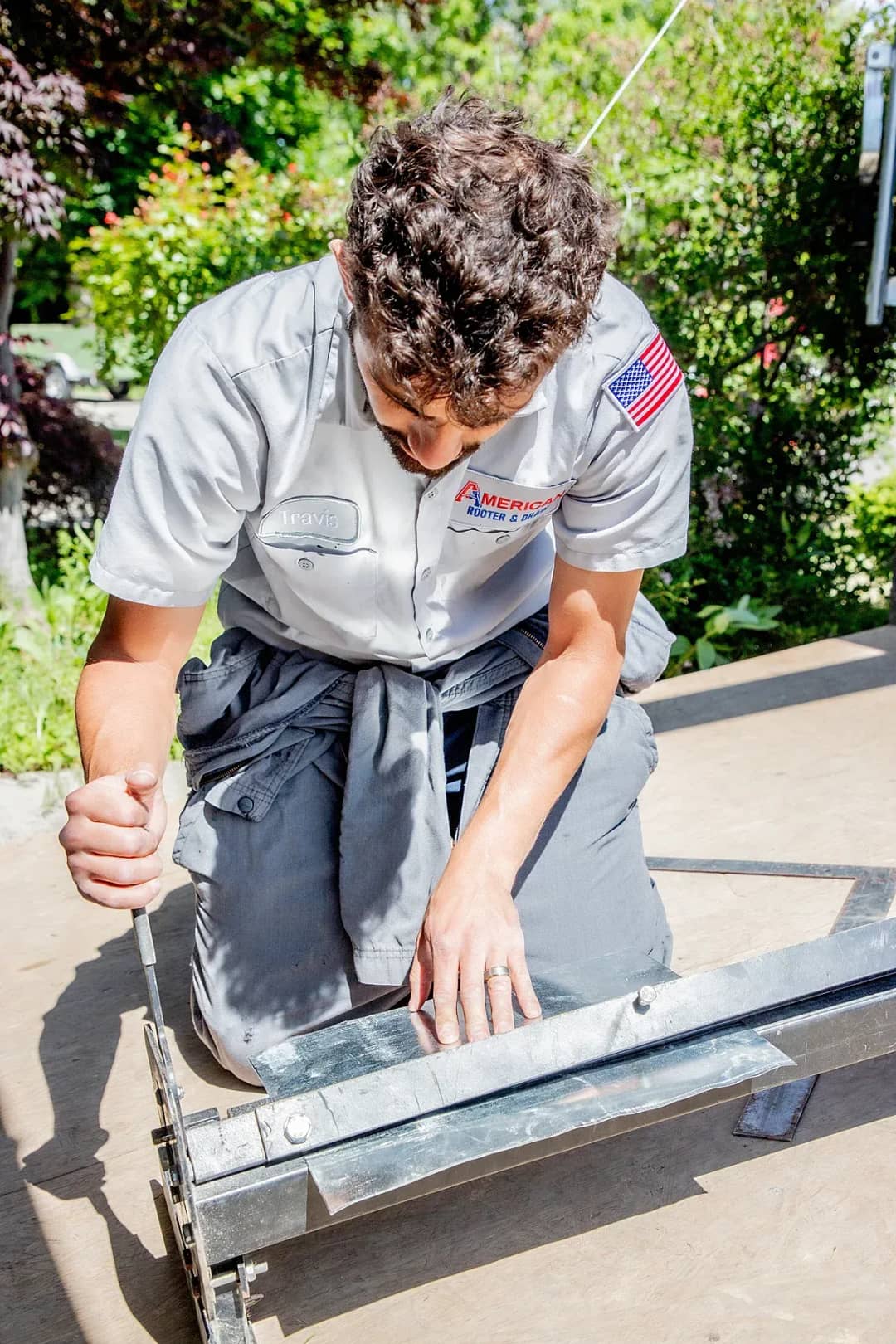
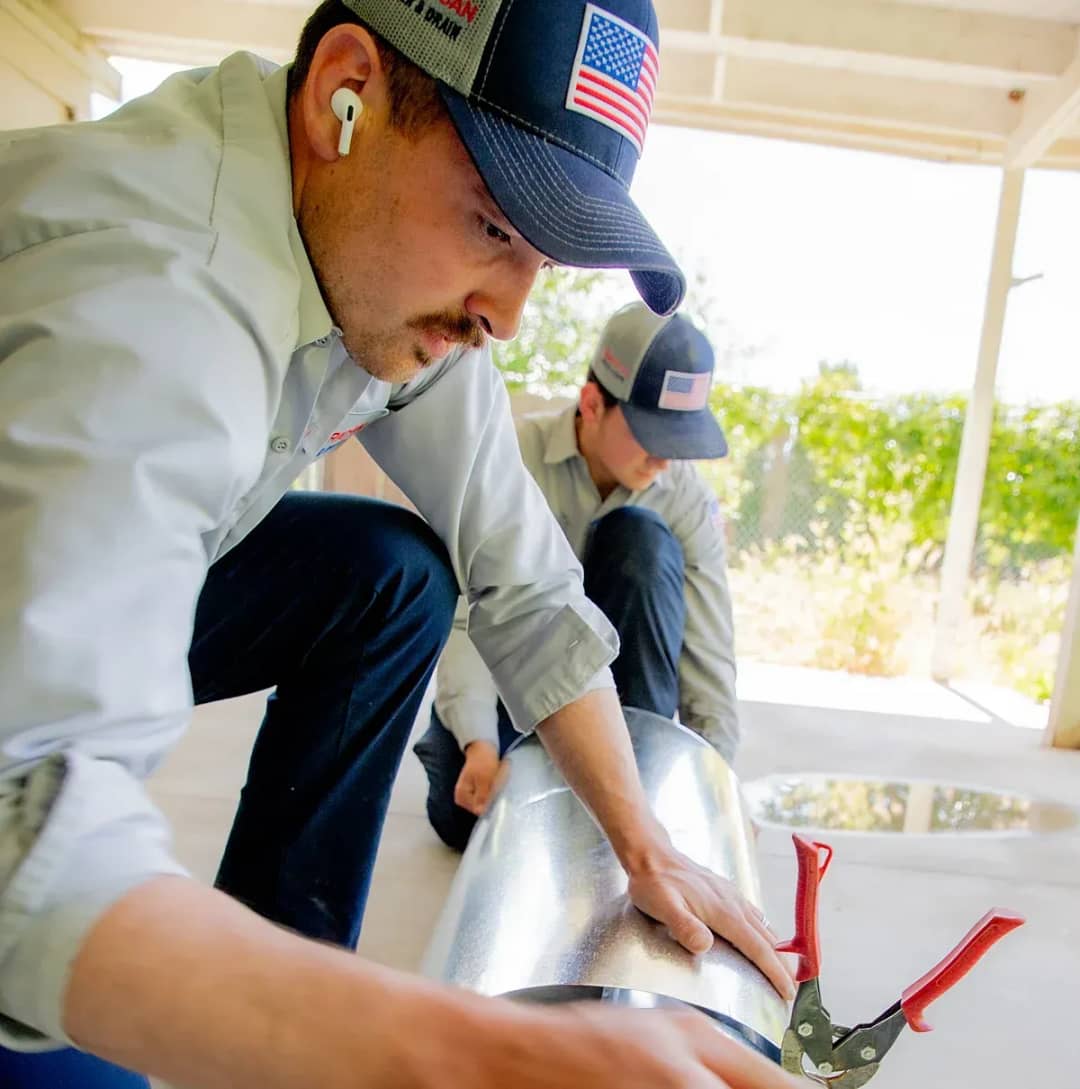
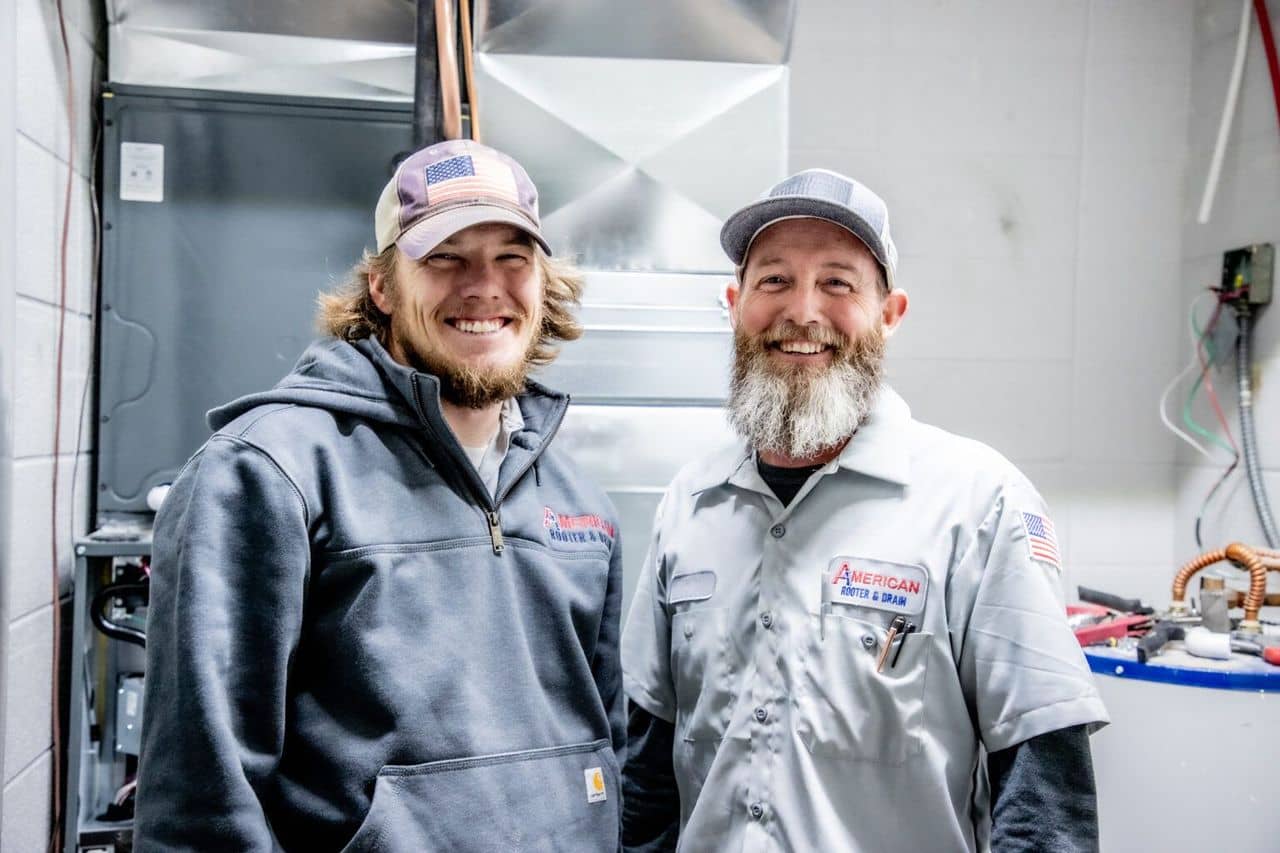
American Heating & Air is the heating and cooling side of American Rooter & Drain, established in Caldwell, Idaho in 1945, part of a company that has worked the greater Treasure Valley since 1945. Heating work is performed under Idaho HVAC Contractor License 029771, dispatched from our shop at 1005 Commercial Way, Caldwell, ID 83605. Across our service area the same crew has completed 1,154 furnace and air-conditioner repair, service and diagnostic calls for 772 customers since March 2023; Emmett is a small share of that, and a normal one.
If the heat is off, call (208) 782-8267. Tell the dispatcher what the furnace is doing — silent, blowing cool, lighting and dropping out, running without warming the house, or clicking on and off — whether it burns natural gas or propane, whether it is a manufactured home, and whether a wood stove is carrying the house meanwhile. Those four details decide what goes in the van before it leaves Caldwell for the hill.