Cold house right now? Ring (208) 782-8267. Want to match the symptom to a cause first? Start with our furnace symptom guide.
Do you come out to Eagle, or is that a long drive from Caldwell?
Routinely, and the dispatch log proves it. Our records begin in October 2020, when the current scheduling software went in, and they show 374 completed jobs of every kind at 176 separate Eagle addresses — every one of them in ZIP 83616 — for 178 customers, 56 of whom have had us back for a different kind of job. The company is far older than its software; the records simply start when the software did.
Heating and cooling specifically: 36 completed heating and cooling calls for 22 Eagle customers between August 2023 and August 2026, run by 12 different technicians. Plumbing and drain work still makes up the bulk of our Eagle history, and we will not inflate a furnace-only Eagle number to look busier than the records say. The honest sample for furnace repair is the company-wide one below.
Highway 44 runs from the west end of the valley straight to State Street and Eagle Road, and a technician wrapping up in Star or Meridian is already most of the way there. Everything else we do in town is listed near you in Eagle.
My heat is out now. When will someone actually be at my door?
Here is the completed record, not the brochure. Across our service area, March 2023 through September 2026, we completed 1,154 furnace repair and no-heat calls at 755 addresses in 33 towns. Take the 1,420 completed heating and cooling calls that carry a booking timestamp: 1,235 of them were done on the calendar day they were booked, and 1,273 inside a day.
Those are completion dates, not arrival promises. For Eagle itself, the closest honest number is scoped to heating and cooling calls, not every trade: 18 completed Eagle jobs carry a booking timestamp, and 17 of them were done the day they were booked — none arrived exactly a day later, and one fell outside that window.
A cold house goes on the board ahead of tune-ups and estimates, in a two-hour block inside a four-hour arrival window. The exception is weather. A hard freeze takes out every tired furnace between Ontario and Boise in the same handful of days, and that is when a same-day answer slips to next morning. Calling early moves you up the list.
Weekends: 33 of those 1,154 furnace calls were completed on a Saturday, none on a Sunday. Across all trades in Eagle, 14 completed jobs fell on a Saturday and 2 on a Sunday.
I have two furnaces. How do I tell which one is out?
Go to the thermostats before you go to the equipment. In a two-system house each thermostat runs its own furnace, so set the one in the cold part of the house to heat, raise it a few degrees above the room, and listen: a click, a small motor spinning up, a pause, a whoosh as the burners catch. Nothing at all means that unit is the problem.
Then there is the zoned single furnace, which fools more people than the two-furnace house does. One unit, one blower, but motorized dampers in the ductwork send air wherever a thermostat is asking, and a damper stuck shut or a zone board that has lost one thermostat leaves one floor cold while the furnace runs perfectly. Tell dispatch you have zoning, and say which unit or which floor.
What does the technician check, and in what order?
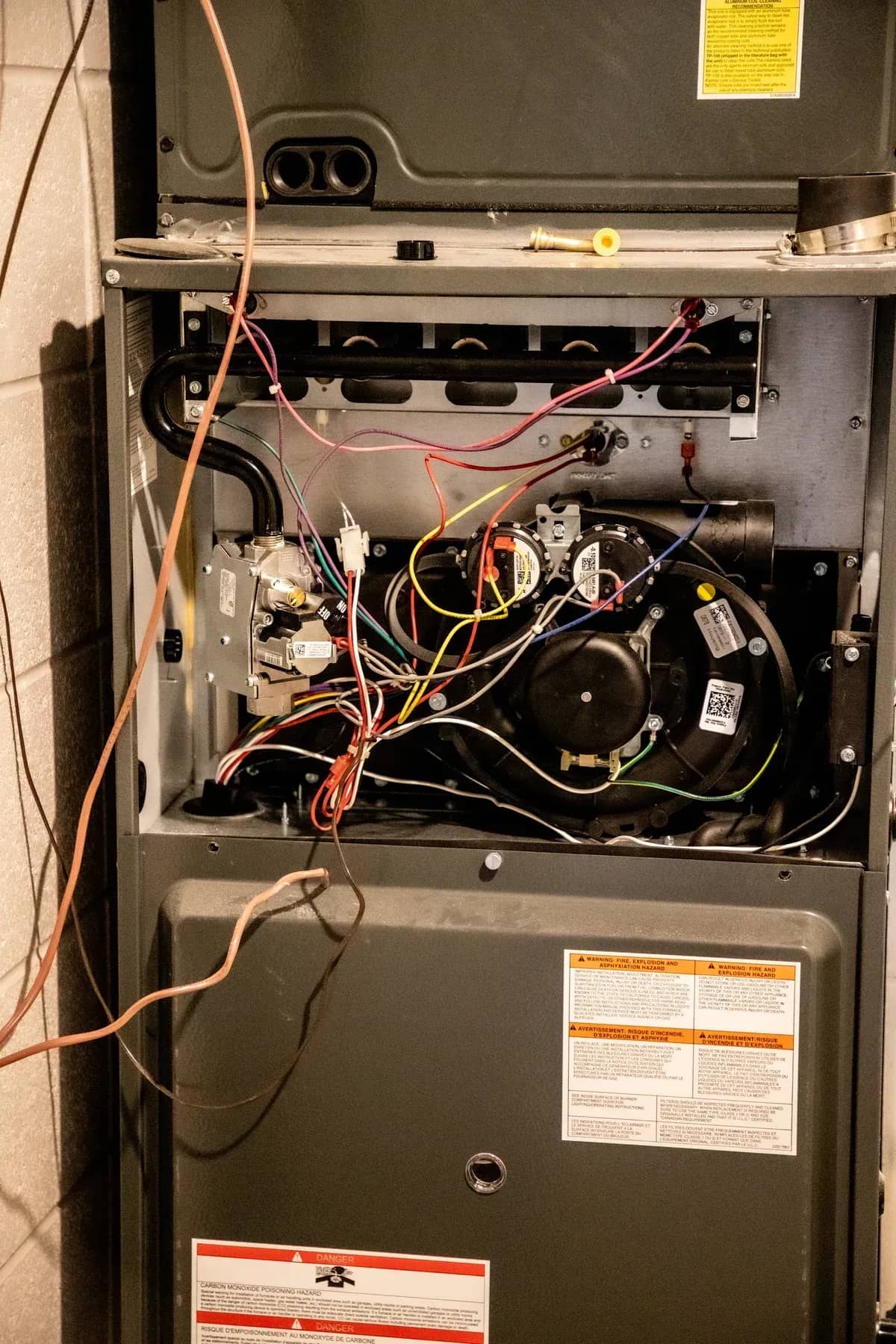
A furnace does not fail all at once. It fails at one step of a fixed sequence, and it usually remembers which. Every gas furnace runs the same order of operations, and the control board will not skip a line: thermostat asks, board self-checks, the small inducer fan starts and pulls air through the heat exchanger and out the vent, a pressure switch confirms that draft is real, the igniter glows, the gas valve opens, the flame sensor proves fire, and only then does the main blower start, with limit switches watching cabinet temperature throughout. Wherever the sequence stops is where the fault lives, and the board logs it — most furnaces blink a code on a small light behind the sight glass.
The dull checks come first: breaker and cabinet switch on, blower door seated far enough to press its safety switch, filter condition, thermostat genuinely calling, code on the board.
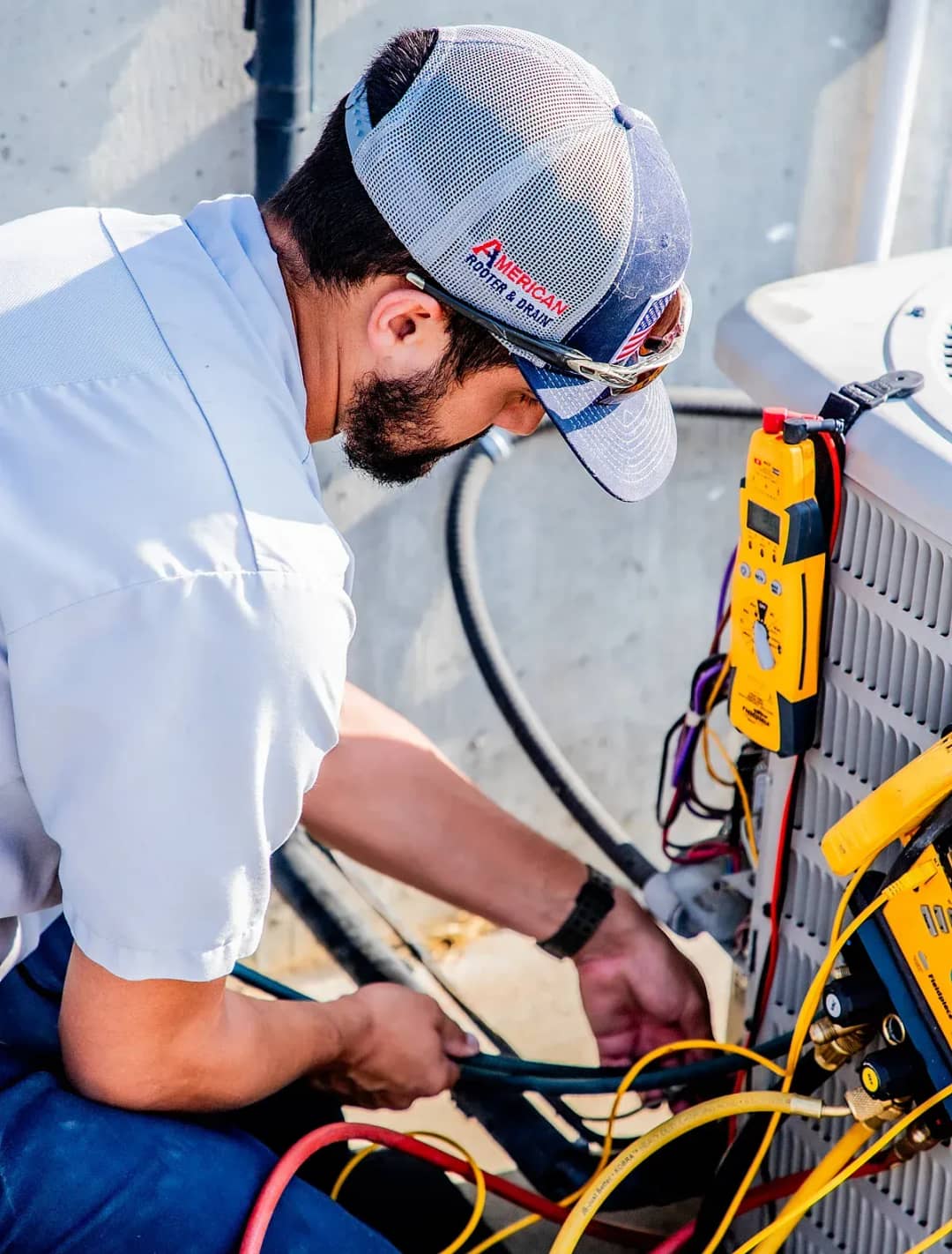
Then the meters. Flame-sensor signal in microamps, because a rod with a skin of oxide reports a weak flame and the board shuts gas to a burner that is lit. Capacitor strength in microfarads. Amp readings on blower and inducer against the nameplate. Manifold gas pressure. Temperature rise through the heat exchanger against the range on the door, which separates a furnace starved for air from one with an ignition fault. Finally a visual on the heat exchanger, because a cracked exchanger is not repaired, it is retired.
Then the question that outranks the part: what in this house killed it? An igniter that died because a choked filter kept the furnace overheating will die again before spring if only the igniter changes.
Which parts fail most, and will they be on the truck?
Our furnace repair and no-heat invoices across the service area are a better guide than any brochure. On them: induced-draft motors for 80 percent and 90 percent furnaces, indoor blower motors in the common 115-volt frames and their blower wheels, dual run capacitors, gas valves both universal and manufacturer-specific, hot surface igniters including the smart-valve type, control boards, high-limit safety switches, 30 amp dual-element cartridge fuses, and burner assemblies pulled and cleaned rather than replaced. Induced-draft motors top that list.
The consumables on that list travel with us. What gets ordered is anything cut to one manufacturer's cabinet — an inducer assembly for one model, an original-equipment gas valve, a board for a discontinued model — and you find out which while the technician is still in your hallway.
First-visit record across our service area: of the 1,154 furnace repair and no-heat jobs, 599 closed in one appointment, 46 took two, 11 took three, 3 took four and one took seven. Fifteen of the 1,154 were logged as recalls — we went back on the same complaint.
Why do furnaces around Eagle quit in the same few weeks?
Because the whole valley finds out at once. The company-wide completion calendar for furnace repair and no-heat calls is lopsided: 135 in November, 124 in January, 107 in December and 92 in October, against 2 in July and 8 in June. Autumn is furnaces confessing what the summer did to them on the first cold night; January is the ones that limped through autumn giving up on the coldest week, when the schedule is already full.
Eagle adds two local aggravations. The first is the inversion. When cold air pools under a warm lid over the valley, Eagle sits in the still, damp layer along the river, and the ice fog that comes with it does one specific thing to a high-efficiency furnace: the two plastic pipes leaving the house — intake and exhaust — grow a skin of ice, the inducer loses the draft it needs to satisfy the pressure switch, and the board locks the furnace out with a pressure-switch code for a part that is not broken. Know where yours exit, clear them after a storm, reset once at the switch, and if it locks out again stop resetting and call.
The second is wind. Up the slope north of Hill Road and along Beacon Light, a vent facing into it or a flue cap that lost its screen to a bird shows up as intermittent lockouts that never happen while the technician is watching. Say when it fails — overnight, windy afternoons, only after snow — because the pattern is half the diagnosis.
Does it matter which part of Eagle the house is in?
It does. Truman Coe Catlin settled Eagle Island in 1863 and dug the first irrigation ditches; the town then grew slowly for generations before the recent building boom, so furnace ages arrive in clumps, and each clump breaks differently.
Old Eagle, near State Street and Eagle Road. Basements and chimneys. A furnace here may share a masonry flue with the water heater, and if it is ever swapped for a sidewall-vented model the water heater is left alone in a chimney sized for two, where its exhaust cools, condenses and eats the liner.
The river and golf-course neighborhoods — Eagle Hills, BanBury, Spurwing, the streets near Eagle Island State Park. Crawl-space furnaces and the first generation of 90 percent equipment, now old enough that secondary heat exchangers, condensate traps and inducer motors are the parts giving up, in crawl spaces that are damp because the river is close.
The foothills builds north of Hill Road and Floating Feather. Big square footage, attic air handlers reached by a scuttle and a plank, long duct runs, zoning, sometimes two systems. Where the house draws from a private well rather than city or Veolia water, the furnace-mounted humidifier scales up fast on harder water, and a lime-choked pad or a solenoid stuck open and dripping onto the cabinet is a diagnosis worth expecting up here.
The heat is off and it will freeze tonight. How do I get through to morning?
Leave the furnace alone. A lockout is deliberate, and cycling the breaker over and over only risks unburned gas in the cabinet. One reset is reasonable; a second is not.
Heat the people, carefully: space heaters one to a circuit, straight into the wall, nothing near them, off when you sleep. The range is not a heater, and running it with the door open is a carbon monoxide problem.
Then look after the plumbing, because we fix that too and would rather not take the burst-pipe call from you in the morning. Cabinet doors open under sinks on exterior walls, a thread of water running at the farthest faucet, the main shutoff located while nothing is wrong. If your place north of town is on a well, the pump house and pressure tank freeze first, so make sure whatever heater lives out there is working tonight. On a high-efficiency furnace in a garage or crawl space the condensate line is the other freeze point, and a frozen trap keeps the furnace off even after the failed part is replaced.
How much is this going to run me, and why is there no number on this page?
Because a figure for an unopened furnace is a guess wearing a dollar sign. The real one is built from five things. What failed, and whether that part is a consumable in the truck or an assembly on order. Gas or electric equipment, which are two different parts lists. Access — a basement unit with elbow room and a foothills attic unit reached across a plank are different labor pictures, and Eagle has both. Whether the dead part caused the failure or only reported it: a pressure switch tripped by an iced vent, replaced without clearing the vent, is a repair you pay for twice. And a safety finding, which ends the repair discussion and starts a replacement one. In a two-system house, each unit gets its own diagnosis and its own written figure.
You are handed one fixed number, in writing, before anything is unscrewed, and you can decline it; if replacement is the honest answer, the on-site comparison of the two paths is free.
Are you going to tell me I need a new furnace?
Only when the furnace says it first, and the record shows how often that is. Across our service area, of the 1,154 completed furnace repair and no-heat calls, our records separately show 44 completed system installations and 420 more installed-equipment or sold-work jobs from estimates (component replacements included) company-wide. Some, but not all, of that work follows an earlier repair or no-heat call, though we do not cleanly isolate how many happen inside a specific window afterward.
The other signal is repetition. Of the 772 customers in that record, 297 called once, 92 twice, 19 three times, 14 four times and 11 five or more. When a furnace fails in a fourth place across back-to-back winters, the equipment is making the case, not us, and we say so in the hallway rather than quietly fitting another igniter. How that arithmetic works is in our repair-or-replace guide; sizing for a two-system house is covered under HVAC installation in Eagle.
Will the City of Eagle want a permit for this?
Not for a repair. A like-for-like igniter, motor, board or gas valve is service work. A replacement furnace is permitted work: the mechanical permit comes from the City of Eagle inside city limits and through Ada County on the unincorporated acreage north and west of town.
The inspector's list on a replacement is worth hearing on a repair visit too: a sediment trap on the gas line, combustion air for closet and garage units, a vent that is pitched and supported or a chimney that is lined, a plan for the water heater's vent if it is losing its partner, condensate to a real drain, and a carbon monoxide alarm.
What if my heat is propane, electric, or a heat pump?
Say which when you call, because the truck loads differently.
Propane. In town the mains carry natural gas; on the acreage north of Beacon Light and out toward the Emmett highway you may be on a tank. Same furnace, different fuel train — smaller orifices, higher manifold pressure, a conversion kit on a natural-gas unit — and a tank that ran low on a cold night is a no-heat call the furnace had no part in.
Electric. Nothing burns, so the flue, the flame sensor, the gas valve and the worst gas-side failure all disappear. What remains is a bank of resistance elements staged by sequencers, plus a contactor and the disconnect fuses, and the diagnosis is amp draw per element and whether the stages come on in order.
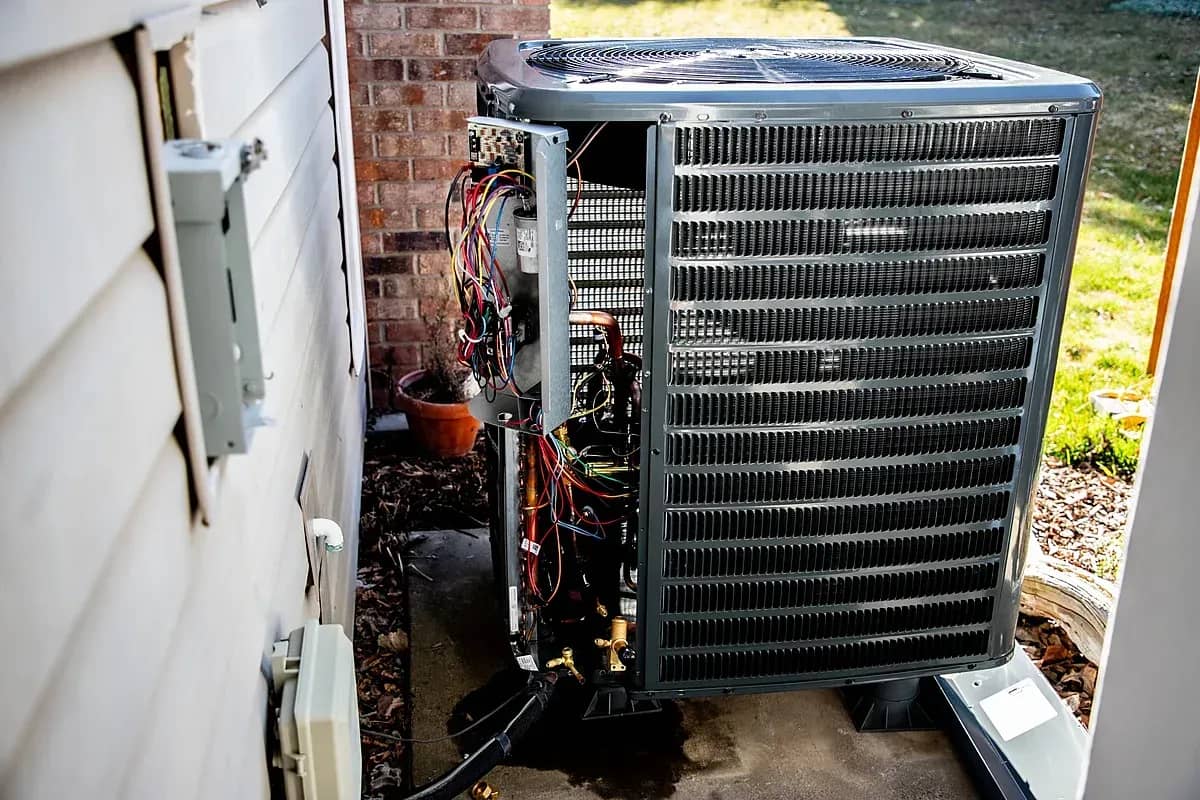
Heat pump with furnace backup. The no-heat call starts outdoors — defrost board, thermistors, changeover — and the furnace may be fine. Begin at heat pump services in Eagle.
Can the same visit take care of a water heater or a drain problem?
Yes, and in Eagle that is most of our history. Of the 374 completed jobs at Eagle addresses, 33 were clogged-drain calls at 32 different homes, and 31 of our 178 Eagle customers have used us for more than one kind of service — plumbing and heating-and-cooling both, for example.
It matters on a furnace call because houses do not sort their faults by trade. A bedroom that never warms up can be a duct that dropped off in the crawl space, with the furnace blameless; a humidifier dripping into the furnace cabinet is a water problem living inside a heating problem. One dispatcher, one truck, and nobody under your house announcing that what they found belongs to some other company. The water heater in Eagle, $59 drain clean, AC repair in Eagle and duct cleaning in Eagle pages cover the rest.
Is there a month when a tune-up actually beats the rush?
September, if you want the schedule to yourself; October, if you go by when everyone else does it. Completed furnace tune-ups and combined heating-and-cooling tune-ups across our service area run 125 in September, 162 in October and 88 in November, against 11 in June. A tune-up does not guarantee you skip a January failure. It buys timing — a weak capacitor reading or an igniter with a hairline crack found in a warm house on an open weekday rather than on the coldest night of the year. Two-system houses need both units on the list. HVAC maintenance in Eagle sets out what the visit covers; the furnace tune-up page has the checklist.
Who actually turns up, and who holds the license?
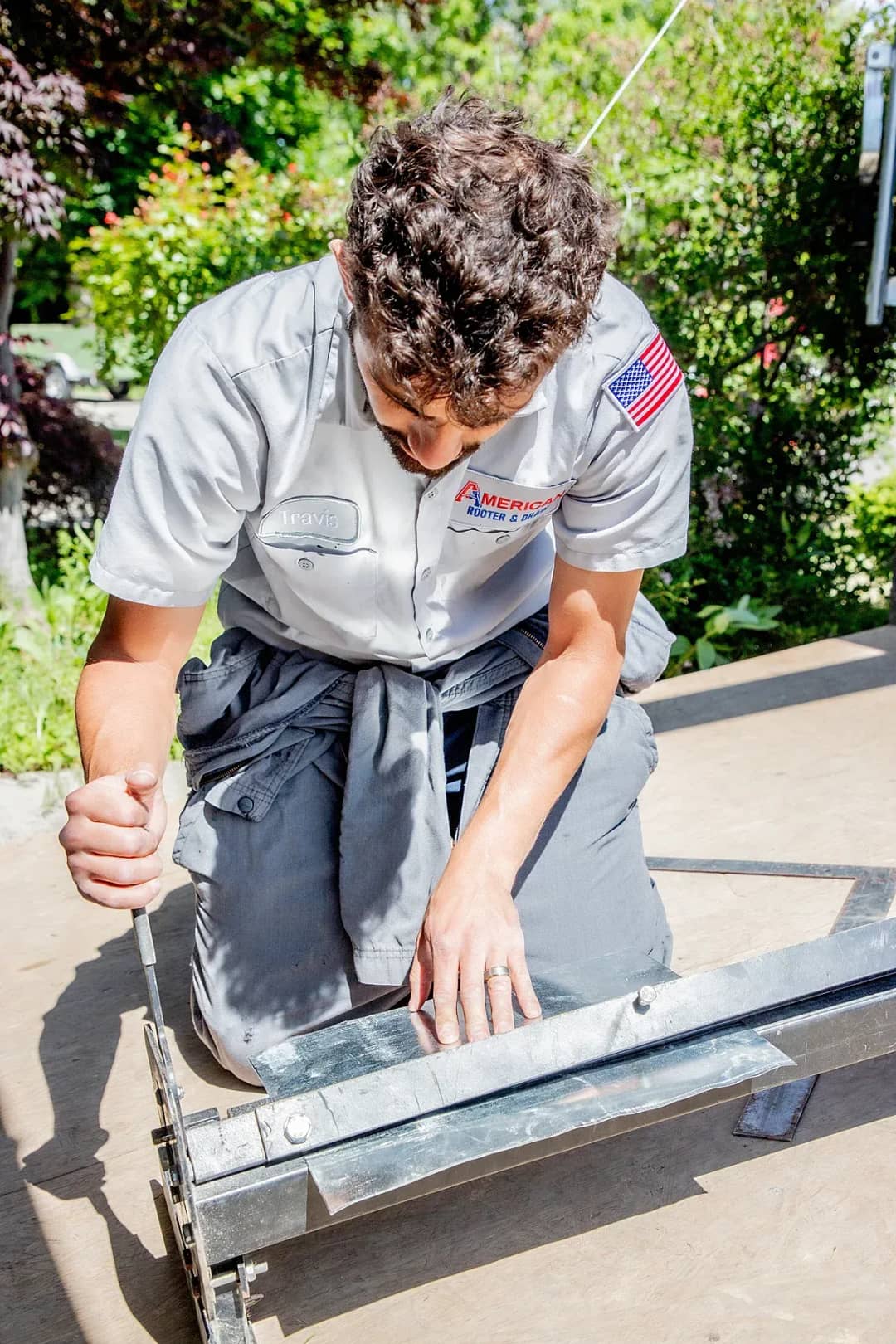
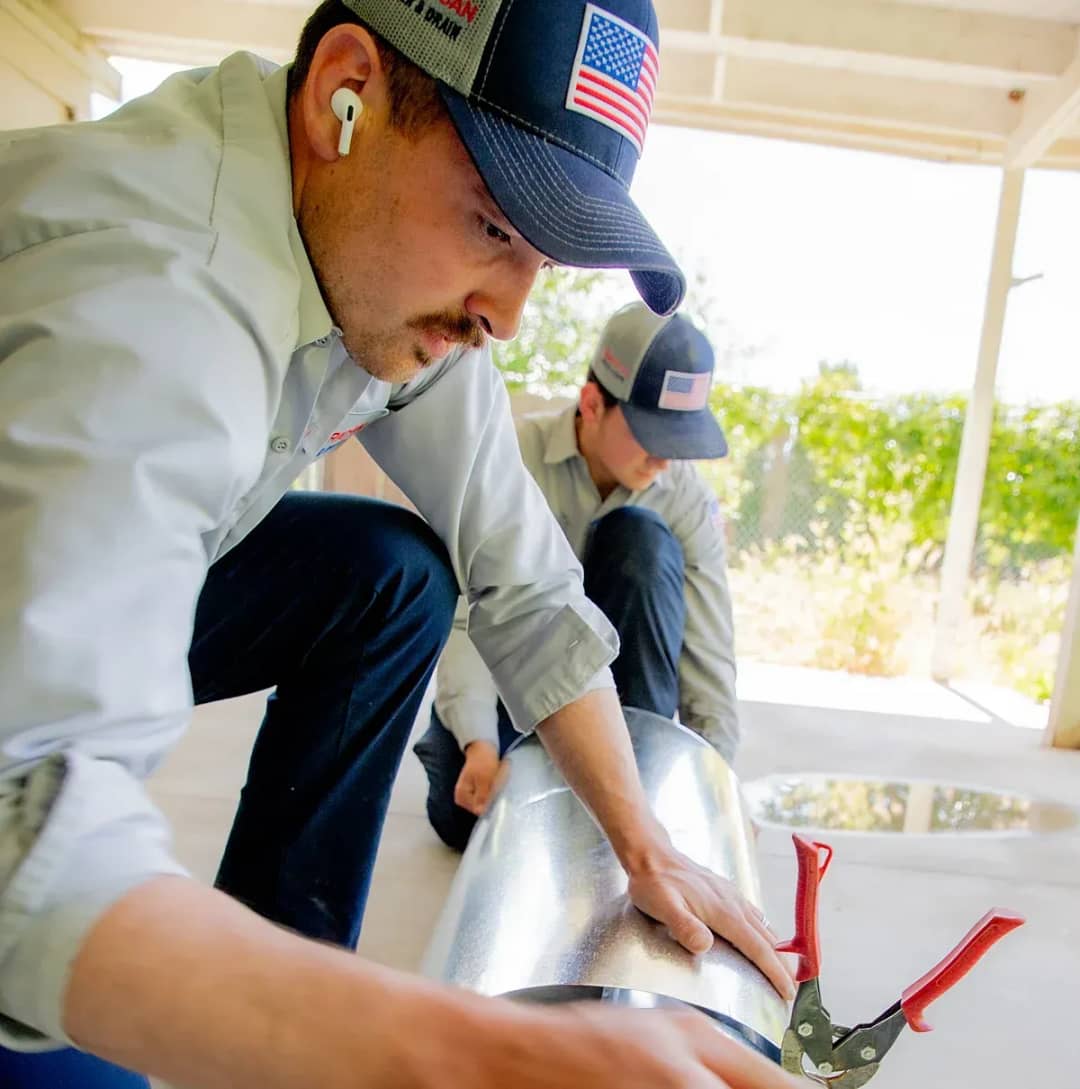
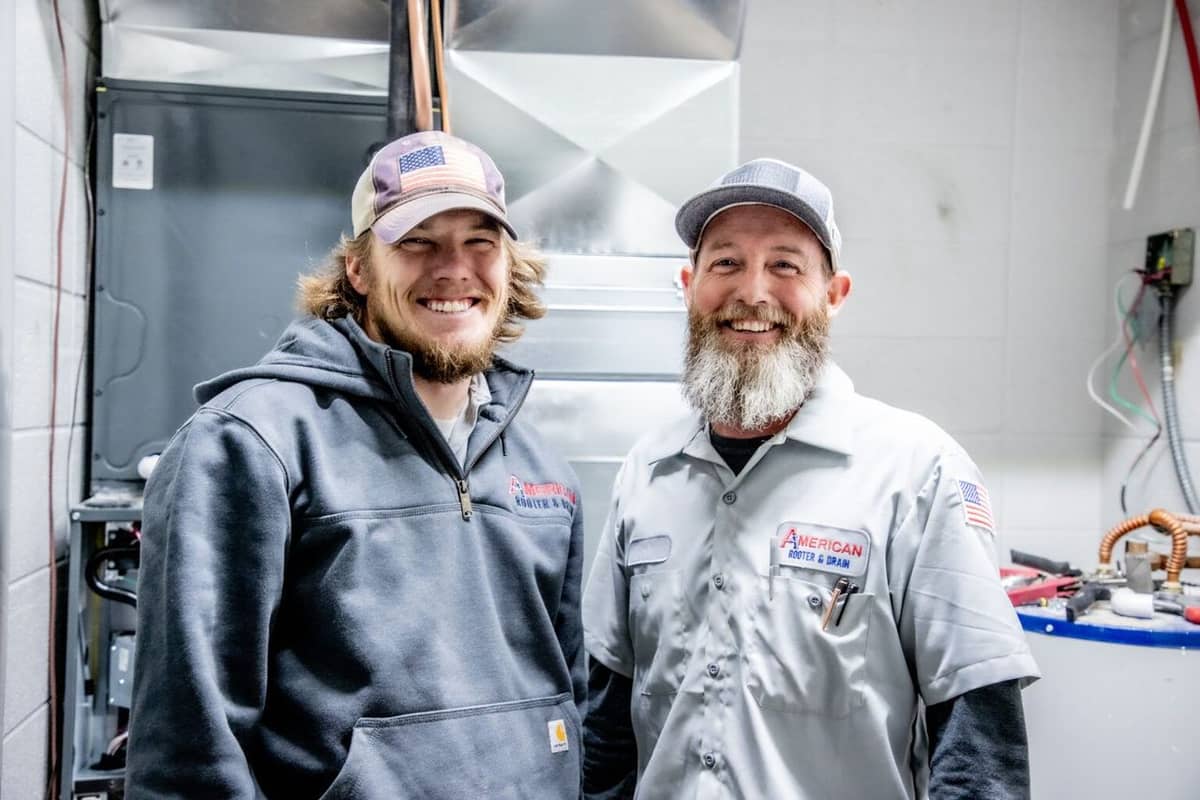
American Heating & Air is the name the heating and cooling side of American Rooter & Drain works under. The parent company was established in Caldwell, Idaho in 1945. It has served the greater Treasure Valley since 1945. The mechanical work on this page is done under Idaho HVAC Contractor License LIC# 029771, from 1005 Commercial Way in Caldwell. Company-wide, 24 technicians have run furnace repair and no-heat calls, and 12 of our heating and cooling technicians have completed calls at Eagle addresses.
The visit has a fixed shape: diagnosed before repaired, the finding explained in plain words, a written price before anything starts, and you can stop the process at any of those steps.
Heat off? Call (208) 782-8267 and give us three things: which unit or which floor; what the furnace is doing — dead silent, blowing cold, lighting then quitting, running without warming the house, or cycling every few minutes; and whether you are on natural gas, propane or electric. Those three answers decide what goes on the truck before it leaves the shop.