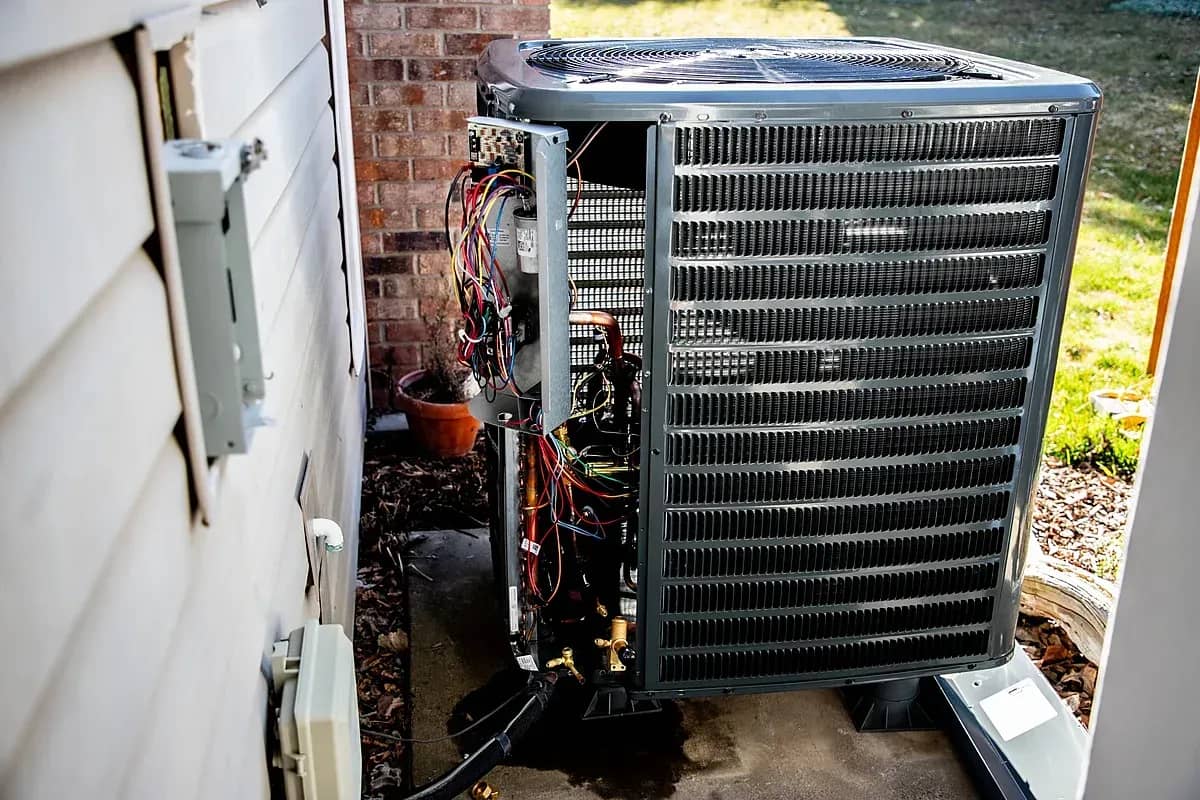
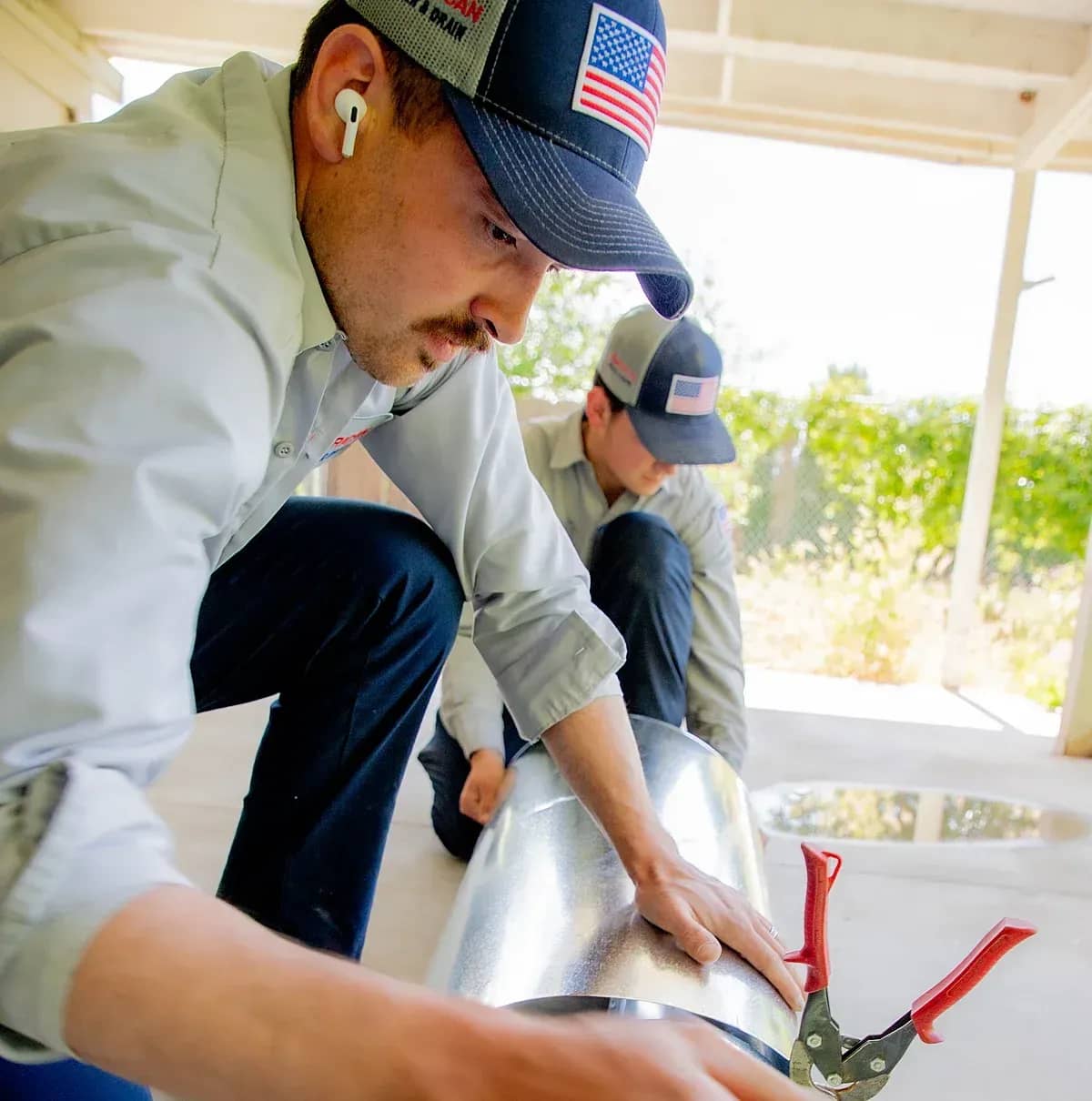

If the house is already cold, call (208) 352-6502 and read the rest later. To work out what your furnace is doing first, our symptom-by-symptom guide sorts it by what you are seeing.
Is Weiser too far out for you to come?
No, and the schedule says so more convincingly than a promise would. Since October 2020 we have run 2,115 jobs at Weiser addresses, 1,914 of them completed at 500 different addresses for 526 customers, and all but one of those 2,115 carry ZIP 83672. Those dispatch records begin in October 2020, when the current system went in — the company is a great deal older than the database. Eighty-six different primary technicians have worked a Weiser address in that stretch. Heating and cooling is the newer half of it: since March 2023 we have run 318 heating-and-cooling jobs here for 115 customers, 87 of them completed furnace and air-conditioner repair, service, no-heat and not-cooling calls at 50 addresses for 52 customers, between March 2023 and July 2026.
Weiser is about forty-four miles of straight-line distance northwest of our shop at 1005 Commercial Way in Caldwell. On our dispatch map it sits in the same service zone as Fruitland, Payette and New Plymouth, which is the detail that matters to you: a technician headed to any of those towns is already most of the way here, and the routing treats the four as one run.
My heat went out last night. Can somebody get here today?
Often, and here is the honest shape of it. Of the 93 completed heating and cooling jobs at Weiser addresses with both a booking timestamp and a completion timestamp, 77 were finished the same calendar day they were booked and 2 exactly one calendar day later — 85 percent between the two. The other 14 fall into neither bucket; booked_at is not always a scheduling timestamp in this data — on some jobs it reflects when an earlier estimate was sold rather than when the visit was set up — so we won't guess what happened on those. A house without working heat is moved ahead of routine tune-up and estimate work on the dispatch board, which is a scheduling rule rather than a favor.
One caveat: when the weather turns hard, every furnace in Washington and Payette counties that was already marginal fails inside the same forty-eight hours, and that is the week when the gap between booking and completion is most likely to widen. Calling first thing in the morning changes what is available. While you wait, the furnace repair page covers getting through a cold night safely.
Why does the furnace light, run a minute, then quit?
This one has a signature you can recognize from the hallway. The burners light, you hear the whoosh, and thirty to ninety seconds later everything drops out and the sequence starts over. Three or four rounds of that and the control board gives up and locks itself out.
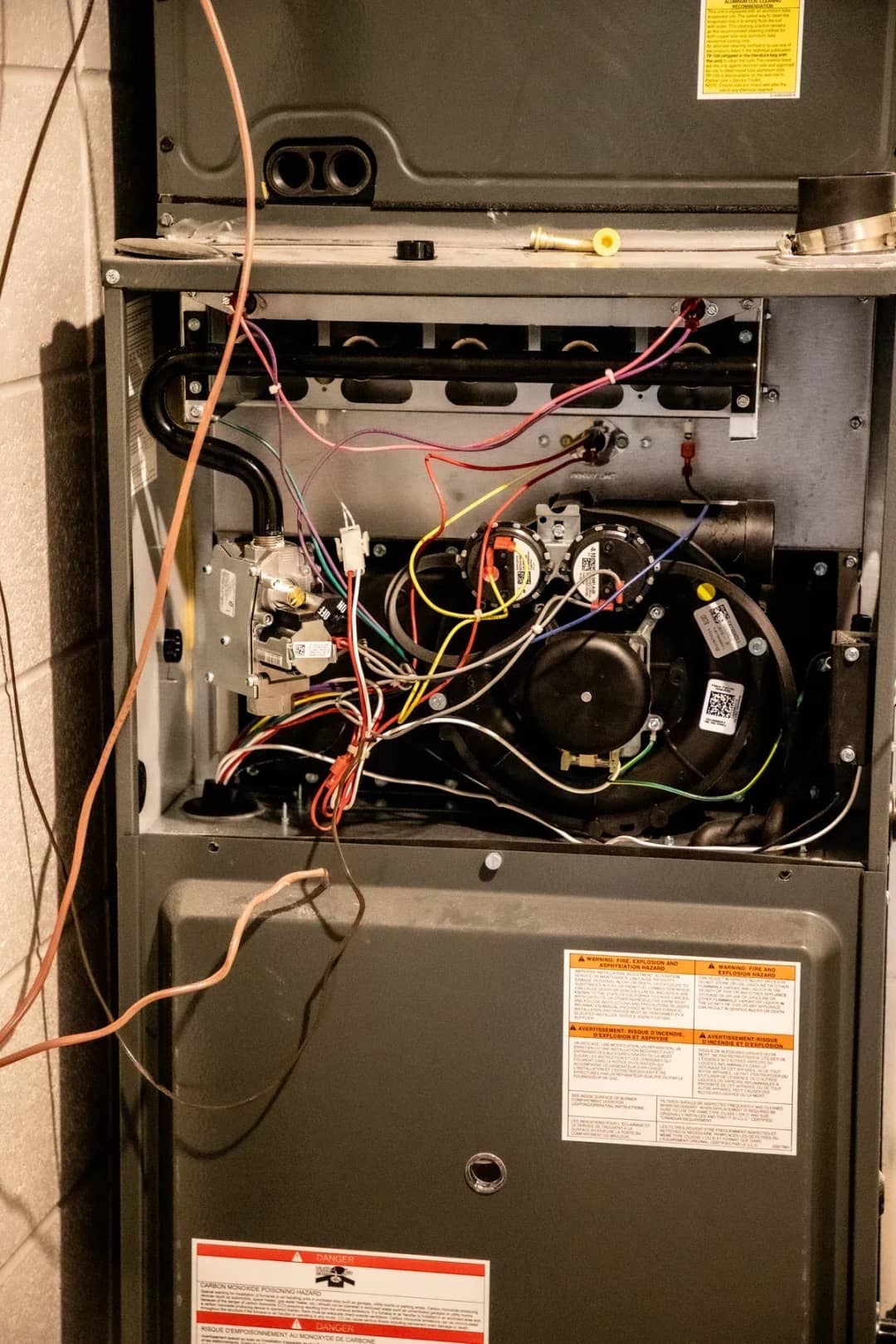
It is almost always the flame sensor, and what that part does is stranger than it looks. It is a plain steel rod in the burner flame, connected to nothing but a wire. Flame conducts a tiny current — microamps, millionths of an amp — and the board reads that current as its only proof that gas leaving the burners is burning rather than filling your basement. Let a film of oxide build on the rod and the current falls below what the board accepts. The board cannot tell a dirty sensor from an unlit burner, so it closes the gas valve.
The technician cleans the rod, then reads the actual microamp value while the burner runs, because a rod that cleans up but will not hold a steady signal strands you again in three weeks. An angled OEM flame sensor is one of the parts that has come off a van at a Weiser address, so this is not hypothetical. The rest of the job is asking why it fouled — a burner running rich, a rusted sensor mount, a poor ground at the board. Skipping that question is how a furnace gets fixed twice.
It runs and runs and the house still will not warm up. What is going on?
Nearly every version of this complaint is an airflow problem wearing a furnace costume, and the furnace is the last thing to replace.
Start with the filter, which earns first place out here. Weiser is working farm country. Fieldwork throws dust for weeks in spring and again through harvest, and late summer in this valley reliably has smoke in it, so a one-inch filter loads up far faster than the packaging implies. A furnace that cannot pull enough air across the heat exchanger overheats, trips its high-limit switch, shuts down, cools and restarts — cooking igniters and board relays years ahead of schedule while it does. A four-inch media filter, where there is cabinet room for one, holds several times the dust before it chokes.
Then duct. In a crawl space or unconditioned attic, a boot that has come loose or a length of flex that slipped off a collar dumps heated air where nobody lives, and the register in the far bedroom goes quiet while the furnace runs all day. A return grille too small for the blower does the same damage from the other direction, as does furniture parked over a return. Then the blower itself: a wheel packed with a felt of dust moves markedly less air than the same wheel clean. Our duct cleaning page for Weiser covers what that inspection looks for.
Do you have to order the part, or does it get fixed in one trip?
One trip, most of the time — the visit ends the same afternoon it starts.
Which side of that line you land on comes down to which part died. The ones that fail on a January night live on the van: igniters, flame sensors, run capacitors, universal pressure switches, high-limit switches, board fuses, thermostats. Looking only at what has actually been invoiced on a furnace job at a Weiser address, the list includes a hot surface igniter, an angled flame sensor, a 20 MFD 440-volt oval run capacitor, a universal pressure switch and a ninety-percent induced draft motor. None of that requires a second trip.
What has to be ordered is anything brand-specific or physically particular — an OEM gas valve, a control board for a furnace whose manufacturer stopped making them, an inducer sized to one company's cabinet. When that is the answer you hear it on the first visit, along with what we can do to keep the house livable meanwhile.
Why do so many furnaces around here fail in October?
Because October is the month a furnace is asked to do something it has not done since March. Of the 285 completed heating and cooling jobs at Weiser addresses, 44 fell in October — more than any other month — with June and July close behind at 31 each, which is the air-conditioning side of the same list peaking in summer the way the heating side peaks in fall.
Nothing about October is mechanically special for a furnace specifically. What it is, is the first real load. A furnace sits idle through six warm months collecting dust on the burners and in the blower, and the igniter that was already thin last March did not heal over the summer. The use of that fact is simple: run the furnace half an hour on a mild day in September, window cracked for the burn-off smell, and listen. If it lights on the first try and holds temperature, you have bought a quiet winter. If it hesitates or makes a noise it did not make before, you found the problem with the schedule open and the house warm.
Does it matter that my house is one of the older ones downtown?
It changes what we expect to find. The blocks off Court, Liberty, Park and State Street, and the numbered streets through the middle of town, hold a lot of houses heated long before anyone had thought of a sealed combustion cabinet. Plenty started with a gravity furnace in the basement — the big octopus with fat round trunk lines radiating out of it — and were converted to forced air later. A conversion is recognizable on sight: supply trunks oversized for the blower now bolted to them, a return path undersized because a gravity system barely needed one, registers still in the floor. The furnace ends up fighting duct designed around different physics, which surfaces as uneven rooms and short cycling no thermostat adjustment will fix.
The other thing old Weiser houses turn up is a shared masonry chimney. On many the eighty-percent furnace and the gas water heater vent into the same flue, with the furnace doing most of the work of keeping it warm and drafting. Replace that furnace with a high-efficiency unit venting out a side wall in PVC and the water heater is suddenly alone in a chimney far too large for it — a real venting problem that has to be caught before equipment is ordered. Our Weiser water heater page covers that side of it.
I live outside town. Does that change anything?
It changes the failure list more than the schedule. Pioneer Road, Cove Road, Haas Road, Indianhead Road, Eaton Road and the stretches along U.S. 95 each appear dozens of times on our Weiser job list, so none of these are unfamiliar addresses.
What differs is where the equipment lives and what visits it. Furnaces in unconditioned utility rooms, detached garages and crawl spaces run colder and corrode faster than the same model in a finished basement. Mice and pack rats find warm cabinets in November, and chewed low-voltage thermostat wire is a genuine cause of a dead furnace out here rather than a punchline — the symptom looks exactly like a failed thermostat until somebody follows the wire.
Vent terminations matter more too. On a high-efficiency furnace the white PVC intake and exhaust exit a side wall a couple of feet off the ground, and where the wind has a longer run at the house they collect drifted snow and glaze over in freezing fog. Learn where yours come out and walk past them after a storm: a blocked intake will not let the pressure switch close, and a pressure switch that will not close is a service call a two-minute walk would have prevented.
Mine runs on propane, or it is electric. Can you still work on it?
Yes to both. Propane is the same furnace with different plumbing at the gas end: smaller orifices, higher manifold pressure, and — on a unit converted from natural gas — the correct conversion kit and a pressure check afterward rather than a guess. It also has a failure mode natural gas does not, which is the tank. A furnace running long hours through a cold week draws a tank down faster than the delivery schedule assumed, and low pressure on a hard night imitates a furnace fault convincingly, so checking the gauge before you call is thirty seconds well spent.
An electric furnace is a different animal: no burners, no flame sensor, no gas valve, no flue, no heat exchanger to crack. It has resistance elements staged in by sequencers, a contactor, and its own fuses — including cartridge fuses in the disconnect that leave a furnace completely dead with nothing visibly wrong. Diagnosis there is electrical, though the blower motor and run capacitor fail exactly as they do on the gas side. For a heat pump with electric backup, see heat pump service in Weiser.
What is a furnace repair going to cost?
You will not find a number here, and that is deliberate rather than evasive. Anybody quoting a furnace repair over the phone is pricing a machine nobody has looked at. What we can tell you is what the number is built from.
Which component failed, first — a stocked consumable and an ordered assembly are not the same job. Whether the furnace burns natural gas or propane or is electric, because those are three different repair lists. How reachable the unit is, since a basement furnace with clearance on all sides and one at the end of a plank walk in a low attic are not the same labor. Whether the failed part is the disease or the symptom, because a blocked flue is not a pressure switch job no matter what the board logged. And whether we find a safety condition that turns the visit into a replacement conversation instead.
What you do get is a fixed price in writing before anything is taken apart, and a standing option to say no. If the answer turns out to be replacement, the visit that puts both options side by side is free and carries no obligation — across our Weiser heating and cooling work, technicians have written 408 estimates and 113 of them, 27.7 percent, have been sold.
What if you tell me it is not worth fixing?
Then we say it during the visit rather than quietly selling you one more part, and you decide.
The record is not dramatic. Most Weiser households who have called us for a furnace or air-conditioner repair, service or no-heat visit have needed exactly one such call; a smaller number have called us back more than once for a different failure.
Repetition is the signal. One failed part is one failed part; a furnace does not owe you an apology for an igniter. A third failure in a third different section of the same furnace inside one heating season is a machine telling you something, and so is a cracked heat exchanger, which ends the conversation on the spot whatever the unit's age. Our repair-or-replace walkthrough lays out how that call gets made, and HVAC installation in Weiser covers sizing and install day.
Should I just have it looked at before winter instead?
That is the cheaper version of this whole page, yes. Weiser homeowners regularly book furnace tune-ups with us, sometimes combined with an air conditioner tune-up — 59 completed tune-up visits for 38 customers since June 2023.
One honest caveat: a tune-up is not insurance, and we will not pretend otherwise. What the visit buys is timing — finding the tired igniter, the weak capacitor, the flame sensor reading low, in October with the schedule open and the house warm, instead of at ten on a January night with wind coming down the river. See furnace tune-ups or HVAC maintenance in Weiser, and AC repair in Weiser rides along on the same visit.
Can you handle the plumbing while you are already out here?
Yes, and it is worth asking, because the drive is the expensive part of coming to Weiser and it is already spent once a van is in your driveway. Sixty-five of our 115 Weiser heating and cooling customers — better than half — have also had plumbing or drain work from us, and 83672 sits in the zone where our $59 drain clean applies.
So if the furnace call is booked and the kitchen drain has been slow since Thanksgiving, or the water heater has started making a noise, say so when you schedule rather than after the technician has packed up. Common pairings here include water heater work and gas line installation in Weiser — a gas line and a furnace are frequently the same conversation. Everything we do out here is listed on our Weiser services page.
Who am I letting in the door?
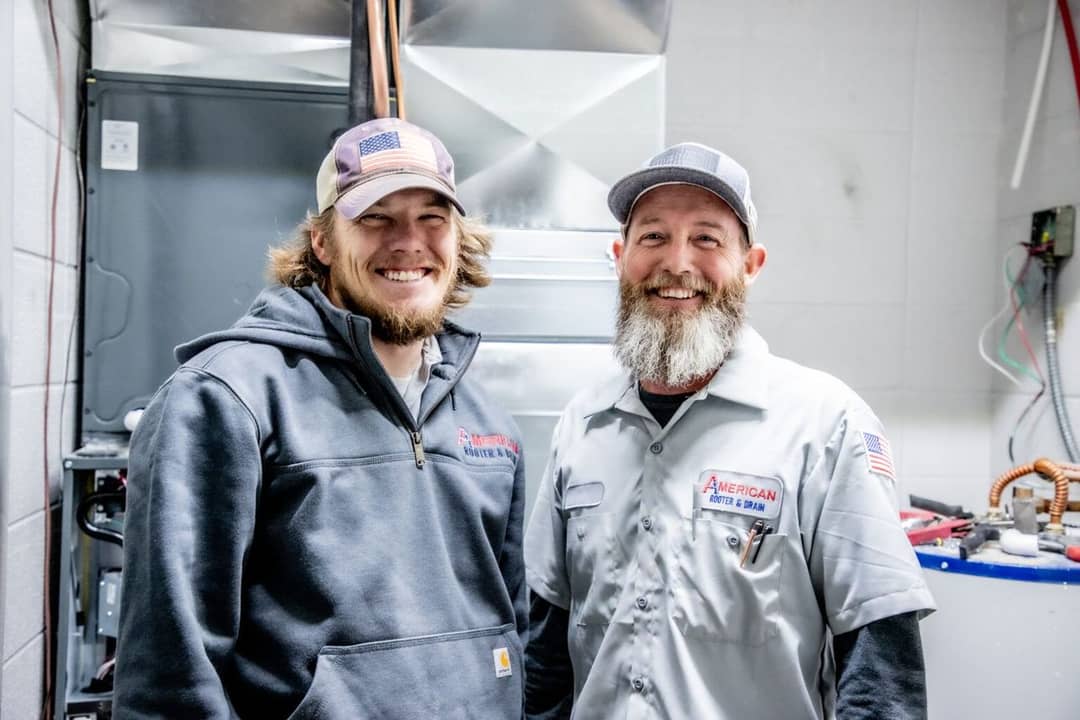
American Heating & Air is the heating-and-cooling side of American Rooter & Drain, a Marine veteran's company established in Caldwell, Idaho in 1945. The shop is at 1005 Commercial Way in Caldwell, the Idaho HVAC contractor license is LIC# 029771, and we have served the greater Treasure Valley since 1945.
If the heat is off right now, the number is (208) 352-6502. If you can safely reach the rating plate inside the front panel, have the brand, model and serial number ready, and be prepared to say roughly how old the furnace is and whether anything has been repaired lately. Those answers decide what the technician loads before leaving Caldwell.
Neighboring towns on the same run: furnace repair in Payette and furnace repair in Fruitland.