If the house is cold as you read this, the number is (208) 782-8267 and the rest can wait. If you would sooner work out what the furnace is doing first, our symptom guide matches silent, clicking, blowing-cold and cycling to their usual causes.
Do your heating trucks actually come down to Homedale?
They do, and the dispatch log says so more convincingly than a paragraph of promises. Since November 2020 our records show 281 jobs booked at Homedale addresses and 257 of them completed, for 91 different customers at 90 addresses, every one inside ZIP 83628. The log starts when the current dispatch software went in; the company predates the software by decades, established in Caldwell, Idaho in 1945 and serving the greater Treasure Valley since 1945.
Most of that work is plumbing, drains, water heaters and septic, because that is what this company was first. Heating and cooling is the newer half, and at Homedale addresses it comes to 24 completed jobs: nine furnace and air-conditioner repair-type calls — what our software files as no-heat, not-cooling, repair, service and diagnostic jobs — for three customers between December 2023 and December 2025, two completed tune-ups, two completed installs, and eleven completed inspection and estimate visits for seven customers between September 2024 and July 2026. Twenty-four is not a number we will dress up; it does say a Homedale address is an ordinary stop, not a favor.
On our dispatch map Homedale and Wilder are one zone — ZIPs 83628 and 83676 together — so a technician wrapping up in Wilder is most of the way down the highway to you already, and Marsing is the next zone over.
My furnace is out. How soon can a truck be in Homedale?
The measured answer, from completion times rather than promises: of the ten completed heating-and-cooling jobs at Homedale addresses that carry both a booking time and a completion time, eight were finished on the same date they were booked and one the day after. That count covers every kind of heating-and-cooling visit, inspections and estimates included, and ten is a small sample. It is still the real figure.
Two things push it. A cold snap is the first: when an arctic front parks over the valley and the river fog freezes onto everything, the furnaces that were barely coping all quit together, and that is when same-day slips to next-morning. Ringing early beats ringing at bedtime. The weekend is the second: on a Saturday night, say so, and you will hear a straight answer about Sunday or Monday rather than a hopeful one.
While you wait: reset the furnace once by cutting its power and restoring it, and a second lockout means stop. Keep the oven closed. Run space heaters one to a circuit, plugged into the wall, and off when you sleep. And protect the plumbing — cupboard doors open under sinks on outside walls, a faucet at the far end of the house trickling, the pump-house heat left on if you are on a well.
How does the technician figure out what is actually wrong?
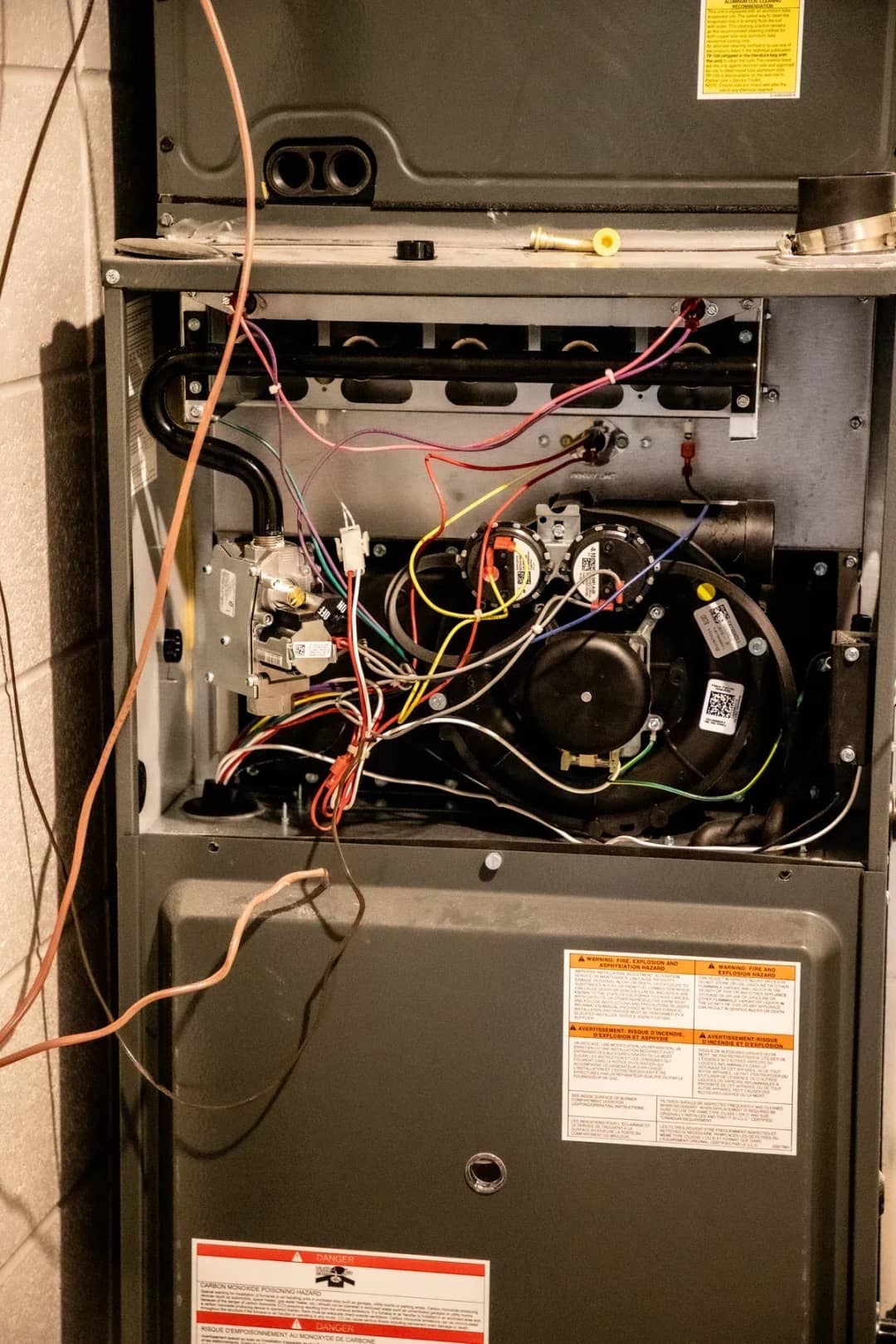
By refusing to guess, in a fixed order. First the things that fool people: power at the panel and at the switch on the cabinet; whether the lower door is latched, since a loose blower door holds the safety switch open; the state of the filter; and whether the thermostat is calling and the furnace can hear it, because a flat thermostat battery or a control wire gnawed through under the house looks exactly like a dead furnace from the hallway.
Then the fault code blinking on the control board, which is where the technician starts rather than stops, because the board records what it noticed, not what caused it. After that, meters. The flame sensor's signal is read in microamps while the burners are lit, because a rod filmed with oxide reads low and the board will shut off gas to a burner that is burning perfectly well. Then temperature rise across the heat exchanger against the range stamped on the rating plate — a rise above that range means the furnace is not moving enough air, however healthy the burners look, and that one reading swings the whole diagnosis toward the filter and the ducts.
Before parts are discussed, the heat exchanger gets a look and combustion readings get taken, because a cracked exchanger takes repair off the table. Then you get what the visit exists for: what failed, what most likely killed it, a fixed price in writing, and whether the part is on the truck. You say yes or no, and no is a normal answer.
My furnace runs a few minutes, shuts off, then starts again. Is that serious?
Worth a call, and usually not the furnace's fault. The pattern is short cycling, and the version where the burners light and run for a few minutes before dropping out is almost always the high-limit switch doing its job: the cabinet got hotter than it is allowed to, so the switch cut the gas. The blower runs on to cool things down, the switch resets, the furnace tries again, and around it goes. Each round is a heat-up the igniter did not need.
The cabinet overheats because the furnace is starved for air, and that is the phrase to keep. Homedale is farm ground on three sides and river bottom on the fourth: dust off the fields in spring and again at harvest, and most late summers a stretch of smoke. A thin one-inch filter loads up far faster here than the box suggests; a four-inch media filter, where the cabinet has room for one, holds a great deal more. Past the filter: a return grille with furniture pushed against it, registers closed in rooms nobody uses, a blower wheel felted with dust, or a run of flex duct that has slipped off its collar under the house and is heating the dirt.
Why is the fan blowing cold air instead of heat?
Check the thermostat's fan switch first: set to ON, the blower runs whether or not the burners are lit, and the air between heat cycles feels cold. Set it to AUTO and wait a cycle. If it was already on AUTO, a cold blower usually means the furnace tried to light and could not. After several failed ignition attempts most boards go into lockout and run the blower to clear the cabinet, so cold air at the registers is the aftermath of a failure at the burners: a cracked igniter, a fouled flame sensor, a gas valve that is not opening.
The mirror case is a high-limit trip, after which the board runs the blower to cool the heat exchanger — lukewarm air from a blower that will not shut off is often the first sign of overheating, so check the filter. If a heat pump heats the house instead, start on our Homedale heat pump page.
Do you carry furnace parts, or does everything get ordered?
Most of what fails on a cold night is carried. No furnace part has yet appeared on an invoice for a furnace call at a Homedale address on our books — the heating-side hard item we have actually replaced here is a flexible gas connector behind a furnace, in the summer of 2026 — so there is no local parts list to point at the way there is for larger towns.
What we can describe is how the trucks are stocked, because it is the same truck whichever town it is headed for. The parts that are the same across brands ride along: igniters, flame-sensor rods, run capacitors, universal pressure and limit switches, board fuses, common blower motors, plain thermostats. If one of those died, the repair finishes in the same visit. The parts that wait on a supplier carry a brand name: the gas valve made for that furnace and no other, a circuit board for a model the factory quit supporting, a draft inducer molded to one cabinet. Land there and you find out before the technician leaves your driveway, with an honest answer about how long and how to keep the house warm enough in the meantime.
Which months bring the most heating calls from Homedale?
November and December by our count, with August close behind. Of the 24 completed heating-and-cooling jobs at Homedale addresses, seven were completed in November, six in December, five in August and two in January — small counts, and we won't split them further by whether a given month's calls were furnace or air-conditioner work. Across our whole service area, since March 2023 we have completed 1,154 furnace and air-conditioner repair-type calls for 772 customers, and the lesson holds at any size: the furnace that fails in the first cold week was already marginal in October and had not been asked to prove it.
So ask it: run the furnace on the first cool evening in October and count the tries it takes to light. A furnace tune-up is that same test with a meter in the room, and it finds the fault on your terms instead of December's.
Does it matter that my house is old, or a manufactured home, or out on an acreage?
It changes what we expect behind the panel, and Homedale has all three.
The old townsite. The blocks along the state-named avenues in the middle of town hold houses heated by something other than a forced-air furnace when they were built. Many went through a floor-furnace or wall-furnace stage before a forced-air unit was squeezed into a closet or basement corner, and it shows: a return path that is an afterthought, supply runs threaded through a crawl space never meant to hold them, and a flue that may still be shared with a gas water heater in a masonry chimney.
Manufactured homes. A great deal of Owyhee County lives in a single-wide or double-wide, and the furnace in one is its own animal: a downflow unit in a closet, sealed to the outdoors for combustion air, venting through a roof jack, pushing air into a duct under the floor — and on a double-wide, across a crossover duct between the halves that is the first place to look when one side of the home is cold. Its parts come from the manufactured-home furnace makers, not the universal bin, and the closet is tight enough that the whole unit sometimes has to come out. Say "manufactured home" when you call.
The acreages. Out along Batt Corner Road, Market Road, Johnstone Road and the roads toward Succor Creek, the furnace is likelier to live in an unheated utility room or a shop, likelier to burn propane, and likelier to have hosted mice — a thermostat wire gnawed through under the house produces a furnace that is silent for no visible reason. The two white plastic pipes of a high-efficiency furnace end on the windward side of the house and fill with driven snow or ice over in freezing fog, and a blocked intake cannot close the pressure switch.
Is a propane or electric furnace a different repair?
Somewhat. Tell the dispatcher which you have. Inside town you are most likely on natural gas mains; beyond them propane is the rule. A propane furnace is the same furnace plumbed for a different gas — burners drilled smaller, gas arriving at higher pressure — and a unit that left the factory set up for natural gas needs a proper conversion kit and a pressure check afterward, not a guess. Propane also fails in a way natural gas cannot: a week of fog with the furnace barely resting can empty a tank ahead of the delivery route, and from inside the house a low tank or a frost-glazed regulator is indistinguishable from a furnace fault. The gauge on the tank is the only diagnosis on this page you can do in slippers.
An electric furnace skips the combustion side entirely — nothing lights, nothing vents, nothing can crack. Its failures are a resistance coil that has opened, a sequencer that never brings its stage on, or a cartridge fuse in the disconnect that has quietly blown; many manufactured homes in the county are heated this way.
How much will it cost to get my furnace fixed?
There is no dollar figure in this section, on purpose. Anyone who quotes a furnace repair before opening the cabinet is guessing, and the guess will move. What we can do is show you what it is made of.
Which component failed, first: a universal part already on the truck and a brand-specific assembly from a supplier are not the same job. Gas, propane or electric, since each carries its own parts list. How reachable it is: a furnace standing in the open in a basement is one job, and one wedged in a closet or at the back of a crawl space is another. Whether the dead part caused the failure or merely reported it, because a furnace whose exhaust is blocked will keep tripping its pressure switch however many new switches it is given. And whether something unsafe turns up, which changes the conversation altogether.
What you get in return is a fixed price on paper before the repair starts, and the freedom to turn it down. People use that freedom: on the 24 completed heating-and-cooling jobs at Homedale addresses, our technicians wrote 34 estimates across 14 of those jobs, and homeowners accepted 11. If the honest answer is replacement rather than repair, the visit where a technician prices both in the same hour costs nothing, and asking commits you to nothing.
Is my furnace worth fixing, or is it time for a new one?
Judge it by what it has been doing, not by its birthday. One worn-out part is not a verdict on the furnace. The signals worth weighing are repetition and safety: three failures in one winter, each in a different part of the same furnace, is a pattern rather than bad luck; a part that has to be ordered for a furnace the factory no longer supports is a warning about the next part; and a cracked heat exchanger settles it, because that is the wall between the flue gases and the air you breathe.
How the decision gets made: the technician lays out the repair price and the replacement price on the same visit, tells you which he would pick in your house, and leaves the choice with you. Our guide to the repair-or-replace decision shows the arithmetic, and HVAC installation in Homedale covers sizing, venting and install day.
Can the same truck handle the drain and the water heater too?
Yes, and in Homedale that is the usual arrangement: of the eight customers with completed heating-and-cooling work at Homedale addresses, seven have also had completed plumbing, drain or other work from us here. This company started with drains, and one dispatcher books both.
The drive out Idaho 19 is the expensive part of a Homedale call, and once a truck is in your driveway it is already paid for. If the furnace visit is on the calendar and a bathroom sink has been draining slowly all month, say so when you book, not as the truck is backing out. Our $59 drain clean is good in Homedale — one accessible branch line cleared with a cable machine from an existing opening. Homedale pairings run to water heaters, drain cleaning in Homedale and gas lines; if you are on a septic system, as many Homedale acreages are, septic service rides the same board, and duct cleaning in Homedale covers uneven rooms when the furnace is fine.
Who is coming to my house, and what will they ask me?
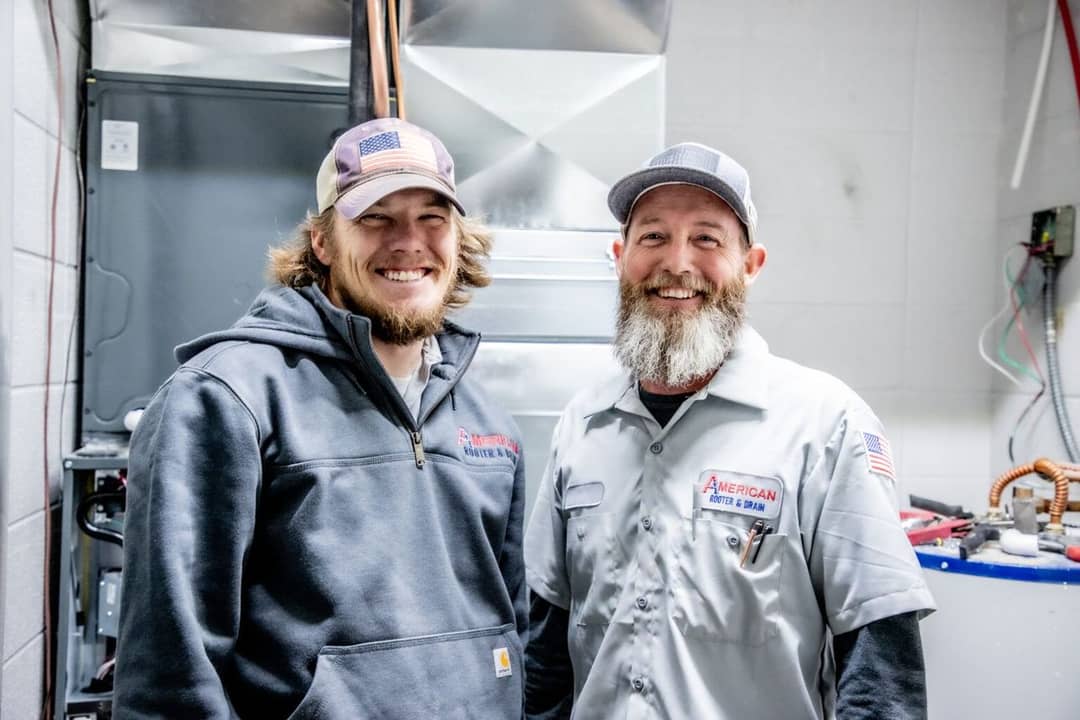
American Heating & Air is the furnace-and-air-conditioner arm of American Rooter & Drain, a company founded by a Marine veteran and established in Caldwell, Idaho in 1945, serving the greater Treasure Valley since 1945. We run out of 1005 Commercial Way, Caldwell, and Idaho HVAC Contractor License 029771 covers the heating work. The person at your door diagnoses before repairing, explains the failure in plain words, prices it on paper before touching a part, and says plainly whether that part is on the truck.
When you call (208) 782-8267, five answers shorten the visit: what the furnace is doing, in one sentence — dead silent, clicking but never lighting, lighting then dropping out, blowing cold, or cycling on and off; gas, propane or electric; whether it is a manufactured-home furnace; brand, model and serial off the label inside the front panel, if you can safely reach it; and roughly how old it is, plus any recent repairs.
Neighbors on the same run: furnace repair in Wilder, which shares our Homedale dispatch zone, and furnace repair in Marsing up the river. Everything else we do in town is on the Homedale services page.