Air Quality Services We Handle
- Whole-home air filtration system installation, integrated with your existing HVAC system
- Standalone air purifier installation for single rooms or specific concerns
- HEPA and high-MERV filter upgrades
- Humidification and dehumidification system installation
- Air duct cleaning to clear built-up dust and debris
- Filter selection and ongoing replacement service
Signs Your Indoor Air Needs Attention
- Allergy symptoms, irritation, or respiratory discomfort that's worse inside than outside
- Frequent headaches or a general sense of fatigue at home
- Dust that builds back up within a day or two of cleaning
- Persistent musty or stale odors that don't clear with normal cleaning
- Condensation collecting on windows, or visible mold or mildew growth
- Noticeably higher indoor humidity than the season would explain
What's Actually in Your Air
Indoor air carries a mix of things a standard furnace filter was never designed to catch: dust and pet dander, pollen that rides in on open doors and windows, mold spores, and volatile organic compounds (VOCs) off-gassing from paint, cleaning products, and new furniture. Combustion appliances — a gas water heater, a fireplace, a stove — add their own byproducts if not properly vented. Fabric throughout the house, from curtains to rugs to upholstery, holds onto all of it and releases it back into circulation over time.
Whole-Home Filtration vs. Standalone Purifiers
- Whole-home systems install into your existing HVAC ductwork and treat every cubic foot of air that circulates through the house, which makes sense when the problem is house-wide — general dust, whole-home allergy symptoms, or a household member with asthma.
- Standalone purifiers treat a single room and work well for a specific concern — a bedroom for someone with allergies, a nursery, a home office — without touching the rest of the house's air handling.
Choosing a Filter: MERV and HEPA Explained
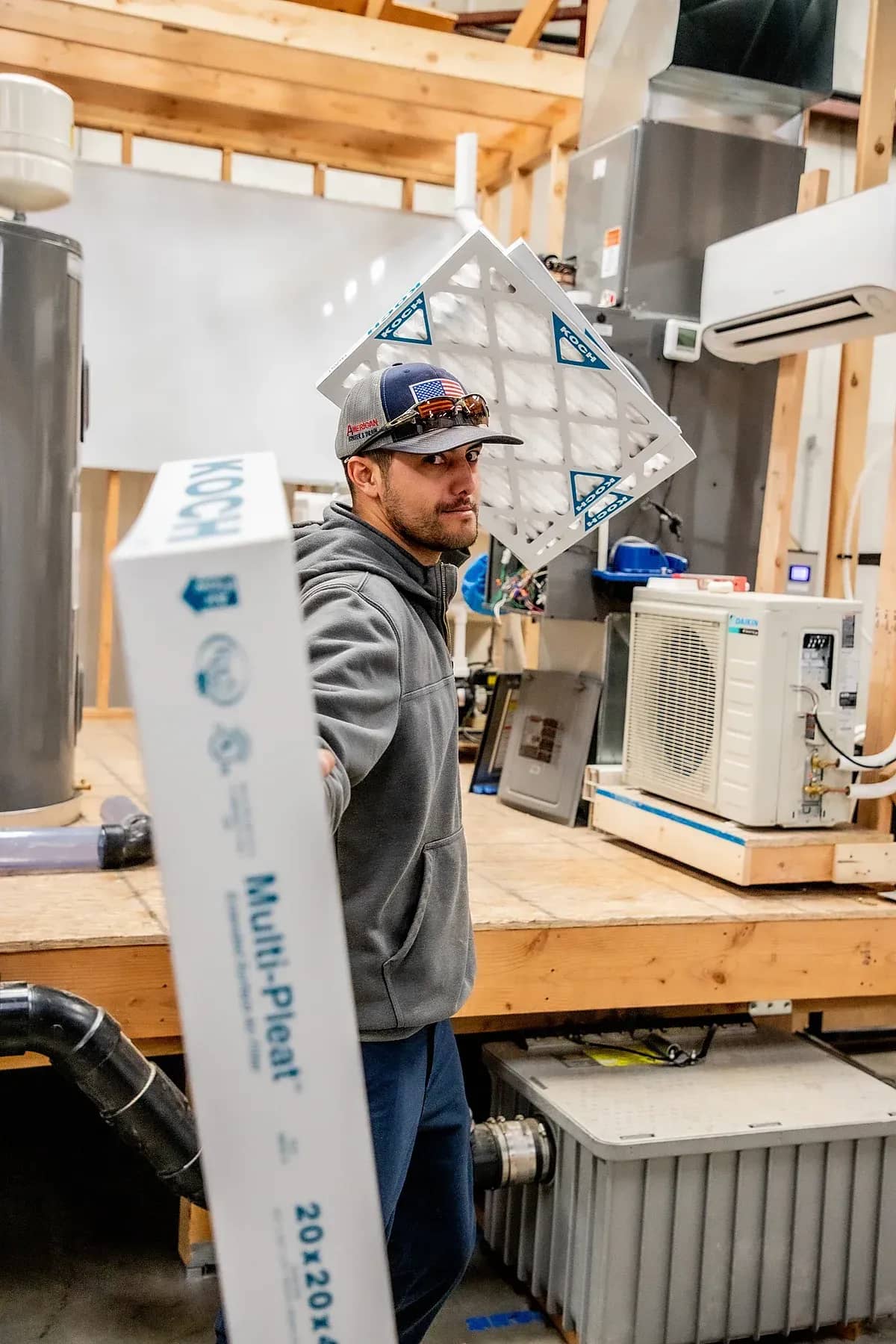
Filters are rated by MERV (Minimum Efficiency Reporting Value) — the higher the number, the smaller the particle it traps. A higher MERV rating isn't automatically the right call, though: a filter rated too restrictive for a given HVAC system chokes airflow and strains the blower motor. HEPA filtration sits in its own category, capturing the smallest airborne particles, and is typically paired with a dedicated air purifier or a whole-home system built to handle the added restriction. We size the filter to your actual system instead of defaulting to the highest number on the shelf.
How Filtration Affects Your HVAC System
Air filtration isn't just a comfort or health issue — it affects how hard your furnace and AC work. A clogged filter restricts airflow across the coil or heat exchanger, which forces the blower to work harder, raises energy use, and can shorten the life of the equipment. On the flip side, a system running with no filtration at all lets dust and debris coat the coil directly, which cuts efficiency just as much and is a much more expensive fix. Matching the right filter to your system, and replacing it on schedule, protects the HVAC equipment as much as it protects your air.
Seasonal Air Quality in the Treasure Valley
Air quality needs shift through the year here. Spring and early summer bring heavy pollen from valley agriculture and landscaping, which is when whole-home filtration makes the biggest difference for allergy sufferers. Late summer wildfire smoke can push outdoor air quality low enough that keeping windows shut and running a strong filtration system indoors matters more than usual. Winter brings dry indoor air from constant furnace operation, which is where humidification pairs with filtration to keep the air from irritating sinuses and skin on top of whatever particulates are already circulating.
Should You Test Your Indoor Air Before Upgrading?
If you're not sure what's actually driving a symptom — allergies acting up, a persistent odor, unexplained dust — testing gives you an answer before you spend money guessing. DIY test kits can flag basic pollutant levels, while a professional assessment goes further, measuring specific contaminants like VOCs and particulate matter and tying the results back to a recommended fix rather than just a number. Testing isn't required to install a filtration system, but it's worth doing when the symptoms are vague or when you want confirmation that a new system is actually working once it's in.
When Air Duct Cleaning Makes Sense
Filtration and duct cleaning solve related but different problems. A filter catches contaminants as air passes through it; duct cleaning removes what's already accumulated on the inside walls of the ductwork itself, which a filter never touches. Visible dust blowing out of vents when the system starts, a musty smell that seems to come from the vents specifically, or ductwork that's gone years without service are all reasons to pair duct cleaning with a filtration upgrade rather than relying on the filter alone to fix everything.
Treasure Valley Indoor Air Quality Service
We install and service air filtration, purification, and humidity control systems across Caldwell, Boise, Meridian, Nampa, and the rest of the Treasure Valley from our shop on Commercial Way in Caldwell.
Call (208) 782-8267 and a real person answers — no phone tree, no call center. Family-owned, veteran-owned, and Treasure Valley-based since day one.
Frequently asked questions
What is air filtration and why is it important?
Air filtration is the process of removing contaminants from the air inside your home. Air filtration systems use various technologies to trap pollutants including dust, pollen, and pet dander, and can be standalone air purifiers or integrated within your HVAC system.
What are common indoor air pollutants?
Common indoor air pollutants include volatile organic compounds (VOCs) emitted from paints and cleaning products, particulate matter such as dust and smoke, and seasonal allergens like pollen that infiltrate indoor spaces.
How do air purifiers with HEPA filters help indoor air quality?
Air purifiers equipped with HEPA filters are particularly effective at trapping small particles, making them an excellent choice for households with allergies or asthma sufferers.
What is MERV rating and why does it matter when choosing an air filter?
Filters are rated based on their Minimum Efficiency Reporting Value (MERV), which assesses their ability to capture particles. Higher MERV ratings indicate better filtration capabilities, and homeowners should choose filters that strike a balance between efficiency and airflow.
What are signs that I may have poor indoor air quality?
Signs include allergies, irritations, or respiratory problems, frequent headaches, insomnia or fatigue, excessive dust build-up, higher energy bills, persistent unpleasant odors, high humidity levels, condensation on glass surfaces, mold or mildew growing, and musty stale air.