What Actually Drives Water Line Replacement Cost
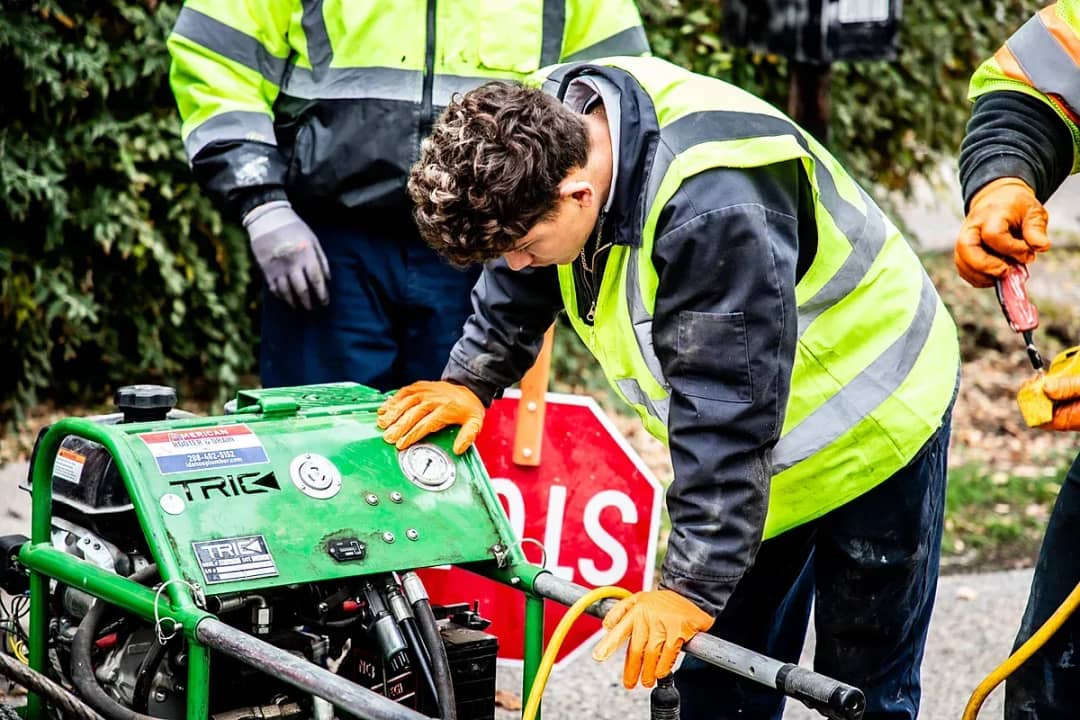
- Trenchless vs. traditional method. Trenchless replacement pulls a new line through the path of the old one using small access points — it's faster and less disruptive. Traditional excavation digs a trench along the full length of the line, and is the right call when the old line's path isn't reusable (wrong depth, wrong material, or a route the new line shouldn't follow), or when there's no clear access for trenchless equipment.
- Line length and depth.
- What's actually wrong — a leak, corrosion, or root damage each point toward a different fix.
- Number of connections — a straightforward single-line replacement costs less than a job involving extensive excavation or multiple connections.
- Permits. Water line work that connects to the municipal main typically requires a permit and inspection through the city or county, which we handle as part of the job.
Timeline
A straightforward replacement might take a day or two; more complicated situations — extensive excavation or multiple connections — can take longer. We'll give you a realistic timeline based on your property once we've diagnosed the line.
Trenchless vs. Traditional Replacement
- Trenchless replacement pulls a new line through the path of the old one using small access points instead of a full trench. It's less disruptive to lawns, driveways, and landscaping, and it's faster to complete.
- Traditional excavation digs a trench along the full length of the line. It's the right call when the old line's path isn't reusable, or when there's no clear access for trenchless equipment.
We'll tell you upfront which method fits your yard and your line — not just which one happens to be easier for us.
Signs Your Water Line Needs Attention
Watch for a sudden spike in your water bill with no obvious cause, low water pressure throughout the house, discolored water, wet or soggy patches in the yard with no other explanation, or the sound of running water when nothing's on. Any of these is worth a diagnosis before it becomes an emergency.
Idaho Cities We Serve
We repair and replace water lines across Boise, Caldwell, Nampa, Meridian, and the rest of the Treasure Valley. See the full water line repair page. If the problem turns out to be on the sewer side instead, see sewer line replacement cost.
Call (208) 366-5771 for a free on-site diagnosis and a flat price in writing before any work starts.
Frequently asked questions
How much does water line replacement cost in Boise?
It depends on the method your line needs. Trenchless replacement, using small access points instead of a full trench, is typically less disruptive and faster than traditional excavation, which digs a trench along the full length of the line. We diagnose the line with a free on-site visit and give you a flat price in writing before quoting a number — the swing between a trenchless spot fix and a full traditional excavation with multiple connections is too wide for one honest number.
How long does water line replacement take?
A straightforward replacement might take a day or two, while more complicated situations, such as those involving extensive excavation or multiple connections, can take longer. We give you a realistic timeline based on the specific conditions of your property.
Do I need a permit for a water line replacement?
Water line work that connects to the municipal main typically requires a permit and inspection through the city or county, and we handle that process as part of the job.
What's the difference between trenchless and traditional water line replacement?
Trenchless replacement pulls a new line through the path of the old one using small access points instead of digging up the entire yard, which significantly reduces disruption to lawns, driveways, and landscaping and is generally faster. Traditional excavation digs a trench along the full length of the line and is used when the old line's path isn't reusable or there's no access for trenchless equipment.
What are the signs I need a water line replacement?
Watch for a sudden spike in your water bill with no obvious cause, low water pressure throughout the house, discolored water, unexplained wet or soggy patches in the yard, or the sound of running water when nothing's on.