Cost Comparison
- Trenchless — a spot repair or a full replacement, completed in 1-2 days through one or two small access pits. Best for most residential lines. Every quote is an exact flat rate, given to you in writing before any work begins, priced by line length, depth, and access.
- Traditional excavation — typically costs more once landscaping, driveway, and hardscaping restoration are included; takes longer, using a continuous trench across the full line length. Best for lines with the wrong depth or material, no clear equipment access, or a route the new line shouldn't follow. Also an exact flat rate, given to you in writing before any work begins.
How Trenchless Works
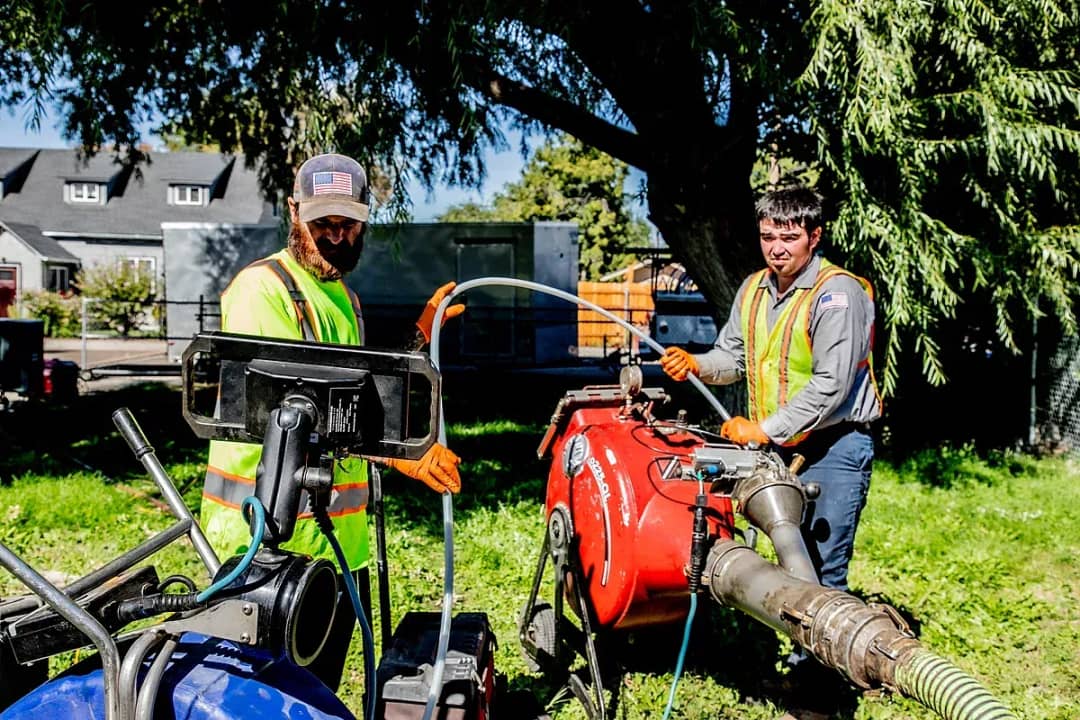
- Pipe bursting pulls a new pipe through the path of the old one while a bursting head fractures the old pipe outward — one continuous pull through one or two small access pits.
- Cured-in-place lining (CIPP) pulls or inverts a resin-saturated liner into the existing pipe and cures it in place, forming a new, jointless pipe within the old one — often with no excavation at all.
How Traditional Excavation Works
A trench is dug along the entire length of the sewer line, the old pipe is removed, and a new one is installed and connected. It's more invasive and takes longer, but it's the right call when:
- The old line's path isn't reusable — wrong depth, wrong material, or a route the new line shouldn't go.
- There's no clear access for trenchless equipment.
- The line condition needs a full-section replacement that trenchless methods genuinely can't reach.
What Drives the Price on Either Method
- Line length and depth
- Access — under a slab, driveway, or mature landscaping costs more to reach than an open yard
- Trench shoring for crew safety on deeper excavations
- Permits, which vary by city
- Restoration — traditional excavation adds landscaping, driveway, or hardscaping repair to the total that trenchless avoids
Which One Do You Need?
We run a camera down the line first and show you exactly what we find, then recommend the method that actually fits — not the one that's easier for us. In most Treasure Valley yards, that's trenchless.
Idaho Cities We Serve
See trenchless sewer repair cost and sewer line replacement cost for the full pricing breakdowns, or our trenchless sewer repair and sewer line repair hub pages. City pages: Boise, Caldwell, Nampa, Meridian.
Call (208) 366-5771 for a camera inspection and a flat-rate price in writing before any work starts.
Frequently asked questions
Is trenchless sewer repair cheaper than traditional excavation?
Often, yes — trenchless avoids the landscaping, driveway, and hardscaping restoration that traditional open-trench excavation requires, and it's faster to complete. Both a trenchless spot repair and a full trenchless replacement typically cost less than traditional excavation once restoration is included, though the exact number for either method varies with scope, line length, depth, and access.
When is traditional excavation necessary instead of trenchless?
When the old line's path isn't reusable (wrong depth, wrong material, or a route the new line shouldn't follow), when there's no clear access for trenchless equipment, or when the line condition needs a full-section replacement that trenchless methods genuinely can't reach.
How long does each method take?
Trenchless jobs are typically completed in one to two days since they only need two small access pits. Traditional excavation takes longer — a full trench dig plus restoration work afterward.
Does trenchless sewer repair work on old clay or cast-iron pipe?
Yes — pipe bursting and cured-in-place lining are both routinely used to replace or reline older clay and cast-iron laterals common across Treasure Valley neighborhoods, without removing the yard above them.
Which method does American Rooter & Drain recommend?
We run a camera down the line first and recommend whichever method actually fits your line's condition and access — not the one that's easier for us. In most Treasure Valley yards, that's trenchless.