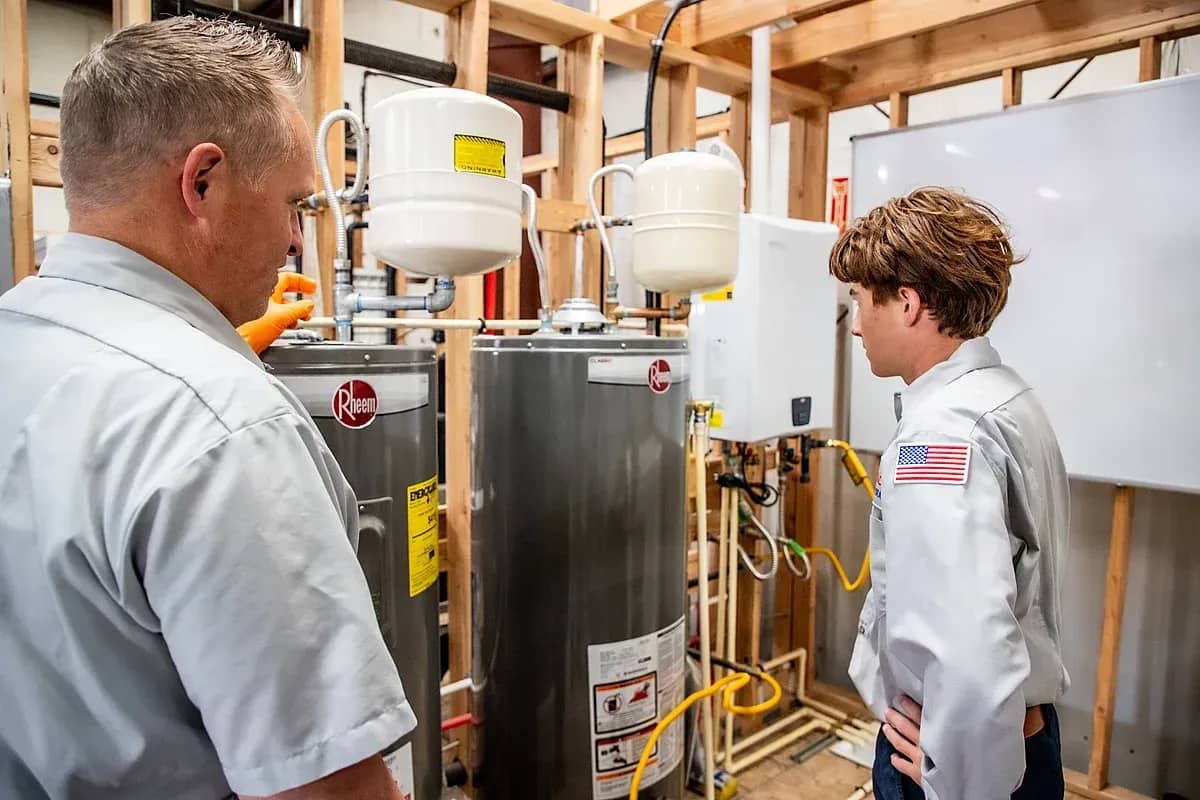
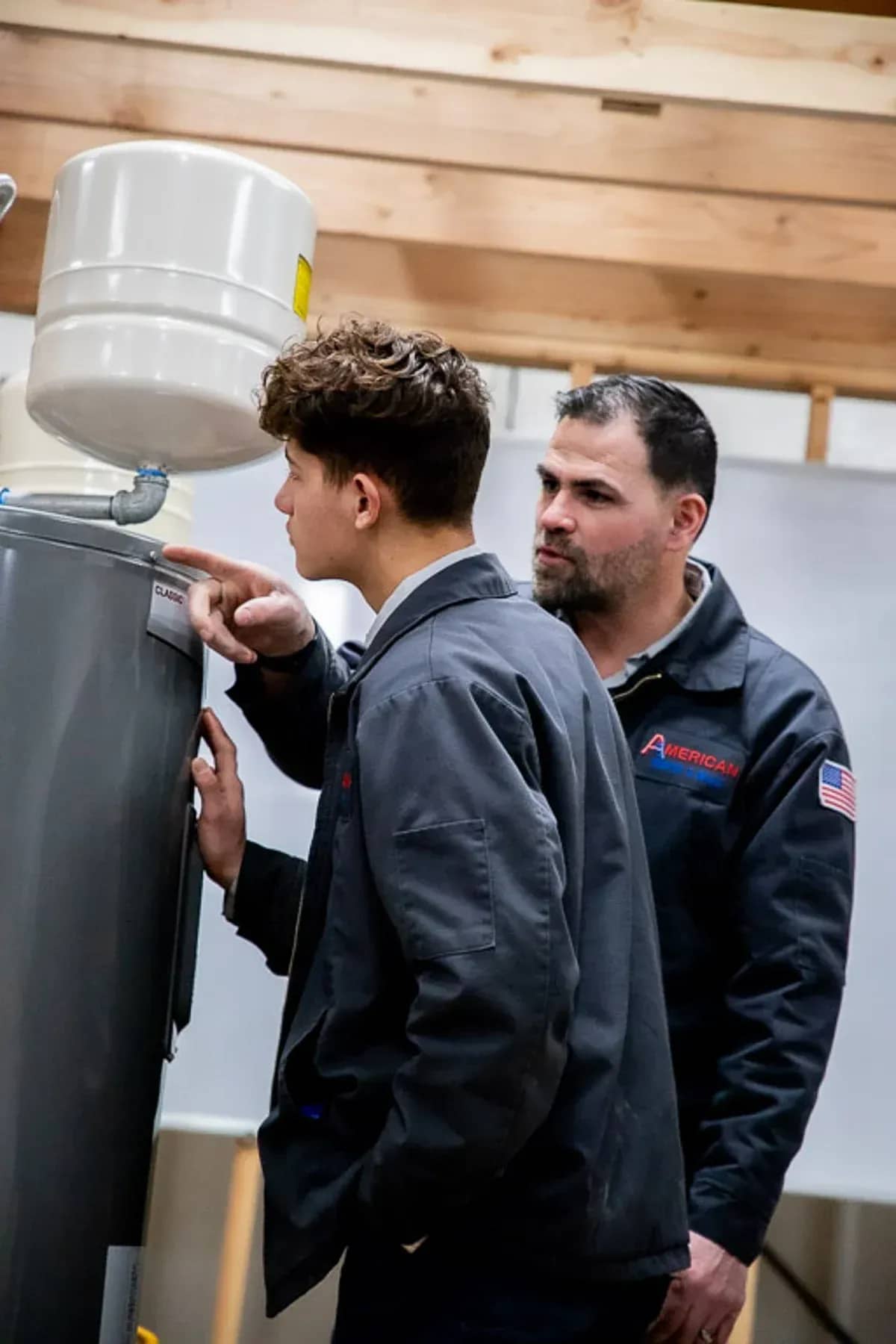
How Your Water Heater Works
Tank-style and tankless water heaters share the same basic job: pull in cold water, heat it, and deliver it on demand. When that process breaks down, the failure usually traces back to a handful of components—the thermostat, heating element, anode rod, pressure relief valve, or the tank itself.
Common Warning Signs
Pay attention to these symptoms before a small problem becomes an expensive one:
- No hot water at all – tripped breaker, failed heating element, or pilot light issue
- Inconsistent temperature – thermostat drifting out of calibration or failing
- Rumbling or popping noises – sediment buildup forcing the burner to work harder
- Water leaking around the unit – loose fittings, a failing pressure relief valve, or a corroded tank
- Rusty or foul-smelling water – depleted anode rod or bacterial growth inside the tank
The Diagnostic Process
Step 1 — Ask Questions First
A good plumber gathers information before touching a tool. How old is the unit? When did the problem start? Has anything changed recently? Those answers narrow the field fast.
Step 2 — Visual Inspection
We look at the tank and all connections for corrosion, mineral deposits, or moisture. A lot of problems are visible before any testing begins.
Step 3 — Component Testing
Depending on what the inspection reveals, we use a multimeter to check heating elements and electrical connections, verify thermostat accuracy, or drain a portion of the tank to assess sediment levels.
Step 4 — Clear Explanation Before Any Work
We walk you through exactly what we found, show you any damaged parts, and lay out your options—repair or replace—with straightforward pricing before we start.
How We Fix the Most Common Problems
No hot water — We check the power supply first. If the breaker is fine, we test the heating elements and thermostat and replace whichever component has failed.
Temperature swings — A faulty thermostat gets replaced. We also verify the unit is set to the recommended 120°F, which balances comfort with energy efficiency.
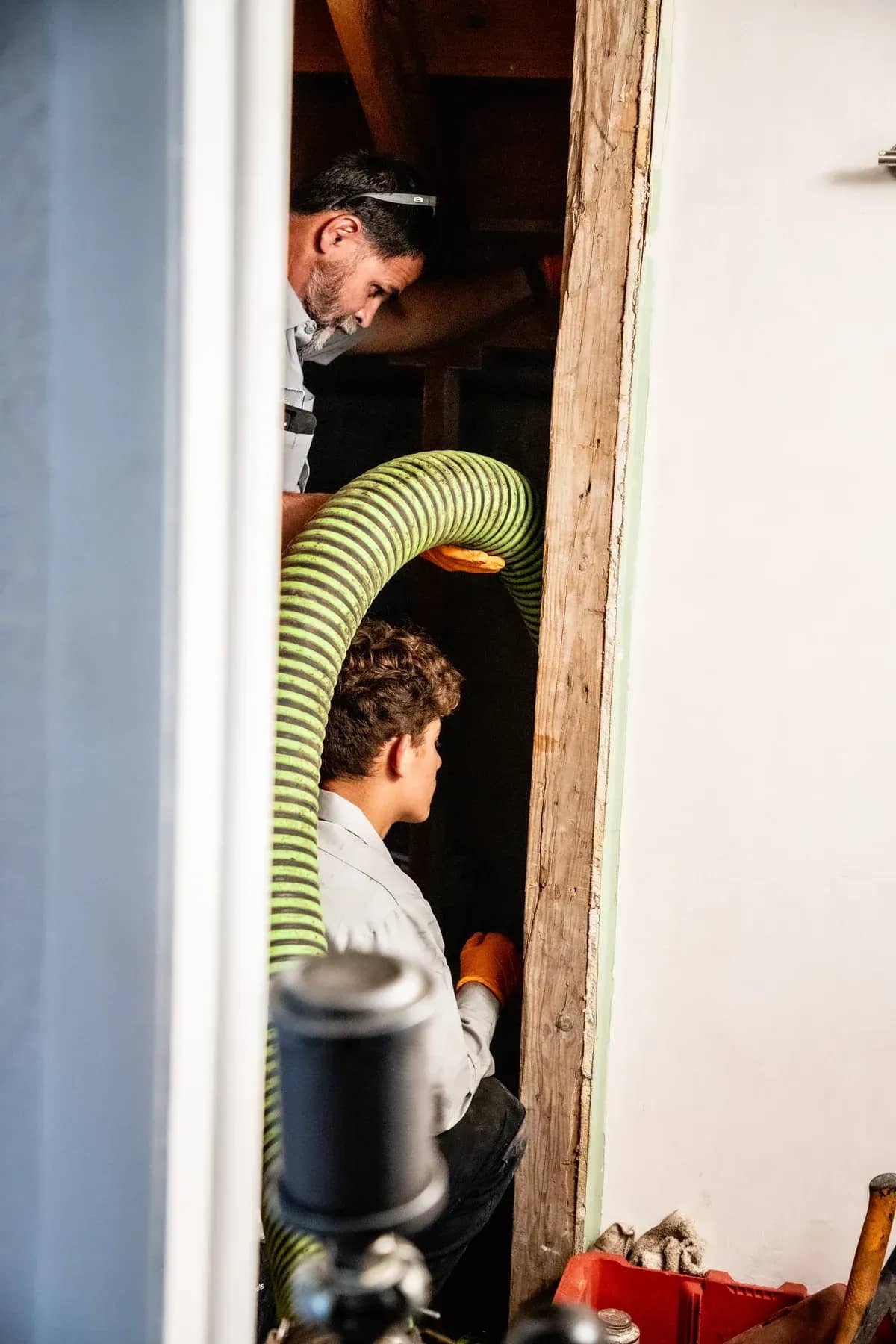
Sediment noise — We flush the tank to remove mineral buildup. In hard-water areas like the Treasure Valley, this matters more than most homeowners realize—sediment reduces efficiency and accelerates tank wear.
Leaks — We inspect every fitting, connection, and valve. Minor leaks are often a matter of tightening or replacing a fitting. A leaking tank itself usually means it's time for a new unit.
Rusty or smelly water — We inspect and replace the anode rod, flush the tank, and disinfect if bacteria are present.
Annual Maintenance Keeps Problems Small
Most water heater failures don't happen overnight—they build up over time. An annual maintenance visit can catch issues early and extend the life of your unit. During a maintenance call, we:
- Flush out sediment
- Test the thermostat and heating elements
- Inspect the pressure relief valve
- Check and replace the anode rod if needed
- Look for early signs of corrosion
Owner Tips Between Service Visits
- Keep the thermostat set to 120°F
- Flush the tank yourself once a year if you're comfortable doing so
- Check the anode rod every two years
- Insulate exposed hot-water pipes to reduce heat loss
- Don't ignore small leaks—they don't fix themselves
When to Call Right Away
Some issues are DIY-friendly; others aren't. Call a plumber if you have:
- A leak that won't stop after hand-tightening connections
- Rotten-egg smell or noticeably discolored water
- No hot water after resetting the breaker
- Noises that persist after a tank flush
- Visible rust or corrosion on the tank body
Attempting certain repairs without the right training can be dangerous and may void your manufacturer's warranty.
Why It Matters Who You Call
American Rooter & Drain is a veteran-owned, family-run company based right here in the Treasure Valley. Our plumbers know the local water conditions—including the mineral-heavy water that accelerates sediment buildup across the Boise area—and we work on all makes and models, from standard tank units to tankless and hybrid systems. Every repair comes with honest, upfront pricing and work we stand behind.
Water heater giving you trouble? Call us at (208) 366-5771 or book online and we'll get your hot water back where it belongs.
Frequently asked questions
What are the common warning signs of water heater problems?
Watch for no hot water at all, inconsistent temperature, rumbling or popping noises from sediment buildup, water leaking around the unit, and rusty or foul-smelling water.
What temperature should my water heater thermostat be set to?
The recommended setting is 120°F, which balances comfort with energy efficiency.
How does a plumber diagnose a water heater problem?
The process starts with questions about the unit's age and when the problem started, followed by a visual inspection of the tank and connections, component testing with tools like a multimeter, and a clear explanation of findings and options before any work begins.
Why does sediment buildup cause noise in a water heater?
In hard-water areas like the Treasure Valley, mineral sediment collects at the bottom of the tank and forces the burner to work harder, creating rumbling or popping noises — flushing the tank removes the buildup.
What does annual water heater maintenance include?
An annual maintenance visit flushes out sediment, tests the thermostat and heating elements, inspects the pressure relief valve, checks and replaces the anode rod if needed, and looks for early signs of corrosion.