Which drain is backing up?
The fixture tells you most of what you need to know before you even open a cabinet.
Kitchen sink. By far the most common call in Meridian's newer subdivisions — Paramount, BridgeTower, Lochsa Falls, Baldwin Park, Tuscany, Heritage Grove, and the newer streets off Ten Mile, Linder, Locust Grove, and Eagle Road. A garbage disposal makes it easy to believe almost anything can go down the drain, and it can't. Grease poured down while still liquid re-solidifies farther down the line. Fibrous scraps — celery, corn husks, onion skins, potato peels — wrap around the disposal blades or the trap instead of grinding cleanly. In a household with young kids, add the occasional dropped utensil, food pouch cap, or handful of rice rinsed straight off a plate, and a kitchen line that's only a few years old can already be narrowing. If the sink drains slow with a gurgle from the disposal side, that's usually where to start. More on isolating a stubborn clogged sink.
Bathroom sink. Slower to clog but not immune — toothpaste buildup, hair, and soap scum narrow the trap over months rather than all at once, so a bathroom sink clog tends to announce itself gradually as pooling water rather than a sudden stop. Same clogged sink troubleshooting applies here.
Toilet. The most common cause we see in Meridian's family households isn't tree roots or old pipe — it's what went in the bowl. Toys are a near-universal culprit in houses with kids under about eight; small figures, bath toys, and hair accessories are exactly the size that clears the trap and lodges in the branch line just past it. Wipes are the other big one, including brands labeled "flushable" — they don't break down in transit the way toilet paper does, and one or two is often enough to catch and start building a mass. Excess toilet paper, especially from a younger kid still learning how much is enough, rounds out the list. If only the toilet is affected and the bowl is rising rather than draining, stop flushing immediately — repeated flushes risk an overflow. See our clogged toilet page for what to do next.
Tub or shower. Almost always hair and soap residue forming a mat over the drain screen or lodging just below it. It builds slowly, so by the time water is standing at your ankles mid-shower, there's usually a meaningful clump to remove, not just a film.
Why do Meridian's newer, low-flow fixtures clog easier than you'd expect?
This one surprises a lot of homeowners, because it runs backward from what you'd assume. Nearly all of Meridian's housing was built after 1995 — PEX and PVC construction throughout, with low-flow toilets, faucets, and showerheads standard from day one. Those fixtures are genuinely good for a water bill. They're also less forgiving of a marginal flush or a slow drain than the higher-flow fixtures common in older homes.
An older, high-flow toilet moves enough water in a single flush to carry a borderline load of paper or debris through the branch line on volume and force alone. A modern low-flow toilet has less water and less force to work with, so the same load that an old toilet would have pushed through can stall partway and start collecting the next thing that goes down. The same logic applies to a low-flow kitchen faucet trying to rinse grease through a disposal — there's simply less water flushing the line clean behind it. It's not a defect in the fixture. It just means a careless flush or a lazy rinse has less margin for error in a newer Meridian home than it would have in an older one.
Meridian's groundwater is also on the hard-to-very-hard end, and mineral buildup narrows a drain line the same way it narrows a water heater's innards. A line that's already slightly restricted from hard water scale has less room for a toy, a wipe, or a grease pocket to catch on before it stops the drain completely — which is part of why a fixture that was fine for years can go from slow to fully stopped in a single afternoon.
What should you try before you call a plumber?
For a single slow or stopped fixture, a plunger is worth trying first — but technique matters more than most people think. Use a cup plunger for a sink or tub, a flange plunger (the kind with a fold-out extension) for a toilet. Make sure there's enough standing water to cover the plunger cup, seal it fully over the drain opening, and push in a steady, controlled rhythm rather than a hard slam — the point is to move water back and forth to work the clog loose, not to force air past the seal. Give it eight to ten solid pushes before stopping to check.
What we'd steer you away from is a chemical drain cleaner. They're hard on PVC and older pipe joints alike, they generate heat that can warp a toilet's wax seal or soften glued PVC fittings, and if the clog doesn't fully clear, you're left with a standing pool of caustic chemical that makes the next attempt — plunger, snake, or a tech's hands — genuinely dangerous to work around. If a plunger doesn't move it within a few honest attempts, that's the point to stop and call rather than reach for a bottle under the sink.
Is this one clogged drain, or a warning sign from your sewer line?
Most of the time, a stopped drain is exactly what it looks like: one fixture, one localized blockage. The way to tell if it's bigger is to watch what happens elsewhere in the house while you run water. If only the fixture in question is affected, it's isolated — a job for a cable or a plunger on that branch line alone. If a second fixture reacts — the toilet gurgles when the washing machine drains, or the tub backs up when you flush — that's a sign water is backing up through the shared line rather than stopping at one trap, which points toward the main line rather than a single fixture.
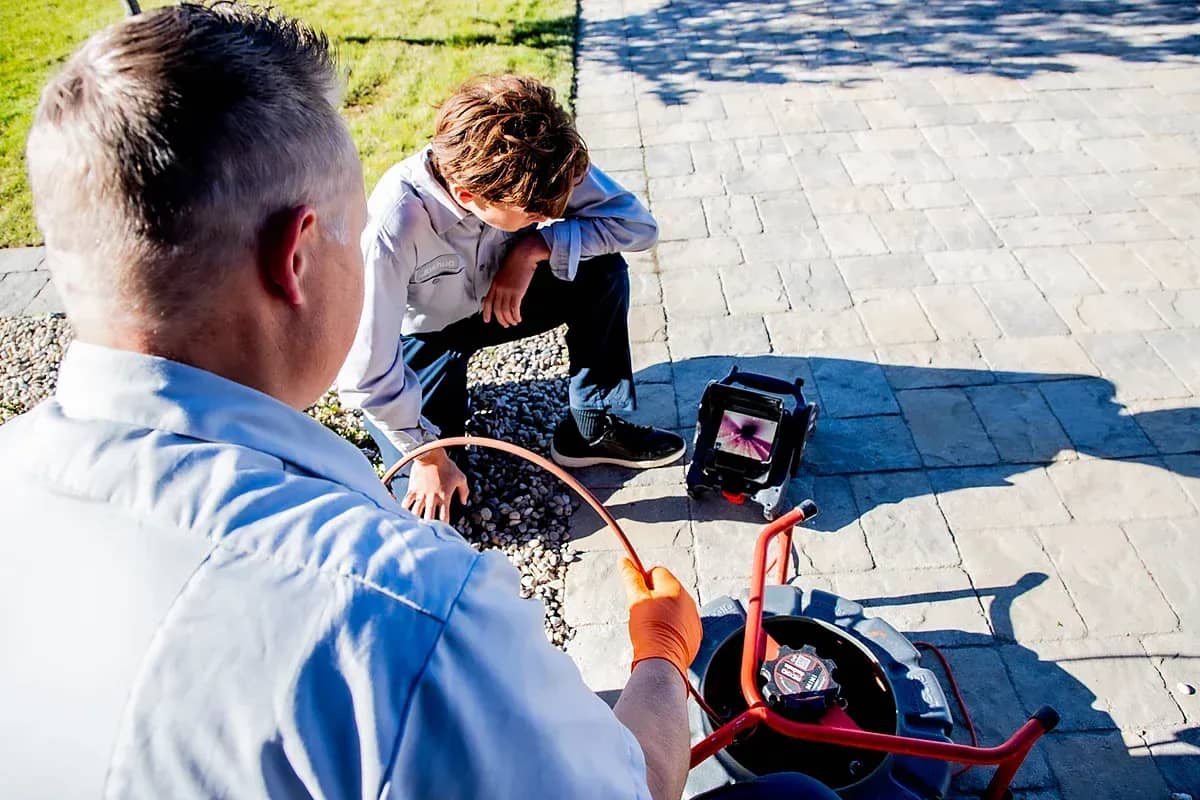
That distinction matters because it changes the fix. A single-fixture clog is a straightforward clear. A main-line issue needs a look at the pipe itself, and in Meridian that can mean anything from leftover construction debris in a newer subdivision's lateral to a bellied section where trench backfill settled unevenly under a young lawn. A sewer camera inspection in Meridian is the fastest way to know which one you're dealing with, and if the camera does turn up a lateral problem, our sewer line repair in Meridian page walks through how that gets fixed.
What it costs, and what's next
For a single, straightforward branch or fixture line — the kind of clog covered above — we run a flat $59 drain-cleaning special. That price is for one line, not a main sewer clog; if the camera or our tech finds the problem is in the main line, we'll walk you through the real options and hand you a flat-rate quote in writing before any further work starts, along with a free on-site estimate. No guessing over the phone, and nothing added once we're already there.
We're licensed under Plumbing License PLB-C-13057, and we run same-day scheduling in Meridian whenever the day's calls allow it. If this is a recurring problem rather than a one-time clog, our drain cleaning in Meridian page covers the maintenance side — jetting and scheduled cleaning that keeps a line from narrowing back down between visits. For everything else we handle around Meridian, see our Meridian service page.
Water backing up right now? Call (208) 366-5771 and we'll get a tech on the way.