Does a drain snake actually work?
Yes, for the right clog. A drain snake, also called a drain auger or a plumbing snake, is a flexible steel cable with a coiled tip. You push the tip into the pipe, turn the cable, and either the tip hooks the blockage so you can pull it out, or it bores a hole through the blockage so water can pass.
That is a good match for a solid, short obstruction: a hairball, a toy, a lump of wet paper, food packed against a bend. It is a poor match for a slow drain that has been getting worse for months, because that is usually a layer of grease or soap lining the pipe, and a cable only pokes a hole in the middle of a lining. The sink drains for a while and then slows again.
Which kind of drain snake should you use?
There are four things sold as a snake, and they are not interchangeable.
- Plastic barbed strip. A thin, flexible strip with small barbs along the edges, about a foot and a half to two feet long (one widely sold model is 20 inches, with 18 inches of barbs). A drain weasel is one brand of this type. It pulls hair out of a shower strainer or a bathroom sink drain. It cannot cut anything, it cannot push through a firm plug, and it reaches only as far as the strip is long.
- Hand-crank auger. A cable coiled in a drum with a crank handle and a thumbscrew or chuck that locks the cable in place. This is the one most people mean. Hand augers are commonly sold with a 25 foot cable and are rated for small drain lines, in the range of half an inch up to about two inches across, so check the pipe size printed on the package. It is not stiff enough to drive through a long run of pipe, and it flexes instead of cutting when it meets something firm.
- Closet auger. A short rigid tube with a cable inside and a curved tip, made for a toilet. Use it only on a toilet. See our page on a clogged toilet.
- Rented power machine. The heavier motor-driven drum machine you can rent. It is much stronger than a hand auger, and that is exactly the risk, which is covered further down.
How do you snake a sink drain, step by step?
This is the method for a kitchen or bathroom sink with a hand-crank auger. Put on rubber gloves and eye protection first. Do not start if you poured a chemical drain opener in recently, because the standing liquid in the trap is hazardous and the cable will fling it.
1. Clear the cabinet and set a bucket under the trap. The trap is the U-shaped or J-shaped bend under the sink. Water and sludge will come out of it.
2. Take the trap off. Loosen the two slip nuts by hand or with channel-lock pliers and drop the trap into the bucket. Look inside it. A lot of sink clogs are sitting right there, and if you empty it and the sink runs, you are finished.
3. Feed the cable into the wall pipe. Pull out a foot or two of cable, push the tip into the open pipe where the trap arm goes into the wall, and tighten the thumbscrew a couple of inches back from the tip so the cable is held.
4. Crank and push at the same time. Turn the handle steadily, clockwise on the common hand spinners (the maker's instructions for your tool say which way advances the cable). When the cable stiffens or the drum starts to bind, you have reached a bend or the clog. Loosen the thumbscrew, feed out another length, and tighten again.
5. Work the clog. If the cable stops against something, keep cranking while pushing lightly, and you will feel it either bite in or break through. A sudden give is a break-through. A rough grab is a hook.
6. Pull the cable back out slowly, still turning the handle. Keep the crank going as you retract so the tip stays wound into whatever it caught. Expect the end to come out coated in hair, slime or grease. Wipe it as it comes out.
7. Put the trap back and run hot water. Reassemble the slip nuts hand-tight plus a quarter turn, and run water for a full minute while you look under the sink for drips.
8. Dry the cable. Wipe it down and let it dry before you coil it up, or it will rust in the drum.
How do you snake a shower or bathtub drain?
For a tub, the usual way in is the overflow opening, not the drain opening. Unscrew the overflow plate, ease out the linkage and stopper, and feed the cable through the opening, which gives a straighter path down to the trap. Turn the handle as you feed, and keep turning as you pull the cable back. A shower with no overflow has only the strainer: lift it out, and use a barbed plastic strip first, because a hair clog is often just under the opening. Our page on unclogging a shower drain goes through the stopper types, and the clogged shower or tub drain page covers the rest.
How do you snake a drain without a snake?
You can reach a short clog with other things, and you should, before buying a tool. Pull the strainer and clean it, plunge with the overflow blocked, and open the trap and empty it. A straightened wire coat hanger will fish hair out of a strainer-level clog, but it is stiff, it snags on the first bend, and it can scratch a fitting, so a barbed plastic strip made for the job is the better choice. Wire pushed hard into a trap can wedge in it and leave you with two problems. For the sink version of these steps see how to unclog a sink.
Can you snake a drain with a drill?
Some cables are sold to be spun by a cordless drill, and the cable is the same spinning steel as a rented machine, with the same hazard: it can bind and whip if the tip catches. Run the drill slowly, never grip the spinning cable with a rag or glove, and stop the moment it loads up. Follow the maker's instructions for the cable you bought.
Where does a hand snake go wrong?
A homeowner snake fails for reasons you can see for yourself once you try one.
It stops short. Hand augers are rated for branch drain lines of roughly two inches or less, with a cable around 25 feet long. If the clog is in the main sewer line, a cable run in from a sink may never reach it, and if the sink is not the fixture that is backing up, cranking in it does nothing at all.
It pokes instead of cutting. The cable goes through the soft center of a clog and leaves the shell behind on the pipe wall. The water drains, you feel done, and the clog returns.
It scratches and snags. A cable forced through a plastic trap or around a tight fitting can scar the inside of the pipe or catch on a joint, and then it will not come back out without effort. That is the honest answer to whether a drain snake can damage pipes: used gently and matched to the pipe size it can do no harm, and forced it can.
It pushes the clog farther along. If the blockage is soft, the cable can shove it past your reach, and now it is out of the hand auger's range. That is why a drain can seem worse right after snaking: the old plug is loose, the water is slower, and the debris has lodged somewhere you cannot reach.
It will not turn the corner. A cable that will not go past the trap, will not go around a bend or will not come back out is binding or kinked. Do not crank harder. Back off, let the cable relax, and if it will not retract, stop, because force makes a kink worse.
It cannot tell you what it found. You never see the inside of the pipe. If the cable keeps stopping at the same depth every time, that is a sign of a joint, a low spot or something in the line, and cranking harder does not change that.
Is renting a drain snake a good idea?
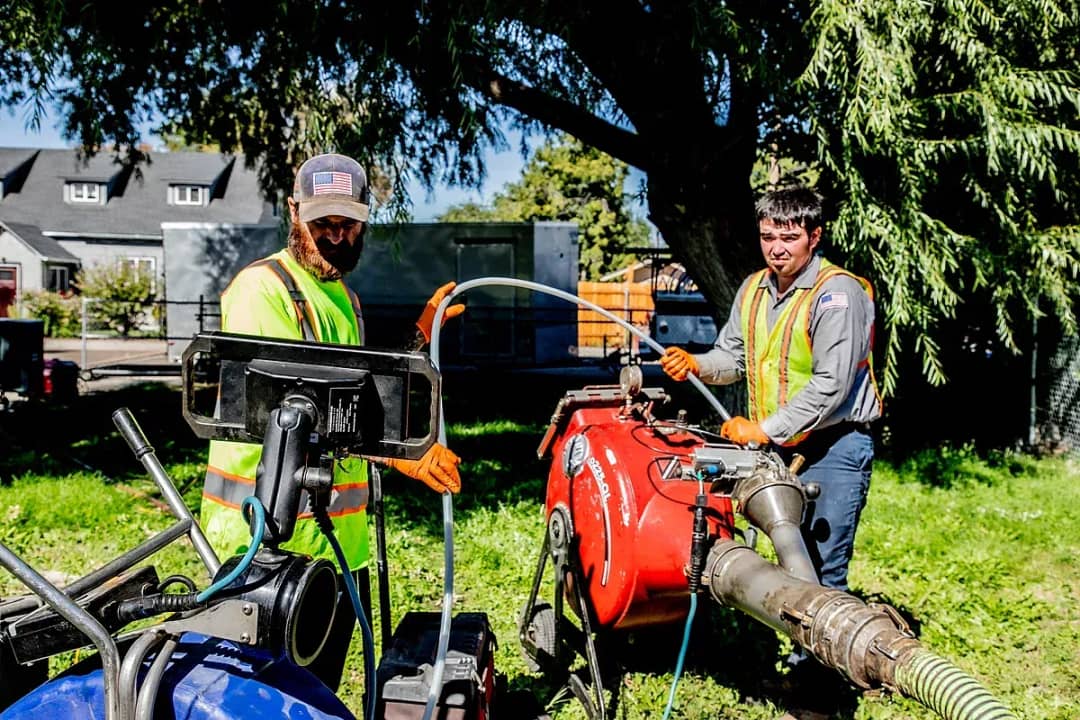
A rented power machine reaches farther and cuts harder, but that is also why it causes trouble in untrained hands. The cable spins fast. If the tip catches and you keep feeding, the cable can twist, kink and break, and a glove, rag or sleeve can wrap around it and pull your hand in. One manufacturer's instructions say to wear safety goggles and its own drain cleaning gloves, and never to grasp the rotating cable with anything else, a glove or a rag included. They also say to set the machine up so you have full control of the foot switch in an emergency, and to be able to shut the motor off if the cutter stops turning. Read the manual for the model you rent, and stop the moment the cable loads up.
The size of the cable matters too. A big cable fed into a one-and-a-half inch sink line can crack a trap or tear up a fitting, and one that is too small just bends. Matching the cable and the cutting head to the pipe is most of the skill with a power machine, and a rental counter cannot do that for a line it has never seen.
When should I stop and call a plumber?
Put the snake away and call if any of these are true:
- More than one drain is slow, or one gurgles when another fixture runs. That points at the main line, which your hand auger cannot reach. Stop running water and see our page on a sewer line backing up.
- Sewage or dark water comes up in a tub, shower or floor drain. Do not use any water in the house until it is cleared. A basement floor drain with standing water, especially when a toilet flush or the washer makes it rise, usually ties into the main line, and a hand snake from a sink will not help it.
- A snake will not clear it, or it came out worse. If the cable will not go through, will not come back out, or the drain is slower than before you started, stop cranking.
- The cable stops at the same place every time. Something is in the pipe, and it needs to be found.
- You have already snaked this drain and the clog came back within weeks or months. The pipe has a reason, and another round of cranking will not find it.
- The cable comes back with roots or chunks of pipe on it. Either one means the pipe is damaged.
- You do not have a way to reach the line. No trap you can open, no overflow plate, no cleanout.
The matching services are drain snaking, clogged drain repair and drain cleaning. When you call, say what you tried, because that tells whoever you reach what is already in the pipe.
What does it cost to have us snake it?
Clearing a single branch line, one fixture and not a main line clog, is covered by our $59 drain cleaning special. Past that, what moves the price is which fixture is involved, whether there is a cleanout or other way in, whether the line needs a cable or jetting, and whether the trouble sits in the branch or the main. We diagnose first, then hand you a flat price in writing that you approve before anything starts. It is a flat rate and not an hourly meter, and on-site estimates are free.
Why does my drain keep clogging after I snake it?
A snake opens a hole through the middle of the clog but does not scrape the pipe wall. If grease, soap or scale lines the wall, or something is wrong with the pipe itself, the clog returns.
Can a drain snake damage pipes?
It can, if it is forced. A cable pushed hard through a plastic trap or a tight fitting can scar it or catch on a joint. Match the cable to the pipe size on the package and let it work around bends instead of forcing it.
How do I unclog a drain if a snake does not work?
Check whether the clog is at this fixture at all: if other drains are slow or gurgle, it is farther down the line and a sink cable will not reach it. If only one fixture is slow, take the trap off or lift the strainer and clean it by hand, and stop cranking if the cable keeps hitting the same spot.
Can I snake a drain after pouring drain cleaner in it?
Not safely. The standing liquid in the trap is caustic or acid, and the cable can throw it. Wear eye protection and gloves at the minimum, and tell any plumber you call what you used.
Where we work
American Rooter & Drain was established in Caldwell, Idaho in 1945 and has worked the greater Treasure Valley since 1945. We snake drains in Boise, Nampa, Caldwell, Meridian, Kuna, Eagle, Star, Middleton, Garden City, Emmett and the rest of the valley, plus Ontario, Nyssa and Vale in Oregon. See what we do in Boise, Nampa, Caldwell and Meridian. Call (208) 366-5771, days, nights, weekends and holidays.