Call Now

Water Heater Repair & Replacement in Kuna

Water heater in the garage? We handle the platform, the pan and the drain line. Repair or replacement in Kuna, with a free on-site estimate. (208) 366-5771.

Free second opinion on any written quote.

2,200+ ★★★★★ reviews · Family-owned & insured
  • Flat Price in Writing
  • Workmanship Guaranteed
24/7Emergency Dispatch
22+Treasure Valley Cities
2,200+★★★★★ reviews
Same-DayService & Estimates

A family business

Our promise to your home

When you call, you get a neighbor, not a call center or a salesman. We show up when we say we will, and we don't pack up the truck until it's done right.

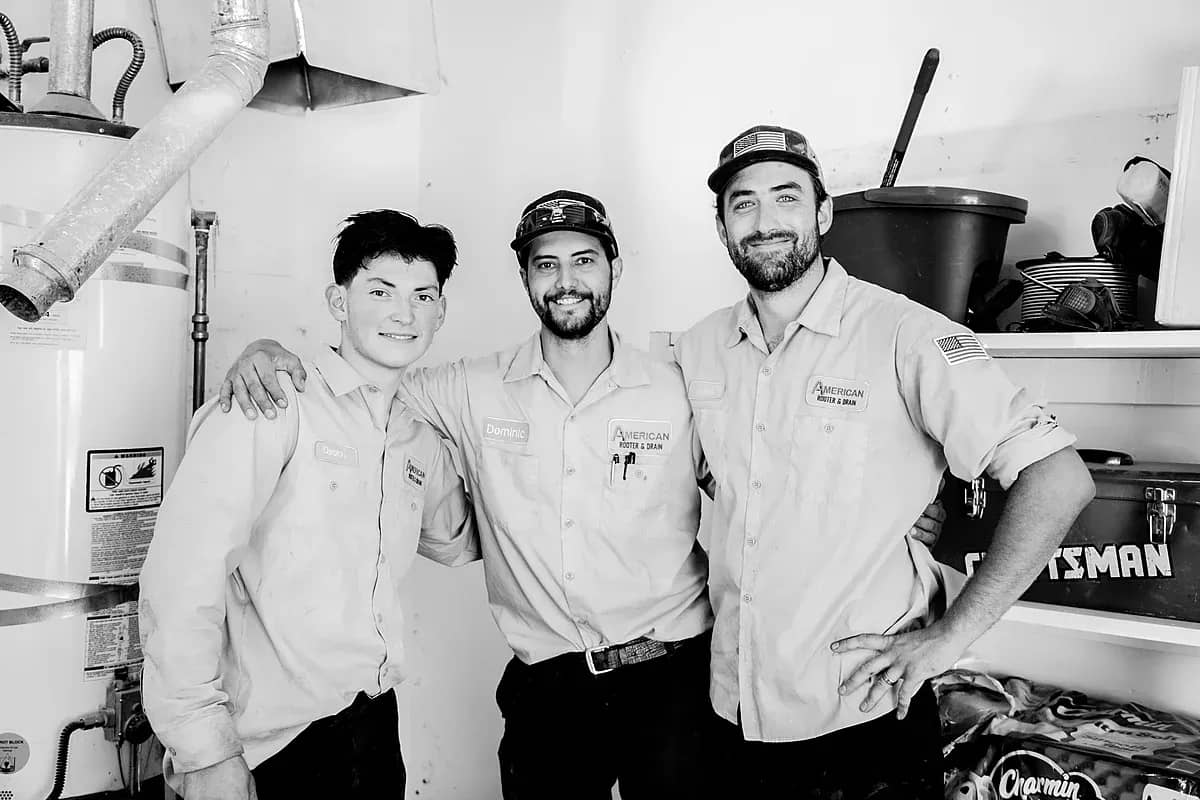
The American Rooter & Drain family

• SATISFACTION GUARANTEED • WORKMANSHIP WARRANTY 100%DONE RIGHT

water

Water Heater Repair & Replacement in Kuna

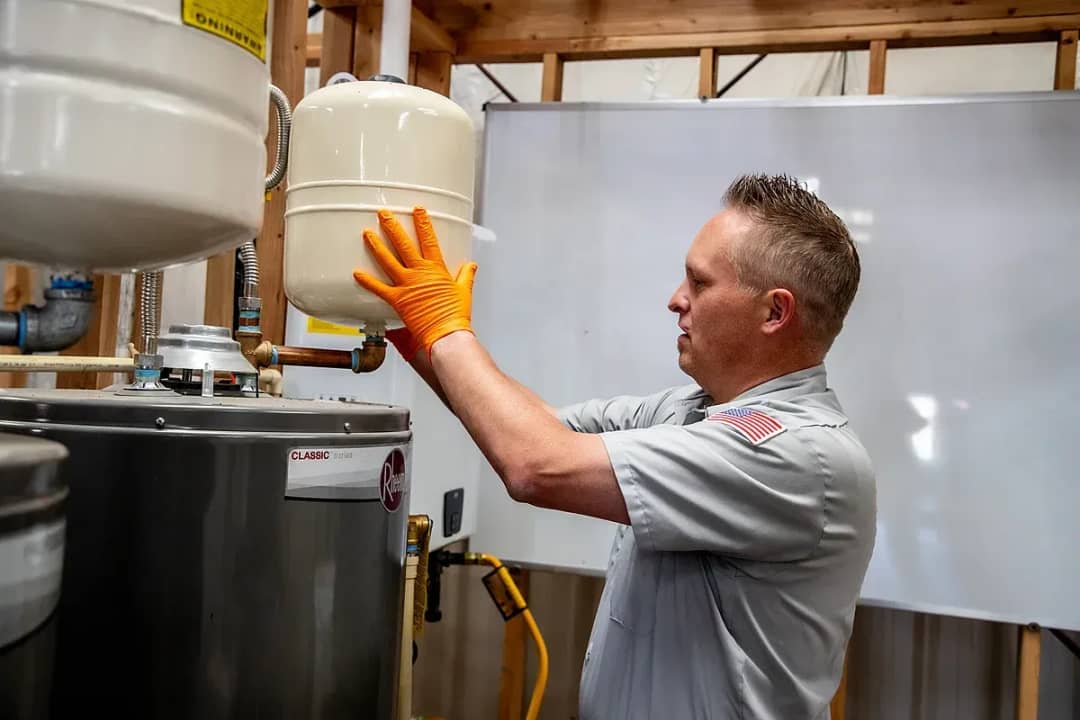
A water heater job in Kuna is mostly not about the water heater. The tank is ordinary equipment, and the garage it stands in is open, lit and easy to work in. What decides how the day actually goes is everything wrapped around the tank: the platform underneath it, the pan and whether that pan goes anywhere, the ceiling height above the draft hood, the closet door the next one has to fit back through, and a set of connections that were correct the day the house was finished and may not be correct for the unit going in now.

Real work, right hereKuna proof

American Rooter & Drain serves Kuna as it grows from its rural roots into one of the fastest-expanding communities south of Meridian, working on everything from older well-water homes near the historic downtown to new-construction subdivisions with municipal service and modern tankless units. Both setups behave differently, and our technicians are equally comfortable with each.

Loved by Treasure Valley neighbors

2,200+ ★★★★★ reviews

Mason was called by my parents to service the HVAC & a broken water pipe! As always he was helpful, very professional, & came quickly! He actually came out a few weeks ago to service my HVAC & its running like a champ still! Cant say enough good things about this company and the guys that put in the work!
CSChelsey Snell
Read more reviews
These three young men, Mason, Kyle, and Koda were great workers and very persistent until they finished the job. I would definitely recommend them and your company!
JBJoan Bradshaw
Awesome guys. They replaced the water heater. Thx James & Reed
MSMavis Skeesuck
Mason and Dante They did excellent service and explained everything to me.
JMJim Macfarlane
Mason & Dante came up and got my AC working within just 1hr. Even though the unit was old they got it going and cooling like new.
KPkevin posada

Why usNo games. Just good work.

Local, licensed pros under Treasure Valley sinks, crawlspaces, and rooftops. Here's what that buys you.

Call (208) 366-5771

Licensed & Insured

Idaho-licensed plumbers and HVAC techs, bonded and insured on every job.

Upfront Flat Pricing

You approve the price before we start. No hourly meter, no overtime games.

Same-Day Service

Call before noon and we'll do our best to be there today.

Guaranteed Work

If a repair isn't right, we come back and fix it. Guaranteed.

Local & Family-Run

Treasure Valley born and run. Real neighbors, not a call center.

Clean & Respectful

We treat your home like ours: careful, tidy, and respectful of your time.

How it works

01

Call or Book Online

Tell us what's going on. A real person picks up. No phone tree, no call center.

02

Upfront Diagnosis

We find the problem and hand you a price in writing before any work begins.

03

Fixed Right, First Time

We finish the job and back it with our workmanship guarantee.

Water Heater Repair & Replacement in Kuna, ID | American Rooter & Drain — American Rooter & Drain
On the job across the Treasure Valley: water.

Signs it's time to call

Spot any of these? Don't wait. Early usually means cheaper.

  • No hot water, or it runs out fast
  • Rusty or discolored hot water
  • Popping or rumbling from the tank
  • Water pooling around the base
  • The unit is 10+ years old
  • A pilot or burner that won't stay lit
Straight answers, fair flat-rate pricing, and we treat your home like it's our own: boots covered, mess cleaned up, job done right the first time.

The crew at American Rooter & Drain

Straight talk

That is what this page covers, because that is what a newer house makes different. What kind of heater you have, how to read its age off the label, what size you need and which fuel to burn are worked through on the main water heater page.

Why is my water heater up on a platform in the garage?

Because gasoline vapor is heavier than air and settles into a layer along the floor, and a gas water heater has an ignition source inside it. The platform lifts that ignition source up out of the layer.

Equipment has moved on since that rule shaped every garage in the valley. A modern gas storage heater is built with a sealed combustion chamber and a flame arrestor screen across the base, a design meant to stop vapor reaching the flame at all, and manufacturers list a great many of those models for installation directly on a garage floor. Whether yours can come down off its platform is decided by the listing printed for that specific heater, not by a general rule and not by what the last one did. We read the listing, and we read it in both directions, because pulling a platform out from under a unit that still needs one is nobody's favor.

The platform matters past that question, and this is the part that costs people money on installation day.

  • It eats the ceiling height you have left. A replacement tank of the same rated capacity is not the same shape as the one it replaces. Insulation got thicker, so the modern unit is taller and wider for the same gallons, and on a platform that extra height comes straight out of the clearance above the draft hood. A platform is what turns a routine swap into a hunt for a shorter model.
  • It moves the vent connector. The draft hood on the new heater lands at a different height, so the rise off the hood and the horizontal run across to the flue get re-made rather than reconnected. That is a fabrication step in the middle of the job, and it is worth knowing it is coming.
  • It decides whether a pan fits at all. A pan takes its own inch or two, and the tank has to sit flat and fully supported inside it. Adding a pan under a heater already standing on a platform can mean rebuilding the platform first.

There is one more thing a garage asks for that a utility room never does, and it is physical rather than mechanical: protection from a vehicle. A tank standing inside the parking path wants a bollard in front of it, or wants to be set back out of the path entirely. It reads like an over-cautious detail right up until a bumper finds a gas connection.

And a maintenance point that belongs to garages specifically. A sealed-combustion heater draws its combustion air from right down at floor level, which is exactly where sawdust, drywall dust, dryer lint and lawn clippings live. A flame arrestor screen packed solid gives you a heater that lights, runs a few minutes and then drops out, and it looks precisely like a failed part. So the first cover that comes off on a garage no-heat call is the burner access, before anybody prices a component.

What is the pan under my water heater for?

It does two jobs. It carries a leak somewhere harmless instead of across your floor, and it tells you where water on that floor came from.

The first job only works if the pan drains. A pan sitting under a tank with no line off it, or with a line that stops an inch past the fitting, holds the gallon or two the pan itself holds and then hands you exactly the leak you were going to have. So the real question is where the line goes. If the garage slab has no floor drain, and a slab-on-grade garage generally does not, the line gets run out through the exterior wall to daylight, or across to a laundry standpipe on the other side of that wall, or to some point where a discharge would actually be seen by somebody.

Three ways that line fails after it is installed:

1. It climbs. Nothing pushes water through a pan line. It moves on gravity or it does not move at all, and one sag between joists or one bump over a bottom plate is enough to stop it. We put a level on the whole run rather than eyeballing the ends.

2. It freezes. A pan line and any other discharge terminating through the same cold exterior wall can hold ice at the outlet in January. A drain that cannot drain is decoration. Pitch it hard, keep the run short, and put the termination where a January inspection of it takes ten seconds.

3. It gets buried. A garage fills up. A pan line running along the floor to the far wall spends its life underneath storage, and a crushed or kinked line is invisible until the day it matters.

The second job of the pan is the one nobody mentions, and it is worth four seconds of your time on the morning you find water. Water standing in the pan with the slab dry around it came from the tank or its fittings. Water on the slab beside a dry pan came from something else entirely: a softener loop, a supply line inside that wall, a hose bib on the other side of it, condensation running off a cold line in August. Perfectly healthy water heaters get replaced over that second one every year, and the pan is what separates the two.

The garage is the forgiving version of all this, because a slab can take a spill. It gets serious in the floor plans that put the heater inside the conditioned envelope instead: the mechanical closet off the laundry, the one tucked under the stairs, the upstairs closet beside the furnace. There the pan and its line are the only thing between a slow weep and a ceiling, and there is no exterior wall two feet away to run to. That routing gets solved on paper before the old tank comes out, not afterward.

My whole neighborhood's water heaters are failing — why?

Because they are the same heater. In a Kuna subdivision the water heaters did not arrive one at a time. A builder ordered them by the pallet, plumbers set them a few houses apart across the same season, to the same specification, and every one of them started counting down on the same schedule.

Builder-grade is a real category rather than an insult. It means equipment chosen to hit a price, inside a house that was itself being built to a price. Adequate, correctly installed, and carrying a shorter warranty. Warranty length is the honest tell, because a shorter-warranty model gets to its price the same two ways: a lighter anode rod and a thinner glass lining. Those two things are most of what decides how long a tank lasts, and those two things are exactly what got trimmed.

You can find out what you have without calling anybody. The rating plate on the front or the side of the tank carries the model, the capacity, the fuel and a date code inside the serial number. Read it on a quiet afternoon rather than on the morning it fails, because knowing whether you are years out from this decision or weeks out from it changes what you should do about it.

What the cohort actually means for you:

  • A neighbor's failure is a genuine signal about yours, in a way it would not be on a street where every house was built in a different decade.
  • You still have the option to choose the day. That is the single largest advantage available on this job, and it expires the moment the tank lets go. A heater replaced on a Tuesday you picked is a different purchase from one replaced on a Sunday you did not.
  • Whatever the original install skipped, it was skipped at every house on the street. If the replacement two doors down needed a pan line rerouted, a platform rebuilt or a vent connector re-made, plan on hearing the same about yours.
  • The second opinion is standing in the driveway across the road. Ask what was added, what it came to, and whether anything got discovered halfway through. On a street of identical installs that is better intelligence than any web page can give you.

Can you fit a new water heater in my utility closet?

Yes, and the way that gets decided is with a tape measure before the model is chosen rather than after the old tank is already on the truck. A closet in a house built this century was framed to the appliance that went into it plus enough room for a plumber to turn a wrench, and not one inch more. Four measurements settle it.

The door opening against the tank diameter. Same capacity, thicker insulation, wider tank. Taking the door and the casing off is routine and we plan for it. Where that still is not enough, the answer is a different shape in the same capacity, taller and narrower or shorter and wider, which is a model decision and not a compromise.

The height above the tank, for the work rather than for the tank. The anode rod withdraws straight up out of the top of the heater in a single piece, and it stands very nearly the full height of the tank. A closet that will not allow that has quietly made the one piece of maintenance that extends a tank's life impossible, and somebody pays for that in year eight. Where the ceiling genuinely will not give, a flexible segmented rod solves it, and that is a decision to make on installation day while the top of the tank is open.

The combustion air the burner needs. A gas heater in a closed closet burns the air in that closet, which is what the louvered door or the pair of openings, one high and one low, are there for. A physically larger replacement takes free volume out of that closet. A heater starved of air spills its exhaust back into the house rather than sending it up the flue, which is the failure mode nobody sees coming because the heater keeps making hot water while it happens.

The clearance to combustibles, on the sides, at the back, and at the front where the door swings, read off that specific heater's own listing rather than off the last one's.

The order on the day is worth knowing, because it is the opposite of what people expect. We protect the floor and the doorway first, kill the fuel and the water, drain the old tank at whatever pace its drain valve allows, and walk it out. Then the new unit gets dry-fitted into the opening and set level in its pan before a single connection is made. Finding out the tank is an inch too wide is a five-minute problem at that point. Finding it out after the water lines are soldered is not.

Will a garage water heater still work in winter?

Yes. It works considerably harder for it, and the parts that were marginal in August are the ones that quit in February.

Two things stack up on a garage tank in January. The water arriving at the inlet is far colder than it was in July, so the burner runs longer on every single cycle, and the gas valve, the thermostat and the igniter all take more work for the same showers. And the air standing around the tank is winter air, so what the tank loses between cycles is greater than the same tank would lose in a conditioned utility room. A heater that kept up fine all summer can be genuinely behind by February without anything having broken.

The seasonality shows up plainly in our own dispatch. Of the 183 no-hot-water calls we have completed across the whole valley since 2021, 86 landed in December through March, which is close to half the year's calls packed into a third of the year. Those dispatch records begin in 2021, when the current system went in — the company is a great deal older than the database. That is company-wide across the valley rather than a Kuna figure, and it is the pattern behind every February call that begins with the words it was fine last week.

Four things worth doing before the cold, all of which take minutes:

1. Walk the pan line and any other discharge to its termination outside. Ice at the outlet is the failure, and you find it by looking, not by waiting.

2. Clear the storage away from the tank. A heater walled in by totes and bikes has no combustion air and no service access, and in a garage that stack grows a little every autumn.

3. Look at the burner access cover. Cold dry garage air moves dust, and the flame arrestor is at floor level where the dust is.

4. Insulate the hot run if it crosses an unheated ceiling. That does nothing for the heater and everything for how long you stand at the far tap.

Tankless deserves its own line here, because a garage is where these hang and freeze protection is the part of the spec sheet nobody reads. A tankless unit protects itself from freezing electrically. That is fine until the power goes out on a cold night, which is exactly the night a unit full of standing water is sitting in an unheated space. Ask where the isolation valves are and what the drain-down procedure is before you need either. Those same isolation valves are what turn a future descaling into a scheduled hour instead of a teardown, so they belong on the installation rather than on a wish list. The longer economics comparison lives here: tankless versus tank water heaters and their real operating costs in Idaho. If a conversion is on the table, the gas branch back to the meter is our own trade rather than a sub's: gas line installation in Kuna.

Is it worth fixing a builder-grade water heater?

That depends on two answers that are independent of each other: which part failed, and how far into the cohort your tank is.

Plenty of what fails on these units is a straightforward repair, and it gets repaired. A pilot that lights and drops out is the sensor that proves the flame, a small part that rides on the truck. A gas control valve, a thermostat, a heating element on an electric unit, a leaking drain valve, a flame arrestor packed with garage dust. None of those condemns a heater and none of them should be used to sell you one.

The cohort is what shifts the arithmetic, and it is worth being straight about. When the heater is the original builder-grade unit and the street has already started replacing them, a fresh part buys you less than the identical part would buy in a tank that is genuinely mid-life. You are putting a new component into a tank whose anode rod has very likely been spent for a while and whose lining has been running unprotected since. That is not a reason to refuse the repair, and we will still do it if that is your call. It is a reason to know which of the two things you are buying.

There is one check worth making before you spend anything either way, and it is the check almost nobody has ever had done. If the ceiling above the tank allows the rod to come out, pull it and look. A rod with metal left on it means the repair in front of you is an early-life repair and the tank has real years ahead. A rod eaten down to the wire means the clock is a different clock, and the same money is better aimed at the replacement you were going to make anyway.

The one thing that is not a judgement call: once the steel of the tank itself is weeping, nothing repairs it. Not a patch, not a weld, not sealant. It has corroded from the inside out and it is under pressure every minute it stays connected. That is the failure the pan under it exists for.

How much does a new water heater cost in Kuna?

We do not put a figure on that from a web page, because too much of it moves on things nobody can see over the phone. What we do instead is name what moves it, come and look at your garage or your closet, and hand you one written number.

On a Kuna house the variables that actually bite are these. Whether the platform stays, comes out or gets rebuilt. Whether the unit going in is taller than the one coming out, and what that does to the vent connector and to the clearance above the draft hood. Whether there is a pan, and whether its line goes anywhere useful or simply ends. Whether the heater is in the garage or in a closet, and whether it fits back through the opening it came out of. The condition of the cold-water shutoff and the connectors, which decides whether they turn or get cut. Tank or tankless, capacity and fuel. And on a conversion, the gas run back to the meter and the vent path out through the wall.

The on-site estimate is free, and it happens at your house. You get a flat price in writing before anything is disconnected, and it does not grow afterward. If somebody has already handed you a written quote, and on a street where several of these have gone in already somebody probably has, we will read it for free and tell you plainly whether it is fair.

Call (208) 366-5771 and a real person answers. No hot water, or a tank leaking onto the slab right now, gets same-day priority whenever there is a truck free for Kuna, and we will tell you honestly what today looks like rather than booking something we cannot hold. If you are calling ahead of the failure instead, because the rating plate says what it says or because two neighbors have already been through this, say so on the phone. That version gets scheduled at your convenience with the right unit already loaded, and it is the version of this job that goes better and costs less.

Established in Caldwell, Idaho in 1945. Licensed, bonded and insured, with a workmanship guarantee behind the installation rather than in a brochure.

Straight answersBefore you call

QWhy is my water heater up on a platform in the garage?

Because gasoline vapor is heavier than air and settles into a layer along the floor, and a gas water heater has an ignition source inside it. The platform lifts that ignition source up out of the layer. Equipment has moved on since that rule shaped every garage in the valley. A modern gas storage heater is built with a sealed combustion chamber and a flame arrestor screen across the base, a design meant to stop vapor reaching the flame at all, and manufacturers list a great many of those models for installation directly on a garage floor. Whether yours can come down off its platform is decided by the listing printed for that specific heater, not by a general rule and not by what the last one did. We read the listing, and we read it in both directions, because pulling a platform out from under a unit that still needs one is nobody's favor. The platform matters past that question, and this is the part that costs people money on installation day. It eats the ceiling height you have left. A replacement tank of the same rated capacity is not the same shape as the one it replaces. Insulation got thicker, so the modern unit is taller and wider for the same gallons, and on a platform that extra height comes straight out of the clearance above the draft hood. A platform is what turns a routine swap into a hunt for a shorter model. It moves the vent connector. The draft hood on the new heater lands at a different height, so the rise off the hood and the horizontal run across to the flue get re-made rather than reconnected. That is a fabrication step in the middle of the job, and it is worth knowing it is coming. It decides whether a pan fits at all. A pan takes its own inch or two, and the tank has to sit flat and fully supported inside it. Adding a pan under a heater already standing on a platform can mean rebuilding the platform first. There is one more thing a garage asks for that a utility room never does, and it is physical rather than mechanical: protection from a vehicle. A tank standing inside the parking path wants a bollard in front of it, or wants to be set back out of the path entirely. It reads like an over-cautious detail right up until a bumper finds a gas connection. And a maintenance point that belongs to garages specifically. A sealed-combustion heater draws its combustion air from right down at floor level, which is exactly where sawdust, drywall dust, dryer lint and lawn clippings live. A flame arrestor screen packed solid gives you a heater that lights, runs a few minutes and then drops out, and it looks precisely like a failed part. So the first cover that comes off on a garage no-heat call is the burner access, before anybody prices a component.

QWhat is the pan under my water heater for?

It does two jobs. It carries a leak somewhere harmless instead of across your floor, and it tells you where water on that floor came from. The first job only works if the pan drains. A pan sitting under a tank with no line off it, or with a line that stops an inch past the fitting, holds the gallon or two the pan itself holds and then hands you exactly the leak you were going to have. So the real question is where the line goes. If the garage slab has no floor drain, and a slab-on-grade garage generally does not, the line gets run out through the exterior wall to daylight, or across to a laundry standpipe on the other side of that wall, or to some point where a discharge would actually be seen by somebody. Three ways that line fails after it is installed: It climbs. Nothing pushes water through a pan line. It moves on gravity or it does not move at all, and one sag between joists or one bump over a bottom plate is enough to stop it. We put a level on the whole run rather than eyeballing the ends. It freezes. A pan line and any other discharge terminating through the same cold exterior wall can hold ice at the outlet in January. A drain that cannot drain is decoration. Pitch it hard, keep the run short, and put the termination where a January inspection of it takes ten seconds. It gets buried. A garage fills up. A pan line running along the floor to the far wall spends its life underneath storage, and a crushed or kinked line is invisible until the day it matters. The second job of the pan is the one nobody mentions, and it is worth four seconds of your time on the morning you find water. Water standing in the pan with the slab dry around it came from the tank or its fittings. Water on the slab beside a dry pan came from something else entirely: a softener loop, a supply line inside that wall, a hose bib on the other side of it, condensation running off a cold line in August. Perfectly healthy water heaters get replaced over that second one every year, and the pan is what separates the two. The garage is the forgiving version of all this, because a slab can take a spill. It gets serious in the floor plans that put the heater inside the conditioned envelope instead: the mechanical closet off the laundry, the one tucked under the stairs, the upstairs closet beside the furnace. There the pan and its line are the only thing between a slow weep and a ceiling, and there is no exterior wall two feet away to run to. That routing gets solved on paper before the old tank comes out, not afterward.

QMy whole neighborhood's water heaters are failing — why?

Because they are the same heater. In a Kuna subdivision the water heaters did not arrive one at a time. A builder ordered them by the pallet, plumbers set them a few houses apart across the same season, to the same specification, and every one of them started counting down on the same schedule. Builder-grade is a real category rather than an insult. It means equipment chosen to hit a price, inside a house that was itself being built to a price. Adequate, correctly installed, and carrying a shorter warranty. Warranty length is the honest tell, because a shorter-warranty model gets to its price the same two ways: a lighter anode rod and a thinner glass lining. Those two things are most of what decides how long a tank lasts, and those two things are exactly what got trimmed. You can find out what you have without calling anybody. The rating plate on the front or the side of the tank carries the model, the capacity, the fuel and a date code inside the serial number. Read it on a quiet afternoon rather than on the morning it fails, because knowing whether you are years out from this decision or weeks out from it changes what you should do about it. What the cohort actually means for you: A neighbor's failure is a genuine signal about yours, in a way it would not be on a street where every house was built in a different decade. You still have the option to choose the day. That is the single largest advantage available on this job, and it expires the moment the tank lets go. A heater replaced on a Tuesday you picked is a different purchase from one replaced on a Sunday you did not. Whatever the original install skipped, it was skipped at every house on the street. If the replacement two doors down needed a pan line rerouted, a platform rebuilt or a vent connector re-made, plan on hearing the same about yours. The second opinion is standing in the driveway across the road. Ask what was added, what it came to, and whether anything got discovered halfway through. On a street of identical installs that is better intelligence than any web page can give you.

QCan you fit a new water heater in my utility closet?

Yes, and the way that gets decided is with a tape measure before the model is chosen rather than after the old tank is already on the truck. A closet in a house built this century was framed to the appliance that went into it plus enough room for a plumber to turn a wrench, and not one inch more. Four measurements settle it. The door opening against the tank diameter. Same capacity, thicker insulation, wider tank. Taking the door and the casing off is routine and we plan for it. Where that still is not enough, the answer is a different shape in the same capacity, taller and narrower or shorter and wider, which is a model decision and not a compromise. The height above the tank, for the work rather than for the tank. The anode rod withdraws straight up out of the top of the heater in a single piece, and it stands very nearly the full height of the tank. A closet that will not allow that has quietly made the one piece of maintenance that extends a tank's life impossible, and somebody pays for that in year eight. Where the ceiling genuinely will not give, a flexible segmented rod solves it, and that is a decision to make on installation day while the top of the tank is open. The combustion air the burner needs. A gas heater in a closed closet burns the air in that closet, which is what the louvered door or the pair of openings, one high and one low, are there for. A physically larger replacement takes free volume out of that closet. A heater starved of air spills its exhaust back into the house rather than sending it up the flue, which is the failure mode nobody sees coming because the heater keeps making hot water while it happens. The clearance to combustibles, on the sides, at the back, and at the front where the door swings, read off that specific heater's own listing rather than off the last one's. The order on the day is worth knowing, because it is the opposite of what people expect. We protect the floor and the doorway first, kill the fuel and the water, drain the old tank at whatever pace its drain valve allows, and walk it out. Then the new unit gets dry-fitted into the opening and set level in its pan before a single connection is made. Finding out the tank is an inch too wide is a five-minute problem at that point. Finding it out after the water lines are soldered is not.

QWill a garage water heater still work in winter?

Yes. It works considerably harder for it, and the parts that were marginal in August are the ones that quit in February. Two things stack up on a garage tank in January. The water arriving at the inlet is far colder than it was in July, so the burner runs longer on every single cycle, and the gas valve, the thermostat and the igniter all take more work for the same showers. And the air standing around the tank is winter air, so what the tank loses between cycles is greater than the same tank would lose in a conditioned utility room. A heater that kept up fine all summer can be genuinely behind by February without anything having broken. The seasonality shows up plainly in our own dispatch. Of the 183 no-hot-water calls we have completed across the whole valley since 2021, 86 landed in December through March, which is close to half the year's calls packed into a third of the year. Those dispatch records begin in 2021, when the current system went in — the company is a great deal older than the database. That is company-wide across the valley rather than a Kuna figure, and it is the pattern behind every February call that begins with the words it was fine last week. Four things worth doing before the cold, all of which take minutes: Walk the pan line and any other discharge to its termination outside. Ice at the outlet is the failure, and you find it by looking, not by waiting. Clear the storage away from the tank. A heater walled in by totes and bikes has no combustion air and no service access, and in a garage that stack grows a little every autumn. Look at the burner access cover. Cold dry garage air moves dust, and the flame arrestor is at floor level where the dust is. Insulate the hot run if it crosses an unheated ceiling. That does nothing for the heater and everything for how long you stand at the far tap. Tankless deserves its own line here, because a garage is where these hang and freeze protection is the part of the spec sheet nobody reads. A tankless unit protects itself from freezing electrically. That is fine until the power goes out on a cold night, which is exactly the night a unit full of standing water is sitting in an unheated space. Ask where the isolation valves are and what the drain-down procedure is before you need either. Those same isolation valves are what turn a future descaling into a scheduled hour instead of a teardown, so they belong on the installation rather than on a wish list. The longer economics comparison lives here: tankless versus tank water heaters and their real operating costs in Idaho. If a conversion is on the table, the gas branch back to the meter is our own trade rather than a sub's: gas line installation in Kuna.

We show upAcross the Treasure Valley

Fruitland · Emmett · Eagle · Caldwell · Garden City · Marsing · Kuna · Hidden Springs · Homedale · Meridian · Mountain Home · Ontario · Nampa · Middleton · Nyssa · Parma · Star · Vale · Payette · Weiser · Wilder · Boise

No surprises. No upselling.

Need Water Heater Repair & Replacement in Kuna? Let's get it handled today.

Free second opinion on any written quote.

(208) 366-5771