We run out of the shop at 1005 Commercial Way in Caldwell. American Rooter & Drain has served the greater Treasure Valley since 1945. Call (208) 366-5771 and we will get a camera in the line before anyone quotes a number.
Why do Kuna's older lots still have root problems in the line?
Original clay pipe under Kuna's older in-town lots was joined in short sections with a mortared or packed joint rather than a continuous gasketed seal, and that joint is the only place along the whole run where a root actually has an opening to exploit. A root does not puncture sound pipe wall — it follows moisture through the smallest available gap at a joint, and once a hair-root finds its way in, it thickens every season it is not disturbed, narrowing the bore from the inside in a mat rather than a single obstruction. A cable head can spin through the center of that mat and open a channel; it cannot shear the growth back to the pipe wall around the full circumference the way a jetting nozzle's cutting head does, which is why the same clay-line backup tends to return to the same fixture on a shortening interval when it has only ever been cabled.
What is the mineral scale problem, and why is it separate from roots?
Kuna draws its water from wells, and well water pulled from this part of the Snake River Plain runs hard — enough dissolved mineral that it shows up as scale on fixtures and shower glass on the supply side. On the drain side, that same mineral comes out of the warm water inside a sewer line and leaves a thin, rough film along the pipe wall, and a rough wall gives grease and soap something to grip that a smooth one would not. This has nothing to do with root intrusion and nothing to do with pipe age in the structural sense — PVC scales exactly the same way clay does, because scale does not care what the pipe is made of, only what is flowing through it and how warm it is when the mineral comes out of solution. A newer PVC lateral in a Kuna subdivision can be narrowing from scale and grease buildup even though nothing about the pipe itself has failed.
Does a water softener change what is on the pipe wall?
A softener changes the chemistry, but it does not remove the underlying maintenance question — it shifts it. Softened water leaves less of the mineral film that gives grease something to grip, but soap curd from the recharge cycle can settle in the laundry and bathroom branches instead, and a softener's regeneration cycle typically dumps its heaviest single volume of water into the drain overnight, when nothing else in the house is running to help carry material along with it. That volume alone does not scour a line that already has a settled deposit in a low spot — it just fills the low spot and stops. A camera pass is still the way to know what is actually on the wall, softener or not.
Why do a subdivision line and an in-town line need different nozzles?
Because they are not carrying the same deposit. On the older clay lines, the nozzle's job is cutting — a chain-style or root-cutting head shears root growth back to bare pipe wall around the full circumference, and jetting after that cut flushes the cut material out rather than leaving it to re-root from whatever is left behind. On sound subdivision PVC, there is usually nothing to cut; the job is a penetrating head to open a scale-and-grease plug if one has formed, or a flushing head to move a settled bed of buildup back toward the cleanout without needing to cut anything at all. Running a root-cutting head down clean PVC does nothing useful and risks marking a pipe wall that did not need cutting in the first place — the nozzle gets chosen from what the camera actually shows, not from what is already on the truck.
Will a store-bought drain cleaner take care of this instead?
Not for either version of the Kuna problem. A chemical cleaner can sometimes soften a light grease clog sitting close to a fixture, but it does not touch mineral scale that is bonded to the pipe wall or a root mass growing through a joint further down the line, and repeated doses of it sit against older clay pipe longer than they would against a shorter, faster-clearing modern lateral. If a single soft clog near a fixture is genuinely the whole problem, a $59 drain cleaning in Kuna cable pass is the cheaper, faster, and equally effective answer, and we would rather tell you that than sell a jetting visit you do not need. A stubborn clogged toilet that keeps coming back is one of the most common single-fixture cases where that cable pass is all it takes.
Is a repeat backup the same clog, or a new one?
If a Kuna line has been cabled before and it is slow again at the same fixture within a few months, the pattern usually means the underlying deposit or root mass was never actually removed — a cable opened a channel through it, and the channel closed back down once flow resumed pushing through the same narrowed space. Jetting answers that differently: a full-circumference pass restores the pipe closer to its original diameter instead of boring a hole through whatever is blocking it, which is the reason a jetted line tends to hold longer than a cabled one on the same deposit. Whether that is worth doing depends on what is actually there, and that is a camera question, not a guess from how the drain sounds.
Does the basalt ground out here change anything for jetting?
Less than you might think for this particular service. The basalt outcroppings around Kuna Butte and the rockier ground that comes with them matter a great deal if a line needs to be dug up or replaced by bursting — rock changes how a trench gets cut and how a bursting head's pull behaves — but jetting does not touch the surrounding soil at all. It works entirely inside the pipe that is already there. Where the ground does matter for a jetting call is indirectly: a rockier subsurface can mean a shallower or more circuitous original lateral route, and that is a camera question about your specific line rather than a town-wide rule.
What about the long lateral runs out on Kuna's acreage properties?
A rural Kuna property with a long run from the house to the septic tank or the main puts a different demand on a jetting pass than a short subdivision lateral does. The hose has to maintain working pressure the full length of the run, and rear-facing jets that both propel the hose forward and drive loosened material backward need more staged, deliberate passes to get debris all the way back to the cleanout rather than just relocating it forty feet down a long, flat stretch. A lot of these acreage properties also do not have an easily accessible cleanout to begin with, since older rural construction did not always include one — locating or establishing one is its own small piece of the job, and we will tell you upfront if that is what is needed before the jetter ever runs.
When does jetting stop being the right tool?
The camera settles this, and we will stop and show you the footage rather than run a pass that cannot fix what is actually wrong. An offset joint where the pipe has physically stepped out of alignment, a section that has gone oval or collapsed, or a low spot that holds water permanently are all structural problems that jetting cleans but does not repair — you would end up with a clean pipe that still has the same underlying shape it had before. That is a pipe bursting in Kuna conversation instead, replacing the affected section through Kuna's rockier ground with two access points rather than a long open trench. And if the whole problem is a single soft clog close to a fixture with no history of repeat backups, jetting is more than the job calls for.
What happens during the visit, in order?
1. Questions about history — when it started, whether it has happened before, which fixtures back up.
2. Camera down the line to identify pipe material, confirm the line will hold up to jetting pressure, and find exactly where roots, scale, or a structural issue sit — this is our sewer camera inspection in Kuna on its own.
3. A single written number, set by what the footage showed, agreed before any water goes down the line.
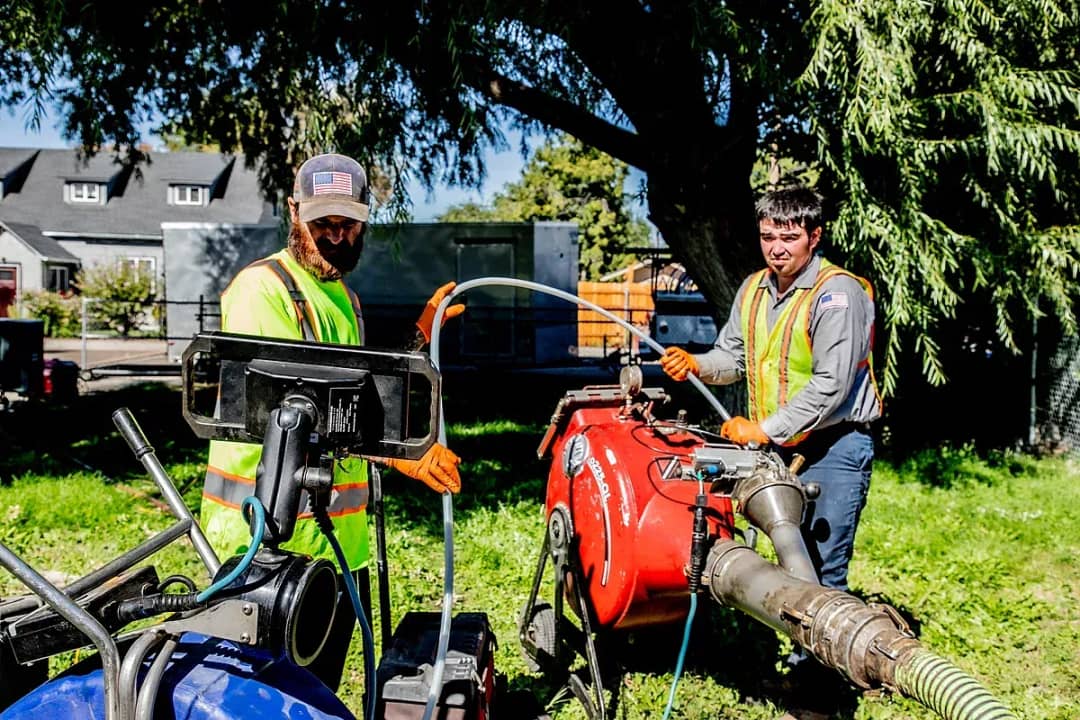
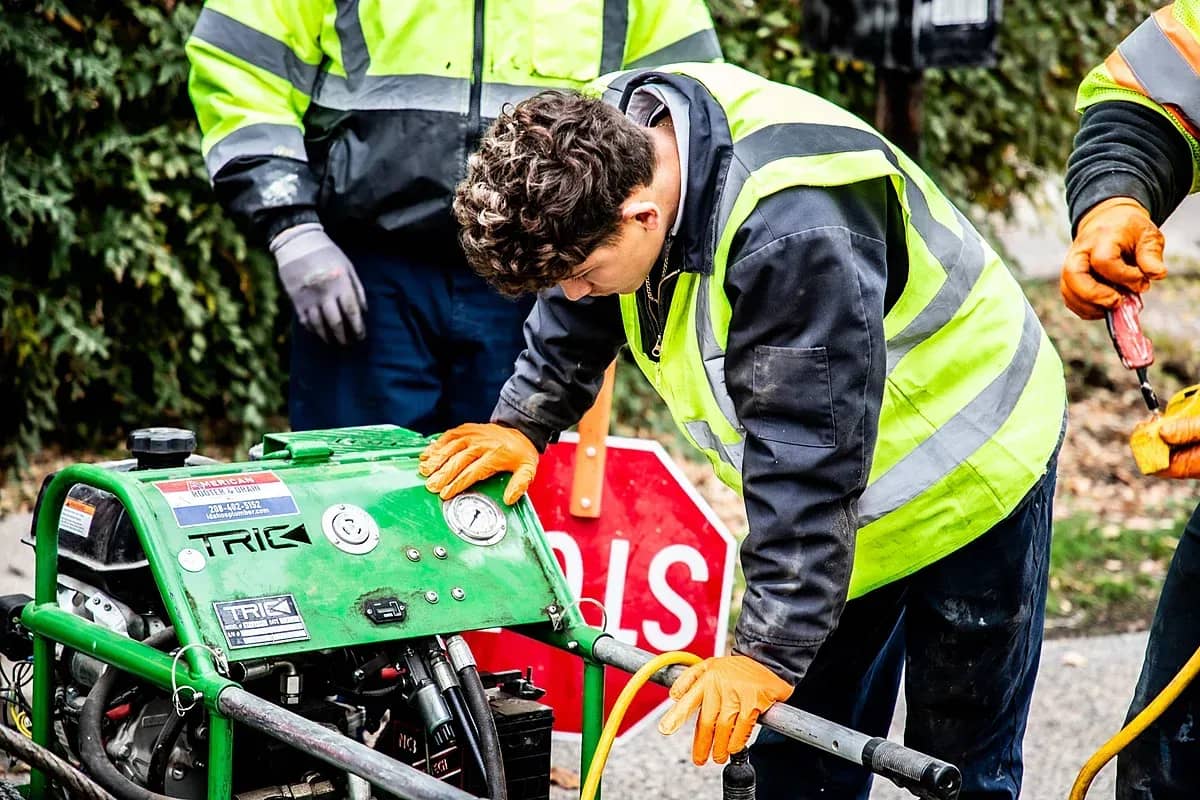
4. The jetting pass itself, nozzle chosen for what is actually in the line, worked in stages on a long run rather than run straight to the end and reeled back.
5. The camera goes back down the cleaned line, so the finished pipe wall is something you look at rather than something we assert.
What actually determines the cost of jetting a Kuna line?
There is no set number for this because the variables genuinely change the job: how far the run is from the cleanout to the main or the tank, whether it is clay with root cutting involved or PVC with only scale and grease, how many passes it takes, whether a cleanout already exists or needs to be established, and whether it is a residential branch or a building sewer carrying more volume. We look at the line first, hand you one flat price in writing before starting, and that number holds even if the job runs long for a reason like a longer acreage run or heavier root growth than the first look suggested — that is on us, not an added invoice line. The on-site estimate itself is free, and if the camera turns up something jetting will not fix, we will tell you that instead of running the pass anyway.
If a Kuna line has backed up more than once, or drains that used to run fine are suddenly slow across more than one fixture, get the camera in first and let the pipe tell you what it actually needs. See everything we do around Kuna at our Kuna hub, check tree root intrusion if that is the visible symptom, or see every city we serve on the hydro jetting overview. Call (208) 366-5771 for a free on-site camera inspection.