We run out of the shop at 1005 Commercial Way in Caldwell. American Rooter & Drain has served the greater Treasure Valley since 1945. Call (208) 366-5771, and we'll get eyes on the joint before recommending anything.
Why does gravel settle differently than silt or sand?
Grain size decides how far moving water can carry something before it drops out, and gravel and coarse sand need a lot more force behind the water than fine silt does to stay in suspension. Silt can ride a slow trickle most of the way down a line. Gravel can't — it settles almost as soon as the water carrying it slows even slightly, which in practice means right where it entered. That's why a gravel problem in an old Payette lateral tends to show up as a distinct pile at or near the joint rather than a long, shallow bed spread across the whole run. It also means the deposit rebuilds fast once the joint is open, because gravity is doing most of the work of putting new material exactly where the old material was.
What does that mean about clearing the line without fixing the joint?
It means clearing buys you time, and it's worth being honest about how much. If the joint itself is still open, gravel keeps arriving on the same schedule it always has — with groundwater movement, with irrigation season, with ordinary settling around the pipe — and it settles in the same spot every time, because that's simply where the water first loses the force to carry it. A jetting pass that removes today's pile without touching the joint isn't a mistake; it's often the right first move while a bigger repair gets scheduled. But calling it a permanent fix would be dishonest, and we'd rather tell a Payette homeowner that up front than have them call back in a year wondering why the same drain is slow again.
What happens to gravel when you send a cable through it?
The same thing that happens to any granular bed: an auger blade needs something with body to it — a root mat, hardened grease, a wad of wipes — to actually bite into and pull back. Loose gravel gives it nothing to grab, so the spinning head skates across the top of the pile or shoves it a few inches sideways instead of removing it. Water starts moving again above the disturbed pile, the call looks resolved, and the gravel itself hasn't gone anywhere — it's sitting there waiting to shift back into the flow path the next time anything disturbs it.
Why does nozzle choice matter more here than with lighter debris?
Moving gravel takes real force, more than moving silt or grease, and a flushing head that would comfortably clear a fine sediment bed somewhere else in the valley isn't automatically strong enough to shift a coarse gravel pile sitting close to a joint. The pass has to be worked directly against the pile rather than run past it once, and it typically takes more than one pass through the same section before the material actually clears the cleanout rather than just churning in place. Running the jetter on a single quick sweep because that's what worked on a lighter deposit elsewhere is how a gravel job looks unfinished five minutes after the truck leaves. On a longer run between the pile and the cleanout, the pass also has to be worked in stages rather than pushed straight through, so the material that does break loose actually makes it out instead of resettling in the next low spot along the way.
What is the camera actually measuring before anyone recommends a fix?
More than whether a pile is present. It reads what the pipe is made of, since that decides which pressure and nozzle are appropriate. It reads whether the pipe wall is sound enough to run a full-force pass rather than already thin or compromised near the joint. And it measures the pile itself — how far it extends from the joint, roughly how deep it sits, and whether it's a single accumulation or evidence of more than one entry point along the same run. That last measurement matters more with gravel than with lighter debris, because a pile's size is a rough proxy for how long the joint has been open and how much force the pass is actually going to need.
Is a repeat backup the same pile, or new gravel arriving?
A properly jetted Payette line that backs up at the same drain inside a matter of weeks, rather than months, is moving too fast for fresh gravel to explain it — more likely, the first pass never fully broke the pile loose, and the remainder is settling right back into the low spot it came from. A joint that's genuinely still open behaves differently: the return interval tends to be longer, tied to a wet season or a period of heavier groundwater movement, and the camera will typically show a smaller, fresher pile rather than a deposit that looks like it was never disturbed. Which one you're looking at is a measurement off the footage, not something to guess at from how quickly the drain backed up.
How do you decide whether another cleaning is enough, or the joint needs to be fixed?
This is the actual decision on a repeat Payette call, and it comes from the camera rather than from how the drain sounds. If the joint shows a hairline separation and the gravel pile is modest, another cleaning genuinely holds for a reasonable stretch, and that's a legitimate maintenance rhythm for an older lot near the downtown core. If the joint has visibly shifted or opened wide enough that gravel is arriving in volume between visits, cleaning it again is money spent on a problem that's going to be back within weeks. At that point the recommendation shifts from cleaning to fixing, and pipe bursting in Payette is how the joint itself gets replaced: a bursting head splits the old clay apart from the inside while a continuous fused pipe is drawn in behind it, all from two narrow openings rather than an open trench across ground that won't hold a trench wall once it's disturbed. We show you the footage from both visits side by side before recommending that, so the decision isn't a guess. If a root mass turns up alongside the gravel at the same joint, tree roots in a sewer line is the other half of that conversation.
How does a Payette gravel call actually get worked, start to finish?
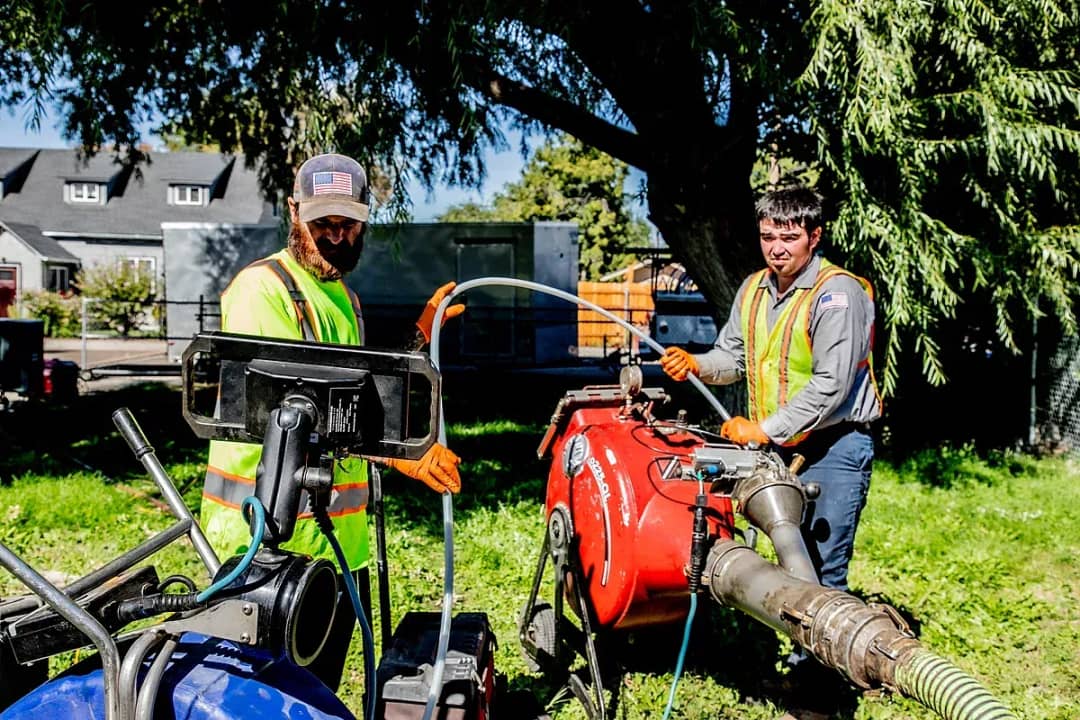
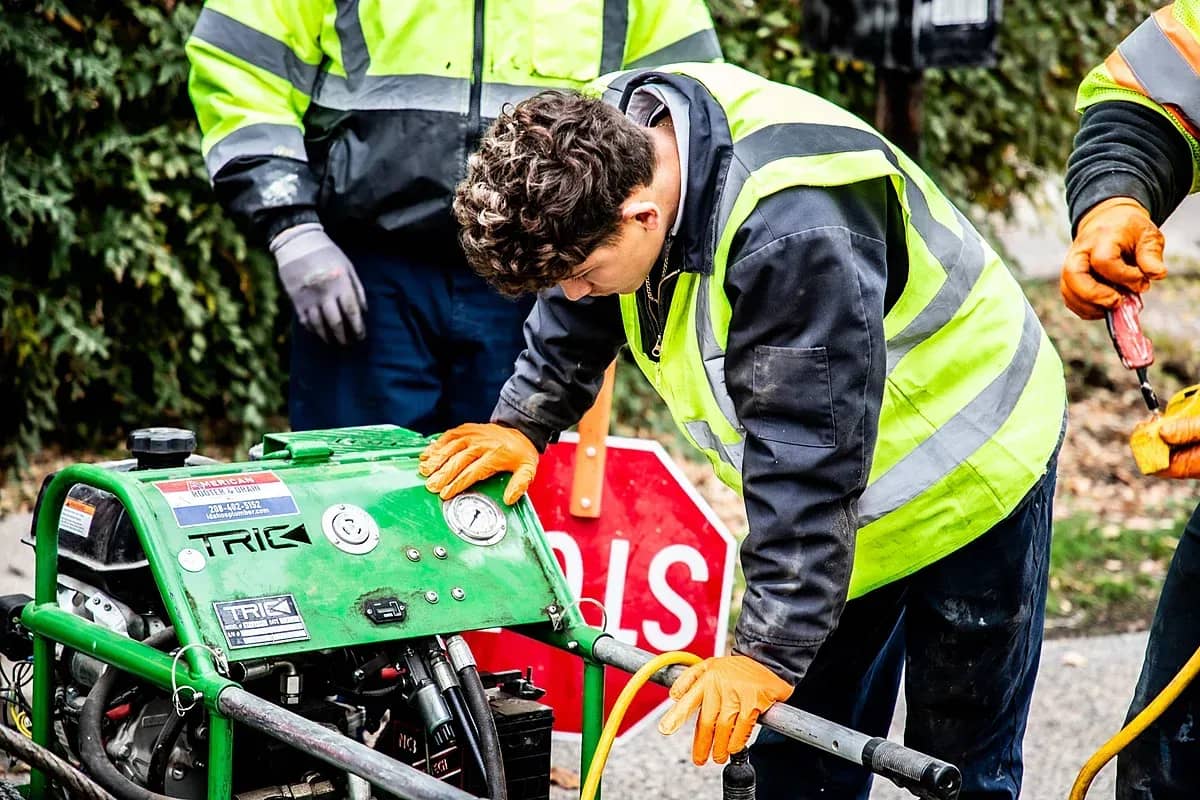
History comes first — how many times the drain has backed up, whether it's always the same fixture, and how long any earlier cleaning actually held. From there the camera goes down the line before anything else touches it, locating the pile, confirming the pipe material, and reading the condition of the joint it settled against; on its own that's our sewer camera inspection in Payette. What the footage shows becomes a single number, written down, before the jetter ever runs. The pass itself gets worked directly against the pile rather than run past it once, repeated as many times as it takes for the material to actually leave through the cleanout instead of churning in the same section. A last look with the camera closes it out, showing you the joint and the cleared pipe together so the next recommendation, if there is one, comes from what's on the screen rather than a guess.
An older lot near the downtown core with no existing cleanout tends to add time for a reason worth knowing ahead of the visit: establishing that access is its own small piece of work, easier to plan for once we've seen the property than to estimate blind over the phone. The same goes for a pile that turns out deeper, or a joint sitting further from the cleanout than the first look suggested — real reasons a job runs long, not padding.
What determines the cost of jetting a Payette line?
The variables: how large the gravel pile actually is, how many passes it takes to move coarse material rather than lighter debris, how far the joint sits from an existing cleanout, whether this is a one-time cleaning or the start of a conversation about fixing the joint itself, and whether the line is a single house's branch or a shared sewer carrying flow from more than one building before it reaches the main. Once we've seen the pile and the joint together, you get a single price in writing before the jetter starts, and it doesn't move even if a heavier deposit takes an extra pass or two to clear completely. Coming out to look costs nothing. Not every Payette call is a gravel job, either — where the camera turns up nothing but a straightforward soft clog, drain cleaning in Payette at $59 is the right tool, and we'd rather point you toward the cheaper fix than run a jetter you don't need.
A drain that keeps slowing at the same fixture is a joint question more often than it's a cleaning question — get the camera on it. Our Payette hub covers everything else we handle in town, recurring drain backups is worth a look if that pattern sounds familiar, and every city we jet is on the hydro jetting page. Call (208) 366-5771.